Gumbi Gumbi Profile
Gumbi Gumbi
Pittosporum angustifolium
For whole body strength, daily vitality and deep nourishment.


Cart
Your cart is empty

Join us in our love of herbs
Gumbi Gumbi Profile
Pittosporum angustifolium
For whole body strength, daily vitality and deep nourishment.
Herbal Intelligence
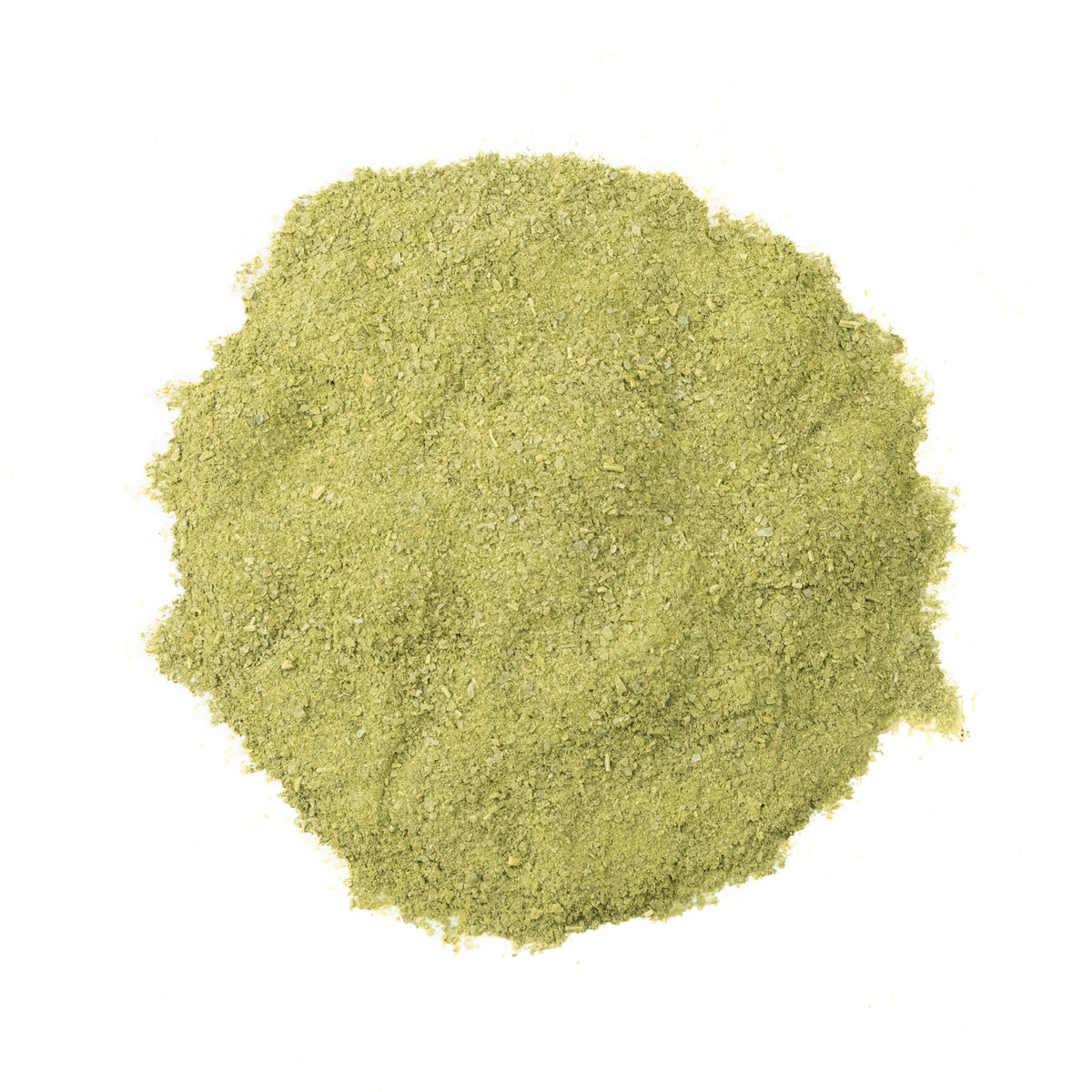
Gumbi Gumbi (Pittosporum angustifolium) is a small weeping tree native to inland Australia, also known as native apricot. Its narrow leaves have been part of Aboriginal bush foods and tradition for hundreds of years, brewed as a tea and laid on the skin.
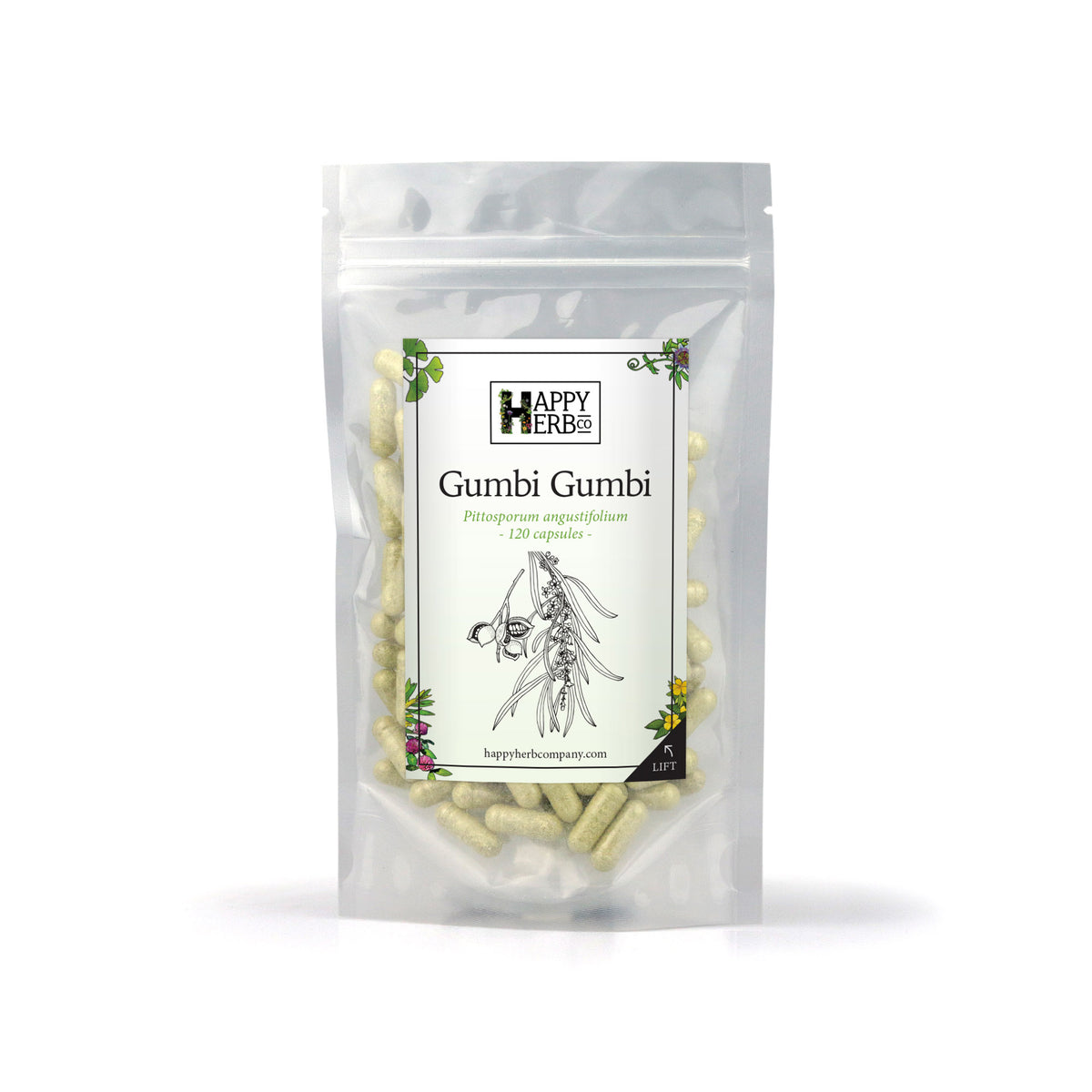
The taste is bold, earthy and decidedly bitter. The leaf is so bitter that we prepare our Gumbi Gumbi in capsules instead of selling it as a tea. It is the herb our customers reach for as part of a daily routine, when they want to feel strong and well in themselves through the cooler months.
Gumbi Gumbi grows across the dry inland of Australia, where different parts of the tree have been used in Aboriginal bush foods for hundreds of years(1). It goes by many names. Gumbi Gumbi is an Aboriginal name; the Noongar call the tree Mangar, the Wongutha Wartapirti and the Ngalia Warrkiri, and in English it is native apricot or weeping pittosporum(2).
The written record is thin and rests largely on anecdotal accounts(3). A tea of the leaves was taken at times of coughs and colds(1, 3). Heated leaves were laid on the breasts of new mothers as a compress, and the fruit was made into a paste or decoction for the skin(2). The seeds, though bitter, were ground into flour for damper(2).
Our Gumbi Gumbi is harvested sustainably on the lands of the Barrungam people. We pay our respects to their elders, past, present and future.
Gumbi Gumbi leaves are a rich source of triterpenoid saponins, measured at up to 4 per cent of the dry leaf, around ten times the level found in chickpeas or soya beans(1). The leaves also hold polyphenols, including phenolic acids and flavonoids, with smaller amounts of tannins, vitamin C and essential oil(1). Research so far has tested leaf extracts in the laboratory, not in people(1, 3).
Gumbi Gumbi is a bush food, not a herb of the European tradition, and Western herbalists are still getting to know it. It is usually described simply as a strong, bitter leaf, and it has become one of the better-known Australian native teas.
People drink it as a daily cup through the cooler months, or for a few weeks at a time when life is demanding and they want to look after themselves. Because it is so bitter, it is often blended with Lemon Myrtle or sweetened with honey.
Research is at an early stage. Laboratory studies have measured the leaf's saponins and polyphenols and tested extracts against microbes(1, 3), but we could find no published clinical trials in people. So we describe how it is used, not what it will do.
Developed and reviewed by Laura Grace, Owner and Creative Director of Happy Herb Co, Herb Educator and Registered Ayurvedic Lifestyle Consultant · Clinically reviewed by Tamara Welsh, BSc, AdvDipWHM, ATMS, Clinical Herbalist
This profile is intended as a researched educational guide and does not replace the broader perspective of a herbal consultation.
★★★★★
5.0 out of 5, from 6 reviews
I suffer from a skin disorder called Hidradenitis Suppurativa. Gumbi Gumbi has been my relief from the symptoms; it is the only herb or antibiotic that helps keep symptoms controllable and provides some relief, as my condition is not curable, only managed.
I would recommend Gumbi Gumbi to anyone who listens. Thank you.
I bought this product to try as I've had psoriasis on my left hand for many years and couldn't get rid of it, trying various things. It was quite bad, it had cracks and bleeding. In 2 weeks of taking gumbi gumbi, it's healed the cracks and skin...very happy with this product and as a by effect, it's helped with my cold. Highly recommended.
So amazing to hear MB! Gumbi Gumbi is such a powerhouse for skin healing, we are so glad we could provide relief for you.
It works well
Worked upon feeling a virus settling in to absolutely clear. And the only virus being prevalent at the time in society was, covid.
Hi Ela, Thank you so much for your review and support!! We really appreciate you taking the time to share and are so happy that you are having a positive experience with the Gumbi Gumbi. Cheers!
I am a gumbi gumbi aficionado. I love the stuff for many uses. I may buy up your whole supply! Subtle. Uplifting, realigning. Good stuff!
Hi Kathleen,
Thank you for sharing your feedback on Gumbi Gumbi. We appreciate your honest feedback as it helps connect other customers with the best products and also helps us optimize our offerings. Grateful for your support!
In health & happiness,
Happy Herb Co
In everyday life
As an Aboriginal bush food, Gumbi Gumbi leaf was brewed as a tea. Because the leaf is extremely bitter, we prepare ours in capsules.
The capsule is simply an easier way to take a very bitter leaf. It does not suggest a therapeutic use.
An old leaf, a new respect.
Hold the capsule and think of the leaf inside it: narrow, weeping, from a small tree of the Australian inland that Aboriginal peoples have known for longer than any written history.
Take it with a glass of water, slowly, and look up where you live on a map of Aboriginal country. Say the name of the people whose land you are on.
Breathe slowly. This leaf was known here before any of us arrived. What knowledge lives in the place you stand that you have not yet asked about?
In the Botanical Guides
Shop
Single Herb
FAQ
Gumbi Gumbi (Pittosporum angustifolium) is a small weeping tree native to inland Australia, also called native apricot or weeping pittosporum. Different parts of the tree have been used in Aboriginal bush medicine for hundreds of years. Today we prepare the dried leaf of Gumbi Gumbi in capsules, because it is extremely bitter.
Gumbi Gumbi is long associated with general health and wellbeing. In Aboriginal bush medicine a tea of the leaves was taken at times of coughs and colds, and the leaves and fruit were used on the skin. Research so far is limited to laboratory studies, with no clinical trials in people that we could find, so we describe how it is used, not what it will do.
Gumbi Gumbi is best known as a herb people reach for when they want a strong, bitter native herb as part of looking after themselves. Most people take it daily through the cooler months, or for a few weeks at a time when life is demanding.
We prepare our Gumbi Gumbi in capsules, taken with water as directed on the label. The leaf was brewed as a tea in Aboriginal bush medicine, but it is extremely bitter, so capsules are an easier way to take it. The capsule is about taste and convenience, and does not suggest a therapeutic use.
No. Gumbi Gumbi is naturally caffeine free, so it can be taken at any time of day. A 2020 study of the plant notes that alkaloids, the family of compounds that includes caffeine, do not appear to be present in the leaves. The strong character of the leaf comes from its bitterness, not from caffeine.
Gumbi Gumbi is bold, earthy and extremely bitter, one of the strongest-tasting native herbs. That is why we prepare it in capsules instead of selling it as a tea.
No formal safety studies of Gumbi Gumbi in people have been published, so there is no established list of who should avoid it. If you are pregnant or breastfeeding, take medication or have a health condition, check with your health professional first.
No formal safety studies of Gumbi Gumbi in people have been published. If you are pregnant, breastfeeding or taking medication, check with your health professional first.
This herb has not been studied enough for its actions to be defined. What we know of it comes from tradition and the sources below.