Spirulina Profile
Spirulina
Arthrospira platensis
For daily nourishment, whole body vitality and nutritional support.


Cart
Your cart is empty

Join us in our love of herbs
Spirulina Profile
Arthrospira platensis
For daily nourishment, whole body vitality and nutritional support.
Herbal Intelligence
Spirulina (Arthrospira platensis) is a blue-green microalga, strictly speaking a cyanobacterium, that grows in the alkaline lakes of tropical Africa and Central America. Dried to a deep green powder, it is one of the oldest foods of its kind: the Aztecs gathered it from the lakes of the Valley of Mexico, and the Kanembu people of Chad still gather it from theirs.
The taste is earthy, green and bold. Most people take Spirulina as a powder blended into a smoothie or juice, and it is the food our customers reach for when they want dense, daily nourishment in a single spoonful.
When the Spanish reached Mexico in the sixteenth century, they found the Aztecs of Tenochtitlan gathering a food from the lake with fine nets and making it into blue-green cakes, known as techuitlatl(1). The custom faded as the lakes were drained, though Lake Texcoco, the last remnant, still has a living population(1).
A second tradition never stopped. On the shores of Lake Chad the Kanembu people collect the algae in clay pots, strain it through cloth and dry it in the sun. The cakes, called dihé, are sold in local markets and crumbled into a sauce of tomatoes and peppers that is poured over millet, beans, fish or meat(1).
Science caught up in 1940, when the French phycologist Dangeard described dihé, and again in the 1960s, when the Belgian botanist Jean Léonard found the green cakes on sale in Chad(1). Spirulina is now farmed around the world(1).
Commercial Spirulina is the dried biomass of two filamentous cyanobacteria, Arthrospira platensis and Arthrospira maxima(2, 3). It is rich in protein with a broad amino acid profile, in phycobiliprotein pigments (notably phycocyanin), in carotenoids and in gamma-linolenic acid(2, 3). In cell and animal models, phycocyanin and related pigments have been studied for their interactions with antioxidant and inflammatory signalling pathways(2).
Spirulina is a food more than a herb, and herbalists class it as a nutritive: something taken for what it contains. It is 60 to 70 per cent protein by dry weight(1), and it became widely known after NASA used it as a dietary supplement for astronauts(2).
People add it to the first meal of the day: a teaspoon in a smoothie or juice, or stirred into yoghurt. Many take it daily through busy seasons, during training, or when meals are simple.
Spirulina has been studied more than most green powders. A 2011 review of human trials found some positive results but concluded that larger studies are needed, describing Spirulina as a safe food supplement whose wider role remains to be seen(2). Quality matters, because blue-green algae products can be contaminated with toxin-producing species(1). We describe how it is used, not what it will do.
Clinically reviewed by Tamara Welsh, BSc, AdvDipWHM, ATMS, Clinical Herbalist ·
This profile is intended as a researched educational guide and does not replace the broader perspective of a herbal consultation.
★★★★★
5.0 out of 5, from 4 reviews
The quality is awesome, I make into capsules or if I don't have time just add to water or smoothie without a bad taste!!
Hi Beth, Thank you for sharing your feedback about the Spirulina Powder. Very glad to hear you are satisfied with its effects -- great idea about making into capsules or adding to a smoothie for avoiding the strong taste!
Cheers,
Happy Herb Co
Can this product be used in place of sugar? I'm trying to break my sugar/sweets addiction, and other things I've tried haven't worked out. Also, do you sell to (very) small businesses at wholesale? I am in Texas/USA. Thank you, Nancy
Very nice and impressive quality! It has a mild flavour and is easy to mix into bottled water / liquid by shaking. Thank you for the very prompt shipping down to Sydney!
Just opened this up after it was delivered and this is soooo green and smells like the really good quality stuff! Tastes like it too!
Question: Is this Australian sourced??
In everyday life
Spirulina powder is used in three main ways.
The usual adult amount is 2 to 3 grams a day. Start with less and build up, and take it with food or plenty of liquid.
Older than almost everything.
Stir a teaspoon into a glass of water and watch the colour: an unlikely blue-green. These algae were among the first living things to make oxygen, three billion years ago, and the Aztecs skimmed them from Lake Texcoco to dry into cakes.
Blend it into a smoothie with banana and pineapple, or whisk it into cold water with lemon if you do not mind the taste.
Drink slowly. The oldest life on earth is still feeding the newest. What old thing feeds you still?
Shop
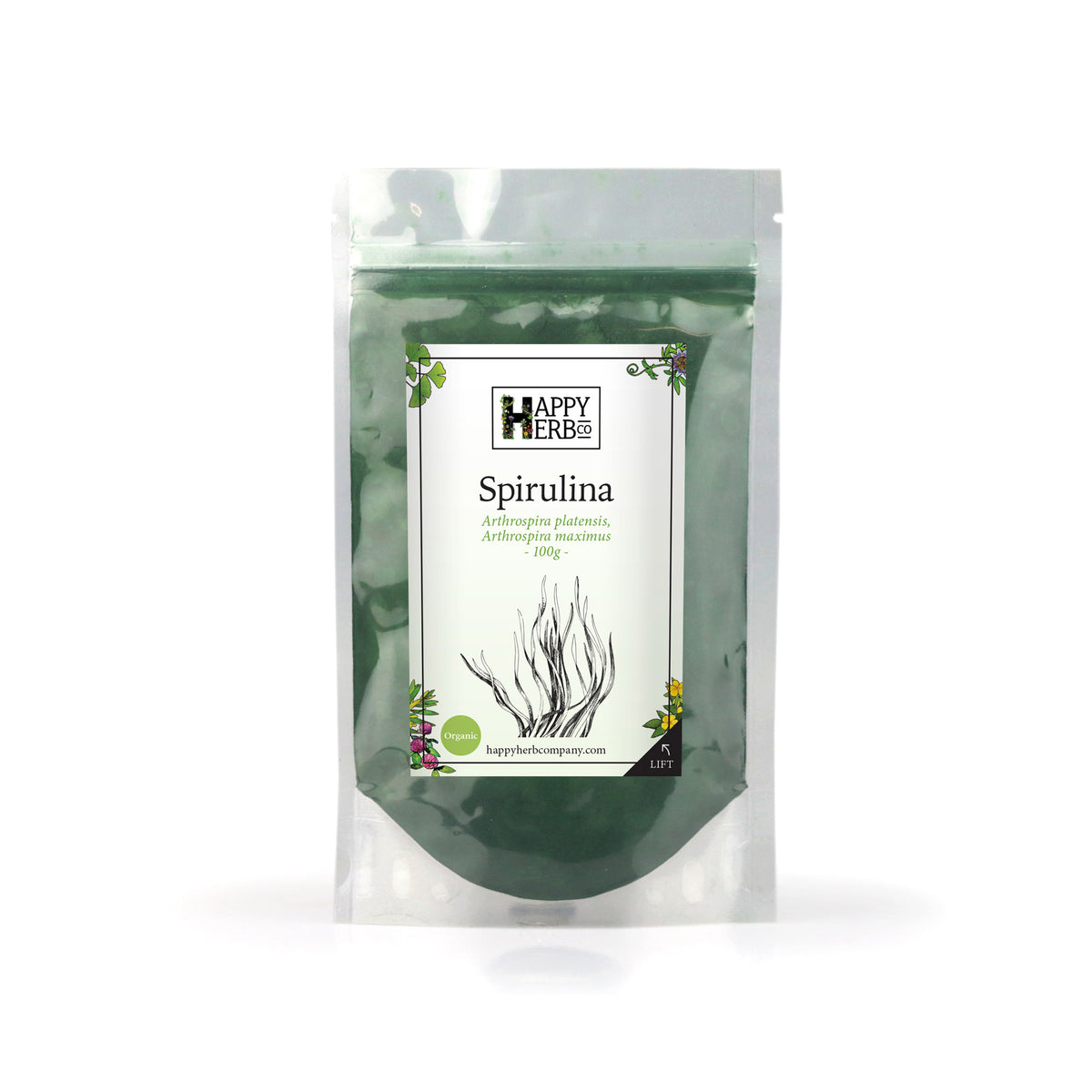
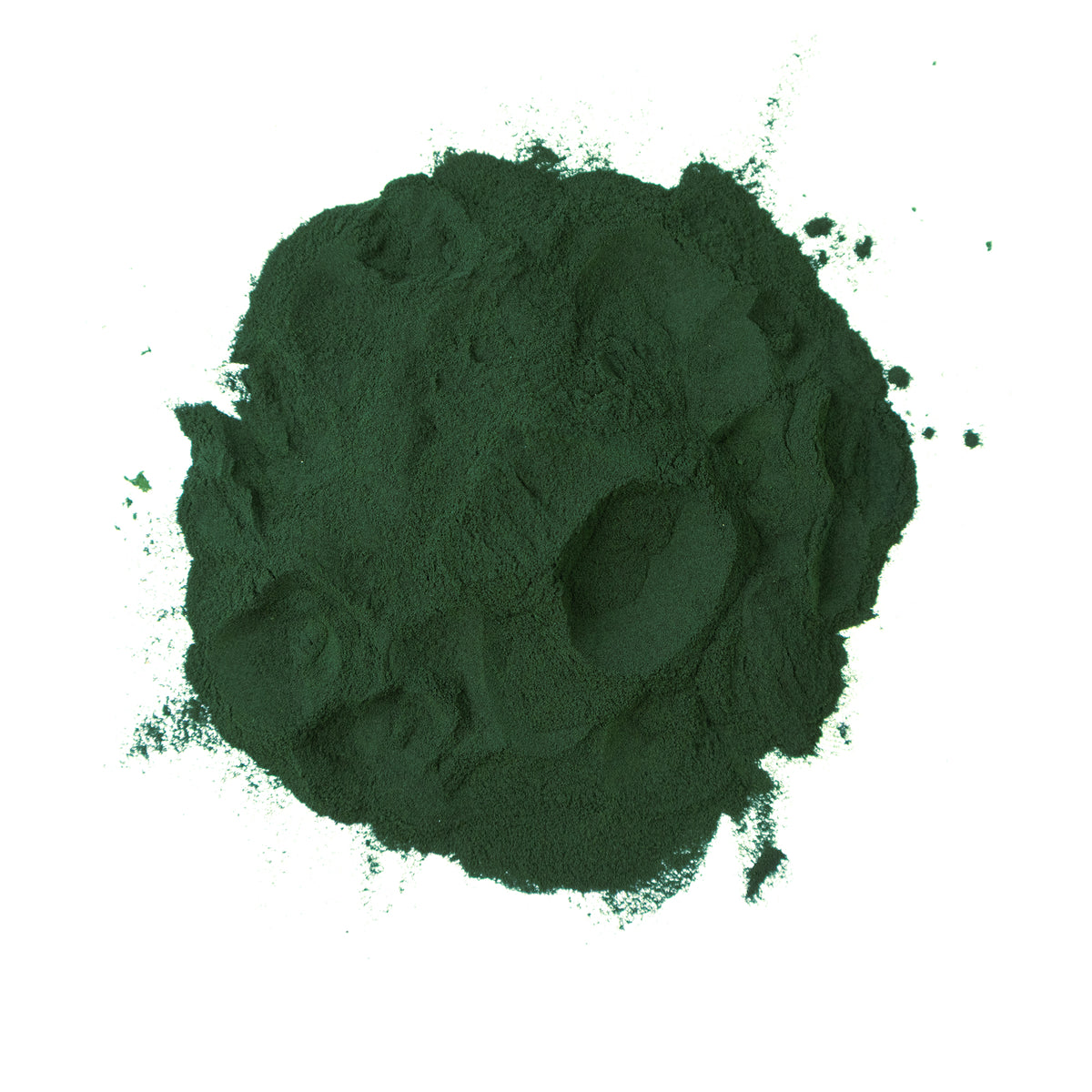
Single Herb
For daily nourishment, whole body vitality and nutritional support.
FAQ
Spirulina (Arthrospira platensis) is a blue-green microalga, strictly speaking a cyanobacterium, that grows in tropical, alkaline lakes. It is named for the spiral shape of its filaments. The Aztecs gathered it as a food in the sixteenth century, and the Kanembu people of Lake Chad still do. Today Spirulina is dried to a deep green powder and blended into smoothies, juices and food.
Spirulina is long associated with nourishment and vitality. It is 60 to 70 per cent protein by dry weight, and the Kanembu people of Chad have long eaten it as a daily food. Herbalists class it as a nutritive. A 2011 review of human trials found some positive results but called for larger studies, so we describe how it is used, not what it will do.
Spirulina is best known as a herb people reach for when they want to add a dense green food to the start of their day. Most people blend a level teaspoon into a morning smoothie or juice. Many take it daily through busy seasons, during training, or when meals are simple.
Blend 2 to 3 grams of Spirulina powder, about a level teaspoon, into a smoothie or a glass of juice, or stir it into yoghurt, a dressing or bliss balls. Banana, pineapple, citrus and mint soften its strong green flavour. Start with less and build up, and take it with food or plenty of liquid.
No. Spirulina is naturally caffeine free. It is a blue-green microalga, eaten as a food for its protein and other nutrients, not a stimulant. Most people take it in the morning, blended into a smoothie or juice, but it can be had at any time of day.
Spirulina has a long history as a daily food. In the United States it is recognised as generally safe as a food ingredient at 0.5 to 3 grams per serving, and a 2011 review described it as a safe food supplement without significant side effects. The United Nations Food and Agriculture Organization notes that blue-green algae products can be contaminated with toxin-producing species, so choose Spirulina that has been tested.
Avoid Spirulina during pregnancy and breastfeeding, and if you have phenylketonuria. It may make the immune system more active, so take care with autoimmune conditions, and it may slow blood clotting, which matters for people with bleeding disorders. Only use Spirulina that has been tested and found free of microcystins and other contaminants. If you take medication or have a health condition, check with your health professional first.
Contaminated blue-green algae can cause liver damage, stomach pain, nausea, vomiting, weakness, thirst, rapid heartbeat, shock, and death. Don't use any blue-green algae product that hasn't been tested and found free of microcystins and other contamination. Contaminated blue-green algae products contain harmful toxins that might be transferred to an infant during pregnancy or through breast milk. Stay on the safe side and avoid use. Blue-green algae might cause the immune system to become more active, and this could increase the symptoms of auto-immune diseases. Blue-green algae might slow blood clotting and increase the risk of bruising and bleeding in people with bleeding disorders. Avoid Spirulina species blue-green algae products if you have phenylketonuria.