Sunflower Profile
Sunflower
Helianthus annuus
For daily nutrition, kitchen alchemy and botanical preparations.


Cart
Your cart is empty

Join us in our love of herbs
Sunflower Profile
Helianthus annuus
For daily nutrition, kitchen alchemy and botanical preparations.
Herbal Intelligence
Sunflower (Helianthus annuus) is a tall annual of the daisy family, native to North America, where Native American peoples first domesticated it. It is now grown around the world for its seeds and their oil.
From the seeds comes Sunflower lecithin, a mild, neutral-tasting mixture of phospholipids, a kind of natural fat, that helps oil and water blend. Most people stir it into smoothies or use it in cooking and home-made herbal preparations, and it is the ingredient our customers reach for when they are working in the kitchen and want a recipe to mix smoothly.
Sunflower is a North American plant. Genetic studies support a single domestication, in eastern North America, well before Europeans arrived(1).
Native American peoples grew it and used the whole plant. The Hidatsa raised Sunflowers in gardens cleared on river bottomlands. The Hopi grew a variety with deep purple seeds and soaked them to make a dye for basketry and for decorating the body, and wore wild Sunflowers in their hair during ceremonies(2).
The plant probably went from Mexico to Spain, and from there to the rest of Europe. Russian growers developed the giant varieties that were brought back to the United States in 1893, and Sunflower became a source of vegetable oil around the world(2). Lecithin, separated from that oil, is a modern addition to a very long history.
Sunflower lecithin is obtained from the seeds of Helianthus annuus. It is a mixture of phospholipids such as phosphatidylcholine, phosphatidylethanolamine and phosphatidylinositol, with smaller sterol and glycolipid fractions. Because these lipids are drawn to both oil and water, they form micelles and keep oil dispersed in water(3, 4). Processing steps such as degumming and deoiling can change the ratio of phospholipids(3, 5). In the laboratory these phospholipids are studied for how they stabilise emulsions and for how phosphatidylcholine is handled in the body(4, 6).
Sunflower lecithin is a food ingredient more than a herb, and Western herbalism has no traditional class for it. Its work is practical. It is an emulsifier: something that helps oil and water stay mixed.
People use it in the kitchen. A spoonful goes into a smoothie, a little into baking or chocolate making, and it is added to home-made herbal butters, oils and tinctures to help the ingredients blend. Many choose it in place of soy lecithin.
Lecithins are well studied as food ingredients. In 2017 the European Food Safety Authority re-evaluated them as a food additive and found no safety concern for the general population at the levels used in food(6). The wider health claims sometimes made for lecithin are another matter, and we do not make them. We describe how it is used, not what it will do.
Clinically reviewed by Tamara Welsh, Clinical HerbalistLast reviewed
This profile is intended as a researched educational guide and does not replace the broader perspective of a herbal consultation.
★★★★★
5.0 out of 5, from 3 reviews
Great product, easy to use when making edible goods. Will purchase again.
Fantastic for breastfeeding. I was getting a blocked duct every other week and I have a history of mastitis from when I was breastfeeding my first baby. Since taking half a teaspoon morning and night, no issues at all. The blocked ducts haven’t come back in months! I’ll keep going with this for as long as I’m still breastfeeding. Lifesaver!
Hi Jess, Thank you for your review! We greatly appreciate your support and are thrilled to hear that you had a wonderful experience with the Sunflower Lechtin.
Our goal is to provide the best possible herbs & blends to our valued customers, and your feedback motivates us to continue working hard towards that goal .
If you ever have any more feedback or questions in the future, please don't hesitate to get in touch. Your feedback is invaluable to us, and we hope to continue to serve you in the future!
Really helpful, healthful friendly product- thank you.
In everyday life
Sunflower lecithin is used in three main ways.
It has a mild, neutral taste and can be used whenever a recipe calls for it.
Turn to the light.
Put a spoon of sunflower lecithin into a jar of oil and water and shake it. What would not mix now stays mixed. It comes from the seed of a flower that turns its face to follow the sun across the sky.
Blend a spoonful into a smoothie or a batch of herbal butter and notice the texture change, creamier, held together.
Eat slowly. The sunflower's whole job is to face the light and hold things together. What are the two things in your life that need something to hold them together?
Shop
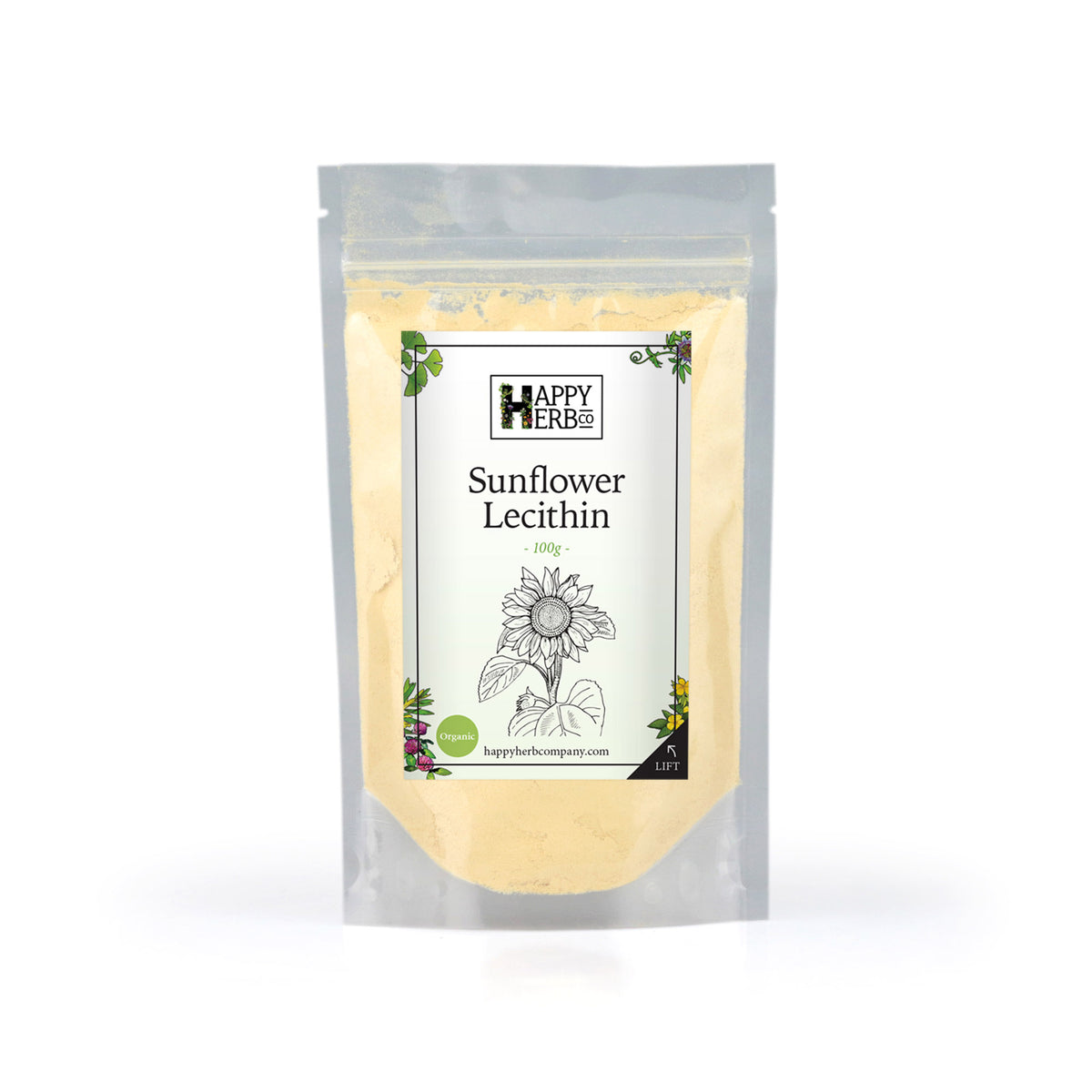
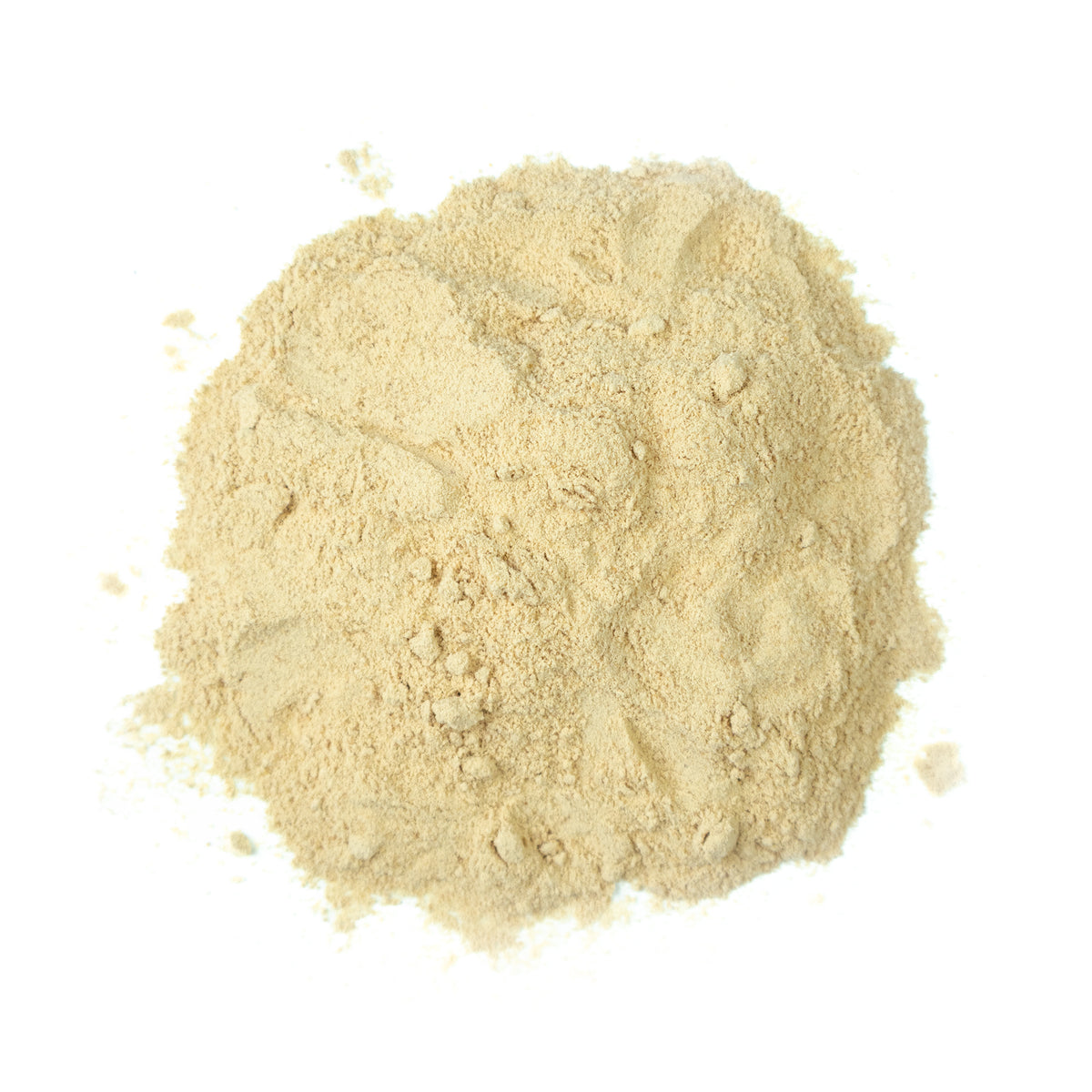
Single Herb
FAQ
Sunflower lecithin is a mixture of phospholipids, a kind of natural fat, taken from the seeds of the Sunflower (Helianthus annuus), a tall annual of the daisy family native to North America. It has a mild, neutral taste and helps oil and water blend. Today Sunflower lecithin is added to smoothies, cooking and home-made herbal preparations.
Sunflower lecithin is best known as an emulsifier: it helps oil and water stay mixed in smoothies, dressings, chocolate, baking and home-made herbal preparations. The European Food Safety Authority has found no safety concern for lecithins at the levels used in food. We do not make health claims for Sunflower lecithin: we describe how it is used, not what it will do.
Sunflower lecithin is a kitchen ingredient rather than a herb, useful when you are making herbal butters, oils or tinctures at home and want the ingredients to blend evenly. Most people add a small amount with the other ingredients at the start of the recipe, including recipes written for botanical extractor machines.
Blend a spoonful of Sunflower lecithin into a smoothie, or add a little to dressings, sauces, chocolate and baking to help oil and water stay mixed. It can also go into home-made herbal butters, oils and tinctures. The taste is mild and neutral, so it does not change the flavour of a recipe much.
No. Sunflower lecithin is naturally caffeine free. It comes from Sunflower seeds and is a mixture of phospholipids, a kind of natural fat, so it can be used at any time of day and in any recipe.
Not quite. Both are lecithins, mixtures of phospholipids that do the same job in a recipe, but they come from different plants. Soya bean oil is the main source of lecithin, and Sunflower seed is one of the alternatives. Many people choose Sunflower lecithin because they prefer to avoid soy. Ours is non-GMO.