White Sage Profile
White Sage
Salvia apiana
For space clearing, ceremonial rituals and energetic cleansing.


Cart
Your cart is empty

Join us in our love of herbs
White Sage Profile
Salvia apiana
For space clearing, ceremonial rituals and energetic cleansing.
Herbal Intelligence
White Sage (Salvia apiana) is an aromatic evergreen shrub of the mint family, native to southern California and Baja California. Its silvery leaves hold a central place in the ceremonies of the region's Native peoples, who have long burned them for purification.
The scent is strong, clean and resinous, and the tea tastes much like garden sage with a bitter edge. Most people burn White Sage, or take it as a tea or liquid extract, and it is the herb our customers reach for when they want to clear a space and mark a fresh start.
White Sage grows on the dry slopes of southern California and Baja California, and its story belongs to the Native peoples of that country(1). The Chumash used it as both a ritual and a medicinal plant(2). The Cahuilla ground its seeds into pinole, a staple meal, and Cahuilla hunters rubbed the crushed leaves on their skin before setting out(1).
The leaves were made into a tea, smoked and used in sweathouses at times of colds(1). Above all they were burned: the smoke of White Sage is part of the purification ceremonies of many Native groups(1).
That use continues, and has spread far beyond California. The US Department of Agriculture records that the Chumash and other Californian peoples are concerned about over-harvesting, and about disrespect of the plant for commercial purposes(1). It is a herb to source carefully and to burn with respect.
White Sage (Salvia apiana) leaves are rich in aromatic terpenoids, notably 1,8-cineole, camphor, alpha-pinene and beta-pinene, along with diterpenoids, triterpenoids, C23 terpenoids, phenolic acids and small amounts of flavonoids(3, 4). The proportions differ from those of other Salvia species(3, 4). In laboratory models, extracts of the leaf have shown antioxidant and antimicrobial activity(3).
In Western herbalism White Sage is classed as an aromatic astringent and a carminative, used in much the same way as garden sage. The US Department of Agriculture's plant guide records the tea being gargled for the throat, and taken to lessen sweating and the flow of breast milk(1).
Most people, though, meet White Sage as smoke. A single leaf or a small bundle is lit and carried through a room when moving house, at the end of a hard stretch, or before meditation and ceremony.
Research is at an early stage. A 2022 review notes that until recently relatively little was known about the plant's chemistry and activity, and the work it gathers is on extracts and their constituents(2). So we describe how it is used, not what it will do.
Clinically reviewed by Tamara Welsh, BSc, AdvDipWHM, ATMS, Clinical Herbalist ·
This profile is intended as a researched educational guide and does not replace the broader perspective of a herbal consultation.
In everyday life
White Sage leaf is used in four main ways.
White Sage is mostly used now and then, when the moment calls for it, not as a daily tea.
Clear the air.
Hold a silvery leaf to your nose: sharp, resinous, clean. White sage grows on the dry hills of southern California, and the peoples of that country have burnt it in ceremony for longer than there has been a California.
Light the tip of a single leaf, blow out the flame and let the smoke rise in a dish by an open window. Or steep a teaspoon for a strong, resinous tea.
Breathe slowly. Where this plant comes from, it is gathered with thanks and used with respect. What are you clearing space for?
Shop
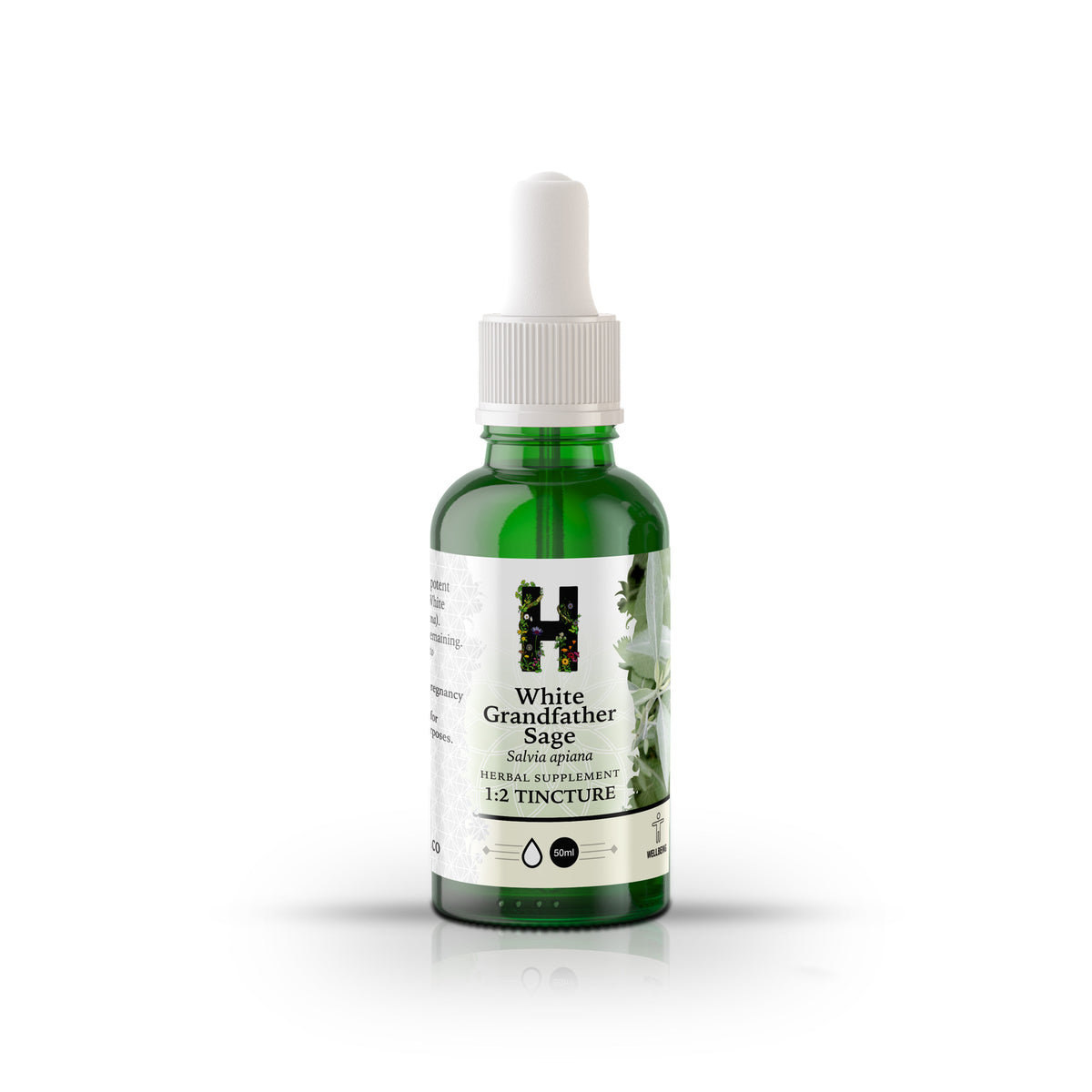
Botanical Concentrate
For space clearing, household cleaning and energetic cleansing.
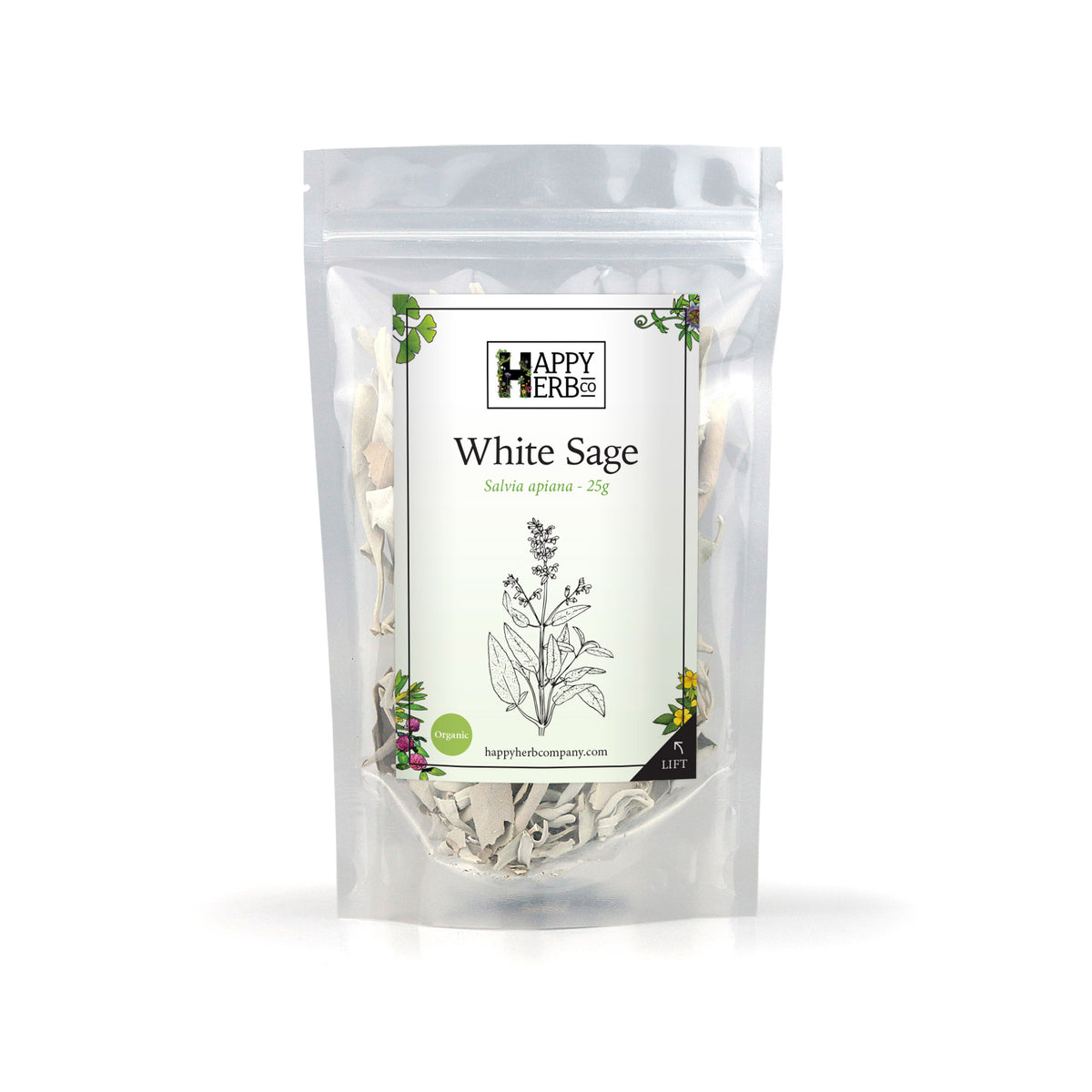

Single Herb
For space clearing, ceremonial rituals and energetic cleansing.
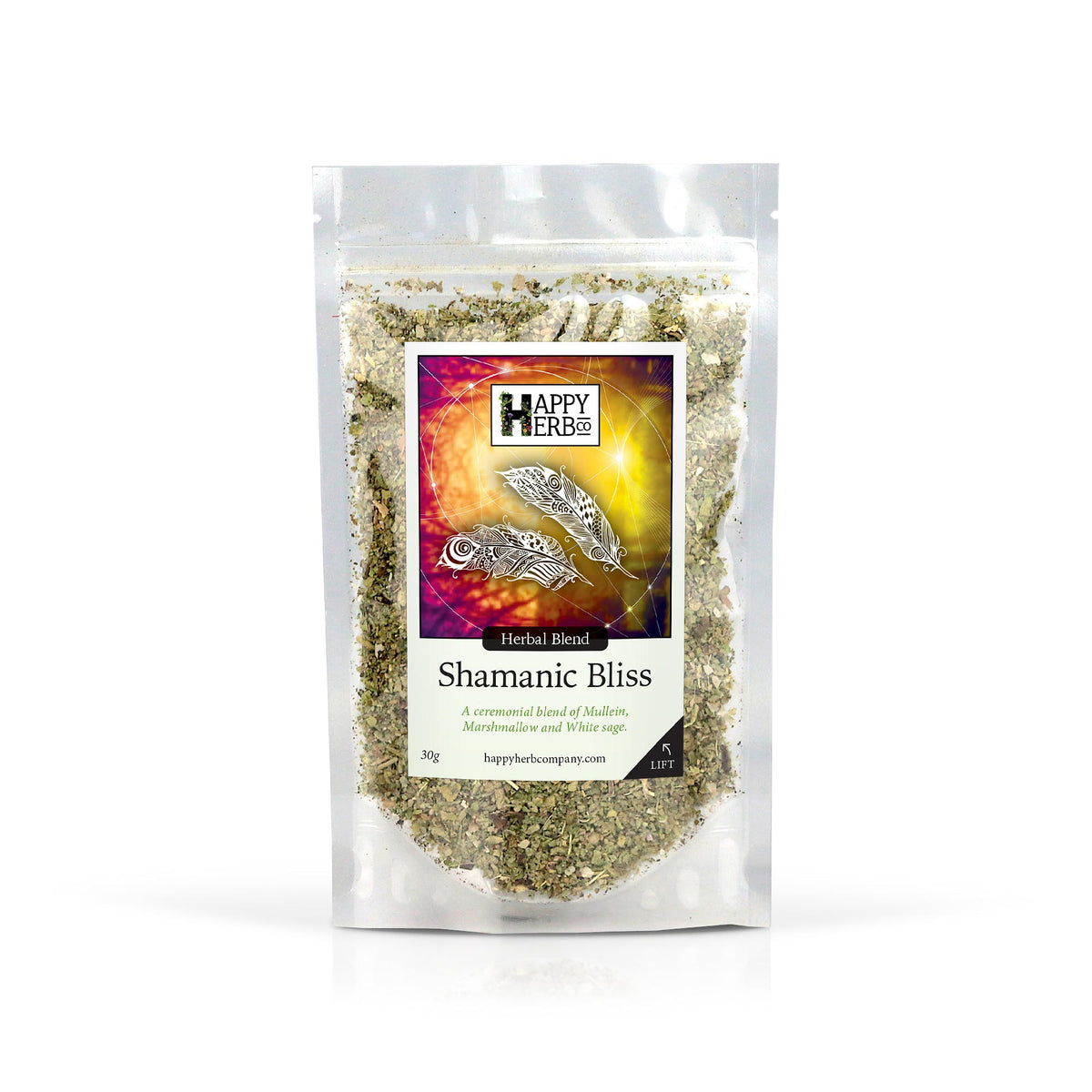
Milled Blend
White sage on a base of mullein and marshmallow, milled for ceremony.
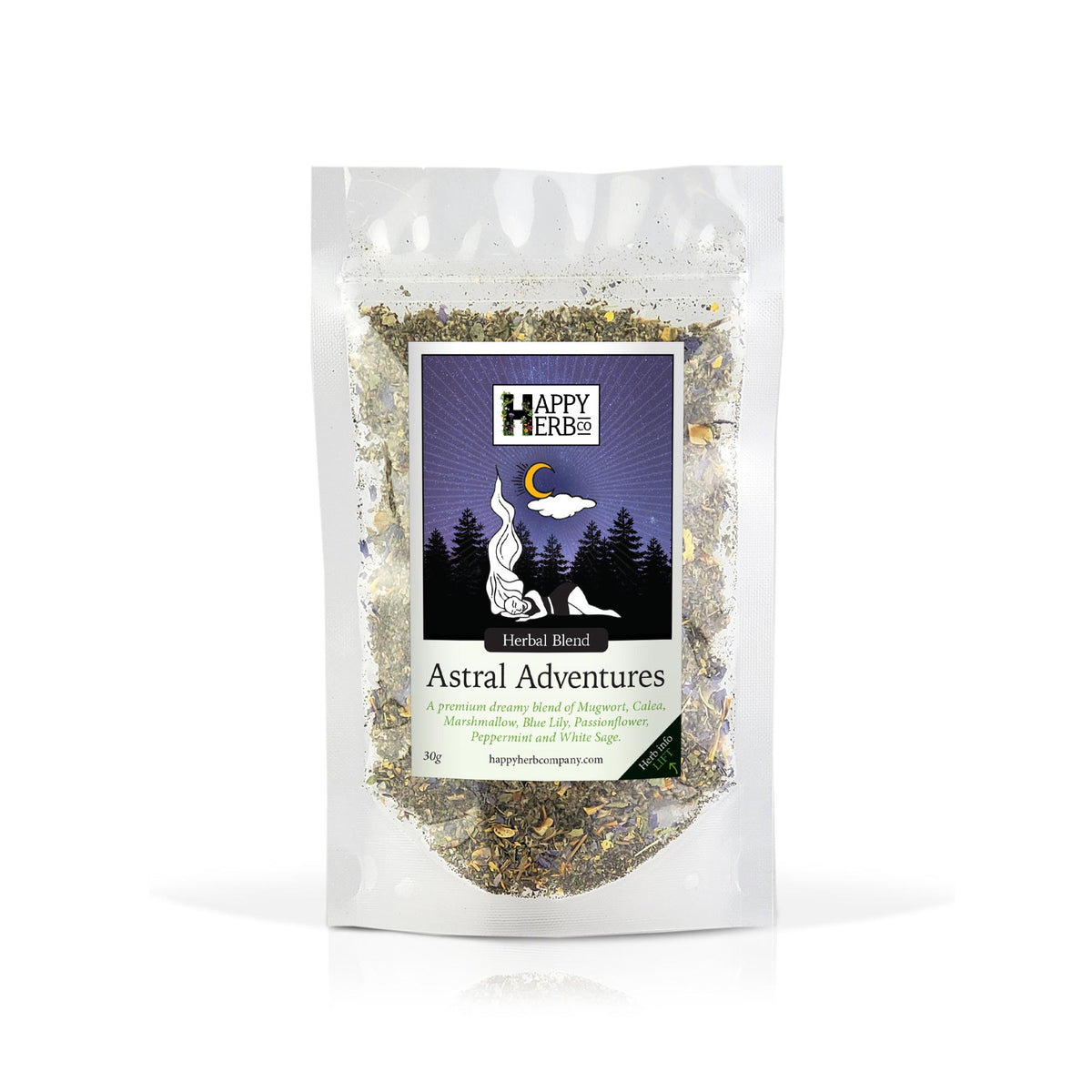

Milled Blend
An evening milled blend of mugwort, blue lily, calea and passionflower.
FAQ
White Sage (Salvia apiana) is an aromatic evergreen shrub of the mint family, native to southern California and Baja California. Its silvery leaves have long been burned in the purification ceremonies of the region's Native peoples. It is a different plant from garden sage (Salvia officinalis). Today White Sage is burned, taken as a tea or liquid extract, and used in milled herb blends.
White Sage is long associated with purification and ceremony. Among the Native peoples of California the leaves are burned in purification ceremonies and have been taken as a tea at times of colds, and Western herbalists class White Sage as an astringent. A 2022 review notes that until recently little was known about its chemistry and activity, so we describe how it is used, not what it will do.
White Sage is best known as a herb people reach for when they want to mark a fresh start. Most people burn a leaf when they move into a new home, at the end of a hard stretch, or before meditation and ceremony. Keep a window open and use a fireproof dish.
Steep 1 teaspoon of dried White Sage leaf in a cup of just-boiled water, covered, for 10 minutes, then strain. Covering the cup keeps the aroma in. The flavour is strong and resinous, much like garden sage, so some people use a little less and add honey to taste.
No. White Sage is naturally caffeine free, so the tea can be drunk at any time of day. It is the leaf of a shrub in the mint family, not a true tea. The flavour is strong and resinous, with a bitter edge.
Yes. The US Department of Agriculture records that White Sage leaves were smoked by Native peoples of California, as well as burned and made into tea. Today the dried leaf is the aromatic, resinous layer in some of our milled herb blends.
Inhaling smoke is harmful; we describe how the herb is used, we do not suggest it. Many people prefer White Sage as a tea.
White Sage is best avoided in pregnancy and when breastfeeding, as it may reduce milk production. If you take medication or have a health condition, check with your health professional first.
Avoid in pregnancy and when breastfeeding, as it may reduce milk production (unless you are trying to wean your baby).
This herb has not been studied enough for its actions to be defined. What we know of it comes from tradition and the sources below.