Yarrow Profile
Yarrow
Achillea millefolium
For circulatory support, female vitality and digestive ease.


Cart
Your cart is empty

Join us in our love of herbs
Yarrow Profile
Achillea millefolium
For circulatory support, female vitality and digestive ease.
Herbal Intelligence
Yarrow (Achillea millefolium) is a feathery-leaved perennial of the daisy family, found right across the temperate northern hemisphere, from Europe and Asia to North America. It is one of the most widely used medicinal plants in the world, and its name recalls Achilles, who in Greek legend used it on his soldiers' wounds.
The taste is bitter and aromatic. Most people take Yarrow as a tea, often with Peppermint, and it is the herb our customers reach for when they want a bitter for the digestion, or a simple cup for the days around the monthly cycle.
The genus name Achillea refers to Achilles, hero of the Trojan War, who in Greek legend used the plant to stop bleeding and tend the wounds of his soldiers(1). The species name millefolium means 'thousand-leaved', for the finely cut foliage(1).
Yarrow grows all around the northern hemisphere, and so does its use(2). In North America more than twenty Native peoples are recorded using it, among them the Blackfoot, Cherokee, Ojibwa and Zuni. The plant was mashed, made into poultices or steeped as a tea, and the Cheyenne and Flathead drank that tea at times of fever(2).
A 2011 review calls Yarrow one of the most widely used medicinal plants in the world, chiefly for wounds, the digestion, the chest and the skin(3). In Poland it is still gathered into the bouquets carried on Assumption Day(2).
Yarrow contains 0.3 to 1.4 per cent volatile oil, 3 to 4 per cent tannins, bitter sesquiterpene lactones such as achillicin, and flavonoids including apigenin and luteolin(4). The European Pharmacopoeia sets minimum levels for the essential oil and for proazulenes(4). The amounts differ a good deal from plant to plant, which makes Yarrow harder to study(4). In the laboratory the sesquiterpene lactones, proazulenes and flavonoids are studied for anti-inflammatory and antispasmodic activity and for their effects on wound healing(3, 4).
In Western herbalism Yarrow is classed as a bitter tonic and an astringent, and as a diaphoretic, a herb taken as a hot tea to encourage a sweat. Herbalists use it in bitter blends for the digestion, in teas for the monthly cycle, and with Peppermint in winter blends.
People take it between meals when the appetite is flat, in the days around a period, and as a cooled tea dabbed on small grazes.
The European Medicines Agency accepts Yarrow as a traditional herbal medicine for temporary loss of appetite, mild digestive complaints, minor cramps with periods and small superficial wounds. That rests on long use: no clinical studies have tested Yarrow taken by mouth(4), and the authors of the 2011 review argue that trials should be funded(3). So we describe how it is used, not what it will do.
This profile is intended as a researched educational guide and does not replace the broader perspective of a herbal consultation.
★★★★★
5.0 out of 5, from 3 reviews
Is smooth and tastes so simple and delicious! Works with so many other herbs I always add some to whatever I'm having. Has a nice soft, fluffy fill. I love mixing it with Oat Straw in the mornings and Chamomile at night.
Awesome blend suggestion, thanks. Laura
My 50 gram yarrow packets arrived perfectly packed, and in less than two weeks to the USA. Very happy with Happy Herb! I will be doing business again with them.
I really enjoy this with some others I mix up for my autoimmune disease. They help for my pain and help me relax in the afternoon and m hopefully they will slow my disease progression :)
In everyday life
Yarrow is used in three main ways.
Yarrow tea is usually taken two or three times a day, for a week or two at a time.
The soldier's herb.
Crush a feathery leaf and smell it, aromatic and a little like chrysanthemum. Yarrow is named for Achilles, who is said to have carried it onto the battlefield, and its stalks were cast for the I Ching.
Steep a teaspoon for anything from ten to thirty minutes, shorter for a milder cup, with peppermint and honey.
Sip slowly. One plant for the wound and the oracle both. What question are you carrying that you have not yet asked out loud?
Shop

Medicine Garden
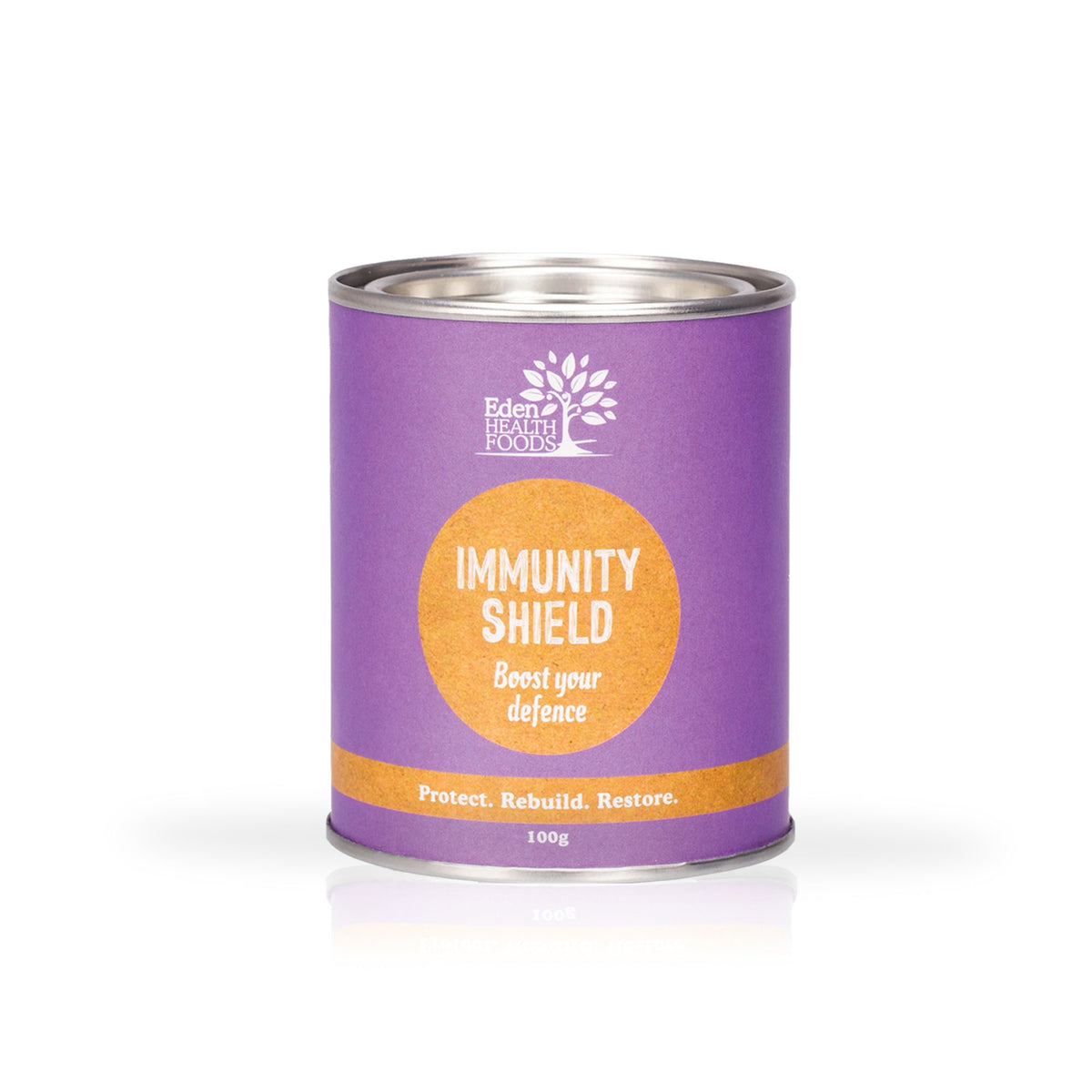
Eden Healthfoods
An echinacea-led formula with goji, rosehip, elderberry and astragalus.

Pureheart Alchemy
A mist of vanilla, chamomile, oak moss, bergamot and blue tansy.
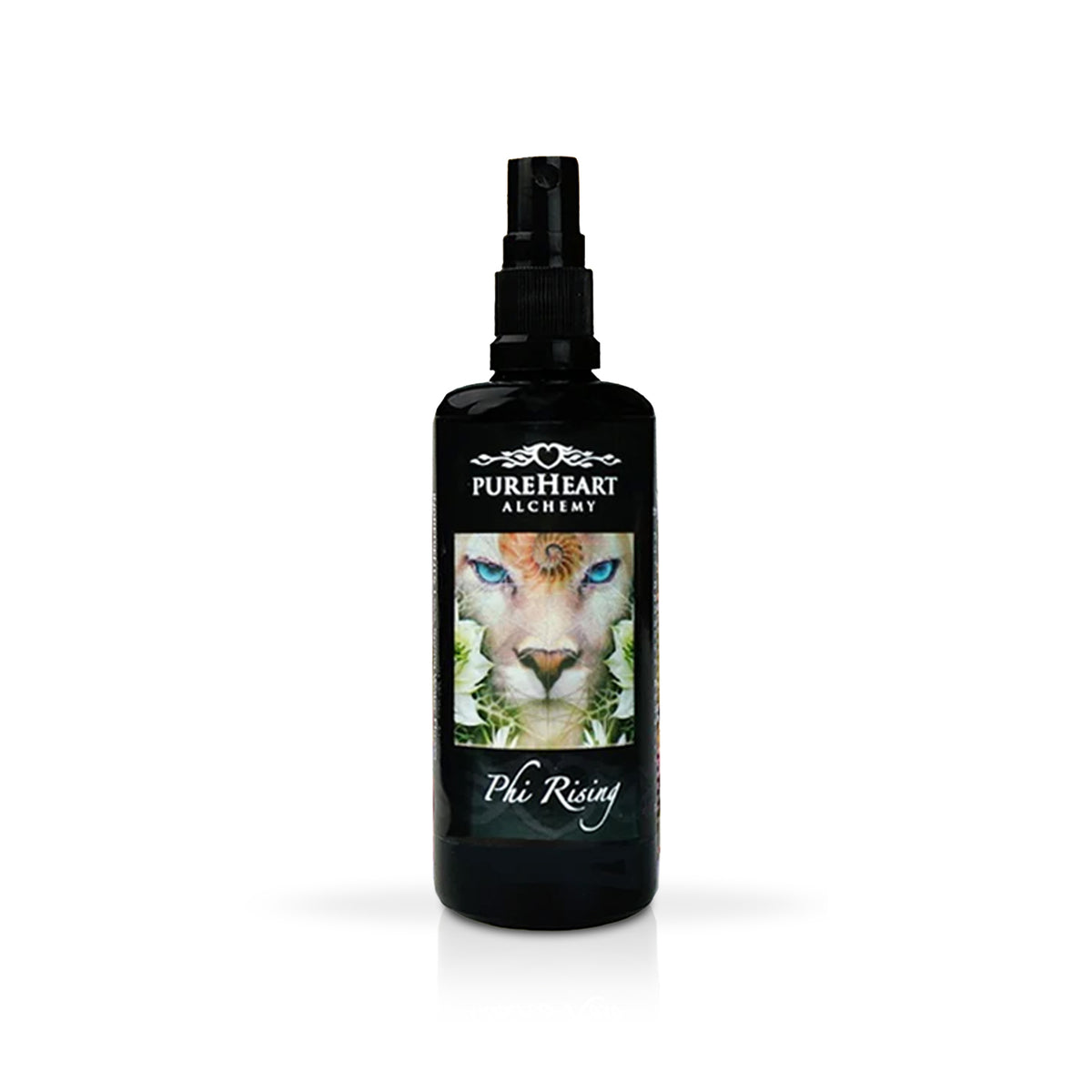
Pureheart Alchemy
FAQ
Yarrow (Achillea millefolium) is a feathery-leaved perennial of the daisy family, found across the temperate northern hemisphere. It is one of the most widely used medicinal plants in the world, and its name recalls Achilles, who in Greek legend used it on his soldiers' wounds. Today Yarrow is taken as a bitter tea or a liquid extract, and used as a wash for the skin.
Yarrow is long associated with digestion, the monthly cycle and the care of small wounds. Many cultures across the northern hemisphere have used it as a tea and on the skin, and Western herbalists class Yarrow as a bitter tonic and an astringent. The European Medicines Agency notes that no clinical studies have tested Yarrow taken by mouth, so we describe how it is used, not what it will do.
Yarrow is best known as a herb people reach for when the appetite is flat or the stomach feels bloated and tight. Most people have a cup of Yarrow tea between meals, two or three times a day, for a week or two at a time. It is often blended with Peppermint.
Steep 1 teaspoon of dried Yarrow in a cup of just-boiled water, covered, for up to 30 minutes, then strain. A shorter steep gives a milder, less bitter cup. Covering the cup keeps the aroma in. Peppermint or a little honey sit well with it.
No. Yarrow is naturally caffeine free, so the tea can be drunk at any time of day. It is the leaf and flower of a plant in the daisy family, not a true tea, and it tastes bitter and aromatic. It is often blended with other caffeine-free herbs such as Peppermint.
Yes. Yarrow's oldest reputation is as a wound herb, and the European Medicines Agency accepts a Yarrow infusion applied to the skin as a traditional preparation for small superficial wounds, on the strength of long use, not clinical trials. Make the tea, let it cool, strain it and dab it on with a clean cloth. Anything deep or slow to mend needs proper care.
Take care with Yarrow if you are allergic to plants of the daisy family (Asteraceae), and avoid it when pregnant or breastfeeding. The European Medicines Agency notes that skin reactions have been reported, and does not recommend Yarrow for children under 12. If you take medication or have a health condition, check with your health professional first.
Caution in individuals with known allergy to the Asteraceae plant family. Avoid this herb when pregnant and breastfeeding.
As described in the monographs cited under Sources.