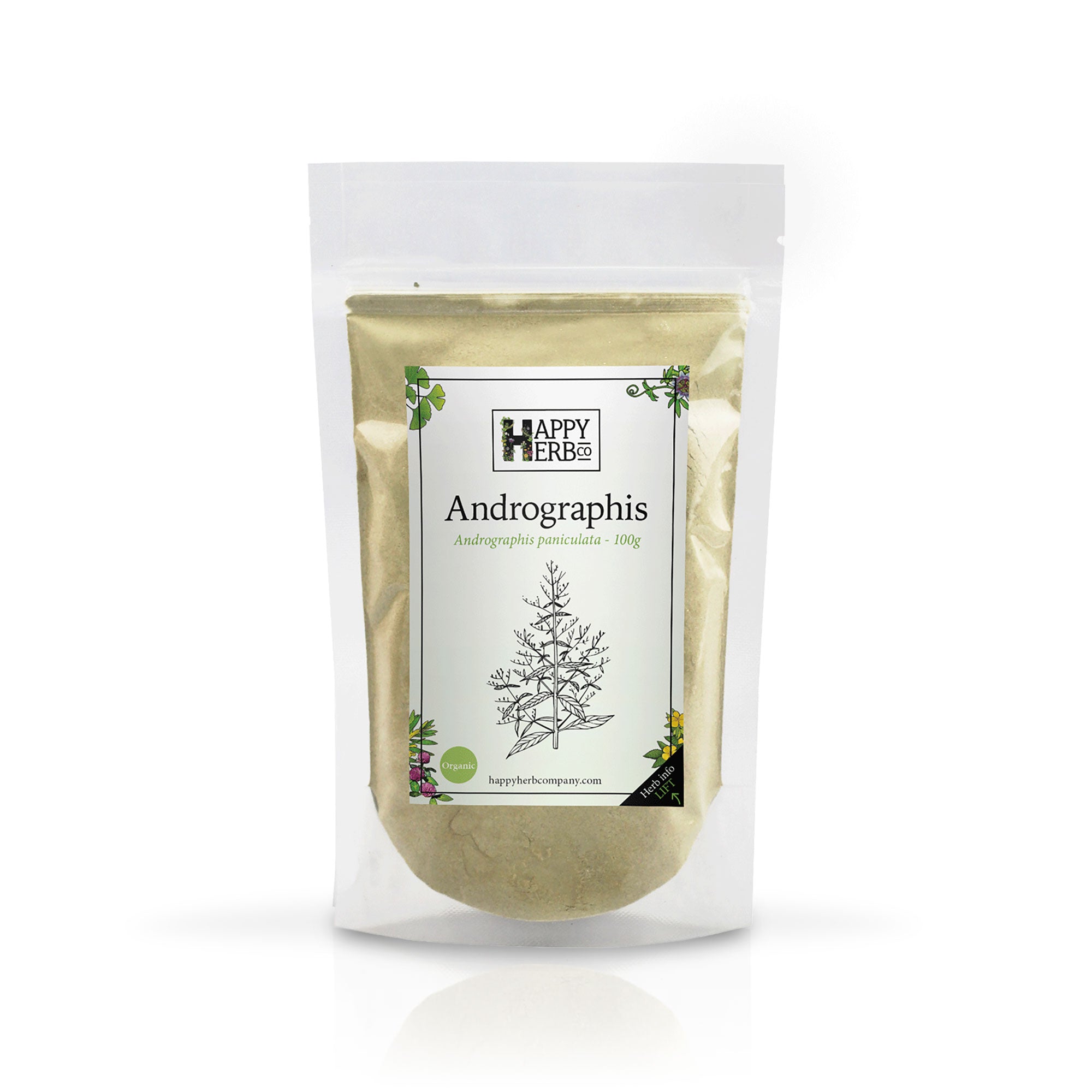
Safety notice. In September 2026 Australia's Therapeutic Goods Administration (TGA) removed Andrographis from the ingredients permitted in new listed medicines, because of the risk of severe allergic reactions, including anaphylaxis. Reactions can occur the first time Andrographis is taken, or after it has been taken before without trouble. Do not use it if you have ever reacted to it. If you notice swelling, hives, wheezing or difficulty breathing, stop and seek immediate medical attention.
Andrographis (Andrographis paniculata) is a slender annual herb native to India and Sri Lanka, known across Asia as the King of Bitters. Its leaves and stems have been part of Ayurvedic, Chinese and Thai herbal traditions for centuries.
The nickname is earned: Andrographis is one of the most intensely bitter herbs there is. Most people take it as a small, strong cup of tea, or as a liquid extract, and it is the herb our customers reach for when the seasons change and they want their defences looked after.
Cultural use
Andrographis has been used in India for centuries. In Hindi and Bengali it is kalmegh, 'dark cloud', and in Sanskrit bhunimba, 'neem of the ground', a nod to a bitterness that rivals the neem tree. It is listed in the Indian Pharmacopoeia and appears in at least 26 Ayurvedic formulas.
The same plant travelled east. In Chinese herbal medicine it is chuan xin lian, counted among the strongly bitter herbs, and in Thailand it is known as fah talai jone.
Across these traditions the pattern is much the same: a very bitter herb taken for a short stretch when the seasons turn or the body is under pressure, and in small amounts before food as a digestive bitter.
Modern herbal use
In Western herbalism Andrographis is classed as a bitter tonic and an immune herb, and it is often paired with Echinacea in seasonal formulas. Herbalists tend to use it in short bursts rather than every day.
It is also one of the more closely studied herbs. The World Health Organization has published a monograph on it, the European Medicines Agency an assessment report, and a 2017 systematic review gathered 33 clinical trials of Andrographis in seasonal respiratory complaints.
The reviewers found the results encouraging but rated many of the trials as limited in quality, and called for better ones. As always, we describe how Andrographis is used, not what it will do.
In September 2026 Australia's Therapeutic Goods Administration removed Andrographis from the ingredients permitted in new listed medicines, because of the risk of severe allergic reactions, which can occur even in people who have taken it before without trouble.
How it's used
Andrographis is taken in two main ways.
Tea. Steep 1 to 2 teaspoons of dried herb in a cup of just-boiled water, covered, for 10 minutes. It is very bitter: honey, ginger, lemon or peppermint make it easier to drink, and many people prefer a small, strong cup to a full mug.
Liquid extract. A tincture taken in a little water or juice, for those who would rather not drink the tea. Follow the directions on the label.
Andrographis is traditionally taken for short stretches, not as an everyday tea.