Red Clover Profile
Red Clover
Trifolium pratense
For menopausal support, hormonal balance and female vitality.

Cart
Your cart is empty

Join us in our love of herbs
Red Clover Profile
Trifolium pratense
For menopausal support, hormonal balance and female vitality.
Herbal Intelligence
Red Clover (Trifolium pratense) is a short-lived perennial of the pea family, native to Europe, western Asia and north-west Africa. Its rose-pink flower heads are a familiar sight in meadows, and the plant has been both a farm crop and a household herb for centuries.
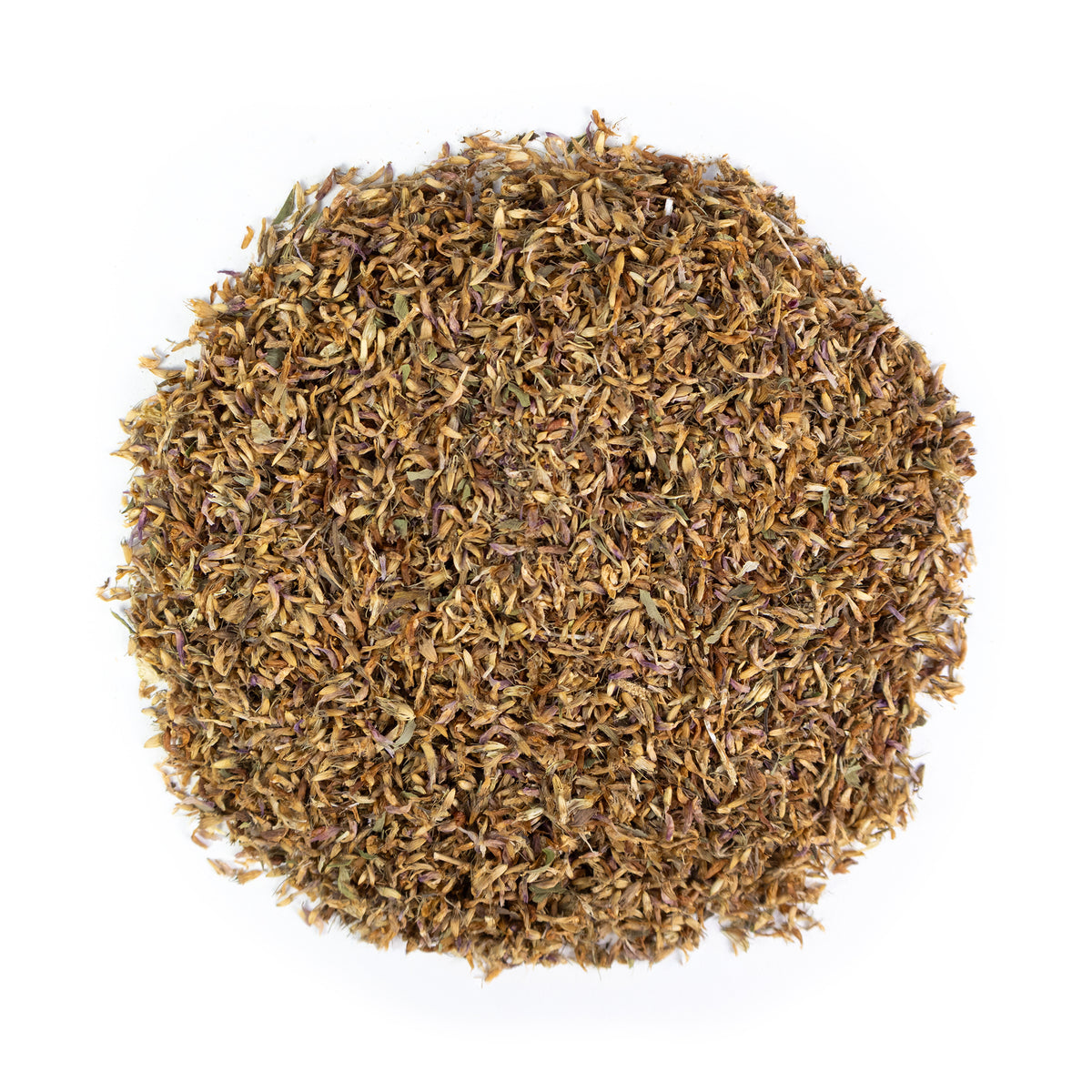
The taste is mild and sweet, a little like fresh hay. Most people take Red Clover as a tea, alone or in a blend, or as a liquid extract, and it is the herb our customers reach for in midlife, when the body is changing and they want a gentle cup to drink each day.
Red Clover is first of all a farm plant. It is the most widely grown of the true clovers, sown for hay and pasture and to improve the soil, and its flowers rely on bumblebees for pollination(2). As a sown crop it reached the British Isles from Germany in the 1600s, and English colonists carried it on to North America(2).
Wherever it grew, the flower heads were gathered for the household. Red Clover has been taken for whooping cough and used for the skin(1), and herbalists came to class it as an alterative, an expectorant and an antispasmodic(1).
Its link with women's midlife is older than the supplement trade. There is evidence that Iroquois women used Red Clover during the 'change of life'(1). Interest today centres on its isoflavones, plant compounds described as mildly oestrogenic(1).
The flowering tops of Trifolium pratense contain a range of secondary metabolites, particularly isoflavones such as biochanin A, formononetin, daidzein and genistein, along with phenolic acids and flavonoids(3, 4). In the laboratory these isoflavones are studied for their interaction with oestrogen receptors and for antioxidant properties(4, 5). How the body converts them varies from person to person with the gut microbiota(5).
In Western herbalism Red Clover is classed as an alterative, one of the slow, steady herbs taken over weeks, and as a mild expectorant. It is a common ingredient in daily blends with Nettle, and in formulas made for women in midlife.
People make it part of a routine: a pot of tea through the day, or a liquid extract in a little water, taken for weeks at a time through the menopausal years.
Most research has tested concentrated isoflavone extracts, not the flower tea. The US National Center for Complementary and Integrative Health says studies of Red Clover have not shown conclusive evidence of benefit for any health condition, and that the studies of hot flushes gave inconsistent results(6). So we describe how it is used, not what it will do.
Herbalists also class Red Clover as a lymphatic: one of the herbs reached for when the lymph feels sluggish, often with Calendula or Cleavers, and the reason it appears in old formulas for the skin. That is a traditional classification handed down in the Western materia medica; it has not been tested in trials, and we list it as a use, not a result.
Developed and reviewed by Laura Grace, Owner and Creative Director of Happy Herb Co, Herb Educator and Registered Ayurvedic Lifestyle Consultant · Clinically reviewed by Tamara Welsh, BSc, AdvDipWHM, ATMS, Clinical Herbalist
This profile is intended as a researched educational guide and does not replace the broader perspective of a herbal consultation.
★★★★★
5.0 out of 5, from 4 reviews
I love this tea. I drink it as is and I drink it multiple times a day. It’s certainly helped me (in conjunction with other teas) with my hormones and feeling great. It’s on my rotation of teas from here. Thank you x
So awesome to get feedback about the herbs helping. Thanks Laura
I've been adding Red Clover to my daily tea blends to help with my eczema and psoriasis and find it has improved skin.
I also add it to my tea blends around my moon time to assist with PMS, which has been very helpful indeed!
Another great tasting tea. I make a pot of tea with this,mixed with pau d,' arco and lasts for about 3 cups of tea. Since drinking herbal teas my skin has been great , it's fantastic in hot weather to quench my thirst and generally feel great 😁
Hi Liz,
Thank you for your review! We are glad to hear that you are enjoying the Red Clover tea -- sounds like a lovely cleansing blend!! Your honest feedback helps other customers connect to the best products for their unique needs, so we really appreciate it! Cheers :)
In health & happiness,
Happy Herb Co
I really enjoy this with some others I mix up for my autoimmune disease. They help for my pain and hopefully they will slow its progression :)
In everyday life
Red Clover flowers are used in two main ways.
Red Clover is usually taken daily for some weeks, not as a one-off cup.
Sweet meadow.
Take a dried blossom and pull a single floret out, as children do, and taste the base of it. There is a trace of nectar, which is why bees and children both love the meadow.
Steep a teaspoon or two for ten minutes with nettle or raspberry leaf. Red clover is taken daily for weeks, a gentle habit rather than an event.
Sip slowly. Clover feeds the bees and feeds the soil it grows in. What do you give back to the ground you grow in?
Shop
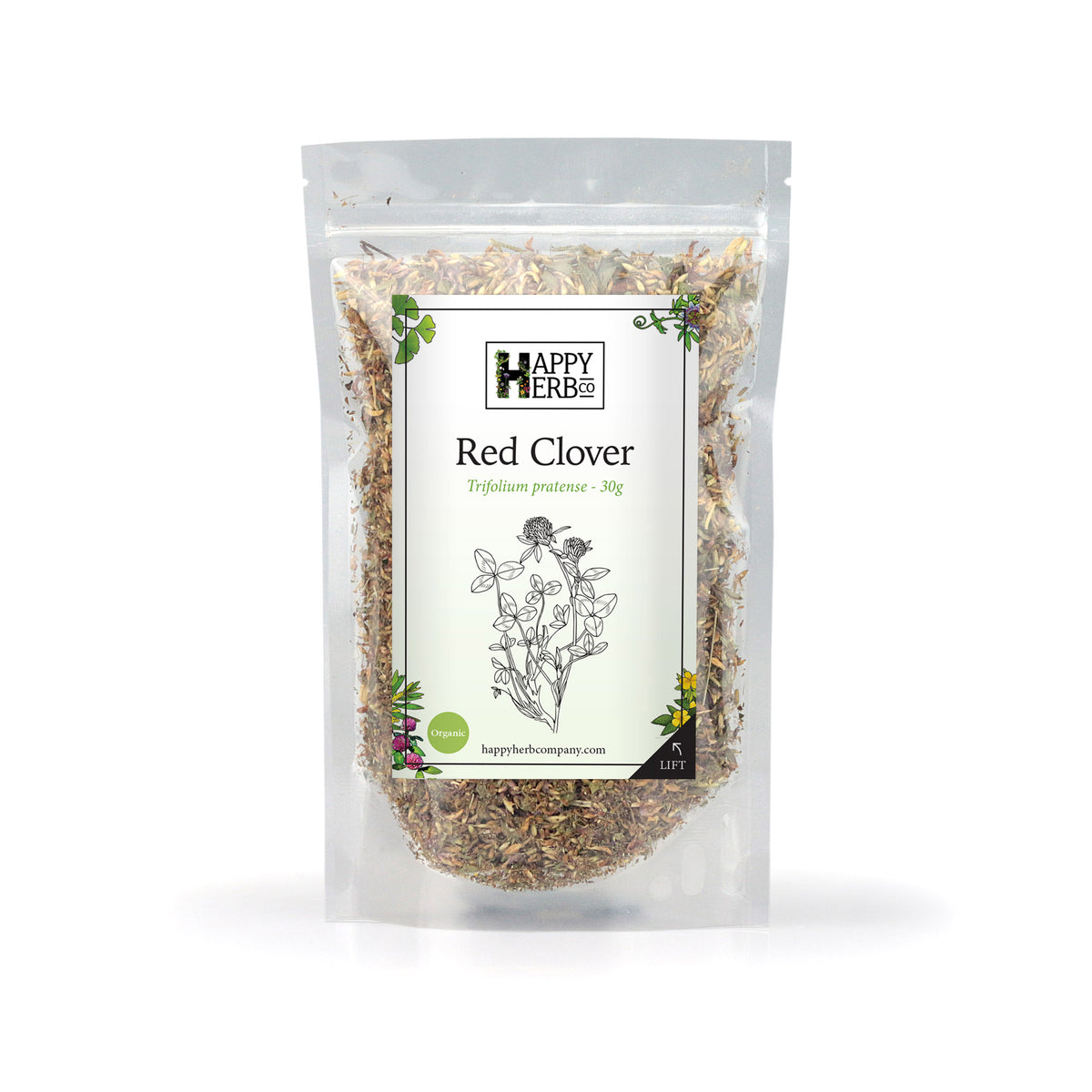
Single Herb


Luxury Tea
A clean, bright tea of nettle, red clover, ginger, dandelion and peppermint.


Luxury Tea
An earthy, gently sweet tea of nettle, horsetail, red clover and oatstraw.
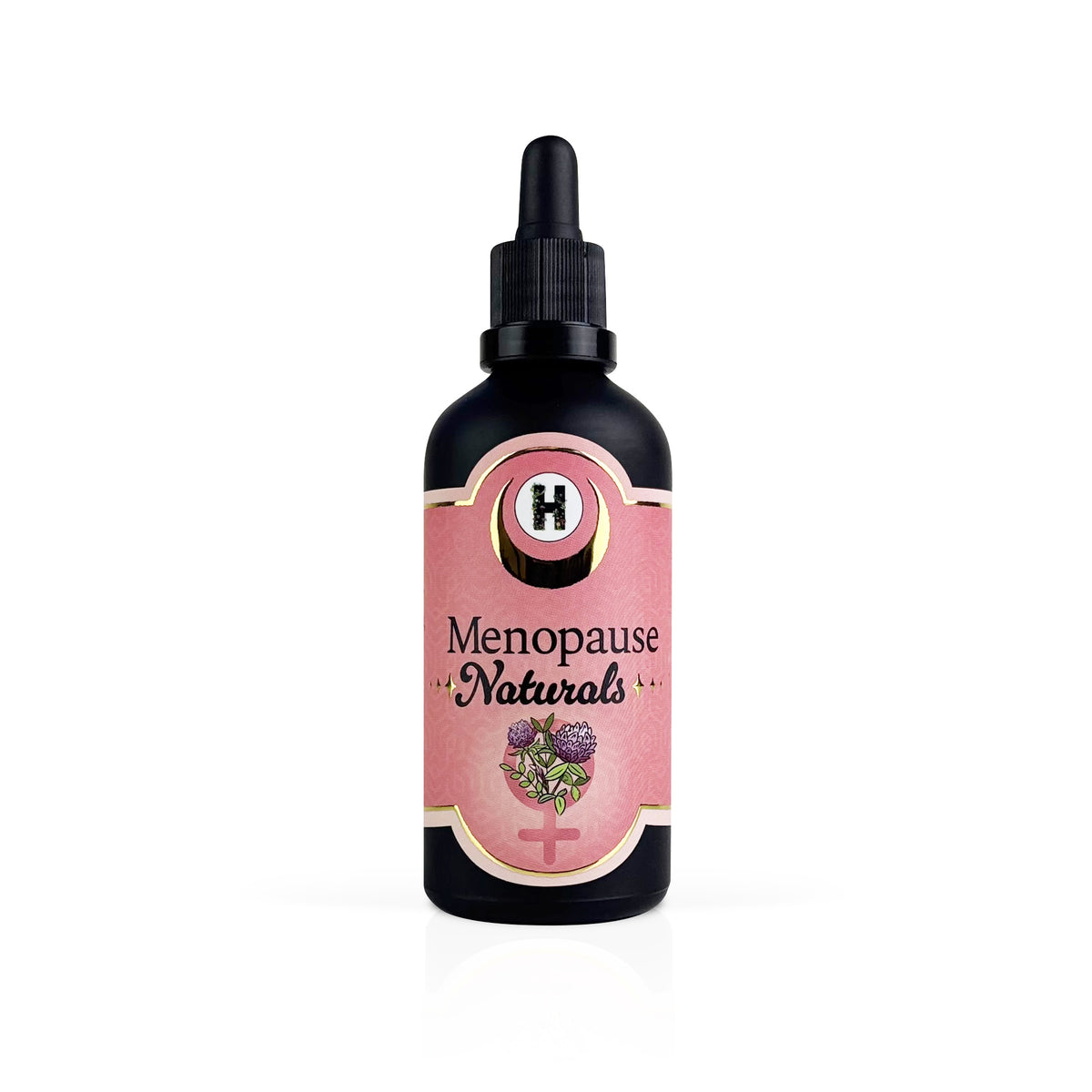
Botanical Concentrate
A 1:2 tincture of black cohosh, chaste tree berry, dong quai and red clover.
FAQ
Red Clover (Trifolium pratense) is a short-lived perennial of the pea family, native to Europe, western Asia and north-west Africa. Its rose-pink flower heads have been gathered as a household herb for centuries, and the plant is also a major farm crop. Today Red Clover is taken as a tea or a liquid extract.
Red Clover is long associated with women's midlife and with the skin. In European and North American herbal tradition the flowers are taken as a daily tea, and Western herbalists class Red Clover as an alterative and an expectorant. The US National Center for Complementary and Integrative Health says research has not shown conclusive evidence of benefit, so we describe how it is used, not what it will do.
Red Clover is best known as a herb people reach for when they want a gentle daily tea through the menopausal years. Most people drink a cup or two a day for some weeks at a time, or take a liquid extract in a little water. It is often blended with Nettle.
Steep 1 to 2 teaspoons of dried Red Clover flowers in a cup of just-boiled water, covered, for 10 minutes, then strain. The flavour is mild and sweet. Drink it plain, or blend it with Nettle, Peppermint or Raspberry Leaf.
No. Red Clover is naturally caffeine free, so the tea can be drunk at any time of day, including the evening. The flavour is mild and sweet, a little like fresh hay, which makes Red Clover an easy base for caffeine-free blends.
Red Clover does not contain oestrogen. It contains isoflavones, plant compounds that the US National Center for Complementary and Integrative Health describes as structurally similar to oestrogen. What that means in the body is not settled: studies of Red Clover have given inconsistent results. If you take tamoxifen or other hormone medication, check with your health professional first.
Avoid Red Clover during pregnancy and breastfeeding. It may have oestrogen-like activity, so talk to your health professional before use if you have a hormone-sensitive condition, such as some breast cancers. It could in theory interfere with tamoxifen. Use caution with methotrexate. If you take medication or have a health condition, check with your health professional first.
Red Clover may have oestrogen-like activity and in theory may interfere with tamoxifen. Use caution with methotrexate. Avoid during pregnancy and breastfeeding. If you have a hormone-sensitive condition, such as some breast cancers, talk to your health professional before use.
As described in the monographs cited under Sources.