Saw Palmetto Profile
Saw Palmetto
Serenoa repens
For men's vitality.


Cart
Your cart is empty

Join us in our love of herbs
Saw Palmetto Profile
Serenoa repens
For men's vitality.
Herbal Intelligence
Saw Palmetto (Serenoa repens) is a low, shrubby fan palm native to the south-eastern United States, where it forms dense thickets under the pines. Its dark, olive-sized berries were a staple food of Florida's first peoples, and they have been taken as a tonic for well over a century.
The taste is strong: oily, pungent and a little sweet. Most people take Saw Palmetto as a simmered tea, usually blended with other herbs, or as a liquid extract. It is the herb our customers reach for in mid-life and beyond, when men want a steady tonic as part of looking after themselves.
Saw Palmetto was a food long before it was a herb. Its remains are found across coastal archaeological sites in southern and central Florida, and the Tequesta, Creek, Miccosukee and Seminole gathered and ate the berries in late summer and autumn(1). An account from 1775 describes the Creek drying the fruit alongside peaches, persimmons and chestnuts(1).
The plant gave more than food. The Choctaw, Koasati, Miccosukee and Seminole split the leaf stalks for basketry, and still do, and the leaves thatched houses(1). The 'saw' of the name is the row of sharp teeth along each leaf stalk(1).
Native Americans also used the berries as a medicine. Colonists adopted the whole berry as a tonic, and the first reports of its use for urinary complaints date from the early twentieth century(2). The berries are still gathered from the pinelands of the south-east(1).
Saw Palmetto berries are rich in oil. The dried fruit holds at least 11 per cent fatty acids, among them lauric, myristic, oleic and palmitic acid(2). It also contains plant sterols, chiefly beta-sitosterol, along with flavonoids such as rutin and a group of polysaccharides(2). Most research has used oily extracts of the berry made with hexane or strong ethanol, not the tea(2).
In Western herbalism Saw Palmetto is classed as a tonic for the male reproductive and urinary systems, and as a mild diuretic. It is best known as a herb for men from mid-life on, and it is usually taken in a blend.
People build it into a daily routine: a cup of the simmered berries, or a liquid extract in a little water, taken steadily over months.
The research does not match the reputation. The US National Center for Complementary and Integrative Health says many studies have been done, and that Saw Palmetto is probably not helpful for the urinary symptoms that come with an enlarged prostate: a 2023 review of 27 studies found little or no benefit when it was taken alone(3). For other uses there is not enough evidence to say(3). So we describe how it is used, not what it will do.
Clinically reviewed by Tamara Welsh, BSc, AdvDipWHM, ATMS, Clinical Herbalist ·
This profile is intended as a researched educational guide and does not replace the broader perspective of a herbal consultation.
In everyday life
Saw Palmetto berries are used in three main ways.
Saw Palmetto is usually taken daily over a long stretch, not now and then.
The low palm.
Hold a few of the dried berries, dark and wrinkled, with a strong, almost cheesy smell. The Seminole people of Florida ate them, and early settlers noticed how well the animals that grazed on them fared.
Simmer two teaspoons gently for five minutes with ginger and honey, or take the tincture in water. Saw palmetto is a herb for months, taken steadily.
Sip slowly. The palm grows low and lives for centuries. What are you building low and slow that will outlast the showy things?
Shop

Party Pop
A peppermint lollipop with tongkat ali, cordyceps, tribulus and oatstraw.

Medicine Garden
Yoni Steam
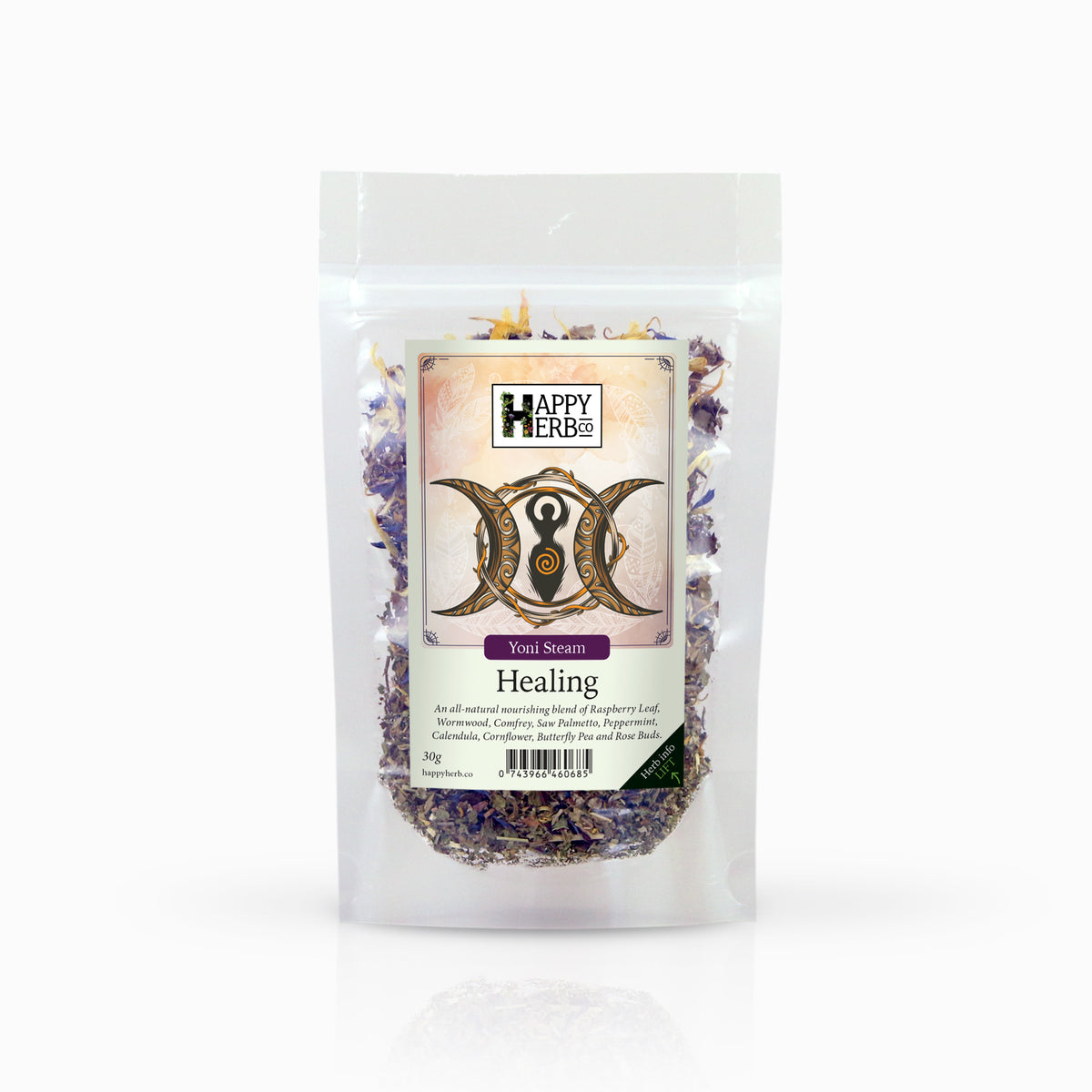
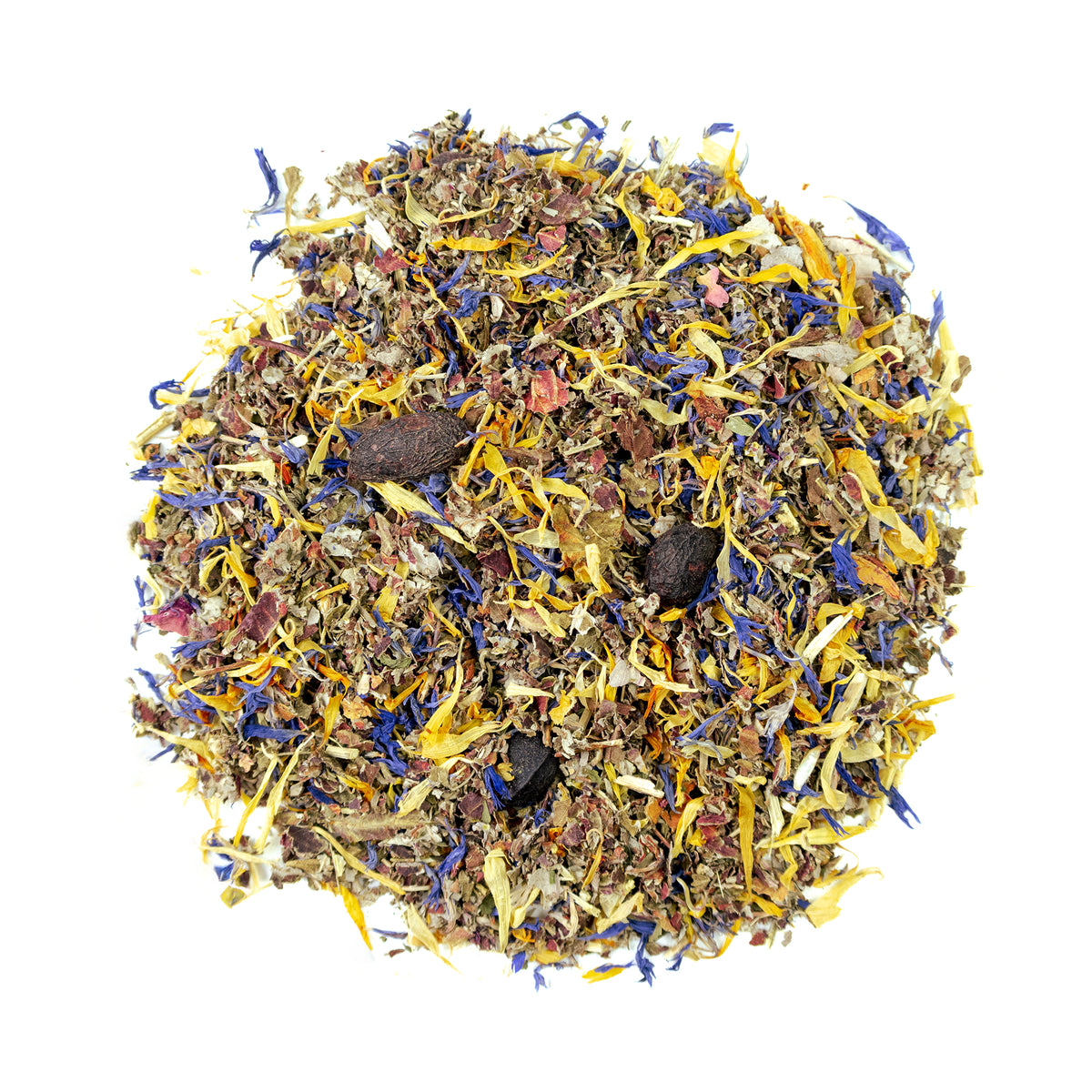
A steaming blend of cornflowers, calendula, rose petals and peppermint.

Medicine Garden
A powder of licorice, saw palmetto, tribulus, suma, mucuna and maca.
FAQ
Saw Palmetto (Serenoa repens) is a low, shrubby fan palm native to the south-eastern United States. Its dark, olive-sized berries were an important food for Florida's first peoples and were later taken up as a tonic. Today Saw Palmetto is taken as a simmered tea, usually in a blend, or as a liquid extract.
Saw Palmetto is long associated with men's vitality in mid-life and beyond. Native Americans ate the berries and used them as a medicine, and Western herbalists class Saw Palmetto as a tonic for the male reproductive and urinary systems. The US NCCIH says it is probably not helpful for the urinary symptoms of an enlarged prostate, so we describe how it is used, not what it will do.
Saw Palmetto is best known as a herb people reach for when they want a steady daily tonic in mid-life and beyond. Most people take it every day over months, as a simmered tea or a liquid extract. See your doctor first about any urinary changes, so that nothing serious is missed.
Simmer 2 teaspoons of dried Saw Palmetto berries gently in a cup of water for 5 minutes, then strain. Because they are berries, they need simmering, not steeping. The flavour is strong and oily, so many people add Ginger, Peppermint or honey, or take Saw Palmetto as part of a blend.
No. Saw Palmetto is naturally caffeine free, so the tea can be taken at any time of day. It is the berry of a small fan palm, not a true tea. Check the label of blended teas and powders, which may include other ingredients.
The US National Center for Complementary and Integrative Health describes Saw Palmetto as well tolerated, and notes that it has been used safely in research studies for up to three years. It describes side effects as mild and infrequent. It also says Saw Palmetto may be unsafe during pregnancy or while breastfeeding.
Saw Palmetto is not recommended during pregnancy or breastfeeding: the US NCCIH says it may be unsafe at these times. Use caution with blood-thinning medication such as warfarin. If you have urinary or prostate symptoms, see your doctor and get tested first, so that a diagnosis is not delayed. If you take medication or have a health condition, check with your health professional first.
Saw Palmetto berry and Epilobium, the Small Flowered Willow Herb, are the two herbs with a long tradition for men's urinary comfort in later life, and the European Medicines Agency accepts both for traditional use in that setting.
The trial evidence for Saw Palmetto is mixed, and large trials have not shown it to shrink the prostate. For Epilobium there are no clinical trials. Urinary symptoms in men over 50 need a GP's assessment first, since the causes vary. We describe how these herbs are used, not what they will do.
Not recommended during pregnancy or breastfeeding, as it may be unsafe at these times. Use caution with blood-thinning medication such as warfarin, as a theoretical interaction is possible. If you have urinary or prostate symptoms, see your doctor and get tested for prostate cancer before using Saw Palmetto, so that a diagnosis is not delayed.
As described in the monographs cited under Sources.