
Calea
Free domestic express over $150. Shipping calculated at checkout

Calea: A Ceremonial Offering for the Dreaming Mind
Known as the dream herb among the Chontal people of Mexico, Calea is one of the most revered ceremonial plants for those who work intentionally with the dream state. Often chosen by those seeking vivid, lucid and deeply meaningful dream experiences. A herb for the experienced and the devoted and to be approached with respect and intention.
- Character
- Bitter · Earthy · Intense
- Companion for
- Dream work · Ceremonial use · Inner exploration
- Pairs well with
- , ,
Mugwort is the name shared by a group of closely related, silvery-leaved herbs of the daisy family, native to Europe and Asia. In the Middle Ages Mugwort was known as the 'mother of herbs'. We offer two: the common Mugwort of Europe (Artemisia vulgaris), the herb of the old texts and the one long linked with the monthly cycle, sold as Mugwort Leaf; and Verlot's Mugwort (Artemisia verlotiorum), a close relative with a stronger aroma, which is our Premium Cut and the leaf in our milled blends.
The taste is bitter, aromatic and earthy. Most people take Mugwort as a tea or a liquid extract, and it is the herb our customers reach for late in the evening, when they want a quiet hour before sleep and are curious about their dreams.
Blue Lily (Nymphaea caerulea) is a water lily native to the still waters of the Nile and eastern Africa, also known as Blue Lotus. Its sky-blue flowers were grown, painted and revered in ancient Egypt for thousands of years.
The taste is floral and delicate, with a light bitterness. Most people enjoy Blue Lily as a tea or a liquid extract, and it is a favourite flower in milled herb blends. It is the herb our customers reach for late in the evening, when they want deep relaxation, a sense of ceremony or a night of vivid dreams.
Passionflower (Passiflora incarnata) is a climbing vine native to the south-eastern United States, with intricate purple and white flowers and an edible fruit called the maypop. Its leaves and stems have a long history as a calming herb, first among Native American peoples and later in European folk medicine.
The taste is grassy and soft, with a light floral note. Most people take Passionflower as a tea or a liquid extract, and it is the herb our customers reach for in the evening, when the mind is still busy and the body is ready for rest.
Ingredients
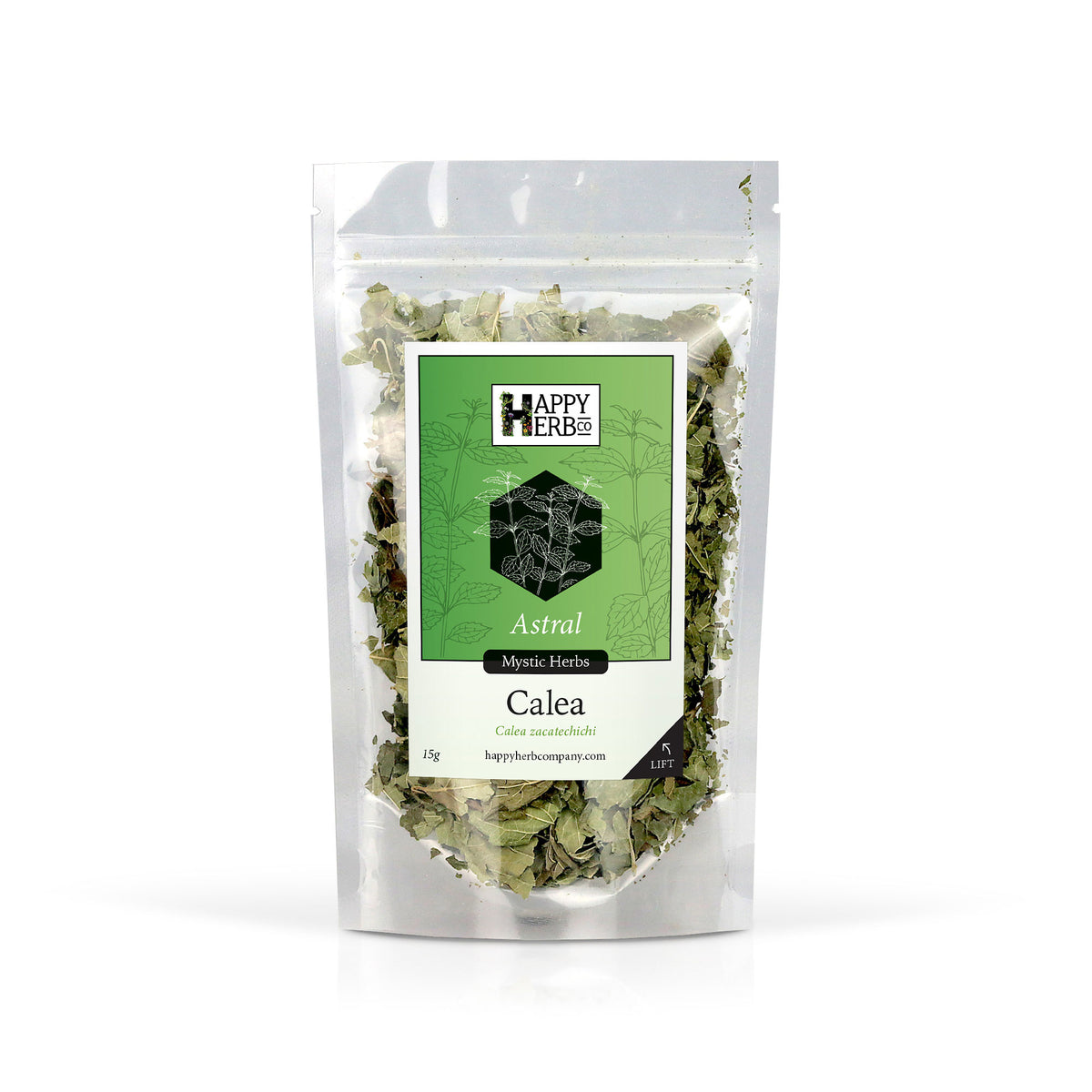
Contents: Calea (Calea zacatechichi)
Preparation: Hand-roll on its own, or blend with your favourite milled herbs.
Herbal Intelligence
Phytochemistry
Calea leaf contains sesquiterpene lactones and flavonoids as its main constituents. The sesquiterpene lactones include a group called germacranolides, and the flavonoids include acacetin; a water extract of the leaf has also been found to contain chlorogenic acid.
Living tradition
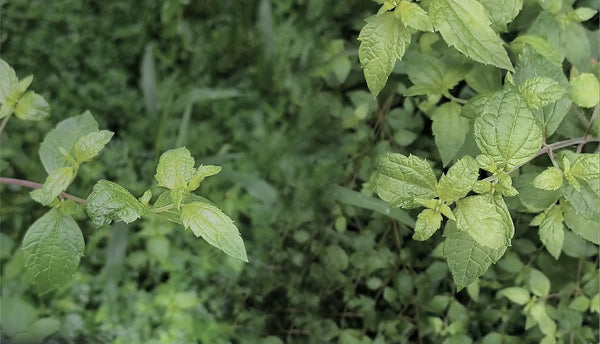
Calea grows from Mexico to Costa Rica. Its best-known use belongs to the Chontal people of Oaxaca, in southern Mexico, who take the plant to receive divinatory messages while dreaming(1, 2).
Specifications
- Range
- Mystic Herbs
- Grown In
- Wild Harvested in Mexico
- Organic Status
- Australian certified before repackaging, or wild harvested where possible.
- Packaging
- Home compostable, reusable zip lock pouch
Vegan Friendly
Precautions
- Caution, smoking is harmful
Happy Herb Co shares referenced knowledge about herbs and makes no therapeutic claims for its products. If you are pregnant, breastfeeding, taking medication or managing a health condition, please speak with a health professional before using any herb.
Choose options
found it nearly impossible to drink the tea due to the bitter taste even after lots of different sweeteners. The smoke wasn't as bad but still quite unpleasant to me, but with these factors aside i have noticed the herb induce more vivid dreams so it definitely would work. Sadly, the taste was enough to put me off and I haven't tried it since I bought it. if your someone like me who can't stand bitterness then this might not be for you but the herb definitely works for those who are able to get through the taste.
Hi Oliver, Thank you for sharing your honest feedback about the Calea dream herb -- you are so right, it is very bitter and can be unpleasant to some! Have you considered trying other dream herbs? Let us know if we can assist in anyway!
If it wasn't for the bitterness this would be a almost perfect replacement for cannabis. The effects are subtle but very enjoyable when paired with something else.
This herb is strong, perhaps the strongest of the non-extracted herbs sold here. It has a psychedelic effect and combines well with kanna kava and other herbs.
The problem I have with it is a) the already noted bitterness, and b) the effect sometimes feels bad, and it doesn't work too well when used several days in a row.
Still though, I recommend this herb. The bitterness isn't too bad when smoked, but I highly advise NOT making it into a tea.
Hi Aedan, Thank you for sharing your honest feedback and experience with calea. Yes it can be a very bitter herb so it may be preferred as a smoking herb. Good idea to not use it several days in a row and instead save it for when you are looking for the stronger/more psychoactive/lucid dreaming effect. Glad to hear you are having a predominantly pleasant experience with this potent herb though. We know other customers will be able to benefit from this review, so appreciate you taking the time to share. Cheers x
Calea Dream Herb
Hi Amber, Thank you for trying the Calea Dream Herb and sharing your review. We are sorry you weren't a fan. Please don't hesitate to reach out if there is anything we can do to help improve your experience!
I like this product crushed up and mixed in with honey eaten before bed as I found it brewed in a tea too bitter for my taste buds!
Explore