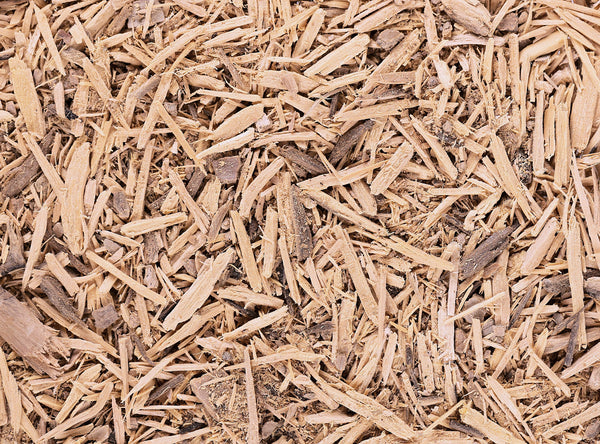
Muira Puama
Shipping calculated at checkout
Free shipping Australia wide on orders over $150
Muira Puama: A Foundational Practice for Potency and Drive
Brazil's potency wood. Often chosen by those seeking to restore vitality, desire and a more present sense of themselves, Muira Puama is a slow build tonic that deepens over time. Long celebrated in South American herbalism as one of the great herbs of physical drive and nervous system strength; a herb for those who play the long game.
- Character
- Bitter · Earthy · Rounded
- Companion for
- Desire · Physical vitality · Nervous system strength
- Pairs well with
- , ,
Catuaba (Trichilia catigua) is the bark of a Brazilian forest tree, and one of the country's best-known tonic barks for generations. In Brazil the name Catuaba is shared by the bark of several trees. Trichilia catigua is the one most widely sold and studied, and the one we supply, as a powder.
The taste is earthy, woody and bitter. Most people stir the powder into hot water as a tea with a little honey, and it is the herb our customers reach for when they want to feel vital and to make room for desire.
Damiana (Turnera diffusa) is a small, aromatic shrub native to Mexico, Central America and the Caribbean. Its dried leaf has been brewed and shared for centuries, and it has long been known as a plant of love, ease and good company.
The flavour is aromatic and a little sweet, with a soft bitterness. Most people enjoy Damiana as a tea or a liquid extract, and it is a classic leaf in milled herb blends. It is the herb our customers reach for when the day is done and it is time to unwind, connect and enjoy the moment.
Maca (Lepidium meyenii) is a low-growing root vegetable of the mustard family, native to the high Andes of Peru. It grows above 4,000 metres on the Junín plateau, where little else will, and it has been cultivated there as a staple food for around two thousand years.
The taste is malty, sweet and earthy. Most people stir the powder into a smoothie, porridge or hot milk, and it is the herb our customers reach for in the morning, when they want steady energy for a long day.
Ingredients
Contents: Muira Puama (Ptychopetalum spp.)
Preparation: 2 grams (1 teaspoon) per serve. Simmer gently for 20 mins then brew for ten mins, strain and pour.
Herbal Intelligence
Phytochemistry
Muira Puama root bark yields a volatile oil containing alpha-pinene, beta-pinene, camphene, camphor, alpha-humulene and beta-caryophyllene. The plant also contains long-chain fatty acids, which make up as much as 20 per cent of its fat-soluble fraction, along with free sterols such as beta-sitosterol, sterol esters and coumarin.
Living tradition
Muira Puama is a tree of the Amazon rainforest, known in Brazil as muirapuama, marapuama or miratã(1, 2). The name is often translated as 'potency wood'.
Specifications
- Other Names
- Ptychopetalum olacoides
- Range
- Dried Herbs & Powders
- Grown In
- Brazil
- Organic Status
- Wild harvested where possible.
- Plant Parts
- Woody parts
- Packaging
- Currently in disposable plastic, moving towards home compostable.
Vegan Friendly
Precautions
In large amounts it can cause insomnia.
More on the Muira Puama profile.
Happy Herb Co shares referenced knowledge about herbs and makes no therapeutic claims for its products. If you are pregnant, breastfeeding, taking medication or managing a health condition, please speak with a health professional before using any herb.
Choose options
Explore