

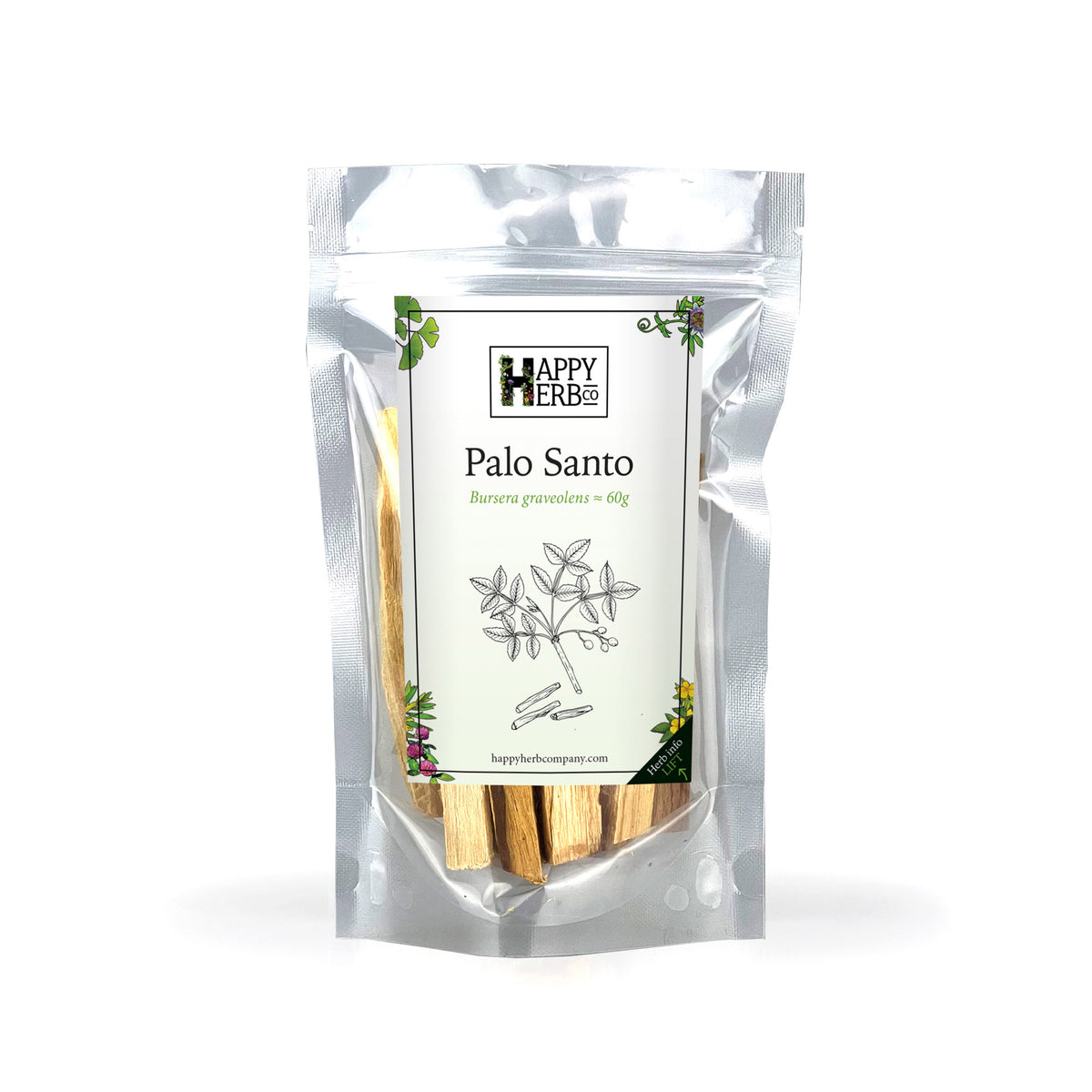

Palo Santo
Free domestic express over $150. Shipping calculated at checkout


Palo Santo: A Ceremonial Offering for Sacred Presence
The holy wood. Palo Santo is used much like a smudge stick and revered across South American traditions for its ability to cleanse space, clear energy, and invoke a deeply intuitive presence. Often preferred for its lighter, more aromatic character. A herb for those who tend to the energy of their space and enjoy a sacred, aromatic presence.
- Character
- Woody · Sweet · Citrusy
- Companion for
- Space clearing · Ceremonial rituals · Elevated presence
- Pairs well with
- , ,
Cacao (Theobroma cacao) is a small evergreen tree native to the upper Amazon. Its seeds, known as cacao beans, are the source of all chocolate, and people have been preparing them for more than five thousand years.
The taste is rich, deep and bitter, with none of the sweetness of confectionery. Most people take Cacao as a hot drink, whisked into water or milk, or blend it into smoothies and food. It is the herb our customers reach for in the morning, and when a gathering calls for a cup to share.
Tulsi (Ocimum sanctum), also called Holy Basil, is an aromatic shrub of the mint family, native to India. It has been used in Ayurveda for more than three thousand years, and it is grown in Hindu households as a sacred plant as well as a herb.
The taste is fresh and aromatic, with a clove-like spice. Most people take Tulsi as a tea or a liquid extract, and it is the herb our customers reach for on full, demanding days, when they want a clear head and a steadier footing.
White Sage (Salvia apiana) is an aromatic evergreen shrub of the mint family, native to southern California and Baja California. Its silvery leaves hold a central place in the ceremonies of the region's Native peoples, who have long burned them for purification.
The scent is strong, clean and resinous, and the tea tastes much like garden sage with a bitter edge. Most people burn White Sage, or take it as a tea or liquid extract, and it is the herb our customers reach for when they want to clear a space and mark a fresh start.
Ingredients
Palo Santo sticks
Herbal Intelligence
Phytochemistry
Essential oil distilled from the stems and fruits of Palo Santo (Bursera graveolens) is rich in terpenes. Limonene is the main compound, with alpha-terpineol, alpha-phellandrene and menthofuran among the others, and the proportions vary with the part of the tree that is distilled(7, 8).
Living tradition
Palo Santo grows in tropical dry forests from Mexico's Yucatán Peninsula south to Peru, and on the Galápagos Islands. It is a close relative of the trees that give frankincense and myrrh, and its Spanish name means holy wood.
Specifications
- Range
- Dried Herbs & Powders
- Packaging
- Home Compostable Pouch
Precautions
If you have asthma or are sensitive to smoke or fragrance, use it sparingly or not at all.
Keep the smoke and the diffuser away from pets, especially birds.
Never leave burning wood or incense unattended. Use a fireproof dish and make sure the stick is fully out.
The essential oil is not to be swallowed. Dilute it before any use on the skin, and keep it out of reach of children.
If you are pregnant or breastfeeding, check with your health professional first.
More on the Palo Santo profile.
Happy Herb Co shares referenced knowledge about herbs and makes no therapeutic claims for its products. If you are pregnant, breastfeeding, taking medication or managing a health condition, please speak with a health professional before using any herb.
Choose options
Smells beautiful and cleanses my aura and home well. Sticks last well, good value.
Burns well and smells amazing, high frequency product
So fresh and a beautiful smell, definitely will purchase more
I love this scent. Sublime.
Great product and worth the money. Thank you
Explore