Coltsfoot Profile
Coltsfoot
Tussilago farfara
For open breath, seasonal ease and milled blends.


Cart
Your cart is empty

Join us in our love of herbs
Coltsfoot Profile
Tussilago farfara
For open breath, seasonal ease and milled blends.
Herbal Intelligence
Coltsfoot (Tussilago farfara) is a low, creeping perennial of the daisy family, native to Europe and northern Asia. Its yellow flowers open in early spring, before the leaves, and its soft, woolly leaf is one of the oldest herbs in the European record, described by Greek and Roman writers.
The leaf is mild and earthy. In Australia Coltsfoot is restricted and is not for internal use, so here it is a leaf for milled herb blends, not for the teapot. It is the herb our customers reach for when they are putting a blend together and want a soft, light base.
The Latin name tells the oldest story. Tussilago comes from tussis, a cough, and ago, to drive away, while the English name describes the hoof-shaped leaf(1). Hippocrates wrote of it, and Dioscorides, Pliny and Galen each described drawing the smoke of the burning leaf into the mouth through a funnel or reed(1).
In China the flower buds, kuan dong hua, are listed in the Shennong Ben Cao Jing, the classic herbal compiled during the Han dynasty, and the plant has been eaten as a vegetable in many parts of the world(2).
In Britain, Coltsfoot was the main leaf of the old herbal blends. An 1890 account describes it rubbed together by hand with eyebright, betony, thyme and lavender, the Coltsfoot making up half the mix(1).
Coltsfoot leaves and flower buds contain flavonoids, phenolic acids, sesquiterpenes and mucilage-rich polysaccharides, together with small amounts of pyrrolizidine alkaloids(2). Laboratory studies have looked at these constituents for antioxidant activity and for their effects on the airways(3).
In Western herbalism Coltsfoot is classed as a demulcent and an expectorant: one of the soft, mucilage-rich herbs long associated with the chest and the breath. For most of its history it was taken as a tea or syrup as well as burned.
That changed when small amounts of pyrrolizidine alkaloids, compounds linked with harm to the liver, were found in the plant(2). Coltsfoot is now on the Australian list of plants that cannot be sold as food(4), which is why we do not offer it as a tea. Today its place is in milled herb blends, and for some people in habit shifting.
Research on Coltsfoot is mostly laboratory and animal work, and reviewers have called for better safety studies(2, 5), so we describe how it is used, not what it will do.
Developed and reviewed by Laura Grace, Owner and Creative Director of Happy Herb Co, Herb Educator and Registered Ayurvedic Lifestyle Consultant · Clinically reviewed by Tamara Welsh, BSc, AdvDipWHM, ATMS, Clinical Herbalist
This profile is intended as a researched educational guide and does not replace the broader perspective of a herbal consultation.
In everyday life
In Australia Coltsfoot is not for internal use, so it is used in one main way.
Coltsfoot is a leaf for occasional use, in small amounts.
Flower before leaf.
Hold a little of the dried leaf. It is soft and felted underneath, and the plant it comes from does a strange thing: it flowers in late winter on bare stalks, and the leaves arrive only after the flowers have gone.
In Australia this leaf is not for drinking, so make a different cup, mullein or peppermint, and keep the coltsfoot beside it to look at and learn from.
Sip slowly. Coltsfoot shows its colour before it shows its strength. What have you been waiting to be ready for, that might be ready now?
Shop
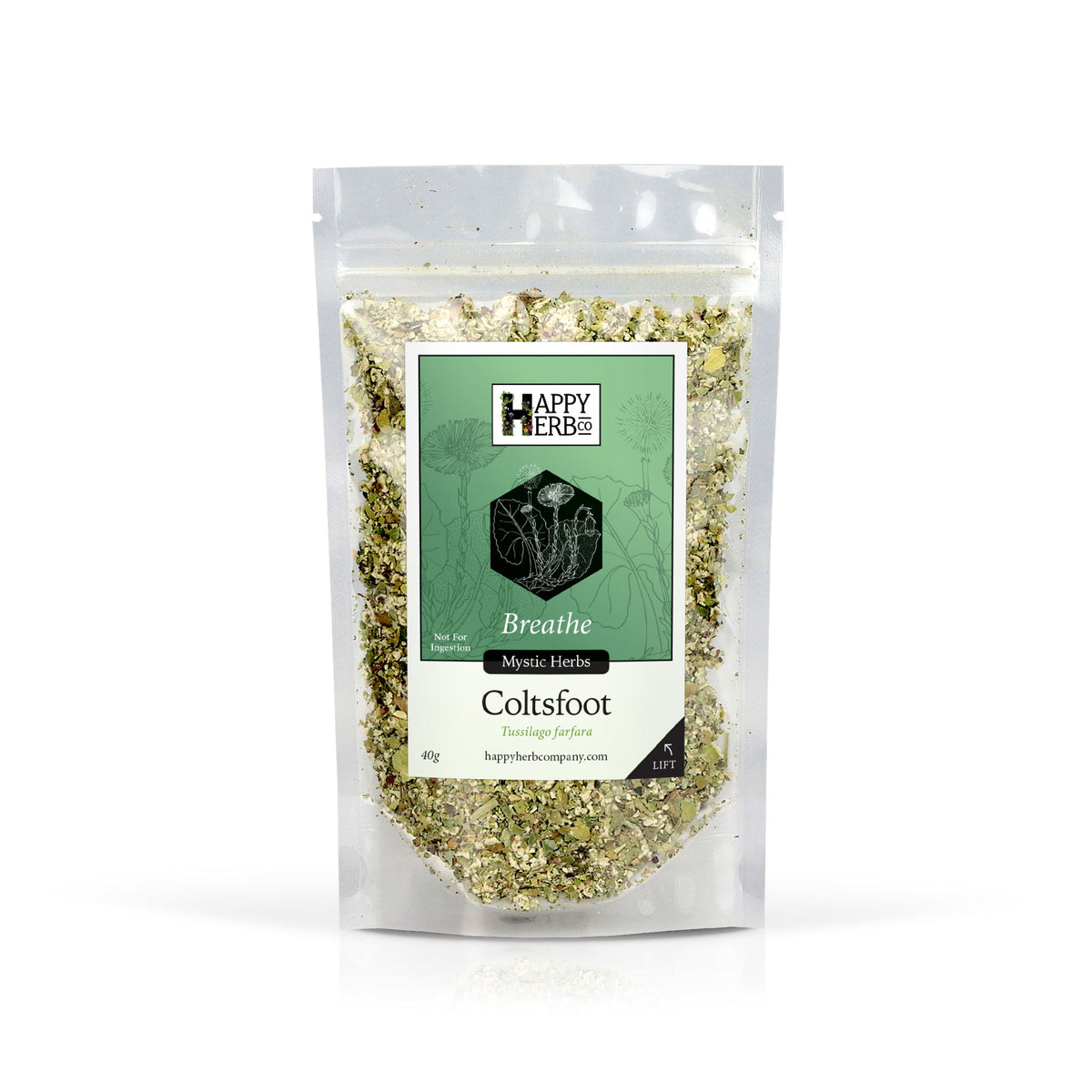

Mystic Herb
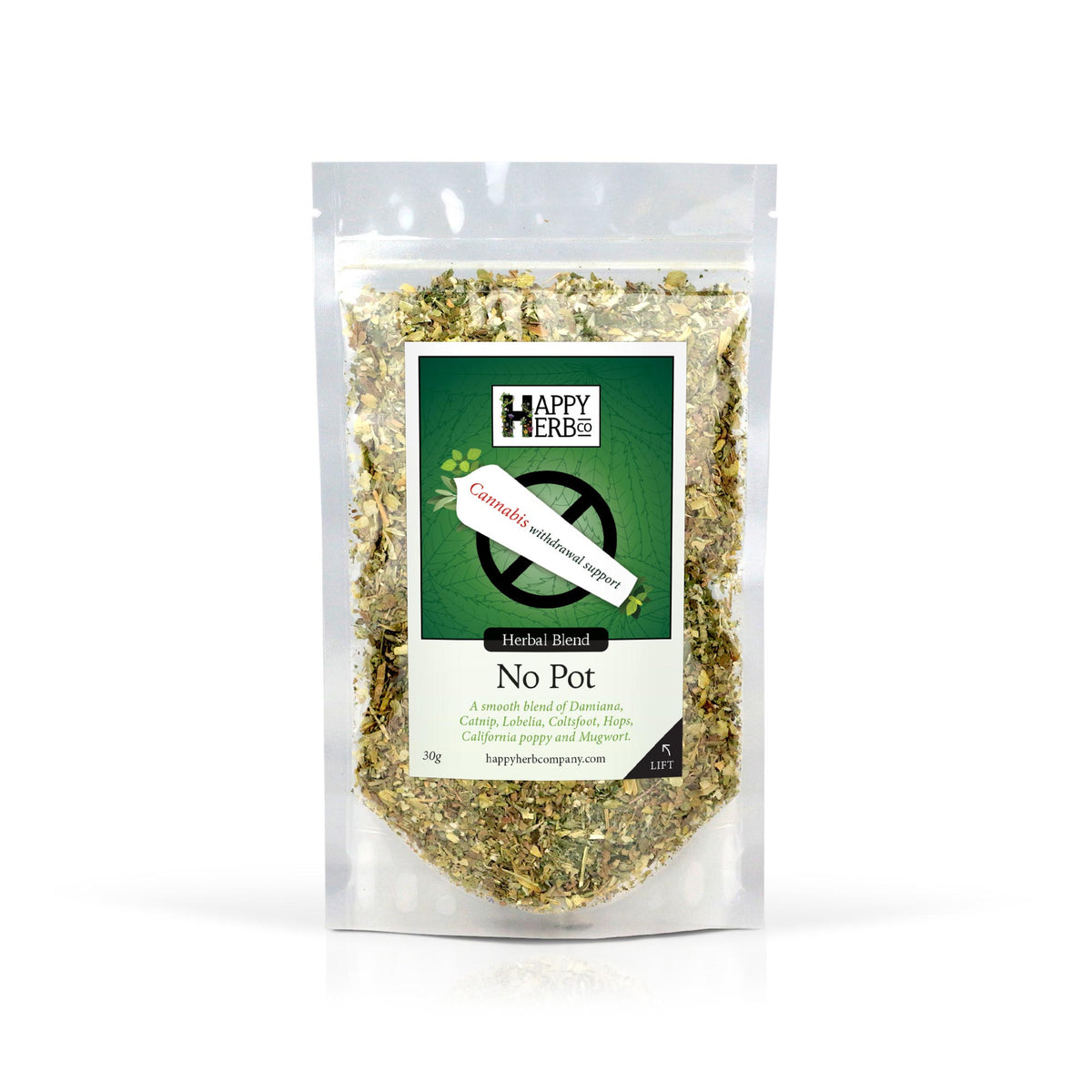

Milled Blend
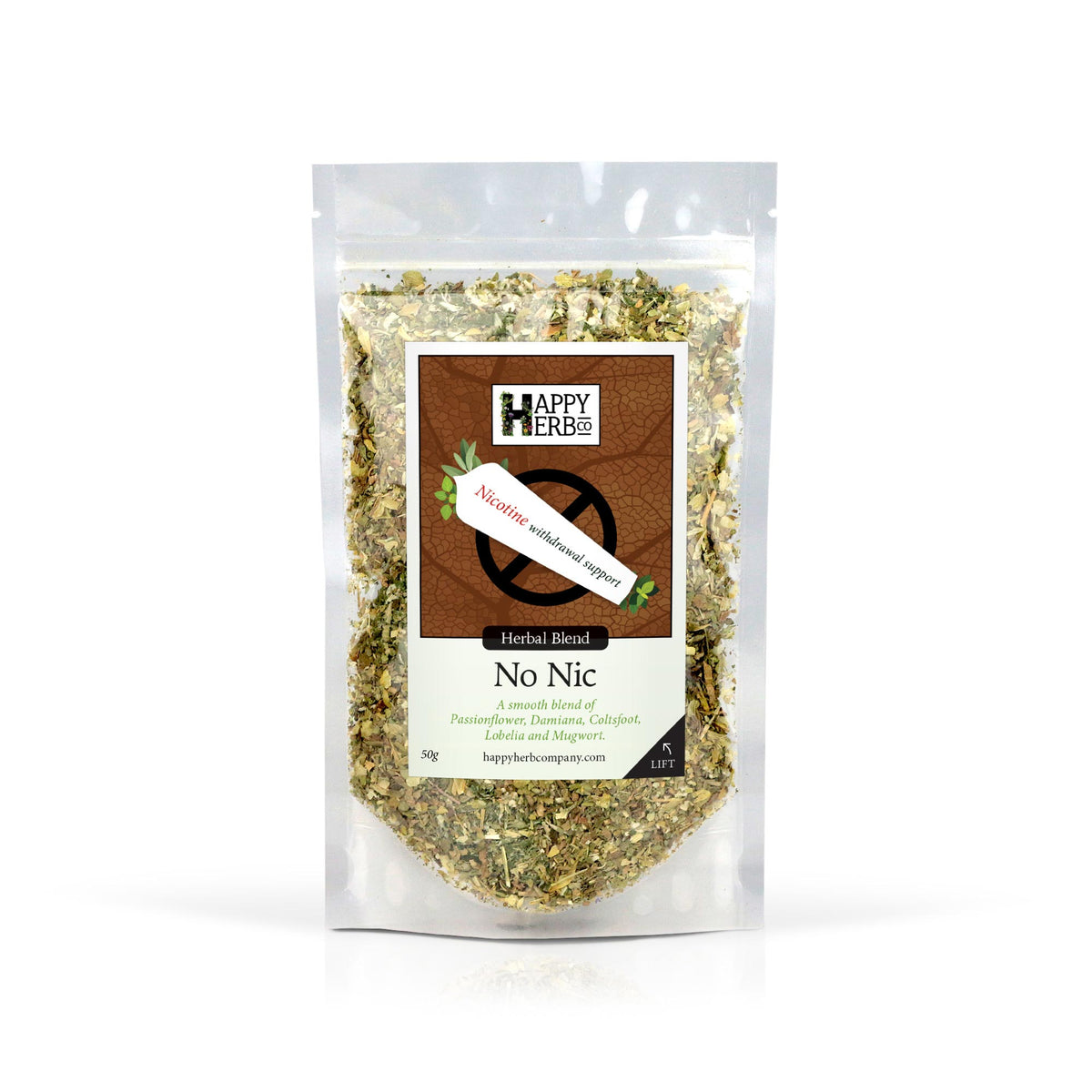
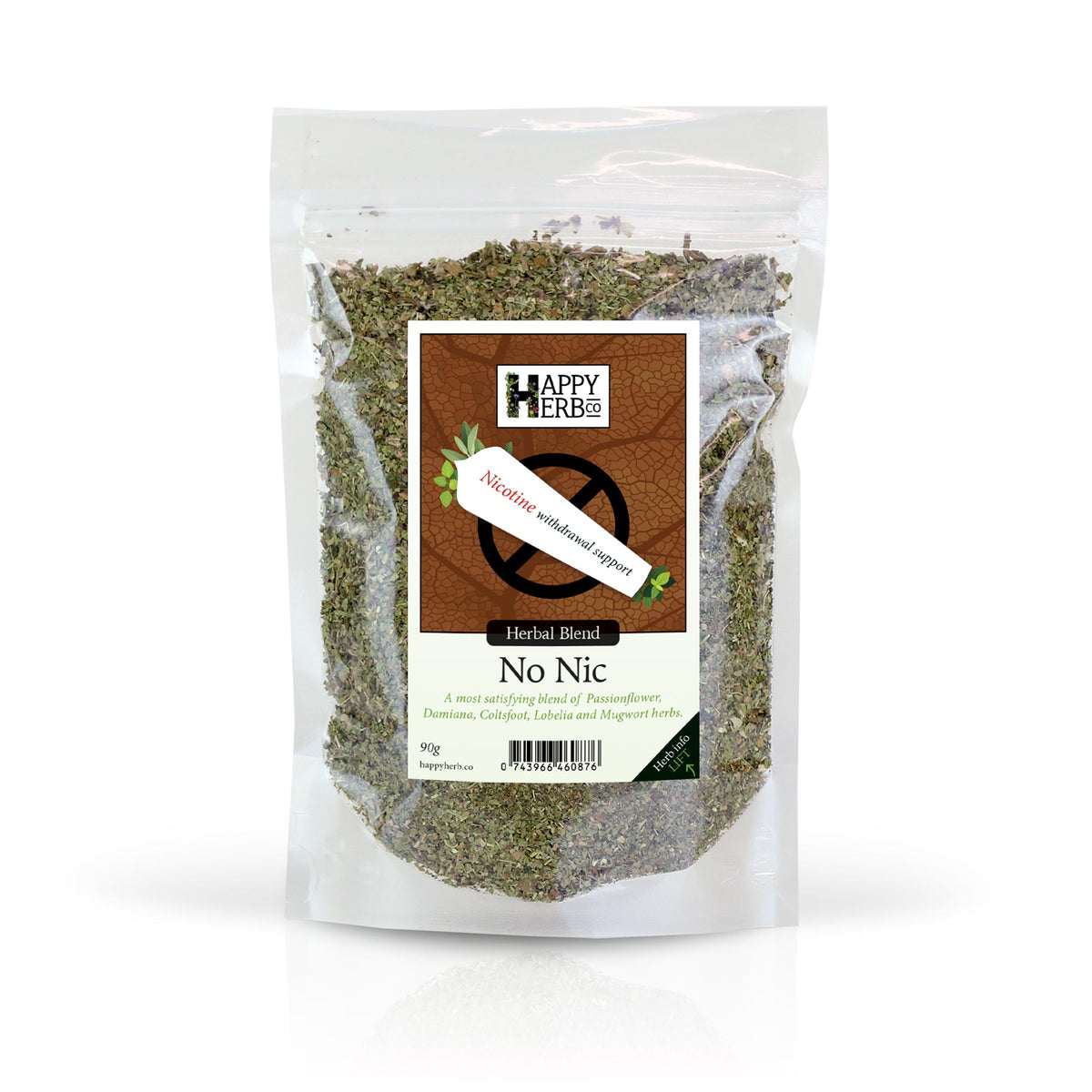
Milled Blend

Milled Blend
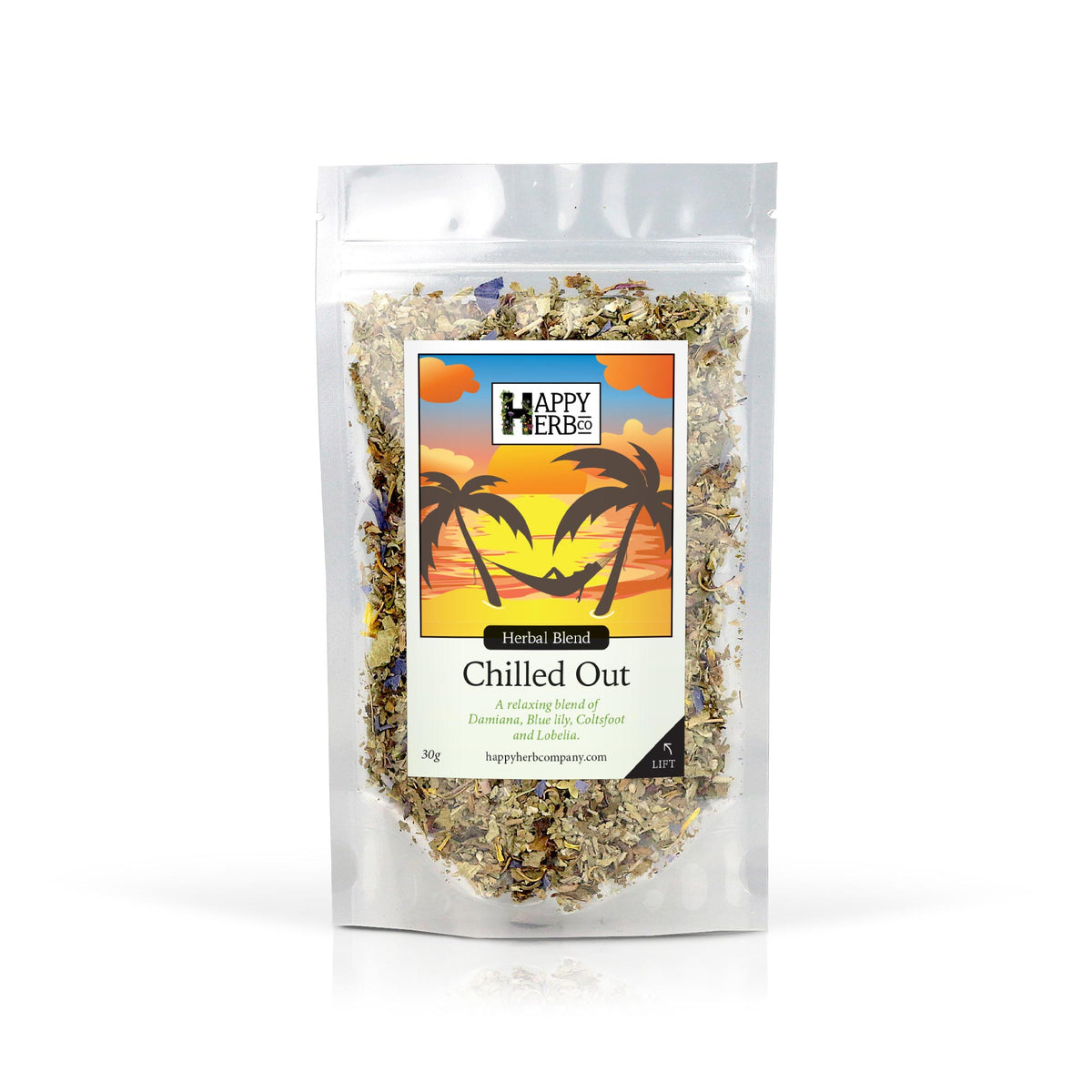
A mild, earthy milled blend of damiana, coltsfoot, passionflower and blue lily.
FAQ
Coltsfoot (Tussilago farfara) is a low perennial of the daisy family, native to Europe and northern Asia. Its yellow flowers appear in early spring, before the leaves. The soft, woolly leaf has been used since Greek and Roman times, and today it is found in milled herb blends.
Coltsfoot is long associated with the chest and the breath. Greek and Roman writers described burning the leaf, and Western herbalists class Coltsfoot as a demulcent and an expectorant. Research is mostly laboratory and animal work, and reviewers have called for better safety studies, so we describe how it is used, not what it will do. In Australia Coltsfoot is not for internal use.
Coltsfoot is best known as a herb people reach for when they want a soft, mild base leaf for a milled herb blend, which for some people is part of habit shifting. Most people use Coltsfoot now and then, in small amounts, mixed with more aromatic herbs, not every day.
Not in Australia. Coltsfoot has been eaten as a vegetable and brewed as a tea or syrup in other parts of the world, but the plant contains small amounts of pyrrolizidine alkaloids and is on the Australian list of plants that cannot be sold as food. Coltsfoot is not for internal use, and we do not sell it for tea.
No. Coltsfoot is naturally caffeine free. It is a leaf of the daisy family and is not related to tea or coffee. In Australia Coltsfoot is not for internal use, so here it is a leaf for milled herb blends, not for the teapot.
Yes. Coltsfoot has one of the longest recorded histories of any smoked herb. Greek and Roman writers described drawing its smoke through a reed, and it was the main leaf in old British herbal blends. It burns with a gentle, even smoulder. Inhaling smoke is harmful; we describe how the herb is used, we do not suggest it.
Coltsfoot is restricted in Australia and is not for internal use, so it should not be made into tea or swallowed. The plant contains small amounts of pyrrolizidine alkaloids, which published reviews link with harm to the liver, so it is not suitable during pregnancy or breastfeeding, for children, or for anyone with a liver condition. If you take medication or have a health condition, check with your health professional first.
Coltsfoot is restricted in Australia and is not for internal use. It contains small amounts of pyrrolizidine alkaloids, which are linked with harm to the liver. Not suitable during pregnancy or breastfeeding, for children, or for anyone with a liver condition.
As described in the monographs cited under Sources.