Pau D'Arco Profile
Pau D'Arco
Tabebuia impetiginosa
For seasonal wellness, cleansing support and deep vitality.


Cart
Your cart is empty

Join us in our love of herbs
Pau D'Arco Profile
Tabebuia impetiginosa
For seasonal wellness, cleansing support and deep vitality.
Herbal Intelligence
Pau D'Arco (Tabebuia impetiginosa) is a tall flowering tree native to Central and South America, known for its pink to purple trumpet-shaped blossoms. Its inner bark, also called Lapacho or Taheebo, has been simmered into a tea by the peoples of the region for centuries.
The taste is earthy, woody and a little bitter. Most people take Pau D'Arco as a simmered tea or a liquid extract, and it is the herb our customers reach for when the seasons change and they want to look after their defences.
Pau D'Arco comes from a canopy tree of the Amazon rainforest and other parts of South America(1). Its use is said to go back to the Inca civilisation, and the Callawaya people made a concentrated tea from the inner bark(2). The Portuguese name pau d'arco means 'bow tree'(2).
The plant goes by many names. In Spanish it is Lapacho, in Brazil ipê roxo, and in English it is also sold as Taheebo(2). Its use was reported in the medical literature as early as 1873, and in 1967 stories in the Brazilian news magazine O Cruzeiro brought it wide public attention as a 'wonder drug'(1). Scientific interest in the bark dates from the same decade(1).
Across South America the bark is still prepared the old way: the inner bark is simmered in water and drunk as a tea(1).
Pau D'Arco is the inner bark of Tabebuia impetiginosa. Its most distinctive compounds are naphthoquinones, including lapachol and beta-lapachone, alongside flavonoids, iridoids and phenolic acids(3). These constituents have been examined in laboratory studies for antioxidant and antimicrobial properties(4). The make-up of the bark varies with season, region and the age of the bark(5).
In Western herbalism Pau D'Arco is classed as an immune herb: a bitter, earthy bark taken for a short stretch, not as an everyday tea. It is often combined with Cat's Claw, Echinacea or Olive Leaf in seasonal formulas.
People use it at the change of season, through winter, and as part of a short cleansing routine: a cup of the simmered bark, or a liquid extract in a little water.
The research is at an early stage. Most studies have been done in the laboratory, on two compounds from the bark called lapachol and beta-lapachone, and a 2009 review judged the scientific evidence for Pau D'Arco products insufficient(1). Memorial Sloan Kettering Cancer Center notes that the effects seen in the laboratory have not been shown in people(6). So we describe how it is used, not what it will do.
Developed and reviewed by Laura Grace, Owner and Creative Director of Happy Herb Co, Herb Educator and Registered Ayurvedic Lifestyle Consultant · Clinically reviewed by Tamara Welsh, BSc, AdvDipWHM, ATMS, Clinical Herbalist
This profile is intended as a researched educational guide and does not replace the broader perspective of a herbal consultation.
In everyday life
Pau D'Arco bark is used in two main ways.
The tea is traditionally taken up to three times a day.
Bow wood.
Hold a piece of the inner bark, pinkish and fibrous. The name means bow wood, because the tree's timber is so hard the peoples of the Amazon made their bows from it, and it flowers pink when it has no leaves at all.
Simmer half a teaspoon for ten minutes with ginger or cinnamon. Drink it in the morning, up to three times a day while you are taking it.
Sip slowly. The hardest wood makes the best bow because it bends without breaking. Where are you being asked to bend?
Shop
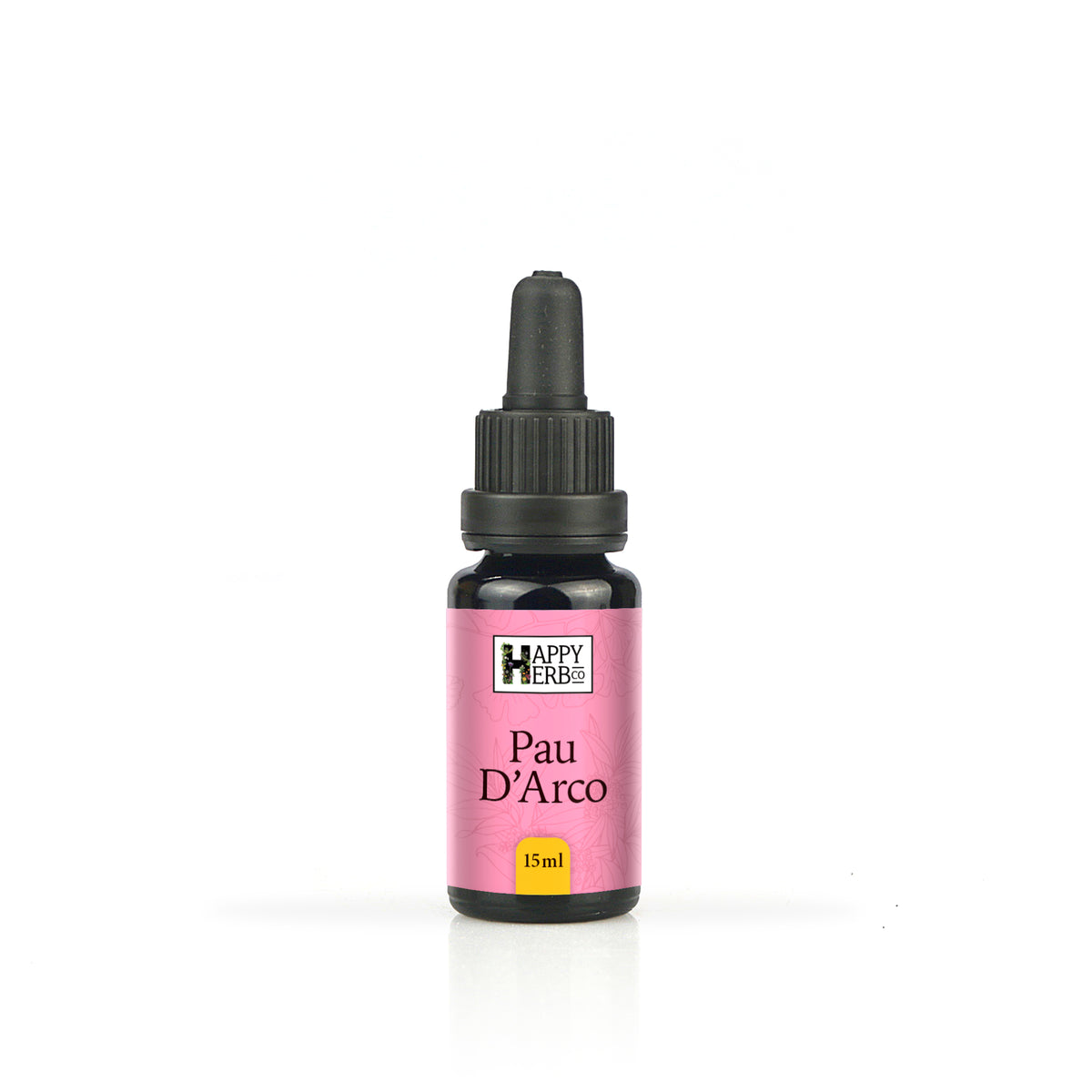
Spagyric
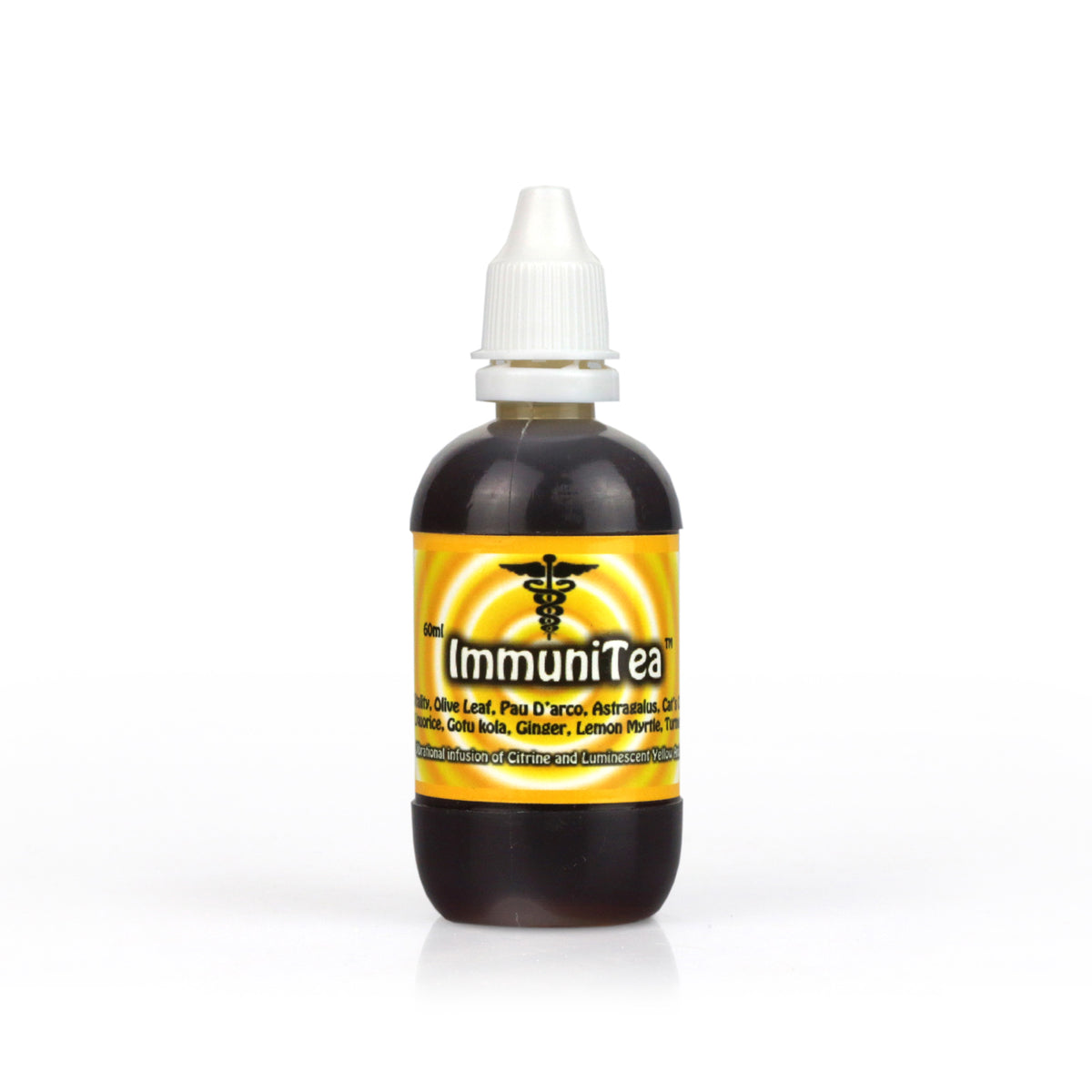
Tea Elixir
Olive leaf, pau d'arco, astragalus, cat's claw and ginger as a concentrate.
FAQ
Pau D'Arco (Tabebuia impetiginosa) is the inner bark of a tall flowering tree native to Central and South America. Also called Lapacho or Taheebo, it has been simmered into a tea by the peoples of the region for centuries. Today Pau D'Arco is taken as a tea or as a liquid extract.
Pau D'Arco is long associated with immune action and seasonal wellness. In South American tradition the inner bark is simmered into a tea, and Western herbalists class it as an immune herb. Most research has been done in the laboratory, and the effects seen there have not been shown in people, so we describe how it is used, not what it will do.
Pau D'Arco is best known as a herb people reach for when the seasons change and they want to look after their defences. Most people take it for a short stretch, as a cup of the simmered bark or a liquid extract in a little water, often alongside Echinacea or Cat's Claw.
Simmer half to 1 teaspoon of Pau D'Arco bark in a cup of water, covered, for 10 minutes, then strain. Because it is a bark, it needs simmering rather than steeping. The flavour is earthy and woody, and Ginger, cinnamon or honey can be added to taste.
No. Pau D'Arco is naturally caffeine free, so the tea can be taken at any time of day. It is the inner bark of a South American tree, not a true tea, and its earthy, woody character comes from the bark itself.
Yes. Pau D'Arco, Lapacho and Taheebo are different names for the same inner bark. Pau D'Arco is the Portuguese name, meaning 'bow tree', Lapacho is the Spanish name, and Taheebo is another common name in English. Botanists now place the tree in the genus Handroanthus, so it may also be labelled Handroanthus impetiginosus.
Pau D'Arco should not be used during pregnancy. It might slow blood clotting, so it should not be combined with anticoagulant or blood-thinning medication, and should be stopped at least two weeks before planned surgery. Memorial Sloan Kettering Cancer Center notes reports of nausea, vomiting and discoloured urine. If you take medication or have a health condition, check with your health professional first.
Yes, that is one of its oldest reputations. In South American tradition the simmered bark is taken for thrush and other fungal complaints, and Western herbalists still class Pau D'Arco as an antifungal, often pairing it with Olive Leaf or Calendula. Some people take it as a short course of tea or liquid extract; some use the cooled tea as a wash.
The laboratory agrees, up to a point. Two compounds in the bark, lapachol and beta-lapachone, have been shown to act against Candida and other fungi in the dish, in work going back to a 1994 study in Planta Medica. What is missing is a trial in people, and Memorial Sloan Kettering Cancer Center notes that effects seen in the laboratory have not been shown in the body. So we describe the use. A fungal infection that does not clear needs a health professional, and Pau D'Arco is not for use in pregnancy or alongside blood-thinning medication.
A well-known anti-fungal, Pau D'Arco contains lapachol, a compound that helps inhibit Candida growth and disrupt biofilms-protective layers that make fungal colonies harder to eliminate. It also supports the liver in clearing toxins released as Candida dies off.
Absolutely avoid use in pregnancy. Pau D'Arco might slow blood clotting and could increase the chance of bleeding during and after surgery. Stop using at least 2 weeks before a scheduled surgery, and do not combine with anticoagulant or blood-thinning medications.
This herb has not been studied enough for its actions to be defined. What we know of it comes from tradition and the sources below.