Cramp Bark
Shipping calculated at checkout
Cramp Bark: A Responsive Approach for Physical Ease
As the name suggests, Cramp Bark is chosen in moments when the body calls for ease and release. Long valued in Native American and Western herbal traditions for its particular affinity with smooth muscle tension and physical discomfort. A herb for those who want their body to move through its rhythms with grace and ease.
- Character
- Bitter · Earthy · Mild
- Companion for
- Physical ease · Muscle release · Feminine comfort
- Pairs well with
- , ,
Wild Yam (Dioscorea villosa) is a twining perennial vine native to eastern North America. Its knotted root, once known as colic root, was a staple of nineteenth-century American herbal practice, and it later became known for diosgenin, a plant compound used in the laboratory to make steroids.
The taste is mild and earthy, with a faint acrid edge. Most people simmer the root into a tea or use it in a cream, and it is the herb our customers reach for around the monthly cycle and at menopause, when they want to feel at ease in their body.
Raspberry Leaf (Rubus idaeus) is the leaf of the raspberry, a prickly cane fruit of the rose family native to Europe and northern Asia. While the berries went to the table, the leaves were dried for tea, and they have been used in Europe for centuries, above all as a women's herb.
The taste is mild, green and a little astringent, much like a light black tea. Most people take Raspberry Leaf as a tea, on its own or blended with Nettle, and it is the herb our customers reach for through the monthly cycle, when they want a plain, steady cup to come back to each day.
Ginger (Zingiber officinale) is a leafy perennial native to tropical Asia, grown for its knobbly, aromatic rhizome. It has been used as both a spice and a household herb in India and China for thousands of years, and it is now one of the most widely eaten plants in the world.
The taste is spicy and zesty, with a lemony sweetness. Most people take Ginger as a tea, fresh or dried, or as a liquid extract, and it is the herb our customers reach for after a meal, or whenever the stomach wants settling.
Ingredients
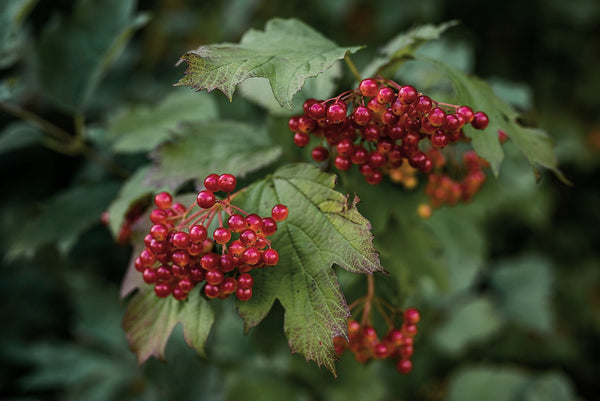
Cramp Bark (Viburnum opulus)
Herbal Intelligence
Phytochemistry
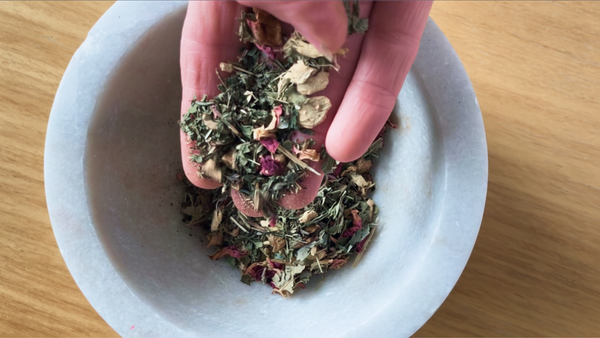
Cramp Bark is the dried inner bark of Viburnum opulus. It contains coumarins such as scopoletin, flavonoids including catechin and epicatechin, and proanthocyanidins, alongside other phenolic and bitter constituents.
Living tradition
Cramp Bark takes its plain-spoken name from North America, where a water preparation of the bark was used for menstrual and stomach cramps. According to the United States Department of Agriculture's plant guide, European, Native American and Asian peoples appear to have arrived at the same use independently.
Suggested use
2 tsp/cup, simmer covered 15 minutes. Drink 3 times daily.
Specifications
- Other Names
- Viburnum opulus, Guelder rose
- Range
- Dried Herbs & Powders
- Grown In
- USA
- Organic Status
- Wildcrafted
- Plant Parts
- Bark
- Packaging
- Home compostable, reusable zip lock pouch
Precautions
More on the Cramp Bark profile.
Happy Herb Co shares referenced knowledge about herbs and makes no therapeutic claims for its products. If you are pregnant, breastfeeding, taking medication or managing a health condition, please speak with a health professional before using any herb.
Choose options
Quality of Valarian root is excellent, very potent calming drops for our anxious puppy
Explore