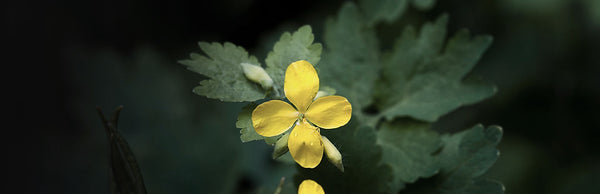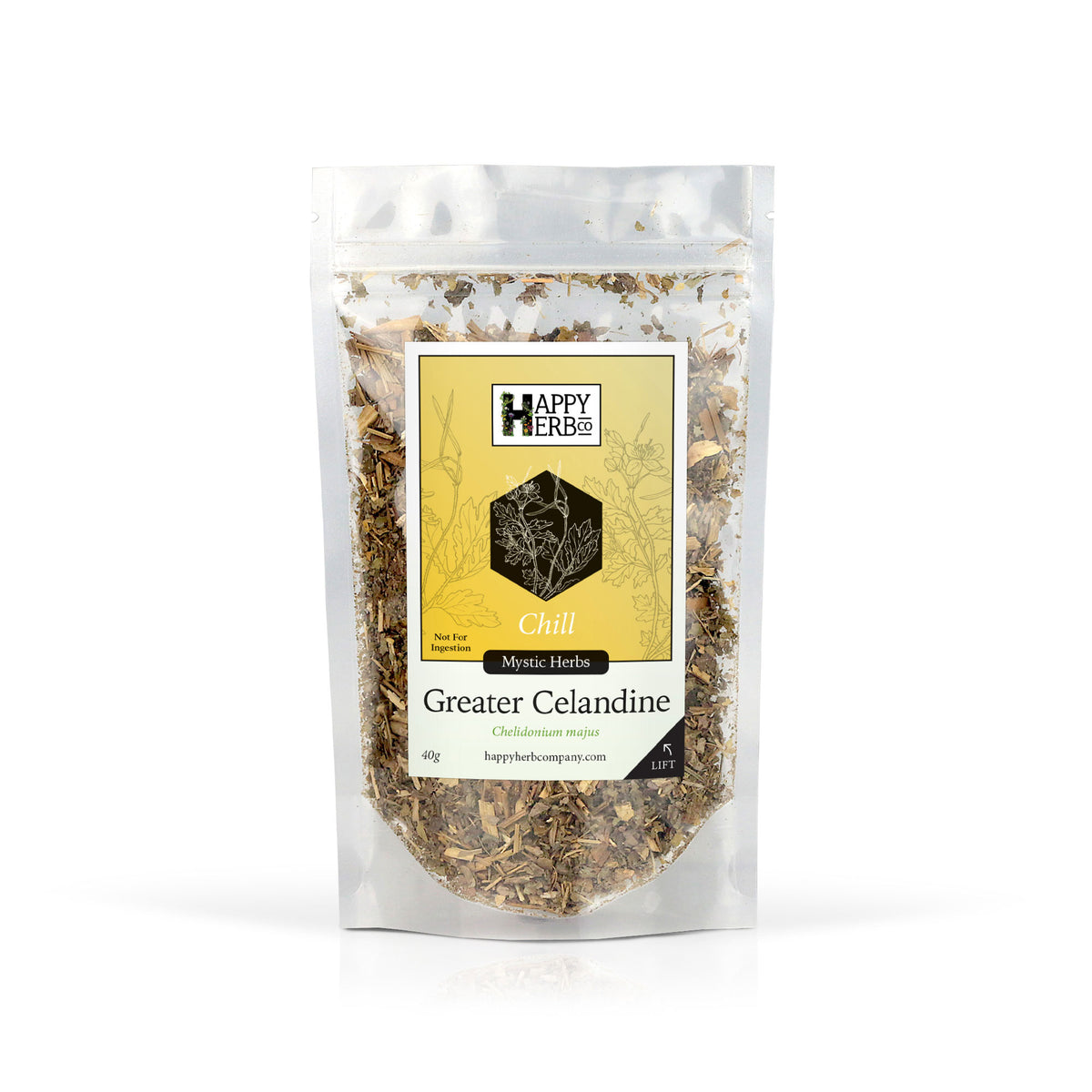
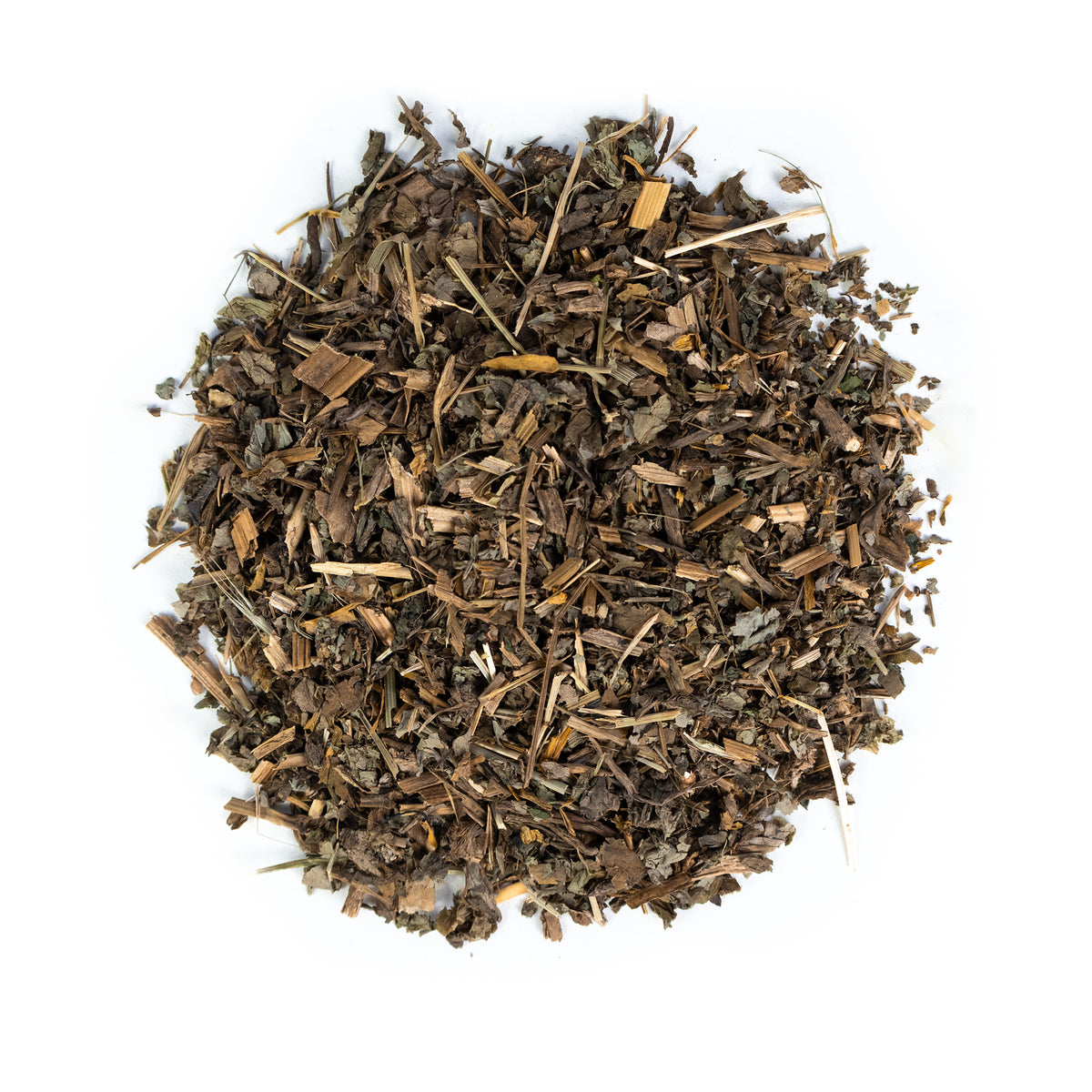
Greater Celandine
Shipping calculated at checkout
Greater Celandine: A Ceremonial Offering for Deep Stillness
Ancient, potent and deeply considered, Greater Celandine has a long and storied tradition in Western and European folk herbalism. A herb that demands respect and rewards those who approach it with genuine intention. For the experienced and the devoted. Use in small amounts and defined periods.
- Character
- Bitter · Pungent · Intense
- Companion for
- Deep stillness · Ceremonial use · Intentional practice
- Pairs well with
- , ,
Dandelion (Taraxacum officinale) is a perennial of the daisy family, native to Europe and Asia and now at home in lawns and paddocks around the world. Its root and leaf have been used as food and in herbal practice for well over a thousand years.
The root is earthy and bitter, and when roasted it brews a dark cup not unlike coffee. Most people take Dandelion as a simmered root tea or a liquid extract, and it is the herb our customers reach for after rich food and big weekends, or when they want something dark and bitter in the cup in place of coffee.
Milk Thistle (Silybum marianum) is a tall, prickly thistle of the daisy family, native to the Mediterranean, with purple flower heads and glossy leaves veined in white. Its seeds have been used as a liver herb for more than two thousand years, and in Australia it is just as often called St Mary's Thistle.
The seeds taste mild and nutty, with a little bitterness. Most people take Milk Thistle as a tea, as ground seed or as a liquid extract, and it is the herb our customers reach for after a run of rich food and late nights, when they want to look after the liver.
Calendula (Calendula officinalis) is a golden-flowered annual of the daisy family from the Mediterranean region. Also called pot marigold, it has been a kitchen and household herb in Europe for centuries.
The petals taste mild, a little bitter and faintly floral, and they turn a cup golden. Most people take Calendula as a tea, or use it on the skin as an infused oil, balm or wash. It is the herb our customers reach for when they want something gentle and bright, and when their skin wants looking after.
Ingredients
Greater Celandine (Chelidonium majus)
Herbal Intelligence
Phytochemistry
Greater Celandine is the dried aerial parts of Chelidonium majus. They contain a complex mix of alkaloids, such as chelidonine, sanguinarine and berberine, along with phenolic acids.
Living tradition
Greater Celandine was described by Dioscorides and Pliny the Elder in the first century AD. Its botanical name comes from the Greek chelidon, a swallow, because the plant comes into flower as the swallows return.
Suggested use
Hand-roll on its own, or blend with your favourite milled herbs.
Specifications
- Other Names
- Opi-8
- Range
- Mystic Herbs
- Organic Status
- Australian certified before repackaging, or wild harvested where possible.
- Packaging
- Home compostable, reusable zip lock pouch
Vegan Friendly
Precautions
- Caution, smoking is harmful
- Not for ingestion
The TGA recommends to only use Greater Celandine internally under the supervision of a healthcare professional, and seek advice before commencing use if there is history of liver disease.
More on the Greater Celandine profile.
Happy Herb Co shares referenced knowledge about herbs and makes no therapeutic claims for its products. If you are pregnant, breastfeeding, taking medication or managing a health condition, please speak with a health professional before using any herb.
Choose options
Explore