


Happy Herb Co
Pau D'Arco Bark
Pau D'Arco Bark
EFFECTS


Couldn't load pickup availability
Pau D'Arco: A Seasonal Custom for Deep Cleansing
When the body needs something deeper. Pau D'Arco is often chosen during times of immune challenge, seasonal shifts or when fungal imbalance is a concern. It is a herb with a long and respected tradition of use for exactly these moments. Harvested from the inner bark of a South American rainforest tree, it has been valued among indigenous peoples of Central and South America for centuries for its broad spectrum, deeply cleansing and antifungal character.
Pau D'Arco: A Seasonal Custom for Deep Cleansing
When the body needs something deeper. Pau D'Arco is often chosen during times of immune challenge, seasonal shifts or when fungal imbalance is a concern. It is a herb with a long and respected tradition of use for exactly these moments. Harvested from the inner bark of a South American rainforest tree, it has been valued among indigenous peoples of Central and South America for centuries for its broad spectrum, deeply cleansing and antifungal character.
Ingredients
Ingredients
Contents: Pau D'Arco (Tabebuia heptaphylla) bark
SUGGESTED USE
SUGGESTED USE
1/2 to 1 tsp per cup, simmer covered 10 minutes. Sweeten as desired. Take 3 times daily.
HERBAL INTELLIGENCE
HERBAL INTELLIGENCE
Pau D’Arco (Tabebuia heptaphylla) — bark
Pau D’Arco comes from the inner bark of Tabebuia heptaphylla, a tree native to South America and long valued in traditional Amazonian and Andean herbal practices. The bark contains distinctive plant compounds such as naphthoquinones (including lapachol and β-lapachone), along with flavonoids, iridoids, and phenolic acids¹. These constituents have been explored in laboratory studies for their antioxidant and antimicrobial properties, reflecting the herb’s traditional use as a strengthening and cleansing tonic².
Pau D’Arco is most commonly prepared as a warm infusion with a deep, earthy flavour, and is appreciated for general wellbeing support and as part of traditional South American health rituals¹. Modern research is ongoing, and preparations can vary naturally depending on season, region and bark age³.
This information is for educational purposes only and does not refer to the effects of any specific product.
_________________________________________________________________
1. El-Hawary, S. S., Taher, M. A., Amin, E., AbouZid, S. F., Mohammed, R. (2021). Genus Tabebuia: A comprehensive review journey from past achievements to future perspectives. Arabian Journal of Chemistry. Retrieved from https://www.sciencedirect.com/science/article/pii/S1878535221000617
2. Taylor, L. (2004). Pau d’Arco: Traditional uses and phytochemistry (PDF). ICA Health. Retrieved from https://icahealth.com/wp-content/uploads/Taylor_Pau-dArco.pdf
3. Pau d’Arco: Potential uses, benefits, and risks. (2019, February 11). Healthline. Retrieved from https://www.healthline.com/nutrition/pau-d-arco
Specifications
Specifications
Pau D'Arco Bark by Happy Herb Co.
Other Names: Tabebuia heptaphylla, Tabebuia avellanadae, Tabebuia impetoganosa
Grown in: Brazil
Organic Status: Conventional
Plant Parts: Bark
Packaging: Home compostable, reusable zip lock pouch
Vegan Friendly
Precautions
Precautions
- Not to be used in pregnancy or breastfeeding
For specific herb contraindications, see our Herb Hub for more detailed information.
Happy Herb Co provides referenced information for educational purposes only, and does not make any therapeutic claims for any of their products.
Please seek advice from a healthcare provider if you wish to use herbs for therapeutic purposes.
Also Available
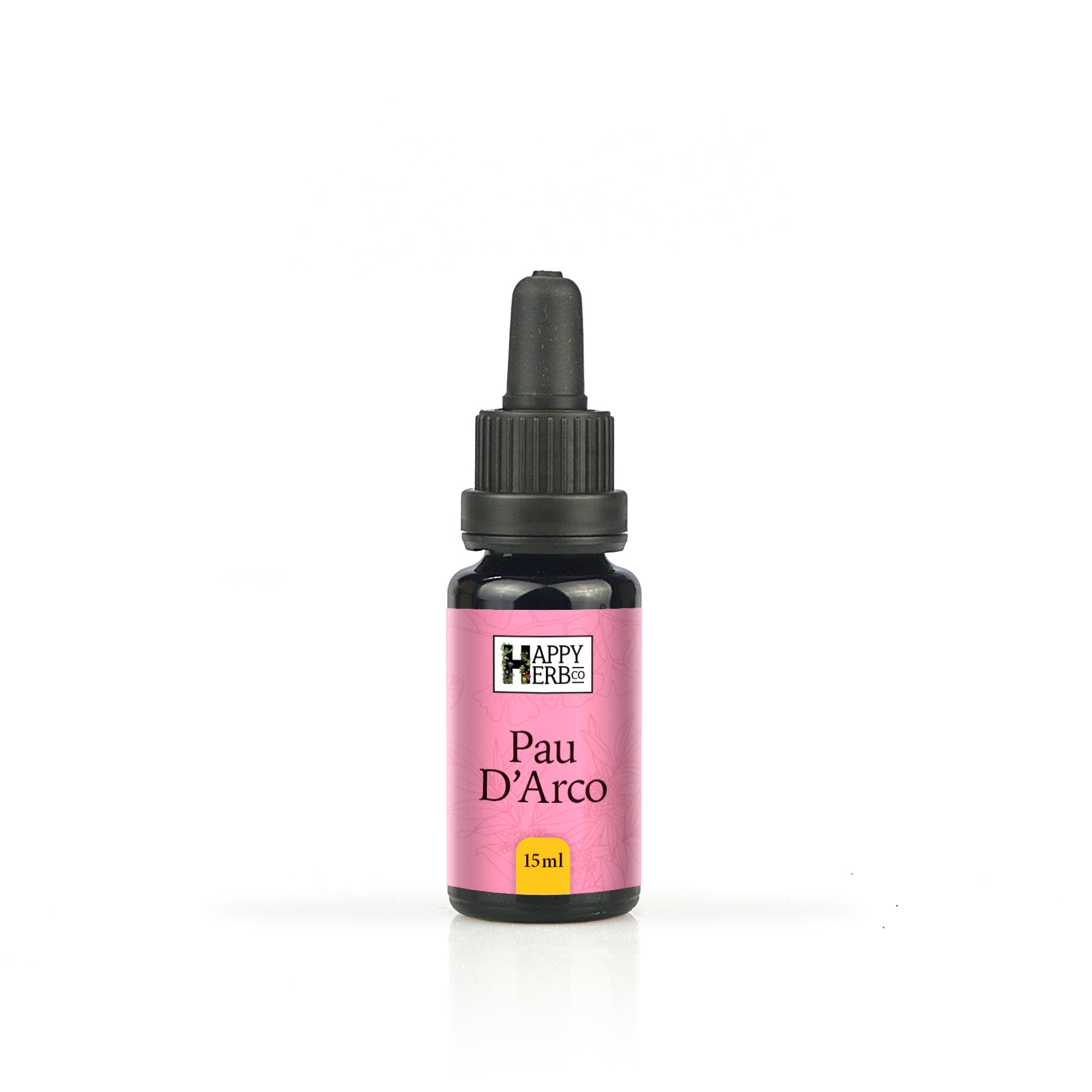
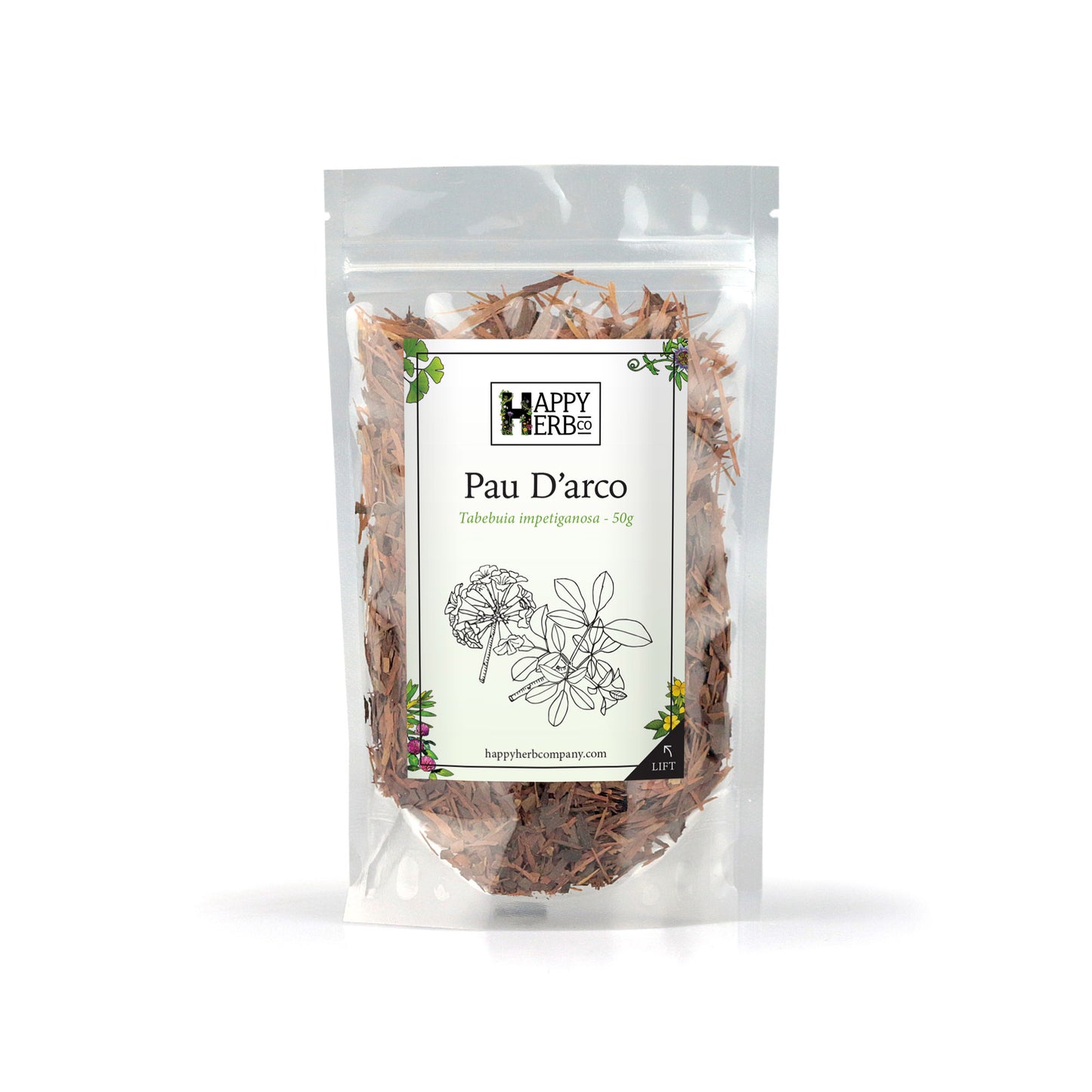
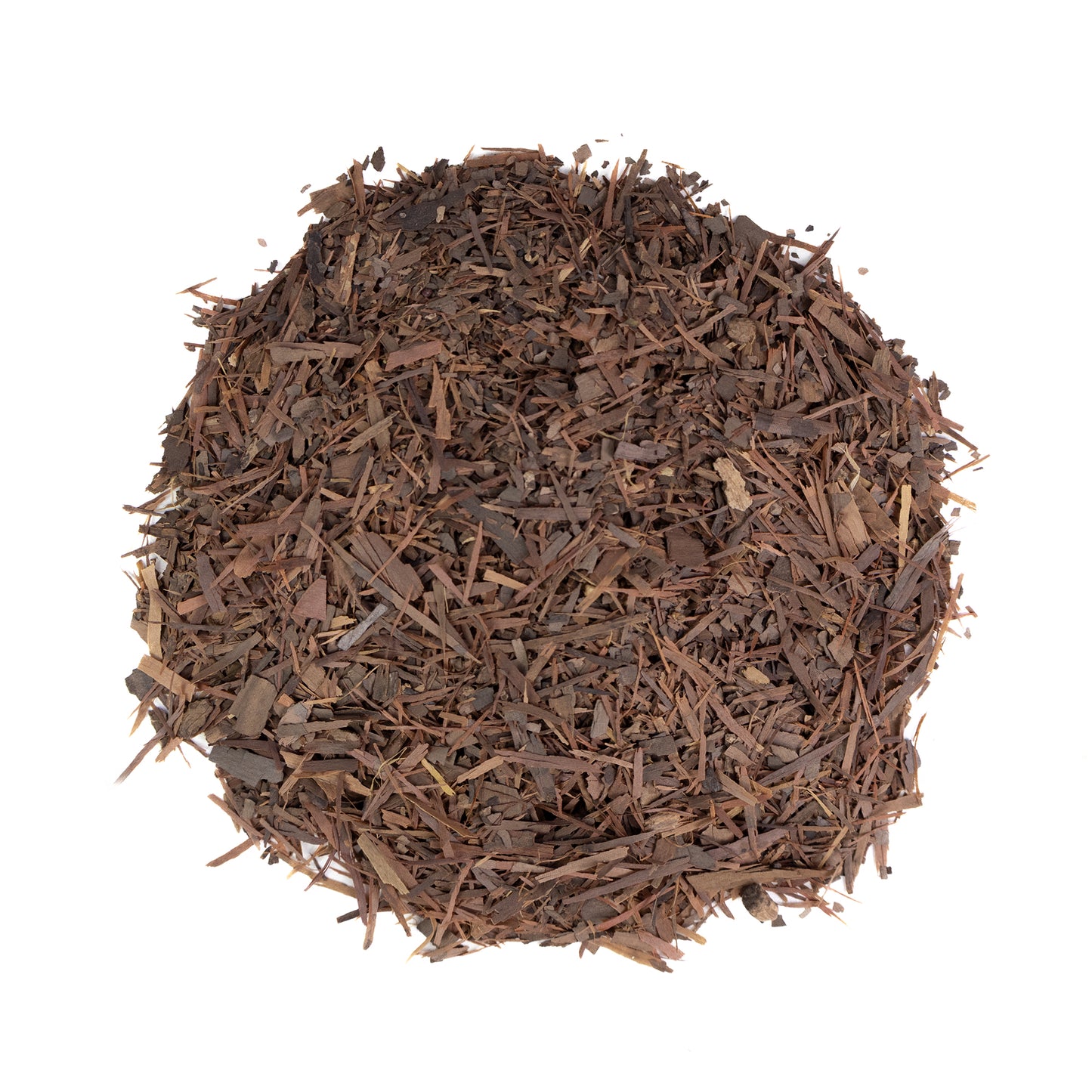

Pau D'Arco
Traditional uses include malaria, anaemia, colitis, respiratory problems, colds, cough, flu, fungal infections, fever, arthritis and rheumatism, snakebite, poor circulation, boils, syphilis, and cancer.

I love this tea , on its own and if you have a tea which tastes a bit bitter add a teaspoon of this and you'll love the taste too 😁😁
Hi Liz,
Thank you for sharing your feedback about the Pau D'Arco! Great idea about adding this herb in with more bitter tasting ones to enhance the flavour! We really love hearing about your experience and know that it will help other customers as well.
Much love,
Happy Herb Co
I made a tisane for my friend with this and she loves it, the effect on her anaemia is yet to be known but we both like the taste :)


