Bee Pollen Profile
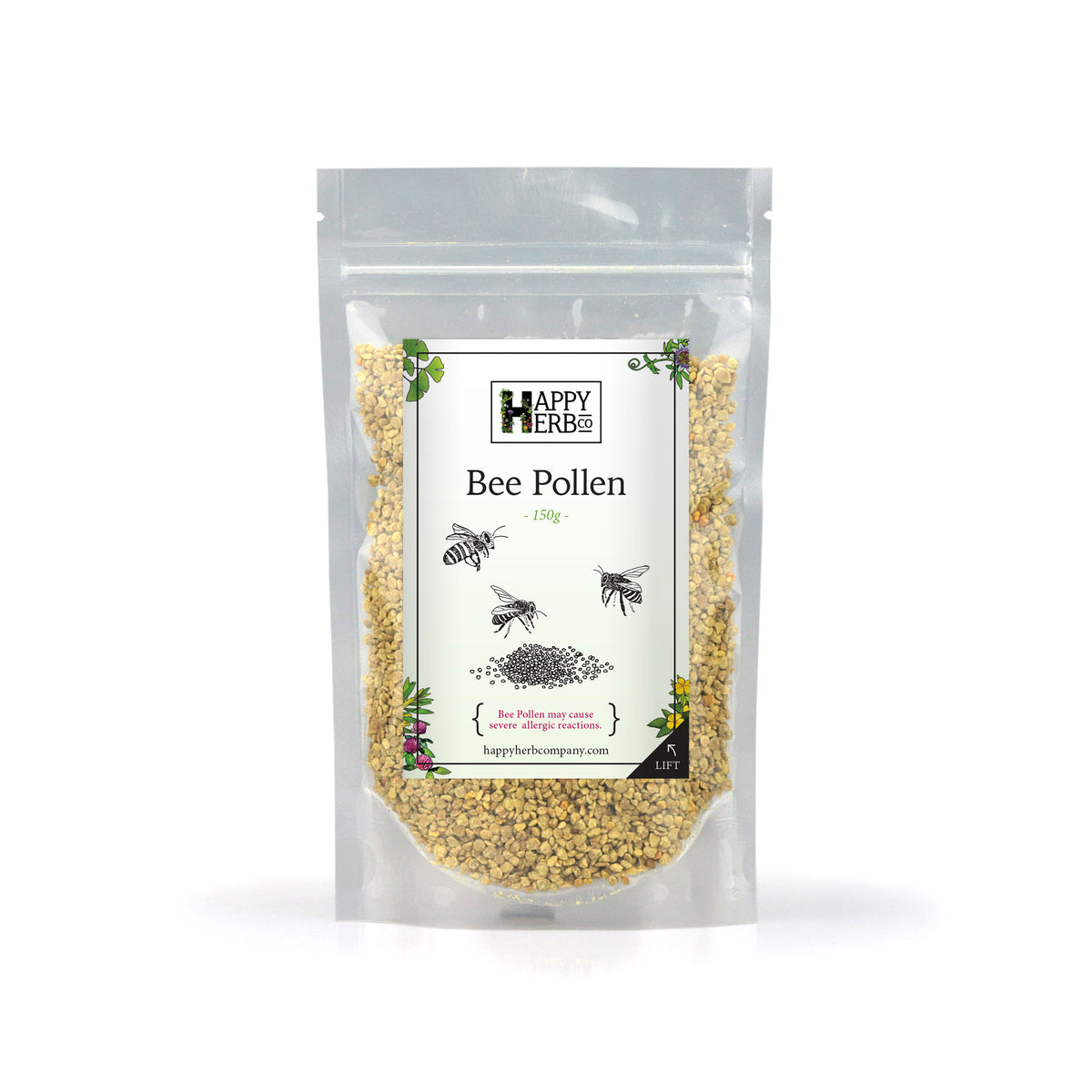
Bee Pollen
Pollen produced by the honeybee, Apis mellifera L.
For daily nourishment, whole body vitality and mindful nutrition.


Cart
Your cart is empty

Join us in our love of herbs
Bee Pollen Profile
Pollen produced by the honeybee, Apis mellifera L.
For daily nourishment, whole body vitality and mindful nutrition.
Herbal Intelligence
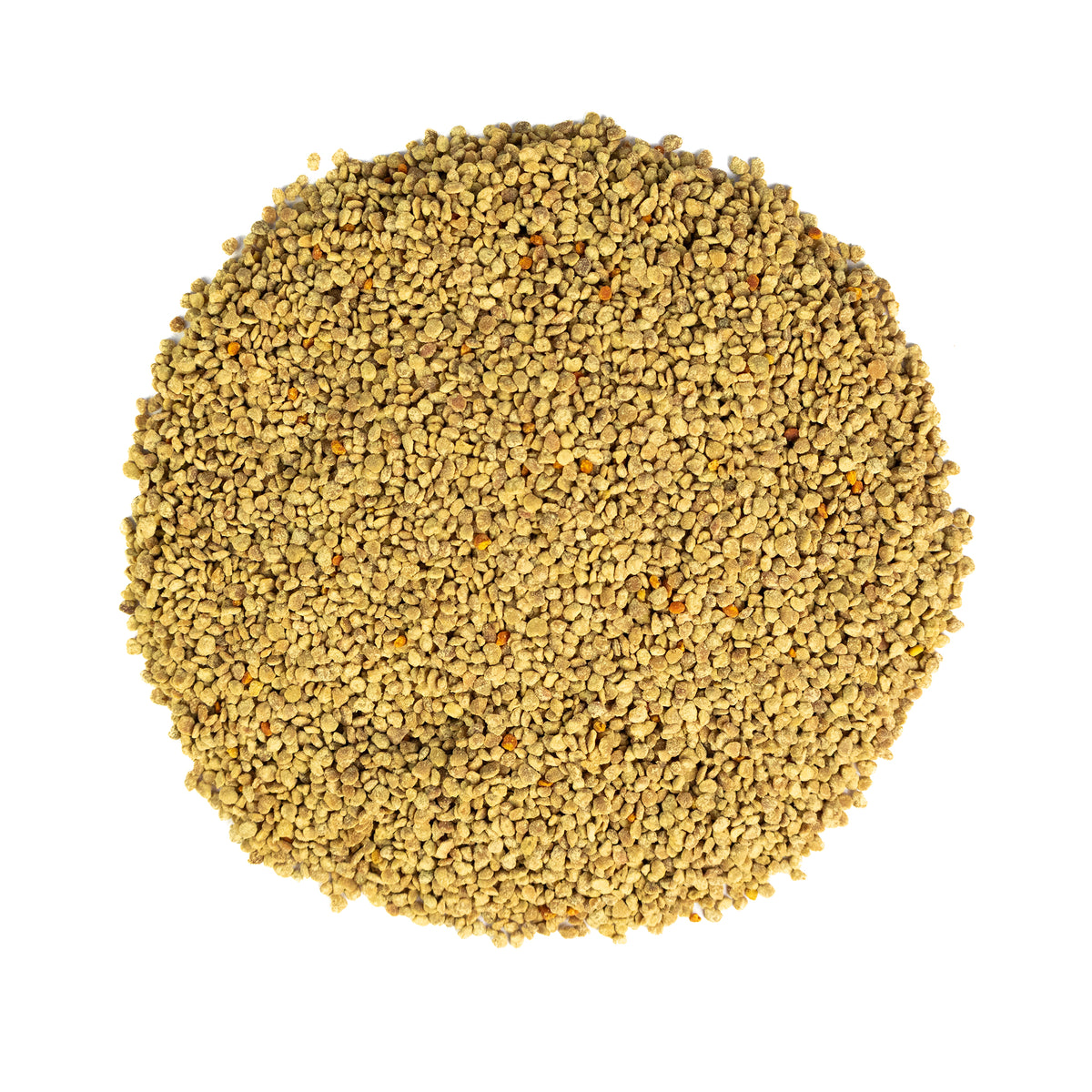
Bee Pollen is flower pollen gathered by the honeybee (Apis mellifera) and packed into small golden granules. It is a food more than a herb, and it has been eaten and valued since the time of ancient Egypt, Greece and China.
The taste is sweet and floral, with a faint bitterness that changes with the flowers the bees have visited. Most people eat Bee Pollen as it is or sprinkle it over breakfast, and it is the food our customers reach for when they want a little daily nourishment from something whole and simple.
Bee products were widely used in the ancient societies of Greece, China and Egypt, and the Egyptians are said to have described pollen as 'a life-giving dust'(1).
The granules are the work of the bees themselves. A foraging honeybee gathers pollen from the anthers of flowers, moistens it with a little nectar or saliva, and packs it into the baskets on her hind legs to carry home(2). Inside the hive the pollen is pressed into honeycomb cells and sealed with honey and wax to make bee bread, the colony's main source of protein(2). Beekeepers collect a small share of the pellets at the hive entrance.
Today Bee Pollen is eaten around the world as a food in its own right. Each batch carries the colours and flavours of whatever was in flower, so no two harvests are quite the same.
Bee Pollen is flower pollen gathered by honeybees and mixed with nectar and bee secretions. It typically contains carbohydrates, proteins, lipids, B vitamins and vitamin C, minerals such as calcium, magnesium and potassium, and a wide range of phenolic compounds, flavonoids and carotenoids(3). In the laboratory these compounds are studied for their antioxidant activity and their effects on inflammation and immune activity(4).
Bee Pollen sits between the pantry and the herb shelf. Herbalists class it as a nutritive tonic: a food eaten in small amounts, day after day, for general vitality. Around 250 different substances have been identified in it, among them amino acids, fats, vitamins, minerals and flavonoids(2).
People build it into breakfast: a spoonful on yoghurt, fruit or porridge, or blended into a smoothie before a long day or a training session. It suits anyone who likes their nutrition to come as food.
Most research on Bee Pollen has been done in the laboratory and in animals. A 2021 review concluded that more studies are needed to establish what it does in the body, and reminded readers that it can cause allergic reactions in people sensitive to pollen(1). So we describe how it is used, not what it will do.
Developed and reviewed by Laura Grace, Owner and Creative Director of Happy Herb Co, Herb Educator and Registered Ayurvedic Lifestyle Consultant · Clinically reviewed by Tamara Welsh, BSc, AdvDipWHM, ATMS, Clinical Herbalist
This profile is intended as a researched educational guide and does not replace the broader perspective of a herbal consultation.
★★★★★
5.0 out of 5, from 6 reviews
I incorporate bee pollen into my diet daily. I love it. Every time I get sick I have a big tablespoon two times a day and it gets me feeling better in a couple of days with minimal symptoms. I also just love how it tastes and how crunchy it is. Thank you :)
Yes agree, such a great way to sweeten up food with so many benefits. Thank you bee's. x
I have chronic fatigue and found this improved my energy levels massively throughout the day. The effects last all day and it tastes delicious! Tastes like honey but crunchy it’s amazing!
Thank you so much for sharing your experience with our Bee Pollen! We're overjoyed to hear that it has made a significant difference in boosting your energy levels throughout the day, especially considering your battle with chronic fatigue.
Your description of the taste as honey-like and crunchy perfectly captures the unique essence of our Bee Pollen. We're delighted that you find it not only effective but also delicious!
Wishing you continued energy and wellness!
Fillls you with radiance
Hi Amanda, Thank you for your purchase and review! Cheers x
I have only started using Bee Pollen mostly on my breakfast or fruit, I have noticed a difference already, I sleep better and wake up more refreshed and feel better than I have for a long time throughout the day, very much recommend.
Hi Merilyn,
Thank you very much for your review! We are happy to hear you are enjoying the Guarana and that it is helping you naturally energize, without the jitters. It is so helpful for a clean, focused energy that last throughout the whole day without the inconvenient crash and burn of coffee! Also great idea about mixing it into hot chocolate with another potent adaptogen - maca- and the heart opening cacao.We want to try some!
Your feedback really helps other customers connect to the best products, as well as helps us optimize our offerings to make them the best they can be. Thanks for taking the time to provide some feedback.
Have a happy & healthy day!
- Happy Herb Co
Very nice sprinkled over your yoghurt, has a bitter aftertaste on its own
In everyday life
Bee Pollen is eaten as a food, in three main ways.
Most people eat a little Bee Pollen daily, as part of breakfast.
Thousands of flowers in a spoon.
Tip a few granules into your palm and look closely. Each one is a different colour, because each came from a different flower, carried home on a bee's leg.
Scatter a small spoonful over breakfast and eat it outside if you can, within earshot of the garden. Chew a few granules on their own and notice the floral sweetness.
Eat slowly. A single spoon holds the work of countless journeys. What small, repeated work of yours adds up to something you would be proud to hand over?
Shop
Single Herb
FAQ
Bee Pollen is flower pollen gathered by honeybees (Apis mellifera), moistened with a little nectar and packed into small golden granules. It has been valued as a food since the time of ancient Egypt, Greece and China. Today it is eaten as it is, sprinkled over breakfast or blended into smoothies.
Bee Pollen is long associated with daily nourishment and vitality. Herbalists class it as a nutritive tonic: a food eaten in small amounts, day after day. Around 250 substances have been identified in it, among them amino acids, fats, vitamins, minerals and flavonoids. Most research has been done in the laboratory and in animals, so we describe how it is used, not what it will do.
Bee Pollen is best known as a herb people reach for when they want a little daily nourishment from a whole food. Most people eat a small spoonful as part of breakfast, and it is also popular blended into a smoothie before a long day or a training session.
Eat Bee Pollen as it is, or sprinkle it over yoghurt, fruit salad, porridge or trail mix. It also blends well into smoothies and raw treats. If it is new to you, start with a few granules and build up to a small spoonful.
Bee Pollen is not a caffeinated food. It is flower pollen packed into granules by honeybees, and the published reviews of its composition list amino acids, fats, vitamins, minerals and flavonoids, not caffeine. It can be eaten at any time of day, though most people have it at breakfast.
Bee Pollen is sweet and floral, with a faint bitterness. The granules are soft and dissolve as you chew. The flavour varies from batch to batch with the flowers the bees have visited.
Bee Pollen can cause allergic reactions in people who are allergic to pollen, so use it with caution if that applies to you. A 2021 review of the research notes that these reactions can be serious. If you take medication or have a health condition, check with your health professional first.
Bee Pollen can cause severe allergic reactions, particularly in people who are allergic to pollen. Use with caution.