Hibiscus Profile
Hibiscus
Hibiscus sabdariffa
For an everyday cup and nourishment.


Cart
Your cart is empty

Join us in our love of herbs
Hibiscus Profile
Hibiscus sabdariffa
For an everyday cup and nourishment.
Herbal Intelligence
Hibiscus (Hibiscus sabdariffa) is a tall annual of the mallow family, thought to be native to tropical Africa and grown for the fleshy red calyces that form around its seed pods. Known as roselle in much of the world and rosella in Australia, it has been a food and a drink for thousands of years.
The taste is tart and fruity, a little like cranberry, and the colour is a deep ruby red. Most people take Hibiscus as a tea, hot or iced, and it is the herb our customers reach for as an everyday cup, when they want something bright, refreshing and free of caffeine. It is also a lovely addition to most herbal tea blends, lending colour and a tart edge to softer herbs.
Hibiscus is probably of tropical African origin, though its first home is still debated(1, 2). It may have been domesticated in Sudan as early as 4000 BC, first for its edible seeds and later for its leaves, shoots and flower parts(1).
In the seventeenth century it reached Asia and the Americas(1), and it gathered names as it travelled: roselle, karkade, zobo, red sorrel, Jamaican sorrel, Florida cranberry and Queensland jelly plant among them(2). In Egypt the dried calyces make a very popular sour tea(1).
Wherever it grows, the fleshy calyces are turned into drinks, syrups, wine, jams and jellies, and the young leaves are eaten as a sour vegetable(1). In folk use a brew of the calyces is counted as a diuretic and a tonic(1). The calyces dry and store well, which is how a seasonal crop became a year-round drink(1).
The deep red calyces of Hibiscus sabdariffa are rich in anthocyanins, the pigments that give the tea its colour, along with other flavonoids, organic acids and phenolic compounds(3, 4). In the laboratory these compounds are studied for their antioxidant activity(4), and the anthocyanins for their effects on blood vessels and inflammatory responses(3).
In Western herbalism Hibiscus is classed as a mild diuretic and an astringent, and it is valued as much for its flavour and colour as for anything else. It gives body and a red glow to many tea blends, and pairs well with Rose, Schisandra, Cinnamon or Ginger.
People drink it through the day as an everyday cup: hot in the morning, iced in summer, or in place of soft drinks and juice. For some it is part of habit shifting, a jug of something red and tart on the table instead of wine.
Hibiscus is one of the better-studied herbal teas. A 2022 analysis of 17 trials found that it lowered systolic blood pressure more than placebo, most clearly in people whose blood pressure was raised to begin with(6). A review of the clinical trials points to small groups and short study periods, and calls for larger studies(4). So we describe how it is used, not what it will do.
Developed and reviewed by Laura Grace, Owner and Creative Director of Happy Herb Co, Herb Educator and Registered Ayurvedic Lifestyle Consultant ·
This profile is intended as a researched educational guide and does not replace the broader perspective of a herbal consultation.
In everyday life
Hibiscus calyces are used in three main ways.
Hibiscus is an everyday drink, taken hot or iced at any time of day.
Red, sharp, alive.
Drop a few dried calyces into hot water and watch the colour bleed out, ruby, then deep crimson. Across West Africa and Mexico this is the everyday drink, sold cold on street corners.
Steep it long, ten to twenty minutes, for the full colour and tartness, then add honey or pour it over ice with a slice of orange.
Sip slowly. Hibiscus is drunk by millions of people who have never called it a herb. What in your life is good precisely because it is ordinary?
Shop

Single Herb
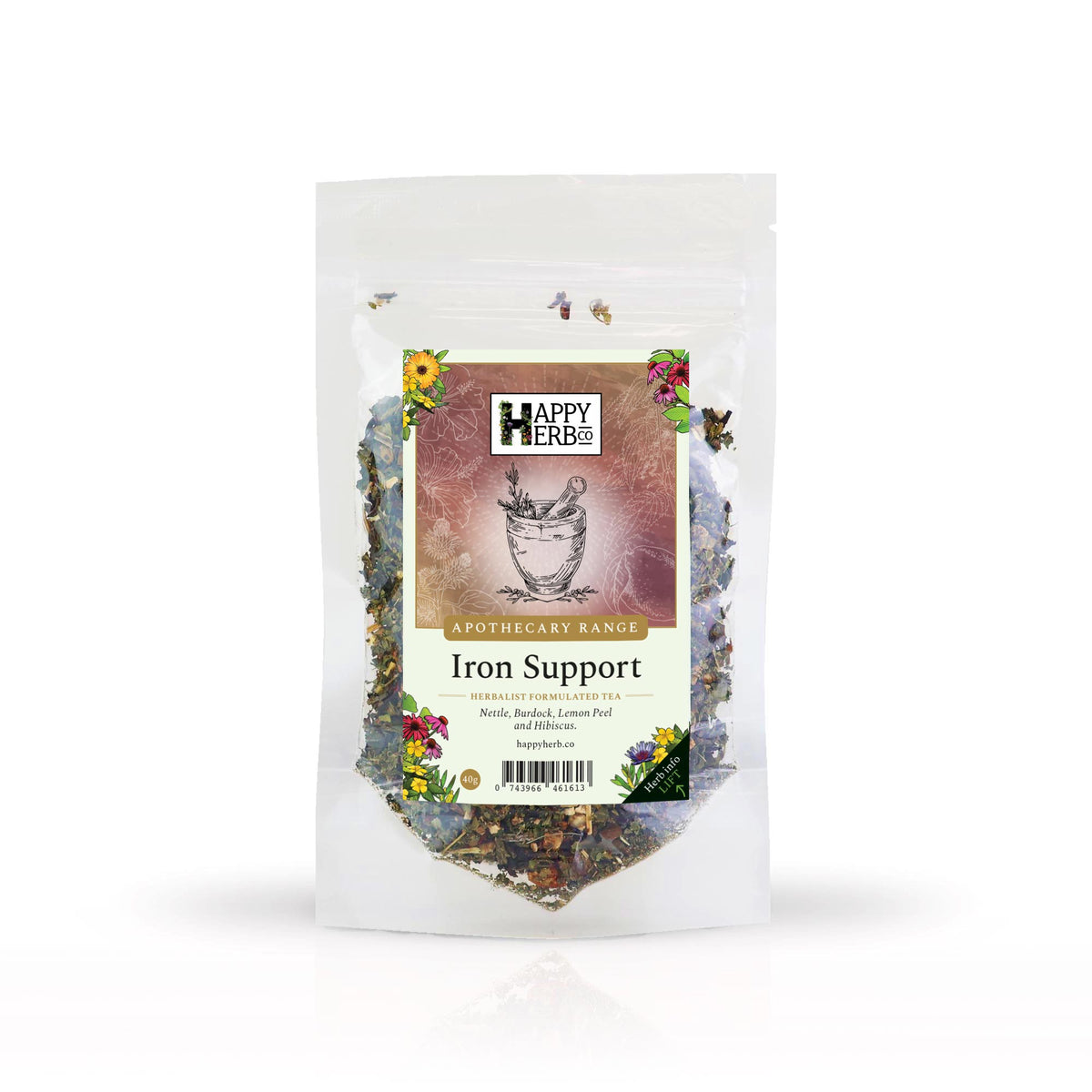
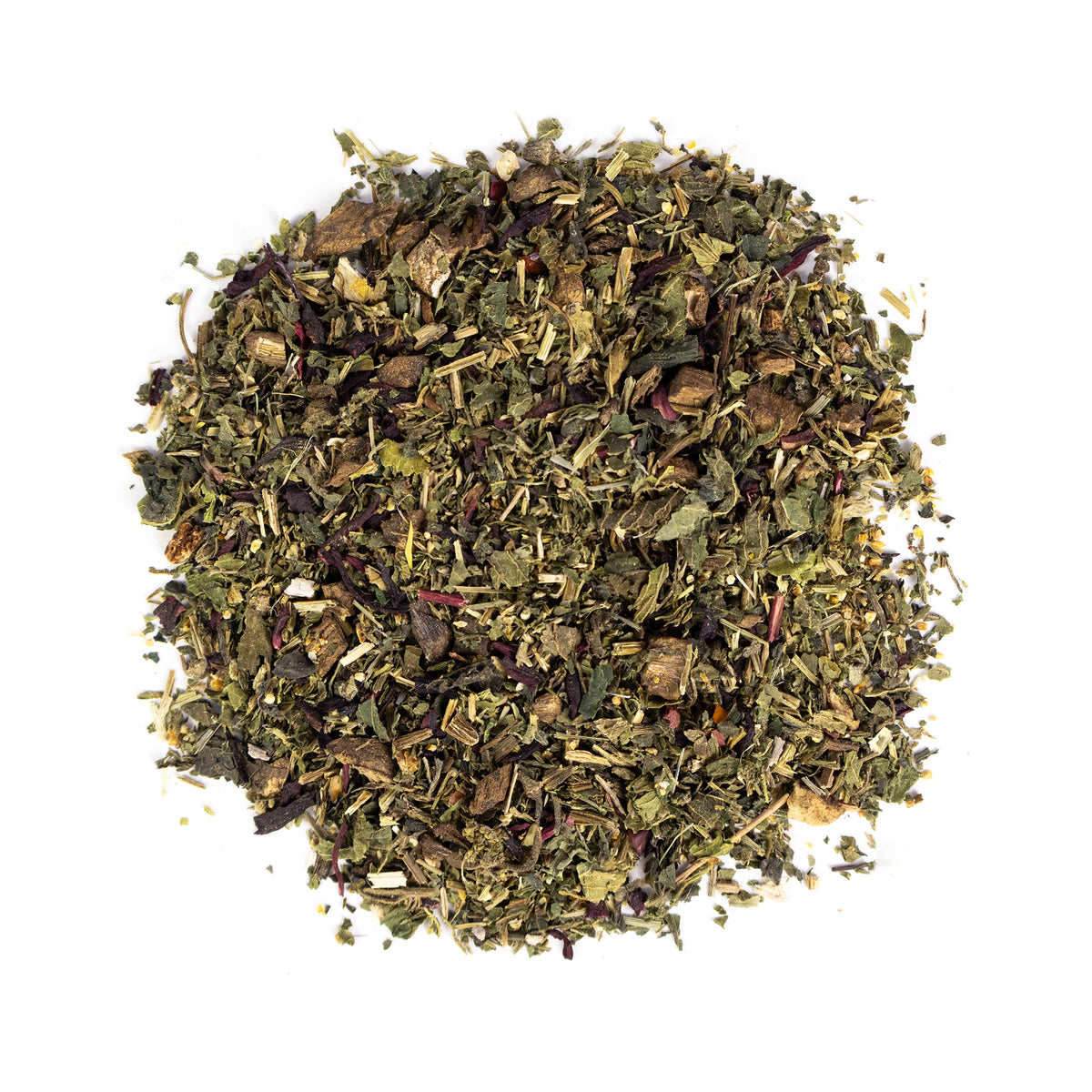
Apothecary Tea
A four-herb tea of nettle, burdock, lemon peel and hibiscus.
FAQ
Hibiscus (Hibiscus sabdariffa) is a tall annual of the mallow family, thought to be native to tropical Africa. It is grown for its fleshy red calyces, which have been made into drinks, jams and syrups for centuries. It is also called roselle, and in Australia rosella. Today Hibiscus is taken as a tart, ruby-red tea, hot or iced.
Hibiscus is long associated with refreshment and with the heart and circulation. Across Africa, Asia and the Americas the tart red calyces are an everyday drink, hot or iced, and Western herbalists class Hibiscus as a mild diuretic and an astringent. Clinical trials on blood pressure are encouraging but small and short, so we describe how it is used, not what it will do.
Hibiscus is one of the few herbal teas with clinical studies behind it, most of them on blood pressure, and the results have been encouraging. It is not a treatment for high blood pressure or any heart condition, and if you take medication for either, speak with your health professional before making it a daily habit.
As an everyday cup, hot or iced, it earns its place on taste alone: tart, bright, free of caffeine, and a natural stand-in for soft drinks and juice.
Steep 1 to 2 teaspoons of dried Hibiscus in a cup of just-boiled water, covered, for 10 to 20 minutes, then strain. A long steep draws out the full colour and tartness. Add honey to taste, or blend it with Rose, Cinnamon or Ginger. For iced Hibiscus, brew a strong pot, let it cool and serve over ice.
No. Hibiscus is naturally caffeine free, so it can be enjoyed at any time of day, including the evening. It is the calyx of a plant in the mallow family, not a true tea. Check the label of blended teas, which may include other ingredients.
Hibiscus is drunk every day as an ordinary drink in many countries. In clinical trials, where people took Hibiscus daily for some weeks, side effects were rare and mild, according to a 2022 analysis of those trials. Long-term studies are few. If you take blood pressure medication or are pregnant, check with your health professional before making Hibiscus a daily habit.
If you take blood pressure medication, monitor your levels carefully when adding Hibiscus regularly. It is generally avoided in pregnancy unless under professional guidance. A 2022 analysis of clinical trials notes that one study reported mild stomach upset in the first week, which then passed. If you take medication or have a health condition, check with your health professional first.
Those on blood pressure medication should monitor levels carefully if adding it regularly, and it is generally avoided in pregnancy unless under professional guidance.
As described in the monographs cited under Sources.