Manuka Leaf Profile
Manuka Leaf
Leptospermum scoparium
For seasonal wellness, respiratory support and digestive health.


Cart
Your cart is empty

Join us in our love of herbs
Manuka Leaf Profile
Leptospermum scoparium
For seasonal wellness, respiratory support and digestive health.
Herbal Intelligence
Manuka (Leptospermum scoparium) is a hardy, small-leaved shrub or small tree of the myrtle family, native to New Zealand and south-eastern Australia. Māori have long used its leaves, bark and wood, and its English name, tea tree, dates from the voyagers and colonists who brewed the aromatic leaves in place of tea.
The taste is bitter, earthy and aromatic. The leaf is taken as a tea, and Manuka also appears with propolis in throat sprays and lozenges. It is the herb our customers reach for at the change of season, when the throat and chest want looking after.
Manuka is known to Māori as mānuka and kahikātoa, among other names(1). Few plants were more useful. The hard wood was made into paddles, fish and war spears, bird spears and eel-pot frames, and pia mānuka, a sweet gum that forms on the branches, was eaten(1).
It was a household medicine too. The leaves were boiled in water at times of colds, an infusion was drunk for internal complaints, and the bark was used as a mouthwash(1, 2).
The name tea tree came with the Europeans. Captain Cook used Manuka as a tea substitute on his first voyage and brewed it with rimu into a spruce beer on his second, and the tea was later much drunk by whalers(1). Today Manuka is better known for its honey and its essential oil, though the leaf is still brewed.
The leaves of Manuka (Leptospermum scoparium) hold an essential oil made up of monoterpenes, sesquiterpenes and triketones. The plant also contains phenolic constituents and tannin-type compounds(3). In laboratory studies, extracts of the essential oil have shown antimicrobial and antioxidant activity in vitro(3).
In Western herbalism Manuka leaf is classed as an astringent and a bitter tonic: an aromatic leaf that is rich in tannins(4). It is a New Zealand herb more than a European one, and most of what is written about it comes from Māori practice and from herbalists there.
People use it at the change of season: a cup of the bitter leaf tea, a bowl of steam, or a throat spray or lozenge that pairs Manuka with propolis.
Research has centred on the essential oil and on Manuka honey, not on the leaf tea. A 2020 review found extensive laboratory data on the oil but a lack of clinical trials(2). So we describe how it is used, not what it will do.
Developed and reviewed by Laura GraceClinically reviewed by Tamara Welsh, Clinical HerbalistLast reviewed
This profile is intended as a researched educational guide and does not replace the broader perspective of a herbal consultation.
In everyday life
Manuka leaf is used in three main ways.
Because the leaf is rich in tannins, Manuka tea is best taken for a short spell, not as an everyday drink.
Breathe it in.
Crush a dried leaf and smell it, sharp, resinous and aromatic. Captain Cook's crew brewed it as tea in 1769, but Māori had been boiling the leaves and breathing the steam for centuries before that.
Steep a teaspoon or two for ten minutes with honey, or put a handful in a bowl of just-boiled water, lean over it with a towel, and breathe.
Sip slowly. The oldest use of this leaf was simply to breathe near it. When did you last take ten slow breaths on purpose?
Shop
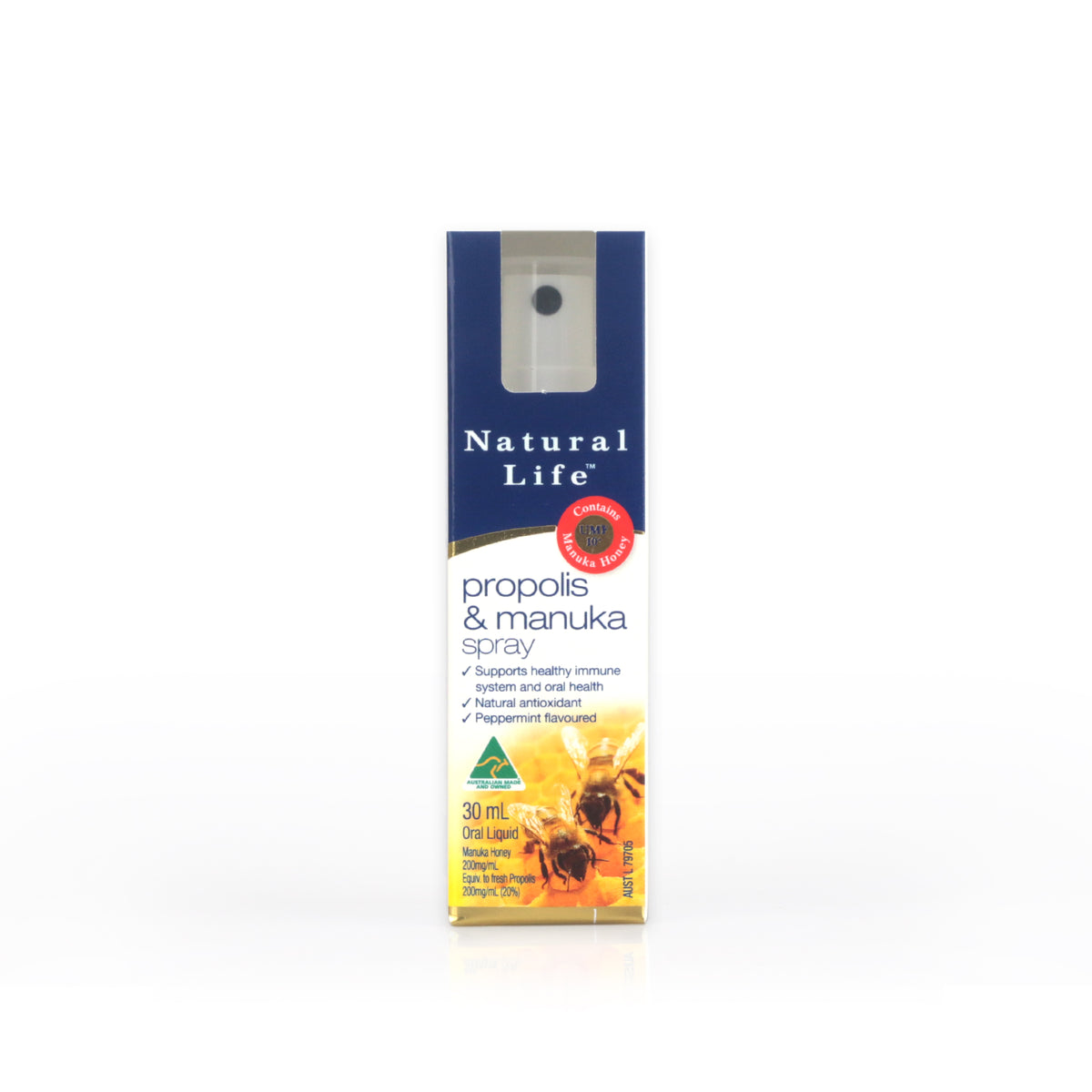
Natural Life
A spray of propolis and New Zealand manuka honey from Natural Life.
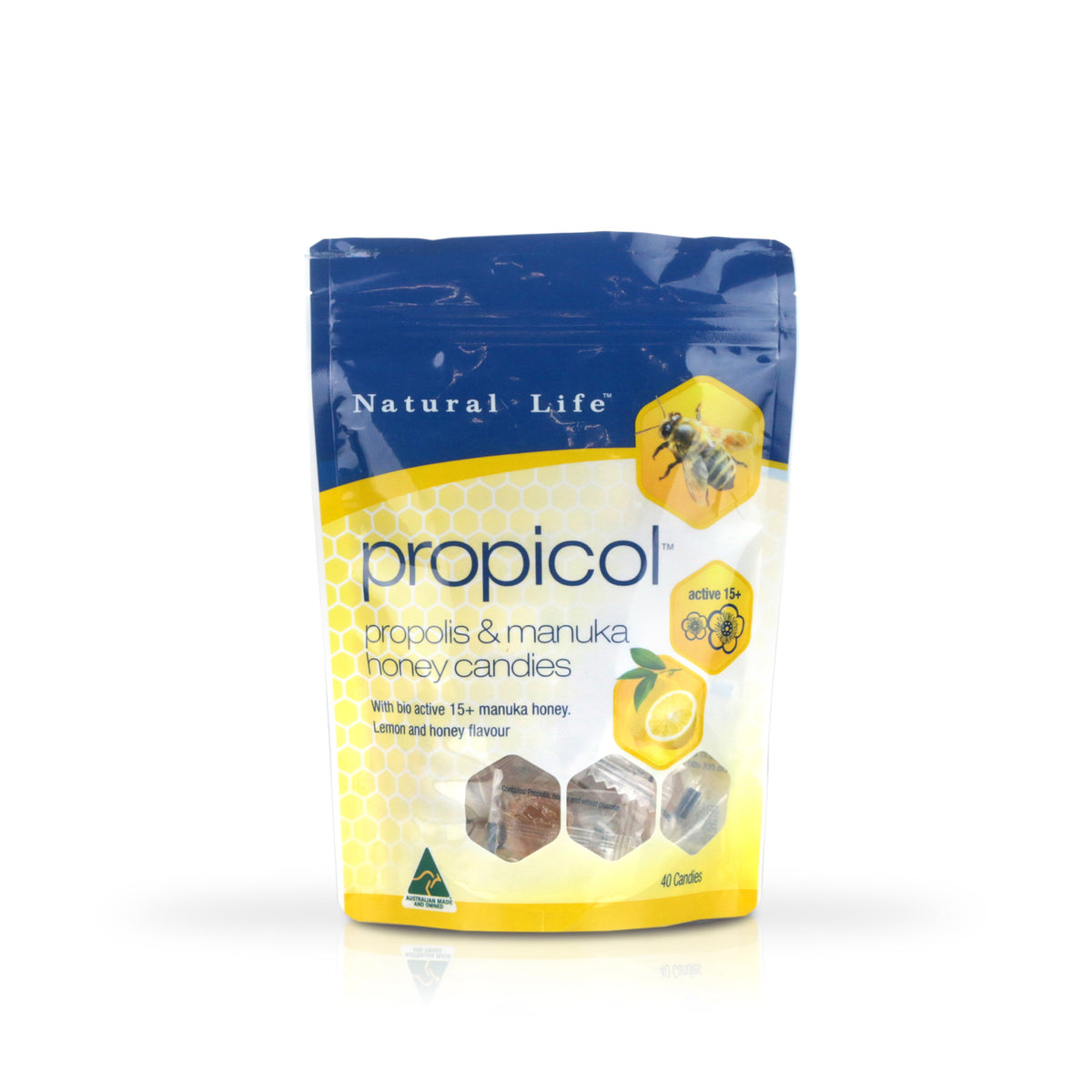
Natural Life
Candies made with propolis, manuka honey and lemon oil.
FAQ
Manuka leaf is the small, aromatic leaf of Manuka (Leptospermum scoparium), a hardy shrub or small tree of the myrtle family, native to New Zealand and south-eastern Australia. Māori have long used the leaves and bark, and early voyagers brewed the leaves in place of tea, which is why Manuka is also called tea tree. It is the same plant that Manuka honey comes from.
Manuka leaf is long associated with the throat, the breath and seasonal wellness. In Māori practice the leaves were boiled and the vapour breathed in, and Western herbalists class Manuka as an astringent and a bitter tonic. Research has looked mostly at Manuka oil in the laboratory, and clinical trials are lacking, so we describe how it is used, not what it will do.
Manuka is best known as a herb people turn to at the change of season, when the throat and chest want looking after. Most people have a cup of the leaf tea, breathe the steam from a bowl of leaves, or use a throat spray that pairs Manuka with propolis. The tea is best kept to a short spell.
Steep 1 to 2 teaspoons of dried Manuka leaf in a cup of just-boiled water, covered, for 10 minutes, then strain. The tea is bitter and aromatic, so add honey to taste. Captain Cook used Manuka as a tea substitute on his first voyage, which is how it came to be called tea tree.
No. Manuka leaf is naturally caffeine free. Despite the name tea tree, Manuka belongs to the myrtle family and is not related to true tea (Camellia sinensis). The tea is bitter, earthy and aromatic, and can be drunk at any time of day.
It depends which tea tree. In New Zealand, tea tree is a common name for Manuka (Leptospermum scoparium), because early voyagers and colonists brewed its leaves as tea. The tea tree oil sold in Australia comes from a different plant of the same family, Melaleuca alternifolia. Kanuka (Kunzea ericoides), a close look-alike, is sometimes called tea tree too.
Because of its tannin content, use Manuka leaf with caution over the long term, and if you have iron deficiency, constipation or a peptic ulcer. The Herb Federation of New Zealand advises against prolonged use of large amounts with meals, as tannins may impair the absorption of minerals. If you take medication or have a health condition, check with your health professional first.
Due to the tannin content of Manuka, caution with long term use, iron deficiency, constipation and peptic ulcer.
As described in the monographs cited under Sources.