Lemon Myrtle Profile
Lemon Myrtle
Backhousia citriodora
For mood lift, seasonal wellness and daily vitality.


Cart
Your cart is empty

Join us in our love of herbs
Lemon Myrtle Profile
Backhousia citriodora
For mood lift, seasonal wellness and daily vitality.
Herbal Intelligence
Lemon Myrtle (Backhousia citriodora) is an evergreen rainforest tree of the myrtle family, native to the coastal forests of Queensland. Its leaves are the richest known natural source of citral, the compound behind their strong lemon scent, and Indigenous Australians have long used them for food and medicine.
The taste is citrusy, fresh and bright: more lemony than lemon, without the sourness. Most people take Lemon Myrtle as a tea, hot or iced, and it is the herb our customers reach for when they want a bright cup to lift the day, or a hot one with honey through the winter months.
Indigenous Australians have traditionally used Lemon Myrtle for cooking and healing(1). The tree grows wild only on the east coast of Queensland, in pockets from the Sunshine Coast north to the Townsville and Herberton regions(2). As well as flavouring food, First Peoples crushed the leaves to breathe in the scent, and made them into a paste for the skin(3).
The botanist Ferdinand von Mueller gave the tree its scientific name. Backhousia honours the English botanist James Backhouse, and citriodora describes the strong lemon scent of the leaves(2).
Today the leaf is used fresh, dried or milled as a lemon tea and as a flavouring for breads, biscuits, cheeses, jams and pasta, and the oil is distilled for its scent(2). Lemon Myrtle has become one of the most widely grown native plants in Australia(4).
Lemon Myrtle leaf yields 1 to 3 per cent essential oil, and 90 to 98 per cent of that oil is citral, a strongly lemon-scented compound(2). By comparison, lemongrass oil holds 60 to 90 per cent citral and lemon oil only 2 to 3 per cent(2). The leaves also contain phenolic acids, flavonoids and proanthocyanidins(4). In the laboratory citral and the leaf's phenolic compounds are studied for antimicrobial and antioxidant activity(2, 4).
Lemon Myrtle is a newcomer to Western herbalism. Herbalists class it as a carminative: an aromatic leaf for the stomach, taken after meals. It is as much a food as a herb, and a small amount brightens almost any tea blend.
People drink it in the morning or mid-afternoon for a lift, iced in summer, and hot with honey through the winter months. Because it is caffeine free, it also suits the evening.
Research so far has centred on the essential oil, tested in the laboratory and on the skin(2). Studies of Lemon Myrtle tea in people are lacking, so we describe how it is used, not what it will do.
Developed and reviewed by Laura Grace, Owner and Creative Director of Happy Herb Co, Herb Educator and Registered Ayurvedic Lifestyle Consultant ·
This profile is intended as a researched educational guide and does not replace the broader perspective of a herbal consultation.
★★★★★
4.0 out of 5, from 8 reviews
We actually use the lemon Myrtle in our candles … everybody loves it
Hello
It's still not available yet to ship to WA???
Please help
yes unfortunalty we are not allowed to ship it to WA, strange ruling by your state laws I know. Very sorry xx
Another perfect herb to add to a mix to add a citrus note and slight sweetness.
I love lemon myrtle tea it is absolutely amazing.
Sad that I can't get it shipped to WA. Oh well....keep looking 😕
Hi Margaret!! Sorry for our delay here -- we can ship to WA! We are based in NSW...going to send you a personal email so we can sort this out in case you are still interested xx
In everyday life
Lemon Myrtle leaf is used in three main ways.
Lemon Myrtle suits everyday use, at any time of day. The essential oil is a different product and is not taken internally.
More lemon than lemon.
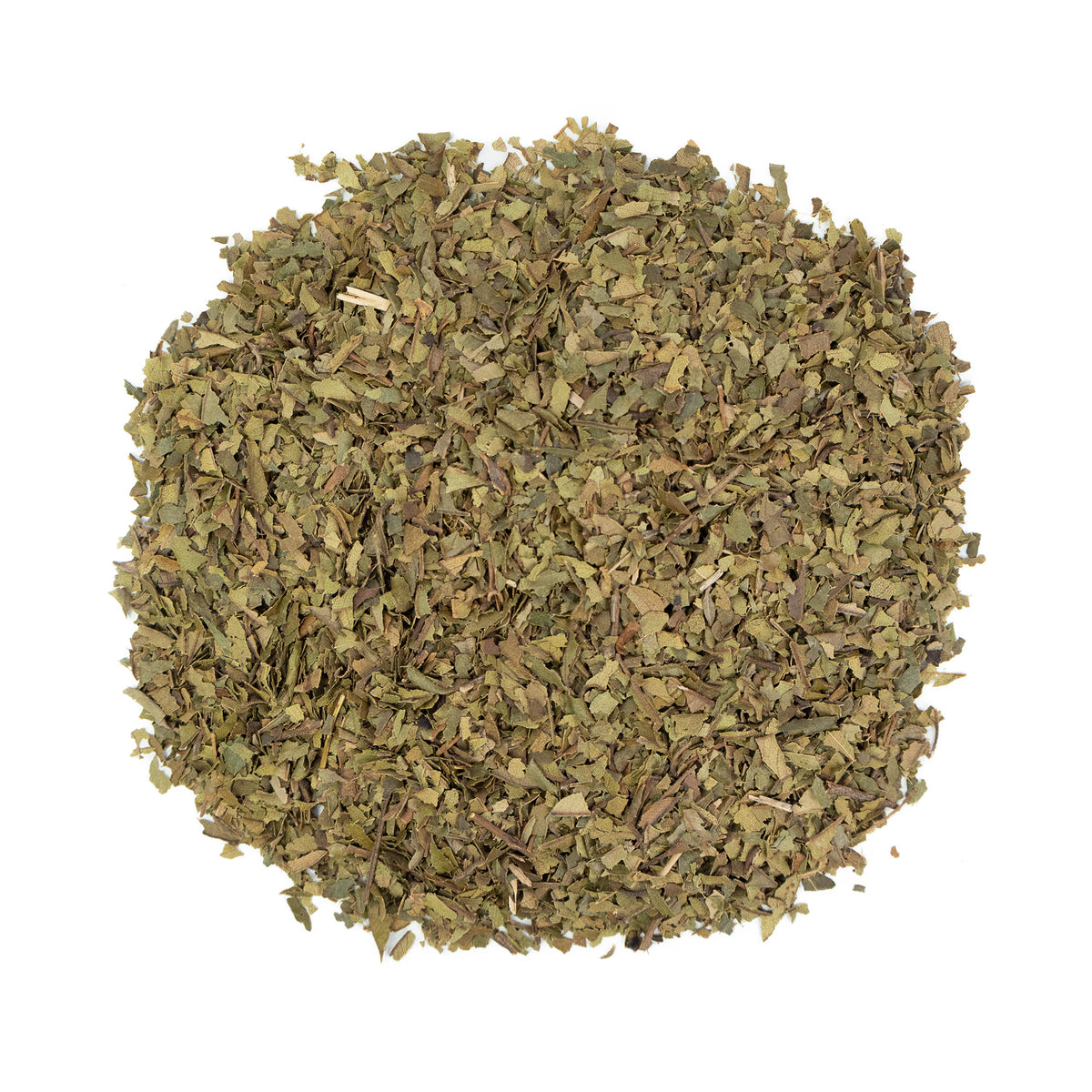
Crush a dried leaf and breathe in. The scent is sharper and cleaner than lemon itself, and the tree has grown in the rainforests of Queensland for far longer than there have been lemons here.
Steep a teaspoon or two for ten minutes, hot or iced, or grind a little over fish. A small amount goes a long way.
Sip slowly. This is the taste of the place you live, not an import. What else that is local have you been passing over for the familiar?
Shop

Single Herb


Luxury Tea
A floral tea that brews a vivid natural blue, with butterfly pea and blue lotus.


Luxury Tea
A bright, lemony tea of damiana, lemon balm, chamomile and lemon myrtle.


Luxury Tea
A bright, citrusy tea with yerba mate, green tea, hibiscus and lemon balm.
FAQ
Lemon Myrtle (Backhousia citriodora) is an evergreen rainforest tree of the myrtle family, native to the coastal forests of Queensland. Its leaves are intensely lemon-scented and have traditionally been used by Indigenous Australians for cooking and healing. Today Lemon Myrtle is taken as a tea, hot or iced, and used as a lemon flavouring in cooking.
Lemon Myrtle is long associated with a bright mood, easy digestion and winter wellness. Indigenous Australians have traditionally used it for cooking and healing, and herbalists class it as a carminative. It is also one of Australia's best-known native food flavourings. Research has centred on the essential oil, not the tea, so we describe how it is used, not what it will do.
Lemon Myrtle is best known as a herb people reach for when they want a bright, fresh cup to lift the day. Most people drink it in the morning or mid-afternoon, hot or iced, and with honey through the winter months. Lemon Myrtle is caffeine free, so it also suits the evening.
Steep 1 to 2 teaspoons of dried Lemon Myrtle leaf in a cup of just-boiled water, covered, for 10 minutes, then strain. Covering the cup keeps the lemon aroma in. Drink it hot with a little honey, or chill it for iced tea. The flavour is strong, so use less when adding it to a blend.
No. Lemon Myrtle is naturally caffeine free, so the tea can be drunk at any time of day, including the evening. It is the leaf of an Australian rainforest tree, not a true tea, and it blends well with other caffeine-free herbs such as Lemon Balm and Tulsi.
Lemon Myrtle tastes citrusy, fresh and bright, often described as more lemony than lemon, without the sourness. The flavour comes from citral, which makes up 90 to 98 per cent of the leaf's essential oil, compared with 2 to 3 per cent in lemon oil. A little Lemon Myrtle goes a long way in tea and in cooking.
Lemon Myrtle tea is made from the dried leaf. Do not take Lemon Myrtle essential oil internally. Little is known about how Lemon Myrtle interacts with medicines, foods or other herbs. A 2021 review in the journal Foods advises that essential oils high in citral, such as Lemon Myrtle oil, should be restricted during pregnancy. If you take medication or have a health condition, check with your health professional first.
Information regarding the interaction of Lemon Myrtle with drugs, foods, or herbs is lacking. Do not use the essential oil internally.
This herb has not been studied enough for its actions to be defined. What we know of it comes from tradition and the sources below.