White Willow Profile
White Willow
Salix alba
For physical ease, head-heaviness and joint comfort.


Cart
Your cart is empty

Join us in our love of herbs
White Willow Profile
Salix alba
For physical ease, head-heaviness and joint comfort.
Herbal Intelligence
White Willow (Salix alba) is a tall, fast-growing tree of the willow family, native to Europe and western and central Asia. Its bark has been used since antiquity, and it is remembered as the plant that led chemists to salicylic acid and, in time, to aspirin.
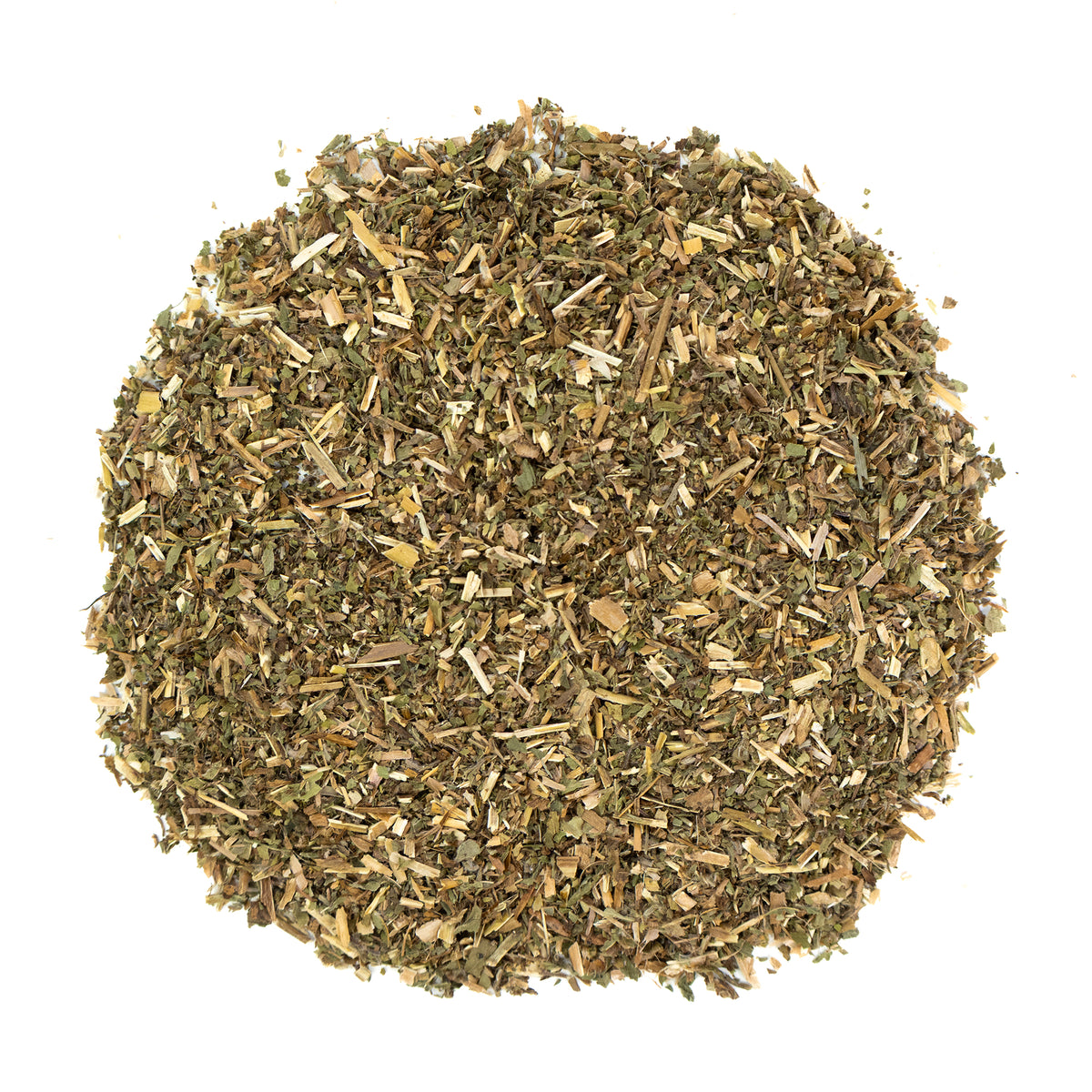
The taste is bitter and astringent. Most people simmer the bark into a tea, and it is the herb our customers reach for on the days when the body feels stiff, heavy or sore and they want physical ease.
Willow is one of the oldest plants in the European herbal record. The Greek physician Dioscorides wrote of its medicinal use in the first century, and Paracelsus did the same in the sixteenth(1).
Its modern story begins in 1763, when the Reverend Edward Stone of Chipping Norton in Oxfordshire wrote to the Royal Society about his success with willow bark in cases of ague(2). From the eighteenth century on, the bark was known as a febrifuge, a herb for fevers(1).
In the nineteenth century chemists identified salicin in the bark, then made salicylic acid and, at the century's end, acetylsalicylic acid, the compound known as aspirin(1). Interest in the bark itself faded for a time. It has since returned, and willow bark is described in the European Pharmacopoeia and taken across Europe as a tea or an extract(1).
The characteristic compounds of willow bark are salicin and related salicylates such as salicortin, together with flavonoids, catechins and 8 to 20 per cent condensed tannins(1). Salicylate levels vary widely between species: about 0.5 per cent in White Willow, and 1 to 10 per cent in Salix fragilis(1). Salicin is a pro-drug, converted in the body to salicylic acid(1). In the laboratory and in clinical studies, willow bark extracts are studied for anti-inflammatory activity and for their effects on pain, low back pain in particular(1, 3).
In Western herbalism White Willow is classed as an anodyne, a herb for physical ease, and as a bitter astringent. Herbalists turn to it for stiff joints, a sore back and a heavy head, often alongside Meadowsweet or Devil's Claw.
People use it for short stretches, not as an everyday tea: a pot after a day of hard physical work, after long hours at a desk, or when the weather settles into the joints.
The European Medicines Agency found moderate evidence from clinical trials for one standardised willow bark extract in low back pain. For the tea and for other uses it relies on long-standing use(1). A 2015 review notes that relatively few human studies have been published(3). So we describe how it is used, not what it will do.
Clinically reviewed by Tamara Welsh, BSc, AdvDipWHM, ATMS, Clinical Herbalist ·
This profile is intended as a researched educational guide and does not replace the broader perspective of a herbal consultation.
★★★★★
4.8 out of 5, from 4 reviews
White Willow Bark works wonderfully and within 20/30 minutes. It works with your body as opposed to the pharmaceutical alternatives. Highly recommend it!
Hi there, thank you for your review! We're so glad to hear that our White Willow Bark Tea has been providing you with amazing pain relief. We take pride in offering a natural alternative to traditional pharmaceutical options. Thank you for recommending our product, we appreciate your support!
White Willow Bark Powder is doing the impossible, reducing cramps in my lower leg muscles,
helping me to rest and relax from constant circulation problems. This is definitely a must to have
in a First Aide cupboard. Made into a hot beverage, easiest way to administer and once digested
it only takes about 15 minutes to take effect. Pain starts to fade, just like unreal!
Hi there,
Thank you for taking the time to leave such a positive review for our White Willow Bark Tea. We are so glad to hear that it has been able to provide you with relief from your leg muscle cramps and circulation problems. We take great pride in offering products that are effective and easy to use, and we're happy to hear that this has been your experience. Thank you for choosing our product and for recommending it as a must-have in any First Aid cupboard. We appreciate your support and hope that our tea continues to bring you relief. Take care!
I bought White Williow Bark tea to relieve ongoing headaches because I was sick of relying on disprin and panadol which were causing me stomach problems. I am so amazed at how well it works. My headache disappears shortly after taking the tea, there’s no side effects and it tastes good.
Hi Anne-Maree, Thank you for your review! So glad to hear you are enjoying the White Willow Bark -- it is truly a game changer! Your feedback helps other customers connect to the best herbs & blends, so we appreciate you taking the time to share. Cheers!
Tastes good, very relaxing and helps me sleep.
In everyday life
White Willow bark is used in two main ways.
White Willow is usually taken after food, up to three times a day, and for short stretches. The European Medicines Agency suggests no more than four weeks at a time.
The bark that became a pill.
Chew a tiny piece of the bark and notice the bitterness and the way it dries the mouth. An English clergyman wrote to the Royal Society about this bark in 1763, and aspirin followed a century later.
Simmer a teaspoon or two for fifteen minutes and blend it with meadowsweet or peppermint and honey. Take it after food, for short stretches.
Sip slowly. Most modern medicines began as somebody chewing a bark by a river. What old knowledge are you carrying without knowing where it came from?
Shop

Medicine Garden

Single Herb
FAQ
White Willow (Salix alba) is a tall tree of the willow family, native to Europe and western and central Asia. Its bitter bark has been used since antiquity, and in the nineteenth century it led chemists to salicylic acid and, in time, to aspirin. Today White Willow bark is simmered into a tea or taken as a liquid extract.
White Willow is long associated with physical ease. In European herbal tradition the bark has been taken at times of fever, aches and stiff joints, and Western herbalists class White Willow as an anodyne and an astringent. The European Medicines Agency found moderate trial evidence for one standardised extract only, so we describe how it is used, not what it will do.
White Willow is best known as a herb people reach for when the body feels stiff, heavy or sore and they want a simple, bitter tea. Most people have a cup after food, up to three times a day, for a short stretch of days. The European Medicines Agency suggests no more than four weeks at a time.
Simmer 1 to 2 teaspoons of White Willow bark in a cup and a half of water for 15 minutes, then strain. Because it is a bark, it needs simmering, not steeping. The tea is bitter and astringent, so most people add honey or blend it with Meadowsweet or Peppermint.
No. White Willow is naturally caffeine free. The tea is made from the bark of a willow tree and tastes bitter and astringent. It does contain salicylates, the family of compounds related to aspirin, so the same care applies as with aspirin.
No. White Willow bark contains salicin, which the body converts to salicylic acid. Aspirin is acetylsalicylic acid, a compound first made at the end of the nineteenth century. The European Medicines Agency notes that willow bark produces relatively low salicylate levels, but that the usual precautions for salicylates also apply to willow.
White Willow contains salicylates, so it is best avoided in pregnancy, above all in the last three months, and when breastfeeding. Do not use it if you are allergic or sensitive to aspirin or anti-inflammatory medicines, or alongside anticoagulant medication. It is not for anyone under 18, and it may cause headaches or digestive upset in some people. If you take medication or have a health condition, check with your health professional first.
White Willow contains salicylates. Not recommended during pregnancy, and not to be used in the last three months. Avoid when breastfeeding. Do not use if you are allergic or sensitive to aspirin, other salicylates or anti-inflammatory medicines (NSAIDs), including asthma brought on by them. May cause headaches and digestive upset in susceptible people. Do not combine with anticoagulant medication. Not for children or teenagers under 18.
As described in the monographs cited under Sources.