Wild Lettuce Profile
Wild Lettuce
Lactuca virosa
For deep rest, physical ease and quietening the mind.


Cart
Your cart is empty

Join us in our love of herbs
Wild Lettuce Profile
Lactuca virosa
For deep rest, physical ease and quietening the mind.
Herbal Intelligence
Wild Lettuce (Lactuca virosa) is a tall, bitter relative of garden lettuce in the daisy family, native to Europe and western Asia. When cut, the plant bleeds a milky sap that dries to a gum called lactucarium, which nineteenth-century physicians used as a sedative.
The taste is strongly bitter. Most people take Wild Lettuce as an evening tea or a liquid extract, and it is the herb our customers reach for at the end of a long day, when the body is tired, the mind is busy and they want deep rest.
Lettuce has been written about as a medicinal plant since antiquity, though the old texts rarely make clear which lettuce they meant(1). By the nineteenth century European medicine had settled on two: the garden lettuce and its bitter wild cousin, Lactuca virosa(1). The species name virosa means 'toxic'(2).
The milky sap, dried to a gum called lactucarium, was regarded as an intoxicant and used as a sedative and an analgesic(1). Physicians of the day thought it weaker than opium but free of opium's side effects, and the plant is still known as opium lettuce(1, 2).
Wild Lettuce still grows on riverbanks and waste ground, and in northern Iran the fresh plant is sometimes eaten as a wild green, not always safely(2). In Western herbal practice the dried leaf is taken as an evening tea.
The aerial parts and milky latex of Wild Lettuce (Lactuca virosa) contain sesquiterpene lactones, including lactucin and lactucopicrin, along with polyphenols and small amounts of flavonoids(3, 4). In laboratory systems the sesquiterpene lactones have been studied for enzyme inhibition and receptor-mediated activity, and polyphenol fractions for antioxidant effects(3, 4). The make-up varies with the plant part, the extraction method and the chemotype(3, 4).
In Western herbalism Wild Lettuce is classed as a sedative and a nervine, and as an antispasmodic: a bitter evening herb for a restless body and a busy mind. It is usually blended, most often with Passionflower, Valerian or California Poppy.
People use it late in the day: a cup an hour before bed, or a little liquid extract in water. For some it is part of habit shifting, a bitter nightcap that is not a drink.
The research is thin. The plant's bitter compounds, lactucin and lactucopicrin, have shown sedative effects in mice(6), which is laboratory work, not evidence in people. A report of eight people who became unwell after eating the fresh plant raw is a reminder to handle it with respect(2). So we describe how it is used, not what it will do.
Clinically reviewed by Tamara Welsh, BSc, AdvDipWHM, ATMS, Clinical Herbalist ·
This profile is intended as a researched educational guide and does not replace the broader perspective of a herbal consultation.
In everyday life
Wild Lettuce leaf is used in three main ways.
Wild Lettuce is mostly taken in the evening, though the tea can be had up to three times a day. Keep each serve modest: this is not a herb to take in large amounts.
The bitter cousin.
Look at the dried herb and think of the plant: a tall, spiny lettuce that bleeds milky sap when cut. Your salad lettuce is its mild descendant; this is the wild one, and it keeps its bitterness.
Steep a teaspoon or two for ten to fifteen minutes with passionflower or chamomile and honey, in the last hour of the evening.
Sip slowly. The wild version of a familiar thing keeps what cultivation bred out. What wildness have you let be bred out of your days?
In the Botanical Guides
Shop

Botanical Concentrate
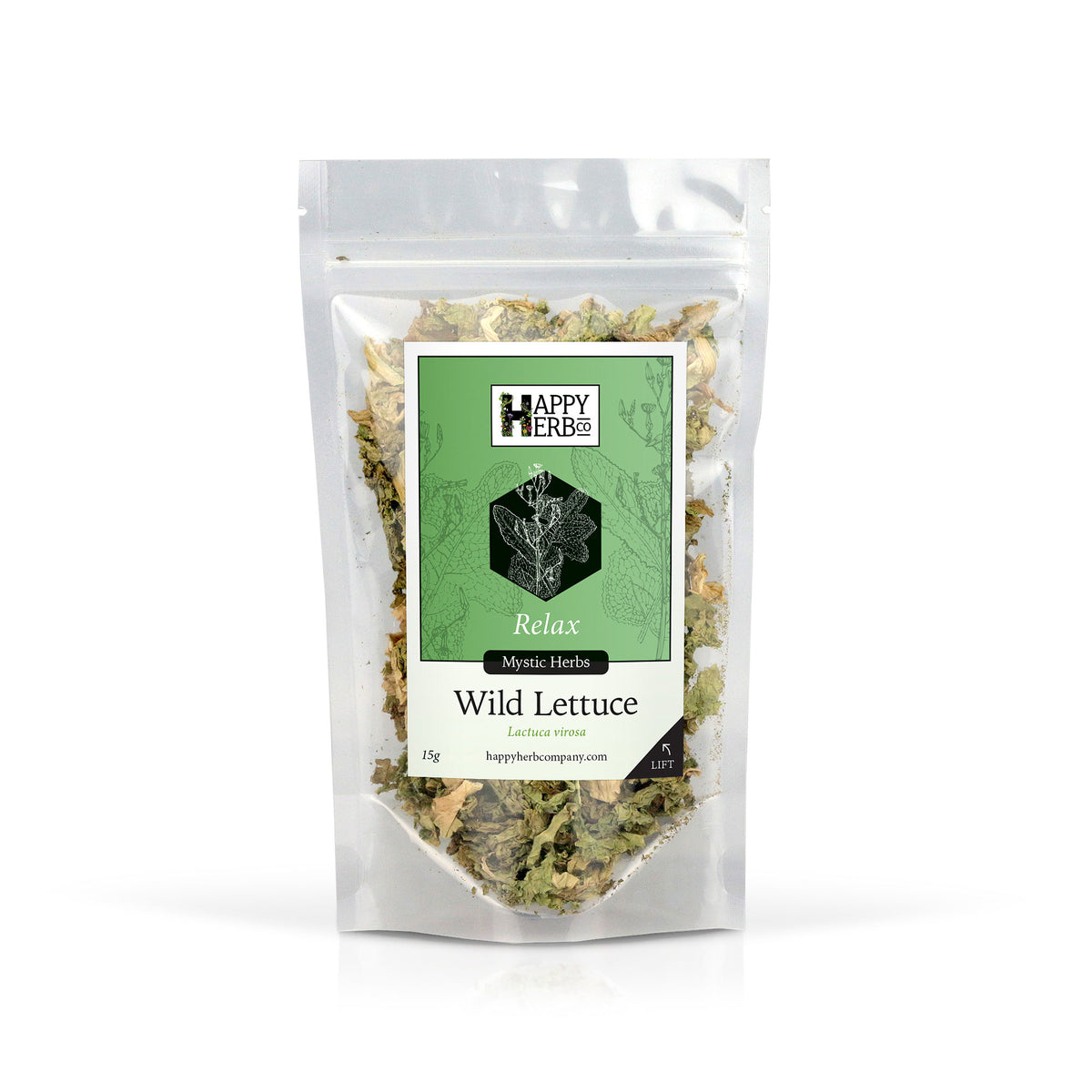

Mystic Herb
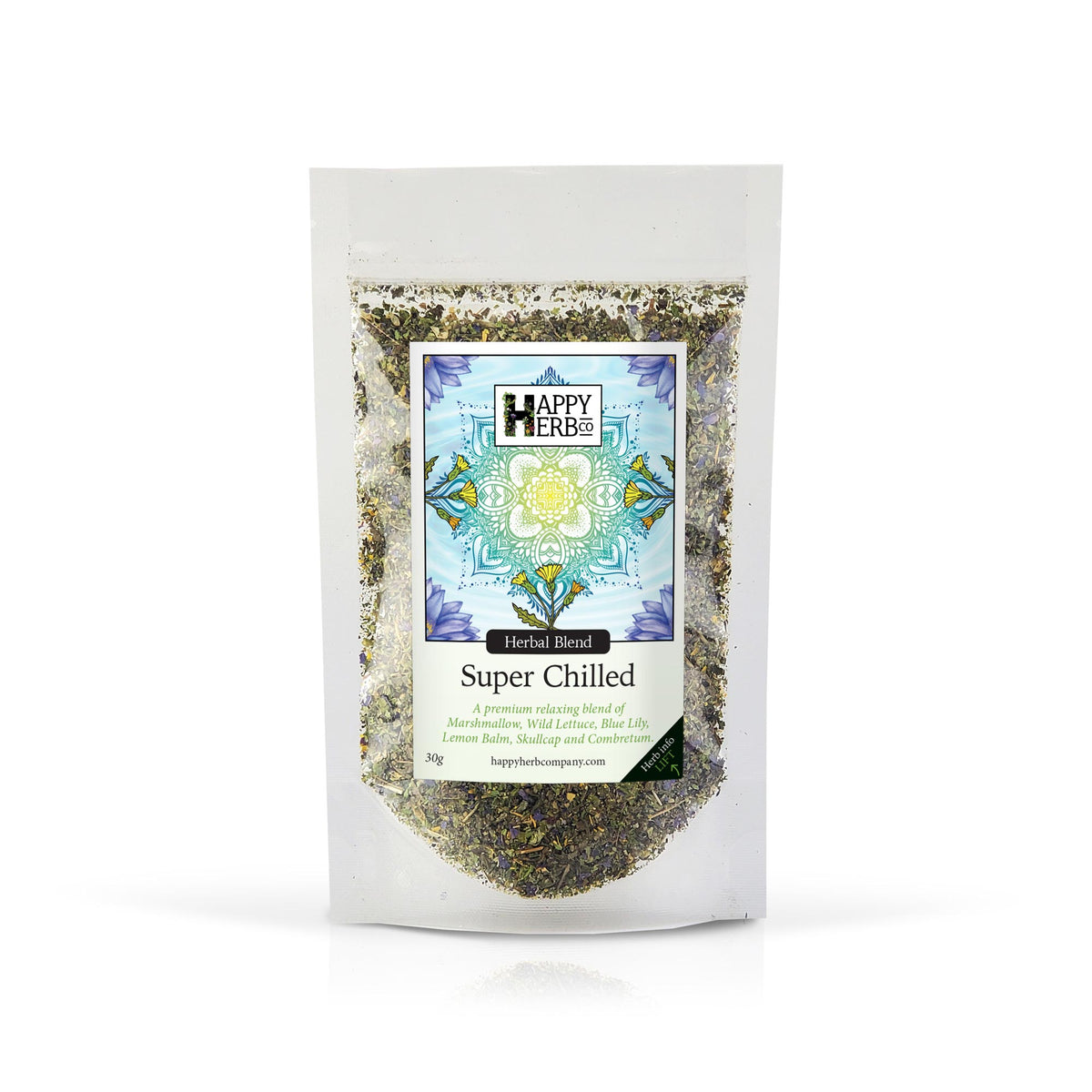
Milled Blend
A soft, dreamy milled blend with wild lettuce, lemon balm and blue lily.
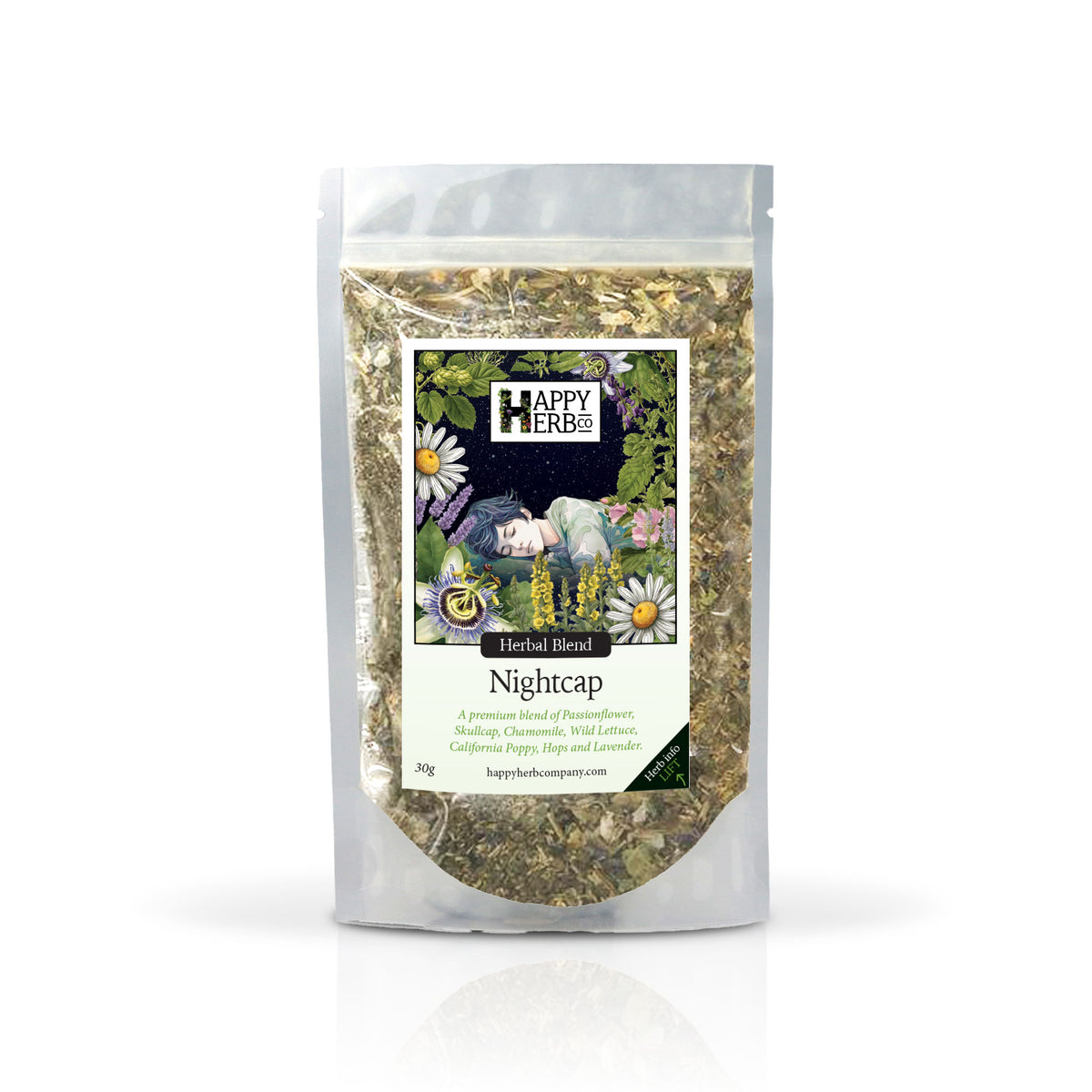

Milled Blend
FAQ
Wild Lettuce (Lactuca virosa) is a tall, bitter relative of garden lettuce in the daisy family, native to Europe and western Asia. Its milky sap dries to a gum called lactucarium, which nineteenth-century physicians used as a sedative, and which gave the plant the name opium lettuce. Today Wild Lettuce is taken as an evening tea or a liquid extract.
Wild Lettuce is long associated with deep rest and physical ease. Nineteenth-century physicians used its dried sap as a sedative, and Western herbalists class Wild Lettuce as a sedative and a nervine, taken as an evening tea. Its bitter compounds have shown sedative effects in mice, which is not evidence in people, so we describe how it is used, not what it will do.
Wild Lettuce is best known as a herb people reach for when they need to quieten body and mind at the end of the day. Most people have a cup of the tea, or a liquid extract in a little water, about an hour before bed. It is often blended with Passionflower, Valerian or California Poppy.
Steep 1 to 2 teaspoons of dried Wild Lettuce in a cup of just-boiled water, covered, for 10 to 15 minutes, then strain. The tea is very bitter, so most people blend it with Passionflower, Chamomile or Peppermint, or add honey to taste.
No. Wild Lettuce is naturally caffeine free, so the tea suits the evening and can take the place of a late cup of tea or coffee. It is very bitter on its own and is usually blended with other caffeine-free herbs such as Passionflower or Chamomile.
Yes. Dried Wild Lettuce leaf is smoked in some herbal blends, including our milled herb blends, where it sits alongside other evening herbs. It is better documented as a tea and an extract, and we found no reliable written history of smoking it.
Inhaling smoke is harmful; we describe how the herb is used, we do not suggest it. Many people prefer Wild Lettuce as a tea.
Wild Lettuce is likely unsafe when taken in large amounts, or when the plant has been harvested too early. A report in BMJ Case Reports describes eight people who became unwell after eating the fresh plant raw; all recovered. Keep to a modest serve of the dried herb. If you take medication or have a health condition, check with your health professional first.
Use Wild Lettuce as an alcohol alternative when you’re seeking deep relaxation, physical release, and mental calm—especially in moments where pain, tension, or restlessness might lead you to reach for a drink.
Wild Lettuce is best known as a herb people reach for when sleep will not come. As an antispasmodic, anodyne and nervine, it is used in the evening for getting to sleep and for restlessness. It is also used for pain, so if that is what is keeping you up at night, it is one to look at.
Wild lettuce is likely unsafe when eaten in large amounts or when the wild lettuce has been harvested too early.
As described in the monographs cited under Sources.