Valerian Profile
Valerian
Valeriana officinalis
For deep sleep, sleep onset and nervous system ease.


Cart
Your cart is empty

Join us in our love of herbs
Valerian Profile
Valeriana officinalis
For deep sleep, sleep onset and nervous system ease.
Herbal Intelligence
Valerian (Valeriana officinalis) is a tall perennial with clusters of pale pink flowers, native to Europe and western Asia. Its pungent root has been used since the times of ancient Greece and Rome, and it is the best-known bedtime herb of European tradition.
The taste is earthy, bitter and strong, with a smell people tend to either like or avoid. Most people take Valerian as a liquid extract or a tea, often blended with Hops or Passionflower, and it is the herb our customers reach for at night, when sleep is slow to come and the nerves need settling.
Valerian is native to Europe and Asia, and has been used medicinally since the times of early Greece and Rome(1). Around 50 to 70 CE the Greek physician Dioscorides described the root of a plant he called 'phu' or 'wild nard', thought to be a Valerian, though it cannot be identified with certainty(2).
The name is usually traced to the Latin valere, 'to be strong or well', and an old English name for the plant is All-Heal. By about 1800 European physicians were writing of the root as an antispasmodic and a remedy for the nerves, and the German name of the time was Katzenbaldrian, cat's valerian(2).
In 1944 the German physician Weiss was recommending it for nervous agitation and sleeplessness, as a tea of two teaspoons to the cup or as a tincture(2). The root is still listed in the European, British and United States pharmacopoeias(2).
The dried root of Valerian (Valeriana officinalis) contains volatile oils rich in sesquiterpenes, such as valerenic acid and its derivatives, together with iridoids known as valepotriates(3, 4). In experimental models these compounds have been studied for their interactions with GABA-related signalling and with smooth muscle, though which of them matter most has not been settled(3).
In Western herbalism Valerian is classed as a sedative and a nervine: the classic root for the end of the day. It is often paired with Hops, Passionflower or Skullcap.
People take it in the evening, as a little liquid extract or a cup of tea half an hour to an hour before bed. It is not thought of as a knock-out herb. The European Medicines Agency describes a gradual effect that builds over two to four weeks of regular use(2). A small number of people find it makes them restless instead.
The research is mixed. The European Medicines Agency accepts certain Valerian root extracts as a well-established medicine for mild nervous tension and sleep disorders(2). The US National Center for Complementary and Integrative Health calls the evidence on sleep inconsistent(1). So we describe how it is used, not what it will do.
Clinically reviewed by Tamara Welsh, BSc, AdvDipWHM, ATMS, Clinical Herbalist ·
This profile is intended as a researched educational guide and does not replace the broader perspective of a herbal consultation.
★★★★★
4.9 out of 5, from 24 reviews
Take it before bed and sleep right through !! Highly recommend
Yes. The original Valium, it is very potent, and like you say, take right before you wish to sleep. Thanks Laura.
I have it every evening to help me relax. Only wish I could buy it in bigger packs!
Hi Kayla, Thank you for your review! We greatly appreciate your support and are thrilled to hear that you had a wonderful experience with the Valerian.
Our goal is to provide the best possible herbs & blends to our valued customers, and your feedback motivates us to continue working hard towards that goal .
If you ever have any more feedback or questions in the future, please don't hesitate to get in touch. Your feedback is invaluable to us, and we hope to continue to serve you in the future!
Valerian as a herbal tea is a gentle way to entice a better sleep. Valerian has a calming effect without the grogginess of other treatments.
Hi Susan, Thank you so much for your kind words and positive feedback! We greatly appreciate your support and are thrilled to hear that you had a wonderful experience with the Valerian.
Our goal is to provide the best possible herbs & blends to our valued customers, and your feedback motivates us to continue working hard towards that goal .
If you ever have any more feedback or questions in the future, please don't hesitate to get in touch. Your feedback is invaluable to us, and we hope to continue to serve you in the future!
Valerian root is the best medicine for relaxation.
A total chill herb. Love it!
Hi Sabrina, Thank you so much for your kind words and support! We're delighted to hear that you had a positive experience with the Valerian. It is such a lovely herb for relaxation and sleep. We appreciate your support!
xx
I have chronic fatigue syndrome which for me includes extreme muscle pain and weakness. Valerian has been the only thing that works to reduce my pain allowing me to sleep deep without awaking up due to pain and last throughout the night and into the next morning. Allowing me to get up and get ready with minimal pain. I'd recommend this for sleep and pain 100 times over.
Hi Page, Thank you for the review! So glad the Valerian is helping you with pain and fatigue. Your feedback helps other customers connect with the best herbs for their needs so we appreciate you taking the time to share. Cheers!
In everyday life
Valerian root is taken in two main ways.
Valerian is an evening herb, taken half an hour to an hour before bed. Many people find it suits a week or two of regular use better than a single night.
The smell is the price of admission.
Open the jar and smell it honestly. Valerian root smells of old socks and damp earth, and cats love it as much as catnip. People have put up with the smell for two thousand years because of what comes after.
Steep a teaspoon of root, covered, for twenty minutes with peppermint and honey, or take the tincture in water, an hour before bed.
Sip slowly. Not everything good is pleasant on the way in. What have you avoided because the first step was unappealing?
In the Botanical Guides
Shop
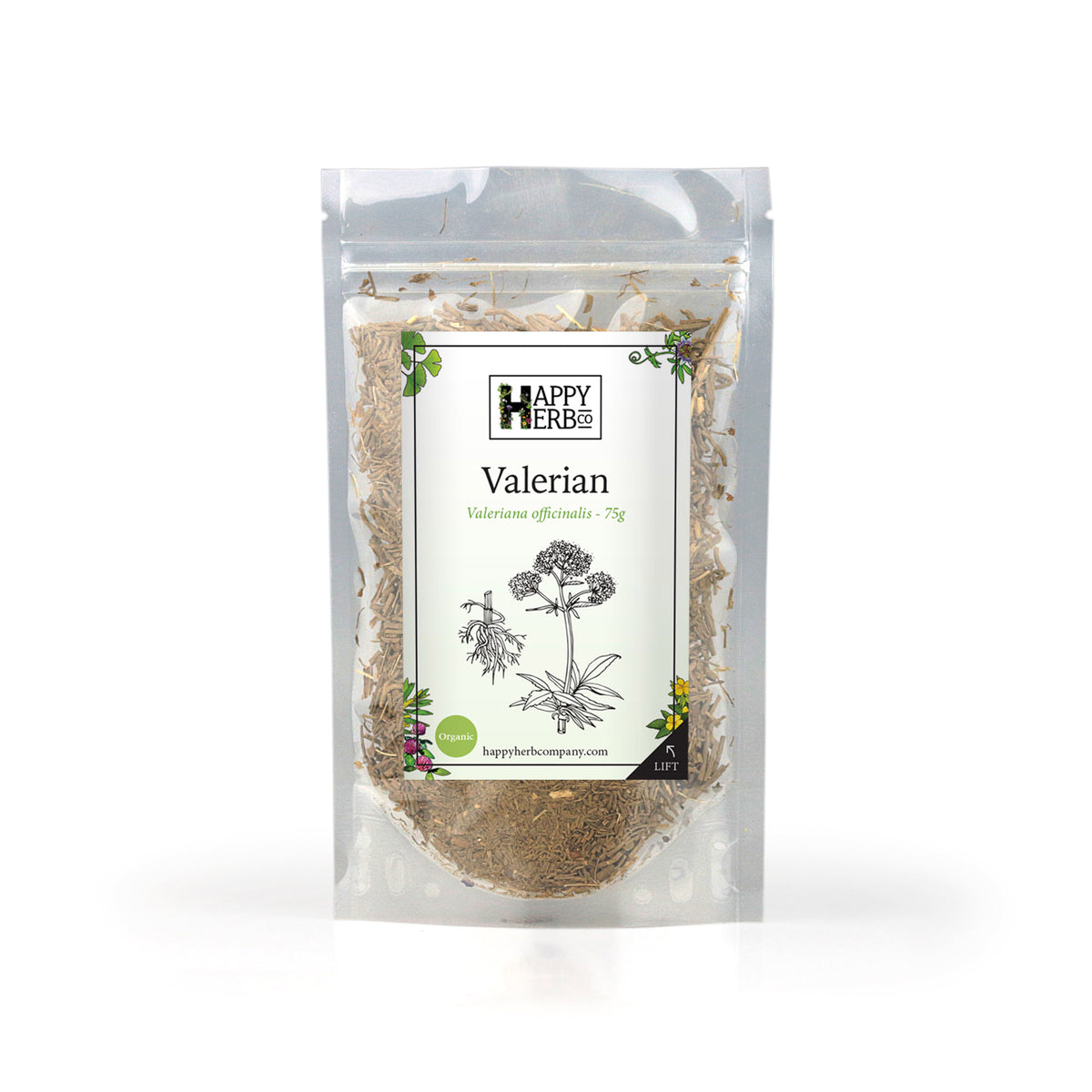
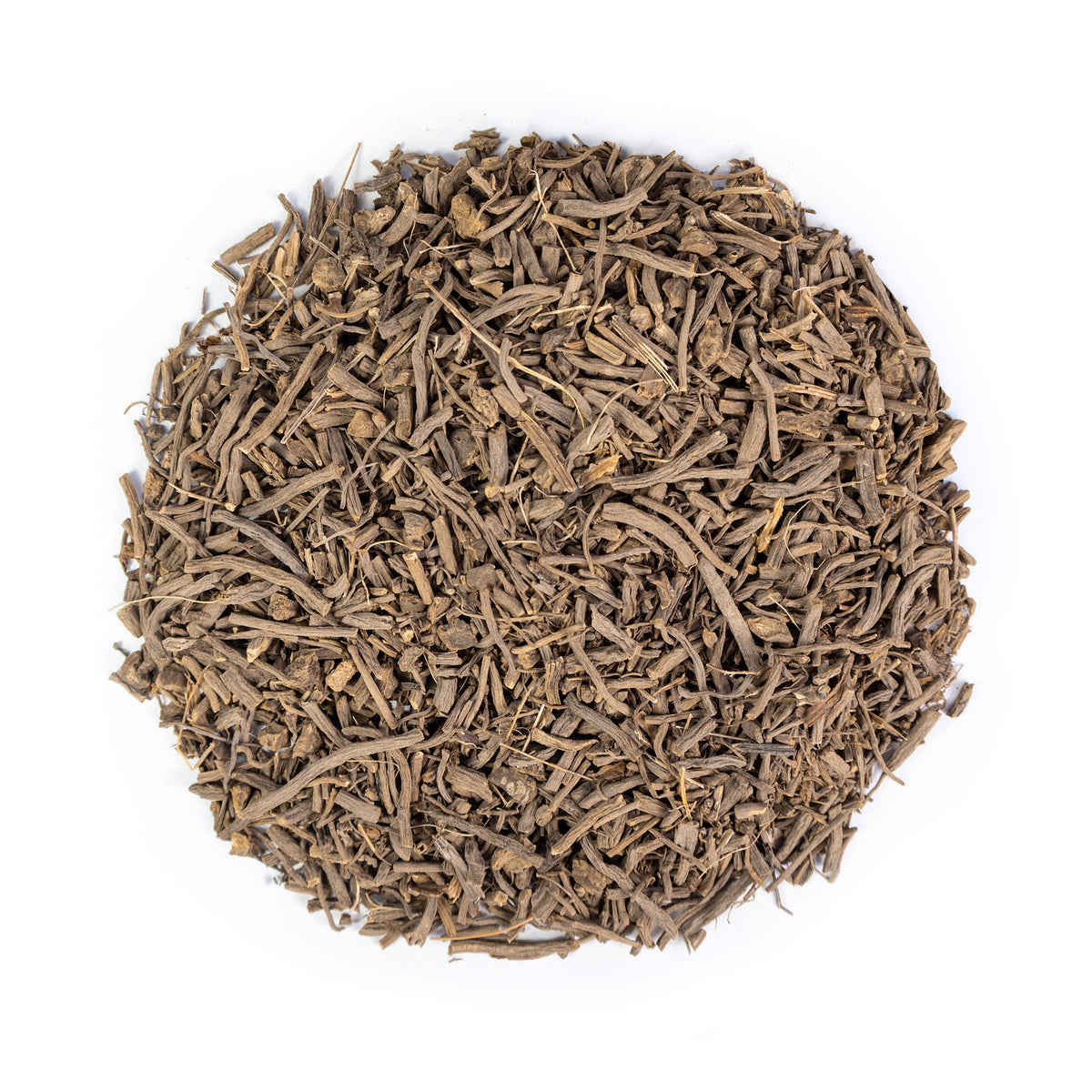
Single Herb

Spagyric
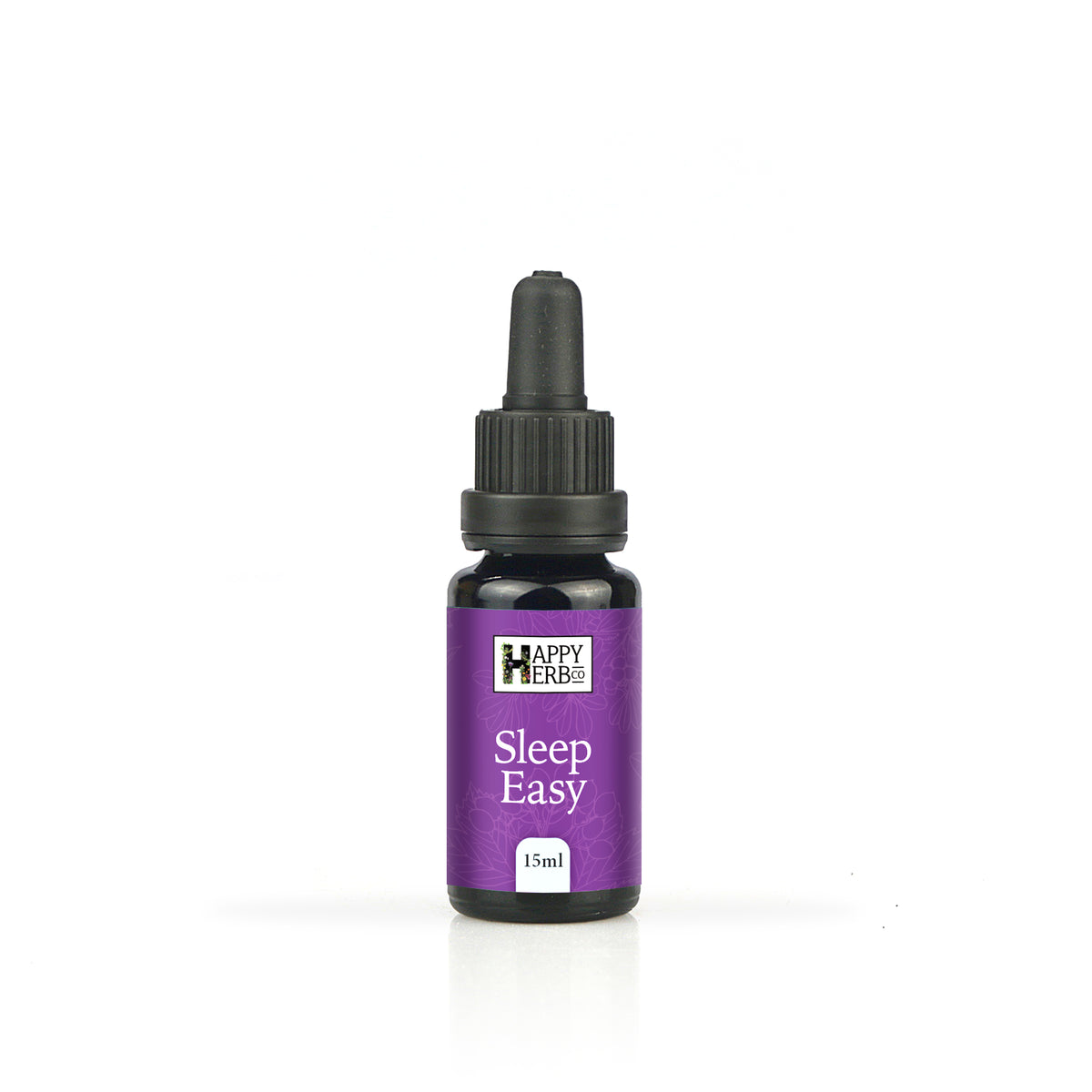
Spagyric
Passionflower, California poppy, ashwagandha and valerian in one spagyric.
FAQ
Valerian (Valeriana officinalis) is a tall flowering perennial native to Europe and western Asia. Its pungent, earthy root has been used since the times of ancient Greece and Rome, and it is the best-known bedtime herb of European tradition. Today Valerian is taken as a liquid extract or a tea, often blended with Hops or Passionflower.
Valerian is long associated with rest, sleep and settled nerves. In European herbal tradition the root is taken in the evening as a tea or tincture, and Western herbalists class it as a sedative and a nervine. The US National Center for Complementary and Integrative Health calls the evidence on sleep inconsistent, so we describe how it is used, not what it will do.
Valerian is best known as a herb people reach for when sleep is slow to come and they need to settle at the end of the day. Most people take a liquid extract or a cup of tea half an hour to an hour before bed. Its effect is described as gradual, building over two to four weeks of regular use.
Steep 1 teaspoon of dried Valerian root in a cup of just-boiled water, covered, for 20 minutes, then strain. Valerian has a strong, earthy smell and a bitter taste, so many people add honey or blend it with Peppermint or Lemon Balm. Drink it half an hour to an hour before bed.
No. Valerian is naturally caffeine free. It is a root taken in the evening, and is often blended with other caffeine-free herbs such as Hops, Passionflower, Chamomile and Lemon Balm in bedtime teas.
It can. Valerian can cause drowsiness and slower reflexes, and the European Medicines Agency advises that it may impair the ability to drive or use machines. The same agency describes its effect on sleep as gradual, building over two to four weeks, not as an instant sedative. A small number of people feel restless after Valerian instead of sleepy.
Do not take Valerian with alcohol, or if you need to drive or operate machinery. It can add to the effects of sedative and anti-anxiety medicines, so seek professional advice first, and avoid it with haloperidol. The US NCCIH lists headache, stomach upset and vivid dreams as side effects. If you are pregnant or breastfeeding, take medication or have a health condition, check with your health professional first.
Valerian is best known as a herb people reach for when sleep will not come, when the body is tense and the mind keeps turning. Western herbalists class it as a nervine and one of the strongest herbs in the sleep tradition, used since Roman times for restlessness and broken nights. A few people find it lively rather than drowsy, so start with a small serve.
Most people take it an hour before bed, as a tea or a liquid extract, for a few weeks at a time. If you take medication for sleep or mood, or are pregnant, speak with your health professional first.
Can increase the effects of sedative or anti-anxiety medications such as opiates, benzodiazepines and barbiturates: exercise caution and take under the supervision of a professional. Avoid if you take haloperidol. Can cause drowsiness and reduced reflexes: do not take if you need to drive or operate machinery. In 10% of the population, Valerian causes the opposite effect: instead of sedation it causes agitation and restlessness. Do not take with alcohol. If you are pregnant or breastfeeding, check with your health professional first.
As described in the monographs cited under Sources.