Skullcap Profile
Skullcap
Scutellaria lateriflora
For mental restlessness, nervous system support and sleep ease.


Cart
Your cart is empty

Join us in our love of herbs
Skullcap Profile
Scutellaria lateriflora
For mental restlessness, nervous system support and sleep ease.
Herbal Intelligence
Skullcap (Scutellaria lateriflora) is a slender perennial of the mint family, native to North America, where it grows in damp ground. Its small blue flowers are shaped like tiny helmets, which gave the plant its name, and its leaves and stems have been used for centuries as a herb for the nerves.
The taste is green and mildly bitter. Most people take Skullcap as a tea or a liquid extract, and it is the herb our customers reach for when the mind is busy and will not settle, in the day or at bedtime.
Skullcap is native to North America, where Native American peoples used it for centuries for menstrual troubles, nervousness, and digestive and kidney complaints(1). The Cherokee took infusions of the root for monthly periods(2).
The name describes the flower, which was thought to look like the helmets worn by European soldiers(1). An older name, Mad-Dog Skullcap, goes back to the plant's first appearance in medical writing, as a remedy for rabies(3). That use did not last. Its place as a herb for the nerves did.
Skullcap is one of the Cherokee medicinal plants still in use as a herbal medicine today(2). The dried leaves and stems are taken as a tea or an extract at times of stress and sleeplessness(1).
The aerial parts of Skullcap (Scutellaria lateriflora) contain a range of flavonoids, including scutellarin, baicalin derivatives and chrysin analogues, alongside phenolic acids and small amounts of volatile compounds(4, 5). In neuronal models these compounds have been studied for their interactions with GABA signalling and calcium channels(5), and flavonoid-rich extracts have shown antioxidant activity in cell-based tests(4, 6).
In Western herbalism Skullcap is classed as a nervine and an antispasmodic: a herb for a busy, overstretched nervous system. It is often paired with Passionflower, Valerian or Oat Straw, and it appears in many stress and evening blends.
People use it at two points in the day: a cup in the afternoon when the mind is racing, and a cup or a little liquid extract before bed. For some it is part of habit shifting, a quiet ritual to close the day.
The research is still thin. In a 2014 crossover trial of 43 healthy volunteers, Skullcap did not differ from placebo on an anxiety scale, though overall mood scores improved with Skullcap and not with placebo(7). The US National Institutes of Health notes that Skullcap has been linked to several cases of liver injury, usually in products that combined it with other herbs(1). So we describe how it is used, not what it will do.
Clinically reviewed by Tamara Welsh, BSc, AdvDipWHM, ATMS, Clinical Herbalist ·
This profile is intended as a researched educational guide and does not replace the broader perspective of a herbal consultation.
★★★★★
4.9 out of 5, from 9 reviews
Great quality product. Will purchase again
Great product. Always super fast shipping too!
I have struggled with sleep issues for a few years. This product definitely helped.
Incredible Shannyn thank you so much for leaving your experience with our Skullcap!
Definitely feel more relaxed after a tea of skull cap paired with passion flower.
Had definitely helped me get to sleep on those restless nights.
Love to relax after a hardworking day on my feet ready close to bed . Smells n taste great
Hi Tina, Thank you for the review! So glad to hear you are enjoying the Skullcap. Cheers!
In everyday life
Skullcap leaf and stem are used in three main ways.
Skullcap tea can be had up to three times a day, or as a single cup in the evening.
Quiet the room upstairs.
Look at the dried herb, small leaves and the little helmet-shaped flower cases that give it its name. American herbalists of the nineteenth century reached for it when the mind would not stop.
Steep a teaspoon or two for ten minutes, with passionflower or oat straw, and sit somewhere without a screen in sight.
Sip slowly. A busy mind is not a broken one; it is simply loud. What would you hear if the room upstairs went quiet?
Shop


Single Herb
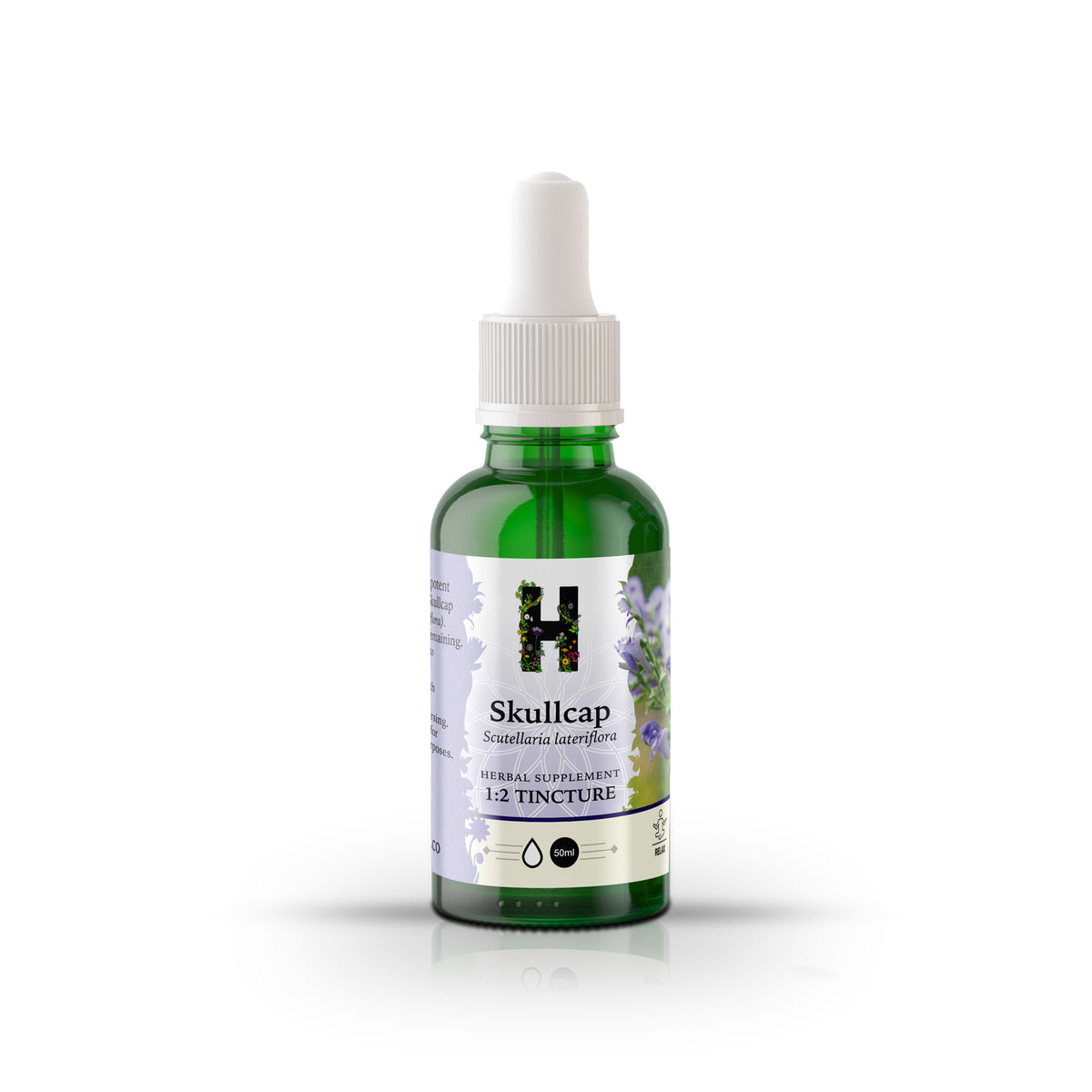
Botanical Concentrate
For mental restlessness, nervous system support and sleep ease.
Spagyric
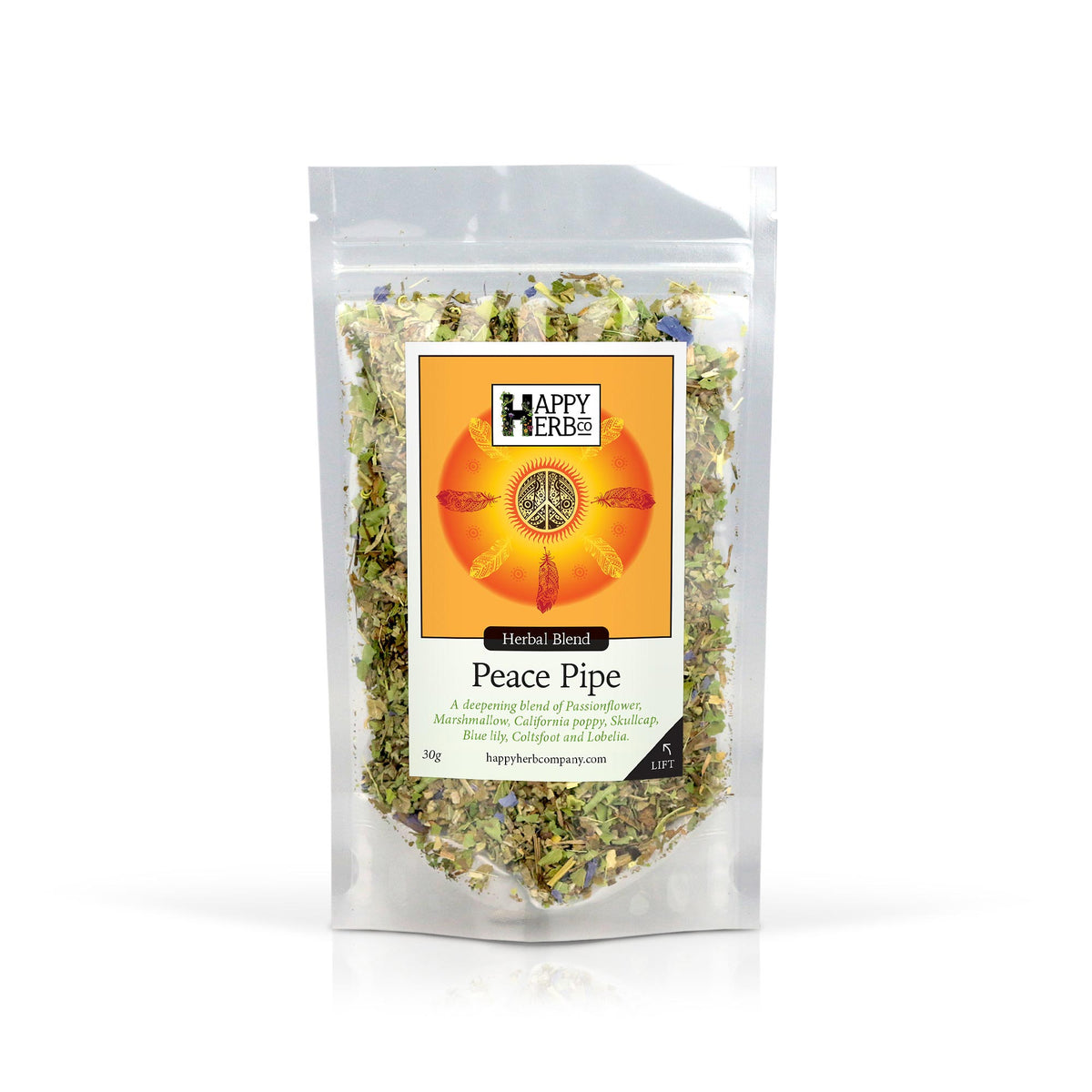

Milled Blend
A soft, dreamy milled blend with passionflower, marshmallow and blue lily.
FAQ
Skullcap (Scutellaria lateriflora) is a slender perennial of the mint family, native to North America. It is named for its small blue flowers, which are shaped like tiny helmets, and its leaves and stems have been used for centuries as a herb for the nerves. Today Skullcap is taken as a tea or a liquid extract. It is a different plant from Chinese Skullcap (Scutellaria baicalensis).
Skullcap is long associated with calm and rest. Native American peoples used it for nervousness and for the monthly cycle, and Western herbalists class it as a nervine. In a 2014 trial in healthy volunteers it did not differ from placebo on an anxiety scale, though mood scores improved. The research is still thin, so we describe how it is used, not what it will do.
Skullcap is best known as a herb people reach for when their mind is busy and they need gentle calming. Most people have a cup of Skullcap tea in the afternoon or early evening, or a little liquid extract in water before bed. It is often blended with Passionflower, Valerian or Oat Straw.
Pour a cup of just-boiled water over 1 to 2 teaspoons of dried Skullcap and steep, covered, for 10 minutes, then strain. Sweeten with honey if you like. The flavour is green and mildly bitter, and Skullcap blends easily with other herbs. The tea can be had up to three times a day.
No. Skullcap is naturally caffeine free, so Skullcap tea can be drunk in the evening and before bed. It is a leafy herb of the mint family, not a true tea, and it is often blended with other caffeine-free herbs such as Passionflower and Chamomile.
Yes. Dried Skullcap is smoked in some herbal blends, including our milled herb blends, where it serves as a mild, green base leaf. Skullcap is far better known as a tea and a liquid extract, and there is little written history of smoking it.
Inhaling smoke is harmful; we describe how the herb is used, we do not suggest it. Many people prefer Skullcap as a tea.
Use caution with Skullcap if you take sedatives or medication for anxiety. The US National Institutes of Health notes that Skullcap has been linked to several cases of liver injury, usually in products that combined it with other herbs. If you take medication or have a health condition, check with your health professional first.
Skullcap is the herb Western herbalists class as a nervine tonic: traditionally used to nourish and settle an overworked nervous system. It is best known as a herb people reach for when anxiety comes with exhaustion: the wired but tired feeling, or a mind that will not stop spiralling. Herbalists also turn to it for tension headaches and premenstrual tension.
Most people take it in the evening, as a tea or a liquid extract, for a few weeks at a time. It suits sensitive nervous types who find stronger herbs too much. If you take medication for sleep or mood, or are pregnant, speak with your health professional first.
Skullcap, as the name suggests, is great for when a busy mind is keeping you awake. It is highly valued for its ability to soothe and tone the nervous system. This herb has mild sedative properties and is often used to alleviate symptoms of anxiety, nervousness, and insomnia. Skullcap is particularly effective when combined with other calming herbs like Valerian, Passionflower, or Lemon Balm. It’s also very effective for tension headaches.
Use caution with Skullcap if you are also taking sedative or anxiety medication. Skullcap has been linked to rare cases of liver injury, usually in people taking it together with other herbs. If you have a liver condition, check with your health professional before use.
As described in the monographs cited under Sources.