Oat Straw Profile
Oat Straw
Avena sativa
For nervous system restoration, deep nourishment and daily wellness.


Cart
Your cart is empty

Join us in our love of herbs
Oat Straw Profile
Avena sativa
For nervous system restoration, deep nourishment and daily wellness.
Herbal Intelligence
Oat Straw (Avena sativa) is the green stem and leaf of the common oat, a cereal grass native to Europe and western Asia. Oats have been grown in Europe for around 4000 years, and the green plant, cut before the grain ripens, has a long history as a calming, restoring herb.
The taste is mild, sweet and a little grassy. Most people take Oat Straw as a tea, on its own or in a blend, and it is the herb our customers reach for through long, demanding stretches, when they feel frayed and want something steadying in the cup.
Oats have been grown in Europe for around 4000 years, first of all as a food(1). Hippocrates, Pliny the Elder and Galen all recommended them as nourishing and strengthening(1).
Their use as a herb is recorded from the twelfth century. In her Physica the abbess Hildegard of Bingen advised a steam bath, made by pouring water in which oats had been cooked over hot stones, for anyone 'exhausted with an empty mind'(1). In the nineteenth century the German priest Sebastian Kneipp was a keen promoter of oat tea(1).
The green plant, cut before it flowers, has its own tradition as a calming herb, taken as a tea, an extract or the pressed juice of the fresh herb(1). The British Herbal Pharmacopoeia of 1976 describes a liquid extract and a tincture of Oat(1).
The aerial parts of Avena sativa, commonly called Oat Straw, and the seed both contain a range of plant compounds. These include mucilage-rich polysaccharides, beta-glucans, flavonoids and saponins, along with minerals such as silicon and calcium. The European Medicines Agency assesses the herb under the name Avenae herba(2). In the laboratory and in small human trials, green oat extracts are studied for their effects on attention and mood(1, 4).
In Western herbalism Oat Straw is classed as a nervine tonic and a nutritive: a mild, food-like herb taken steadily over weeks, not at the moment of need. Herbalists think of it for long, demanding stretches, when a person feels frayed and worn thin.
People drink it as a daily tea, often blended with Lemon Balm, Skullcap or Nettle. Because it is so mild, it is an easy first herb.
The European Medicines Agency accepts Oat herb as a traditional herbal medicine for mild mental stress and to aid sleep, on the strength of long use, and notes that evidence from clinical trials is insufficient(2). Trials of concentrated green oat extracts have reported changes on memory and attention tasks in healthy adults(4), but a concentrated extract is not a cup of tea. So we describe how it is used, not what it will do.
Developed and reviewed by Laura Grace, Owner and Creative Director of Happy Herb Co, Herb Educator and Registered Ayurvedic Lifestyle Consultant · Clinically reviewed by Tamara Welsh, BSc, AdvDipWHM, ATMS, Clinical Herbalist
This profile is intended as a researched educational guide and does not replace the broader perspective of a herbal consultation.
In everyday life
Oat Straw is used in three main ways.
Oat Straw is a daily herb, usually taken over several weeks.
The green before the grain.
Look at the green tops, cut before the oats ripened. The plant that becomes porridge was, for a few weeks, a soft, milky grass, and that is what herbalists wanted.
Steep a teaspoon or two for five to ten minutes, with lemon balm or on its own. It is mild and faintly sweet, a cup for the middle of an ordinary day.
Sip slowly. There is a stage before ripeness that has its own value. What in your life is still green, and good because of it?
In the Botanical Guides
Shop


Single Herb
Magic Elixirs
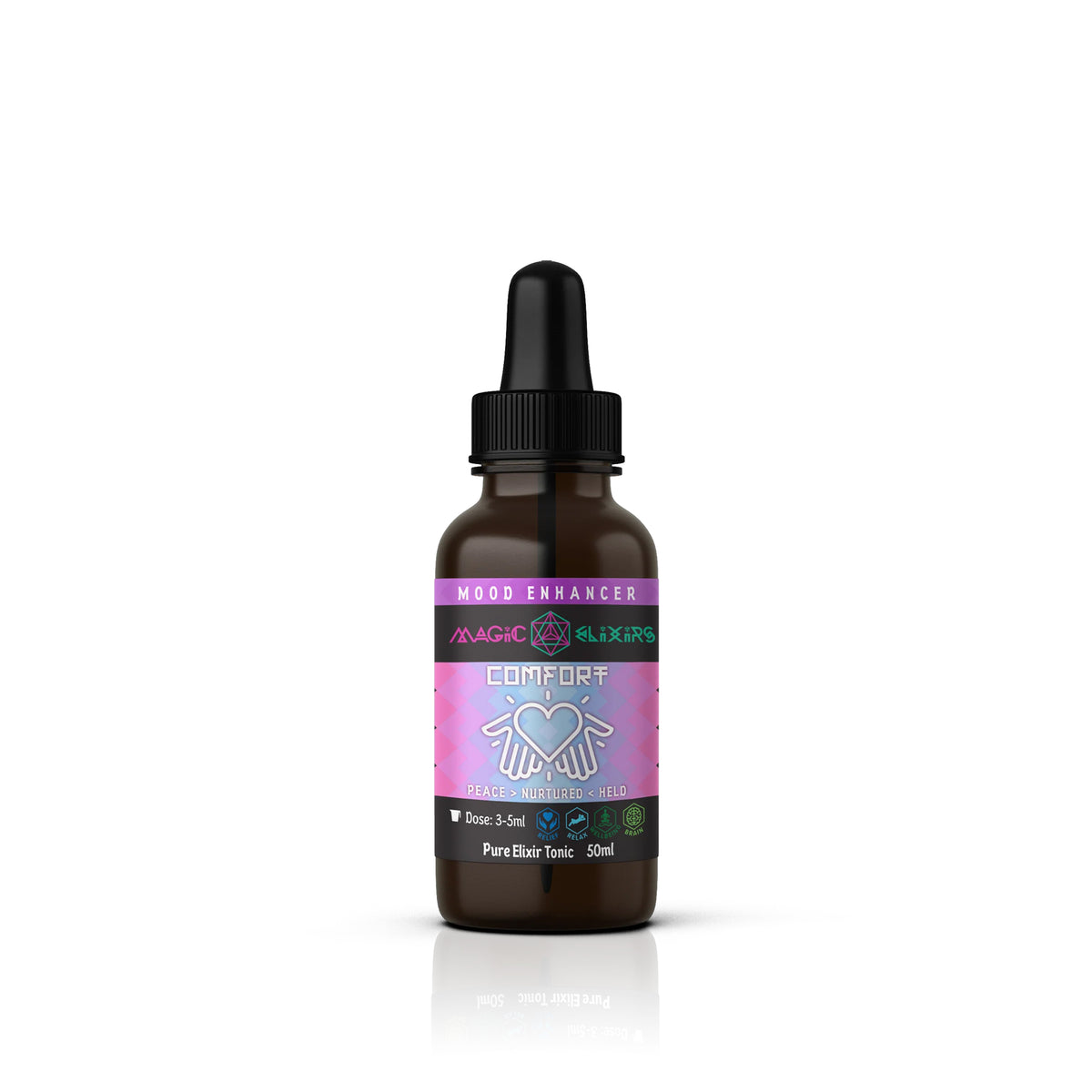
Ashwagandha, ginkgo, green oats, lemon balm and chamomile in one elixir.
FAQ
Oat Straw (Avena sativa) is the green stem and leaf of the common oat, a cereal grass native to Europe and western Asia. It is cut while the plant is still green, before the grain ripens. Oats have been grown in Europe for around 4000 years, and Oat Straw has a long history as a calming herb. Today it is taken as a tea.
Oat Straw is long associated with calm and with restoring the nerves. In European tradition the green plant is taken as a tea at times of strain, and Western herbalists class Oat Straw as a nervine tonic. The European Medicines Agency notes that evidence from clinical trials is insufficient, so we describe how it is used, not what it will do.
Oat Straw is best known as a herb people reach for when they feel frayed and want a mild, steadying tea through a demanding stretch. Most people drink a cup or two a day over several weeks, often in the afternoon or evening. It is a herb for steady use, not for the moment of need.
Steep 1 to 2 teaspoons of dried Oat Straw in a cup of just-boiled water, covered, for 5 to 10 minutes, then strain. The flavour is mild, sweet and a little grassy, so it needs nothing added. Oat Straw also blends well with Lemon Balm, Skullcap or Nettle.
No. Oat Straw is naturally caffeine free, so Oat Straw tea can be drunk at any time of day, including the evening. It is the green stem and leaf of the oat plant, not a true tea, and its mild, sweet flavour makes it an easy swap for an afternoon coffee.
It cannot be assumed to be. Oat Straw is the green stem and leaf of the oat plant, not the grain, but the European Medicines Agency advises caution for people with coeliac disease because data on the protein content of Oat herb are not available. If you avoid gluten for medical reasons, check with your health professional before using Oat Straw.
Do not use Oat Straw if you are allergic to oats. It lists no known side effects. The European Medicines Agency advises caution for people with coeliac disease. If you are pregnant or breastfeeding, take medication or have a health condition, check with your health professional first.
Do not use Oat Straw if you are allergic to oats, and use it with caution if you have coeliac disease, as its protein content is not known. If you are pregnant or breastfeeding, check with your health professional first.
As described in the monographs cited under Sources.