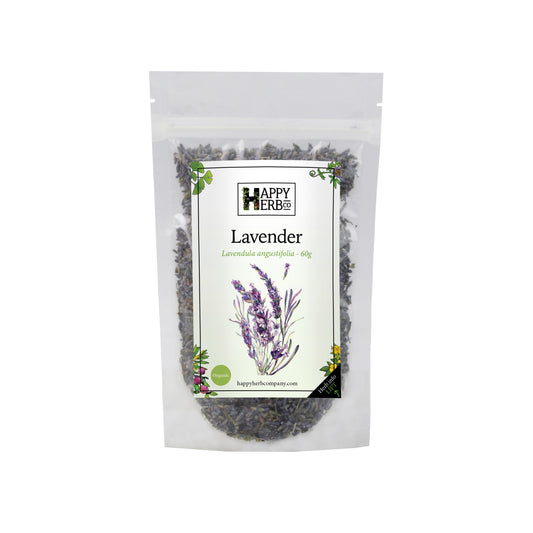
Botanical name
Lavandula angustifolia
Also known as English Lavender.
Beautiful aromatic flower, great as a tea to assist headaches, stress, anxiety, sleep, digestion & liver function.
Learn about Lavender
Lavender is a beautiful aromatic herb with purple flowers that originates from the Mediterranean region.
Its common and scientific name originates from lavare, the Latin word for wash or bathe. Indead, its fragrance does evoke the feeling of clean! The flowers were traditionally used to perfume linen, and keep moths and insects at bay. The essential oils responsible for Lavender’s clean and refreshing aroma have been found to be powerful antimicrobial agents.
Lavender is also gentle sedative that can help reduce stress and anxiety, assist sleep and reduce depression. Lavender is a traditional remedy for headaches; both internally as a tea and externally as an essential oil, rubbed into the temples.
As a tea or tincture, it can help dispel intestinal gas, stimulate liver and digestive function, increase bile flow, and reduce inflammation. It is safe for children and the elderly, and can be useful as a gentle digestive aid and calming herb.
It is also useful externally as an antiseptic, antifungal and soothing wash, douche or sitz bath. The essential oil is used externally for burns, cuts, scrapes and cold sores, and is added to many healing salves and creams.
Popular as a sachet herb in drawers to scent linen or under the pillow for sleep.
Frequently Asked Questions
What are the best herbs for anxiety attacks?
For anxiety attacks—which come on suddenly and feel intense—fast-acting herbs that calm the nervous system and ease panic are most effective. Here are some of the best ones:
- Kava – One of the strongest herbal relaxants. Calms the mind and body quickly, making it ideal for acute anxiety or panic. Best used occasionally. We recommend our Instant Kava for quick & easy preparation.
- Passionflower – Soothes racing thoughts and tension. Great for calming the nerves during high-stress moments or before bed. We recommend our Passionflower 1:2 Liquid Herb for ease of use & quick absorption.
- Skullcap – Eases sudden nervous tension, restlessness, and twitchy muscles. Can help slow mental spiraling. We recommend our Skullcap 1:2 Liquid Herb for ease of use & quick absorption.
- California Poppy – A gentle sedative that reduces emotional overwhelm and physical symptoms like a pounding heart or tight chest.
- Lemon Balm – Quick-acting and soothing for both the mind and digestion. Ideal when anxiety causes stomach upset or shakiness. We recommend our Lemon Balm 1:2 Liquid Herb for ease of use & quick absorption.
- Lavender – Both aromatherapy and internal use can rapidly calm the nervous system and reduce panic symptoms.
- Rescue Plus (Bach Flower Essence + Australian Bush Flower Essence) – Not an herb, but a classic fast-acting flower essence blend many find helpful in moments of crisis.
Common Uses
Anxiety, Appetite Stimulant, Candida, Cold Sores, Depression, Dermatitis, Digestive Complaints, Children, Fungal Infections, Gallbladder, Gastrointestinal Disorders, Hair & Nails, Headache, Indigestion, Infections, Insomnia, Liver Health, Pain, Relaxation, Sedation, Skin Conditions, Skin Health, Smudging, Stress, Wound Healing, Alzheimers & Dementia, Menopause, and Menstrual Health.Herbal Actions
Anti-Inflammatory, Antibacterial, Antimicrobial, Anxiolytic (Anti-Anxiety), Astringent, Bitter Tonic, Carminative, Cholagogue, Hepatic, Nervine, Sedative, Nervine Tonic, Nootropic, and Antispasmodic.Recipes
Got a recipe? Submit it here for a chance to be featured on our blog.
Precautions
Do not use in known allergy. Caution if taking sedatives or CNS depressants- consult your doctor and naturopath/herbalist.
Precautions
-
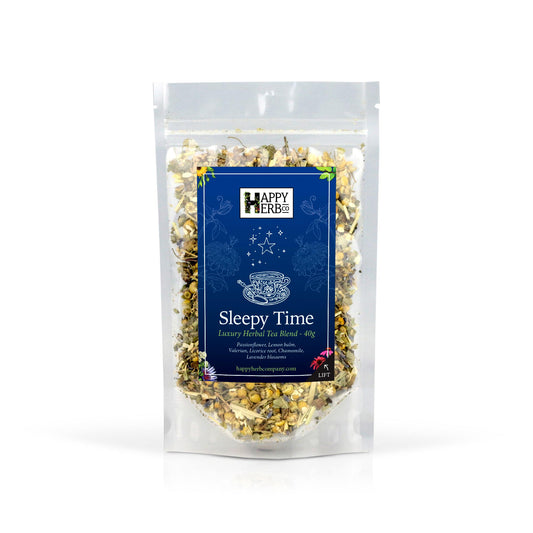
Sleepy Time Herbal Tea Blend
Vendor:Happy Herb CoRegular price $20.00 AUDRegular priceUnit price / perSale price $20.00 AUD
Collapsible content
References
<https://chestnutherbs.com/lavenders-medicinal-and-aromatherapy-uses-and-lavender-truffles/>
<https://www.ncbi.nlm.nih.gov/pmc/articles/PMC3612440/>
Deni Brown (2002), New Encyclopedia of Herbs & Their Uses, pp. 252-57.