

Chaste Tree Berry
Shipping calculated at checkout
Chaste Tree Berry: A Foundational Practice for Feminine Rhythm
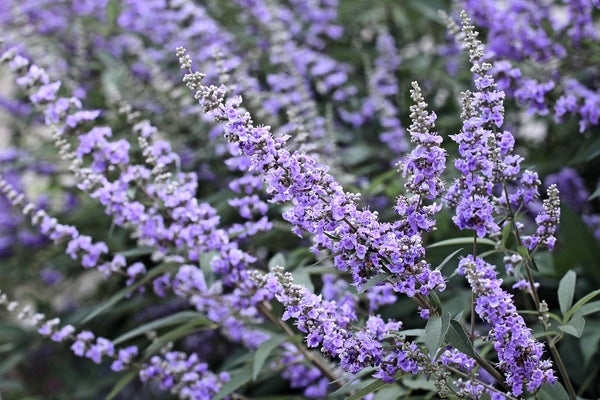
For those who tend to their rhythm with patience and care. Steady, considered and best appreciated over time, Chaste Tree Berry is one of the great slow build herbs of feminine herbalism, worked with consistently rather than reached for in moments of urgency. Long valued in Western and European herbal traditions as a herb of hormonal balance and feminine depth, it is a herb for those who understand that true balance is cultivated gradually.
- Character
- Bitter · Peppery · Rounded
- Companion for
- Feminine rhythm · Cycle support · Balance
- Pairs well with
- , ,
Raspberry Leaf (Rubus idaeus) is the leaf of the raspberry, a prickly cane fruit of the rose family native to Europe and northern Asia. While the berries went to the table, the leaves were dried for tea, and they have been used in Europe for centuries, above all as a women's herb.
The taste is mild, green and a little astringent, much like a light black tea. Most people take Raspberry Leaf as a tea, on its own or blended with Nettle, and it is the herb our customers reach for through the monthly cycle, when they want a plain, steady cup to come back to each day.
Dong Quai (Angelica sinensis) is a tall, aromatic perennial of the carrot family, native to the high mountains of China. Its root, known in Chinese as dang gui, has been among the most widely used herbs in Chinese herbal tradition for close to two thousand years, above all for women.
The taste is earthy, aromatic and bittersweet. Most people simmer the root into a tea or a pot of soup, or take it as a liquid extract, and it is the herb our customers reach for across the monthly cycle and the years of change that follow, when they want to feel nourished and steady.
Wild Yam (Dioscorea villosa) is a twining perennial vine native to eastern North America. Its knotted root, once known as colic root, was a staple of nineteenth-century American herbal practice, and it later became known for diosgenin, a plant compound used in the laboratory to make steroids.
The taste is mild and earthy, with a faint acrid edge. Most people simmer the root into a tea or use it in a cream, and it is the herb our customers reach for around the monthly cycle and at menopause, when they want to feel at ease in their body.
Ingredients
Chaste tree berry (Vitex agnus-catus)
Herbal Intelligence
Phytochemistry
The ripe berries of Chaste Tree (Vitex agnus-castus) contain flavonoids such as casticin and vitexin, iridoid glycosides such as agnuside, and diterpenoids. In the laboratory these compounds are studied for their influence on the body's hormone-regulating systems, especially the pituitary-hypothalamic axis.
Living tradition
Chaste Tree has been written about since antiquity. Hippocrates mentioned it around 400 BC, and Dioscorides and Pliny both described it in the first century AD(1, 2).
Suggested use
Crush or soak 1tsp per serve. Simmer 10mins, brew & serve.
Specifications
- Other Names
- Vitex agnus-catus
- Range
- Dried Herbs & Powders
- Grown In
- Turkey
- Organic Status
- Australian certified before repackaging
- Plant Parts
- Root
- Packaging
- Home compostable, reusable zip lock pouch
Precautions
- Not recommended in hormone sensitive cancers until safety is established.
- Caution in pregnancy and when taking hormonal contraception.
More on the Chaste Tree profile.
Happy Herb Co shares referenced knowledge about herbs and makes no therapeutic claims for its products. If you are pregnant, breastfeeding, taking medication or managing a health condition, please speak with a health professional before using any herb.
Choose options
I was recommended the chaste tree berry tea buy a worker for my chin acne induced by hormonal imbalance and wearing a mask, and it has helped so much! I would recommend it to everyone. My chin has cleared up, hormonally however, I feel those results may take longer to see
Explore