Wild Yam Profile
Wild Yam
Dioscorea villosa
For female hormonal balance, muscle ease and cycle support.


Cart
Your cart is empty

Join us in our love of herbs
Wild Yam Profile
Dioscorea villosa
For female hormonal balance, muscle ease and cycle support.
Herbal Intelligence
Wild Yam (Dioscorea villosa) is a twining perennial vine native to eastern North America. Its knotted root, once known as colic root, was a staple of nineteenth-century American herbal practice, and it later became known for diosgenin, a plant compound used in the laboratory to make steroids.
The taste is mild and earthy, with a faint acrid edge. Most people simmer the root into a tea or use it in a cream, and it is the herb our customers reach for around the monthly cycle and at menopause, when they want to feel at ease in their body.
Wild Yam grows wild across eastern North America, and its recorded story starts there. Among the Meskwaki, women took the root for pain at childbirth, a use the ethnobotanist Huron Smith recorded in 1928(1).
In the nineteenth century it became a favourite of the Eclectic physicians, the American school of botanical medicine. King's American Dispensatory of 1898 lists the plant as Wild Yam, colic-root and rheumatism-root, and describes a decoction of the root taken for colic and cramping pains of the abdomen(2).
Its later fame came from chemistry. The root holds diosgenin, a compound the pharmaceutical industry has used in the preparation of steroids(3). That laboratory work gave Wild Yam its lasting association with hormones, and with the teas and creams women use around the monthly cycle and menopause.
Wild Yam root contains steroidal saponins and their building block diosgenin, together with alkaloids, tannins, phytosterols and starch(3). Diosgenin is the compound the pharmaceutical industry has used in the preparation of steroids(3). In a safety assessment, a standardised Wild Yam root extract showed no oestrogenic activity in a laboratory assay(3).
In Western herbalism Wild Yam is classed as an antispasmodic: a root for muscle ease, chosen where there is cramping or tension in the belly or pelvis. Herbalists often pair it with Cramp Bark, Chaste Tree or Shatavari in blends made for the monthly cycle.
People use it in the days around a period, as a simmered tea, and at menopause, most often as a cream.
The research does not support the idea that Wild Yam acts as a hormone. In a Melbourne trial, 23 women used a Wild Yam cream for three months: there were no side effects, no change in hormone levels, and little effect on symptoms compared with placebo(4). A study in rats has also raised questions about long-term use and the kidneys(5). So we describe how it is used, not what it will do.
Clinically reviewed by Tamara Welsh, BSc, AdvDipWHM, ATMS, Clinical Herbalist ·
This profile is intended as a researched educational guide and does not replace the broader perspective of a herbal consultation.
In everyday life
Wild Yam root is used in three main ways.
The tea can be taken up to three times a day. Most people use Wild Yam for a few days or weeks at a time, not all year round.
The root that changed medicine.
Hold a piece of the dried root. In the 1940s a chemist found that a compound in this twining vine could be turned into human hormones, and the pill and cortisone followed. It is still a herb in its own right.
Simmer a teaspoon or two for ten minutes and drink it plain, up to three times a day, or use the cream on the skin.
Sip slowly. A vine from the American woods rewrote a century of medicine. What ordinary thing near you might be more than it looks?
Shop
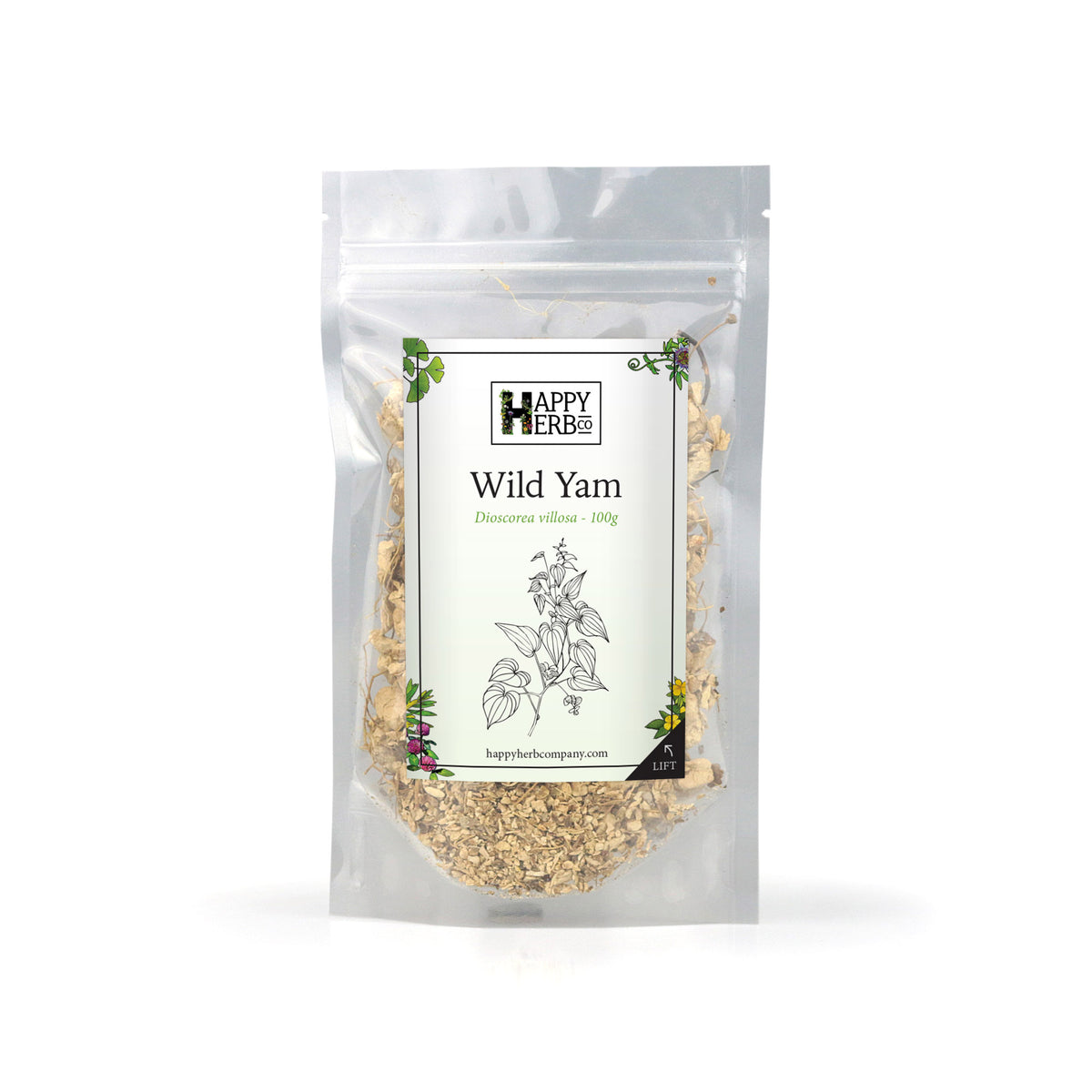
Single Herb
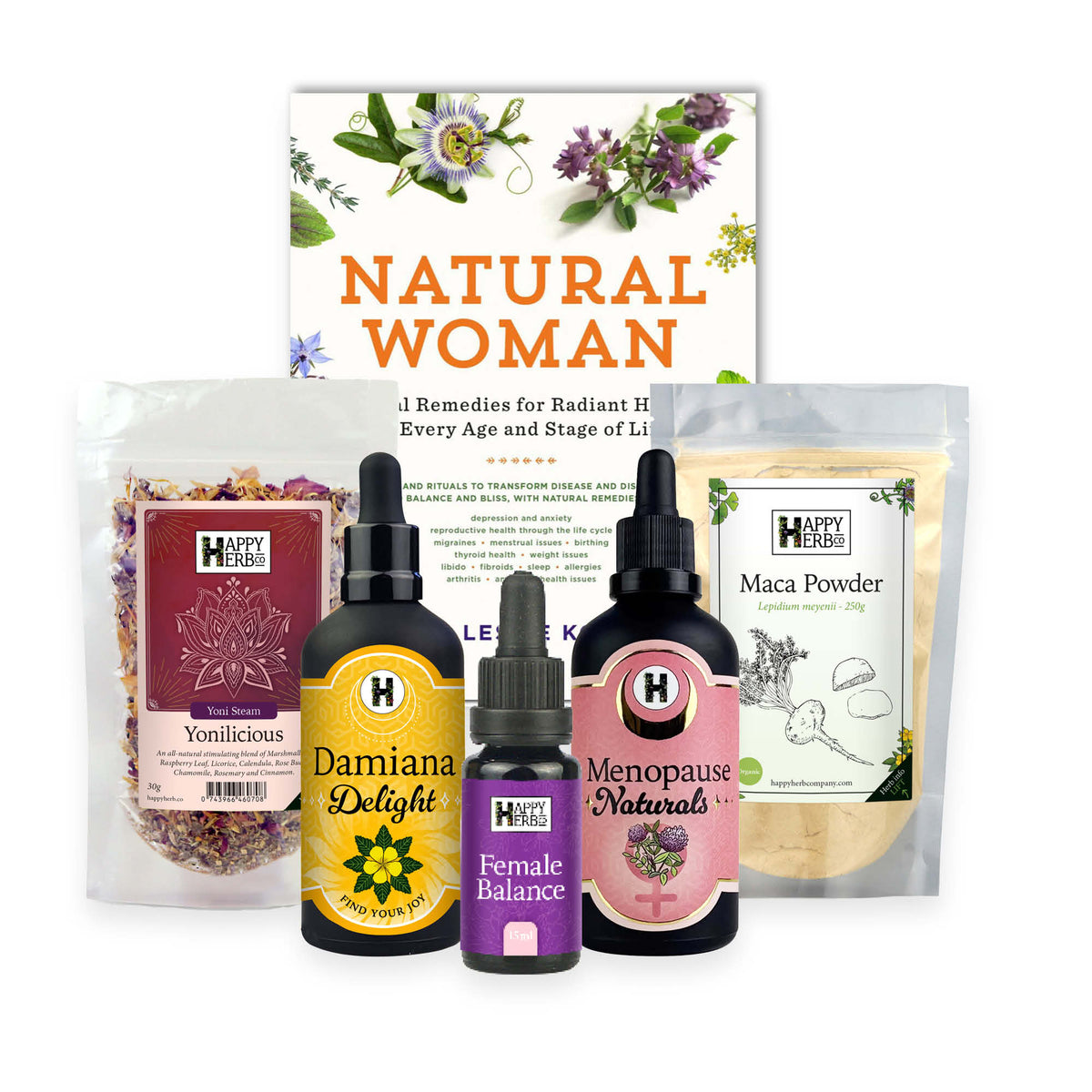
Bundle
A steaming blend, a spagyric, shatavari powder, a cream, a tincture and a book.
FAQ
Wild Yam (Dioscorea villosa) is a twining perennial vine native to eastern North America. Its knotted root, once known as colic root, was widely used in nineteenth-century American herbal practice, and it is a source of diosgenin, a compound used in the laboratory to make steroids. Today Wild Yam is simmered into a tea, taken as a liquid extract or used in a cream.
Wild Yam is long associated with muscle ease and the monthly cycle. Meskwaki women took the root at childbirth, nineteenth-century American physicians used it for colic, and Western herbalists class Wild Yam as an antispasmodic. A clinical trial of Wild Yam cream found little effect on menopausal symptoms, so we describe how it is used, not what it will do.
Wild Yam is best known as a herb people reach for when they want a simple routine for the days around their period. Most people simmer the root into a tea and drink it up to three times a day for those few days. It is often blended with Cramp Bark or Chaste Tree.
Simmer 1 to 2 teaspoons of dried Wild Yam root in a cup of water, covered, for 10 minutes, then strain. Because it is a root, it needs simmering, not steeping. The flavour is mild and earthy, and the tea can be taken up to three times a day.
No. Wild Yam is naturally caffeine free, so the tea can be taken at any time of day, including the evening. It is made from the root of a North American vine and has a mild, earthy flavour that blends easily with other herbs.
There is no good evidence that it does. Wild Yam contains diosgenin, a compound that chemists can turn into steroids in a laboratory, which is where the idea comes from. In a Melbourne trial, 23 menopausal women used a Wild Yam cream for three months and their progesterone and oestradiol levels did not change.
Wild Yam is best avoided in pregnancy and should not be combined with hormonal medication such as HRT. It may cause stomach upset in sensitive people. Researchers who studied Wild Yam in rats suggest long-term use may be best avoided, especially by people with reduced kidney function. If you take medication or have a health condition, check with your health professional first.
Best avoided in pregnancy. Do not combine with hormonal medication like HRT. May cause gastrointestinal upset in sensitive individuals.
As described in the monographs cited under Sources.