Wormwood Profile
Wormwood
Artemisia absinthium
For digestive support, internal cleansing and liver support.


Cart
Your cart is empty

Join us in our love of herbs
Wormwood Profile
Artemisia absinthium
For digestive support, internal cleansing and liver support.
Herbal Intelligence
Wormwood (Artemisia absinthium) is a silver-leafed perennial of the daisy family, native to the temperate regions of Europe, Asia and North Africa. It is one of the most bitter herbs in the European tradition, written about since ancient Egypt and Greece, and it gave the spirit absinthe its name.
The taste is intensely bitter and aromatic. Most people take Wormwood as a small cup of tea or a little liquid extract around a meal, and it is the herb our customers reach for when the appetite is flat or the digestion feels heavy and slow.
Wormwood is among the oldest recorded herbs. The Ebers Papyrus shows the Egyptians using it, or a close relative, and Hippocrates, Pliny and Dioscorides all wrote about it(1). In the Middle Ages it was the household herb against intestinal worms(1).
Its steadiest use was for the stomach. Dioscorides, Galen and Hildegard of Bingen each described it for digestive complaints, and Paracelsus counted it a stomach herb that also guarded against seasickness(1).
Its French name is absinthe, and the name passed to the spirit flavoured with it, which many countries went on to ban(1). The European Union now permits absinthe within set limits for thujone, a compound in the plant's oil(1). The dried herb keeps its place in the European Pharmacopoeia, and is taken as a bitter tea across Europe(1).
The aerial parts of Wormwood (Artemisia absinthium) contain sesquiterpene lactones, including absinthin and related guaianolides, essential oil constituents such as thujone and 1,8-cineole, and phenolic acids(2, 3). In the laboratory, alpha- and beta-thujone have been studied for their interactions with GABA-related ion channels, and the sesquiterpene lactones for their effects on oxidative pathways and enzymes(3, 4).
In Western herbalism Wormwood is classed as a bitter tonic: an aromatic bitter taken in small amounts to wake the appetite and the digestion. It is one of the strongest of its kind. The European Pharmacopoeia asks for a bitterness value of at least 10,000(1).
People use it around meals, for a week or two at a time: a small cup of tea half an hour before eating when the appetite is flat, or a cup after a heavy meal.
The European Medicines Agency accepts Wormwood as a traditional herbal medicine for temporary loss of appetite and mild digestive complaints, on the strength of long use. It notes that there are no clinical data on how well it works(1). So we describe how it is used, not what it will do.
Clinically reviewed by Tamara Welsh, BSc, AdvDipWHM, ATMS, Clinical Herbalist ·
This profile is intended as a researched educational guide and does not replace the broader perspective of a herbal consultation.
★★★★★
4.3 out of 5, from 4 reviews
This deals with certain known parasites, but flukes are also important. Sweet wormwood can deal with some others. But nothing seems to cover too much (most things science does not know). Maybe happy herb can do a more comphesive range to cover different things. Particularly flukes.
The guy who sold me two packets seemed oblivious that this wasn't the sweet wormwood I was asking about.
Happy herb's very good to deal with got some worm wood very good quality arrived quickly very good happy herb's
Thank you for taking the time to leave a review! We're so glad to hear that you had a positive experience with our company. We take pride in providing high-quality products like wormwood and ensuring prompt delivery. We appreciate your business and hope to serve you again in the future :))
Have not used this yet but will be Might take me a while to get results but when I do I can do another review.
Very good thanks
In everyday life
Wormwood is used in two main ways.
Wormwood is taken in small amounts and for short stretches: a cup half an hour before a meal for the appetite, or after eating, two or three times a day, for a week or two. More is not better.
Bitter is a flavour too.
Taste a fragment of the silver leaf and wait. The bitterness is total, and it was the soul of absinthe and vermouth, whose name comes from the German for wormwood.
Pour a small cup, 150 millilitres, over a teaspoon and steep it ten minutes. Drink it half an hour before a meal and do not sweeten it; the bitterness is the point.
Sip slowly. We have bred bitterness out of almost everything we eat. What have you been avoiding that is simply bitter, not bad?
Shop
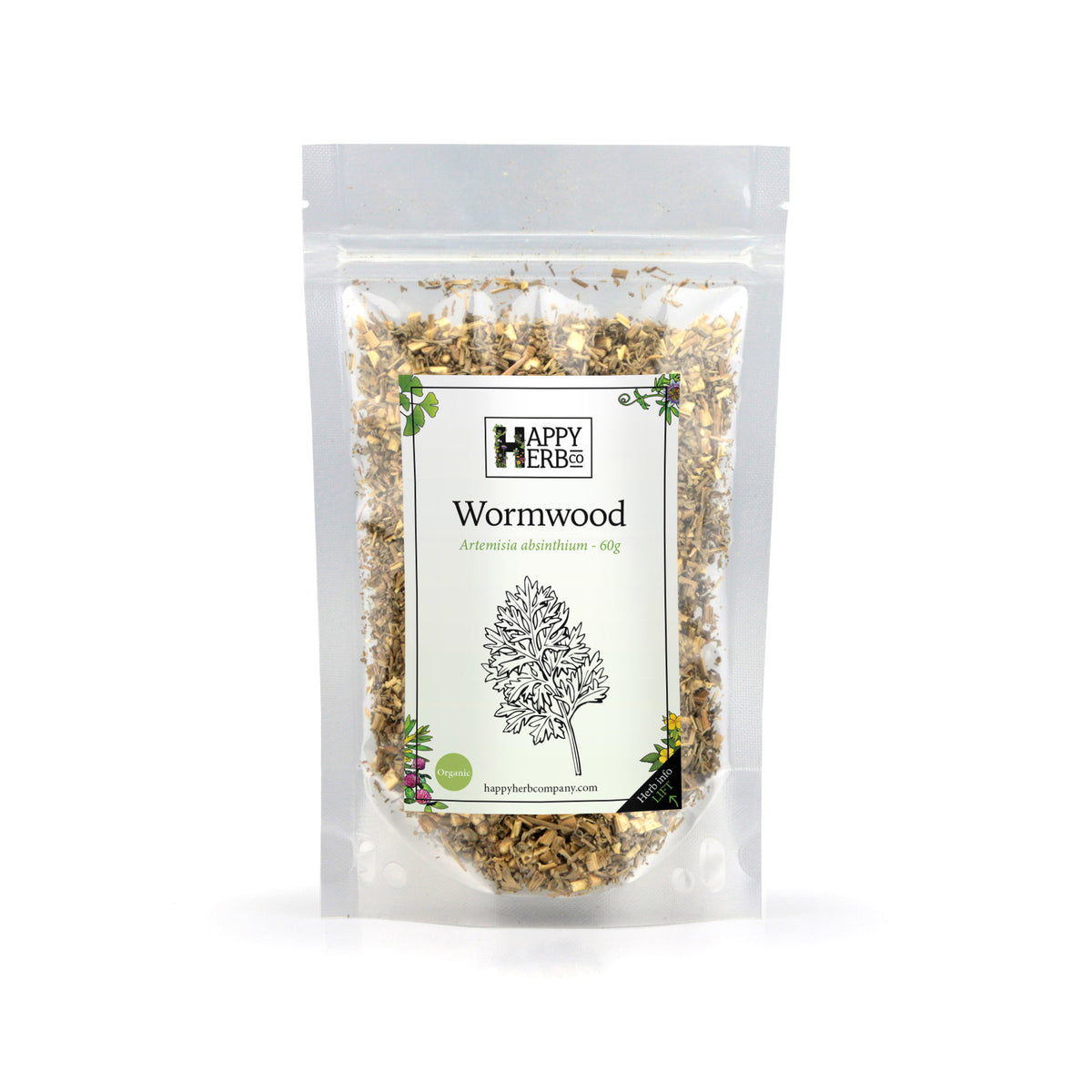
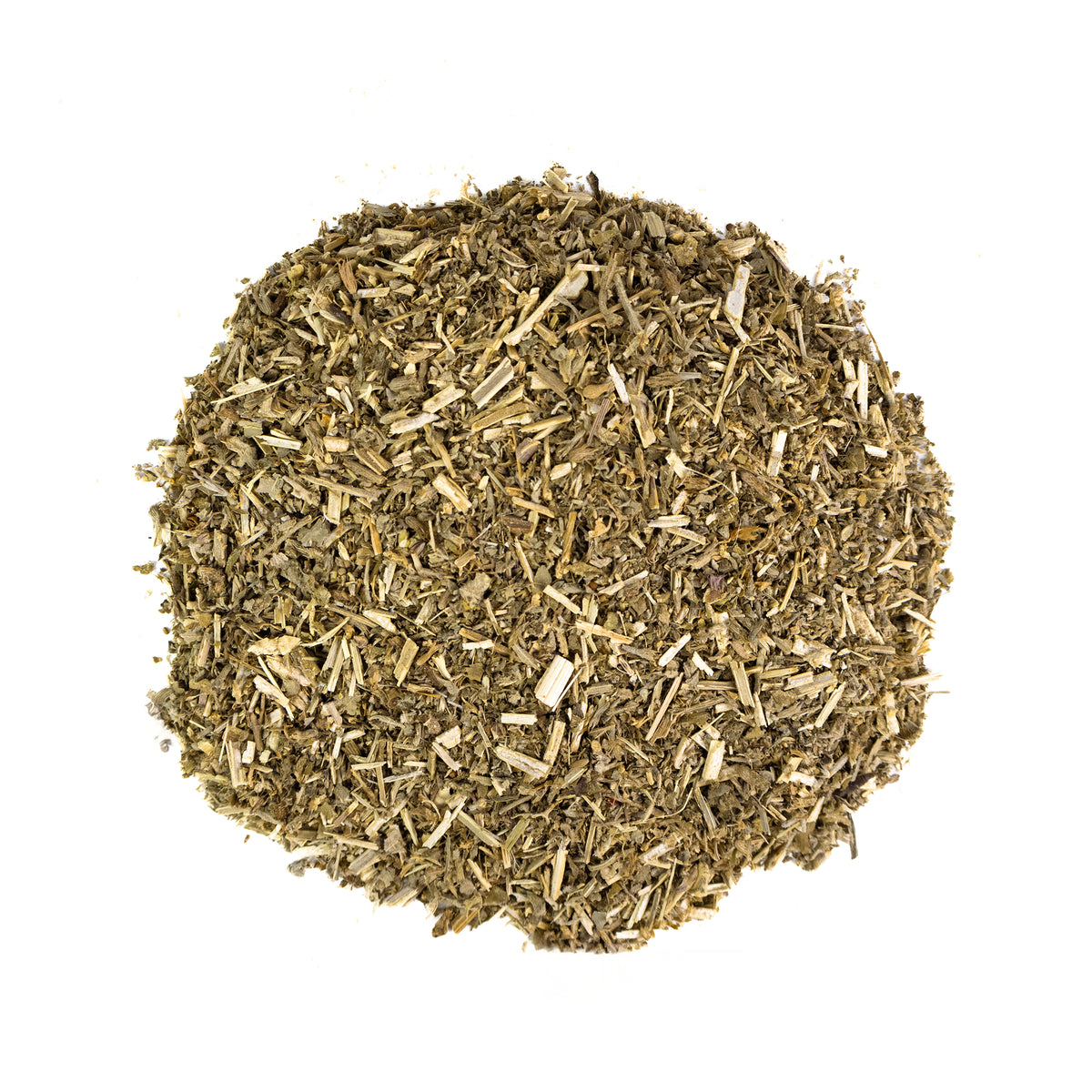
Single Herb
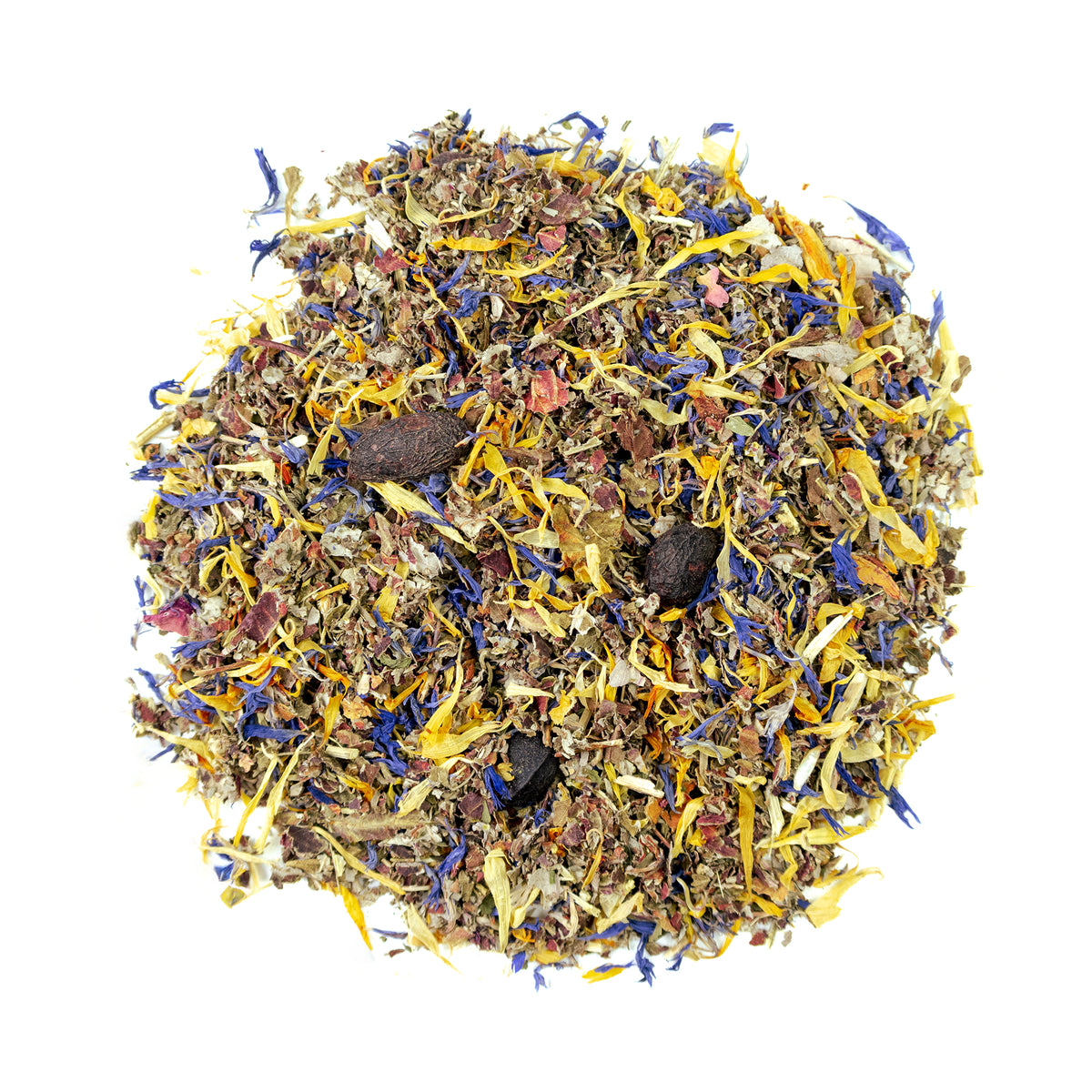
Yoni Steam
A steaming blend of cornflowers, calendula, rose petals and peppermint.
FAQ
Wormwood (Artemisia absinthium) is a silver-leafed perennial of the daisy family, native to the temperate regions of Europe, Asia and North Africa. It is one of the most bitter herbs in the European tradition, written about since ancient Egypt and Greece, and it gave the spirit absinthe its name. Today Wormwood is taken in small amounts as a tea or a liquid extract.
Wormwood is long associated with appetite and digestion. In European herbal tradition it is taken as a bitter tea before or after meals, and Western herbalists class Wormwood as a bitter tonic. The European Medicines Agency accepts this use on the strength of long tradition, but notes there are no clinical data on how well it works, so we describe how it is used, not what it will do.
Wormwood is best known as a herb people reach for when the appetite is flat or a meal sits heavily. Most people have a small cup of Wormwood tea half an hour before eating, or one cup after a meal. It is taken for a week or two at a time, not as an everyday tea.
Pour a small cup (150 ml) of just-boiled water over 1 teaspoon of dried Wormwood and steep, covered, for 10 to 15 minutes, then strain. The tea is intensely bitter, and the bitterness is the point, so sip it slowly. Keep to small amounts: with Wormwood, more is not better.
No. Wormwood is naturally caffeine free. It is the leaf and flowering top of a silver-leafed plant in the daisy family, not a true tea, and it is drunk for its bitterness in small cups around meals, not as an all-day drink.
Wormwood is a herb for short stretches, not for every day of the year. The European Medicines Agency describes two or three small cups of Wormwood tea a day, sets a daily limit for thujone, a compound in the plant's oil, and advises seeing a health professional if you still need it after two weeks.
Do not use Wormwood if you are allergic to the daisy family (Asteraceae), during pregnancy or breastfeeding, with a peptic ulcer, or if you have liver disease or a blocked or inflamed bile duct. Take care with anticoagulant medication, and keep amounts small: larger amounts can be harmful. The European Medicines Agency does not recommend it under 18. If you take medication or have a health condition, check with your health professional first.
Do not use if you have a known allergy to the Asteraceae (daisy) family. Avoid during pregnancy and breastfeeding. Do not use with peptic ulcer. Caution with anticoagulant medication. Keep to small amounts: in moderate to large amounts Wormwood can be harmful. More is not better. Do not use if you have liver disease or a blocked or inflamed bile duct.
As described in the monographs cited under Sources.