Chaga Profile
Chaga
Inonotus obliquus
For resilience, nourishment and winter.


Cart
Your cart is empty

Join us in our love of herbs
Chaga Profile
Inonotus obliquus
For resilience, nourishment and winter.
Herbal Intelligence
Chaga (Inonotus obliquus) is a fungus that grows on birch trees in the cold forests of the northern hemisphere. It forms a hard, black, charcoal-like growth on the trunk, and it has been brewed as a tea in Siberia, Russia and northern Europe for centuries.
The taste is mild and earthy with a faint bitterness, closer to black tea than to a mushroom. Most people take Chaga as a tea, a liquid extract or a powder stirred into a hot drink, and it is the one our customers reach for in winter, when they want something steady and nourishing in the daily cup.
Chaga's story begins in the forests of western Siberia. The Khanty people are thought to have been the first to use it, perhaps as early as the 12th century(1), and its place in Khanty folk medicine is recorded in the ethnographic literature(2). The word chaga comes from Komi-Permyak, a language of the Kama River basin west of the Ural Mountains(1).
The Khanty drank Chaga as a tea and also used it for washing and in smoke rituals(1). The same fungus was known far to the west: First Nations peoples of Canada, among them the Cree and Ojibway, have their own histories of use(1).
In Siberia the hard conk was ground and added to everyday drinks, soups and stews(1). It is still gathered from living birch trees and brewed in much the same way.
Chaga contains polysaccharides, including beta-glucans, along with triterpenoids such as inotodiol, lanosterol and betulinic acid, polyphenols such as hispidin, and melanin, the dark pigment that gives the conk its black colour(1). These compounds have been studied mainly in the laboratory and in animals, where interest has centred on antioxidant and immune activity(1).
In Western herbalism Chaga sits with the tonic mushrooms and is classed as an adaptogen: something taken steadily over weeks to build resilience, not at the moment of need.
People build it into the daily routine through the colder months: a mug of Chaga tea in place of a second coffee, or a spoonful of powder in the morning drink. It has a dark, roasted character but no caffeine, which is part of its appeal.
The research is at an early stage. Laboratory and animal studies are plentiful(1), but Memorial Sloan Kettering Cancer Center notes that the safety and effectiveness of Chaga have yet to be evaluated in clinical studies(3). So we describe how it is used, not what it will do.
Developed and reviewed by Laura Grace, Owner and Creative Director of Happy Herb Co, Herb Educator and Registered Ayurvedic Lifestyle Consultant · Clinically reviewed by Tamara Welsh, BSc, AdvDipWHM, ATMS, Clinical Herbalist
This profile is intended as a researched educational guide and does not replace the broader perspective of a herbal consultation.
In everyday life
Chaga is taken in three main ways.
Chaga is usually taken daily for weeks at a time, most often through winter.
Patience, measured in years.
Hold a chunk of chaga. It is black and cracked on the outside, amber within, and it has spent perhaps twenty years growing slowly on a living birch in a cold forest.
Put a few chunks into hot water and leave them for an hour, or all morning. The same chunks will give you two more pots. Rushing it does nothing.
Sip slowly. Chaga cannot be hurried into existence, and neither can the things that matter. What in your life deserves a longer steep?
Shop
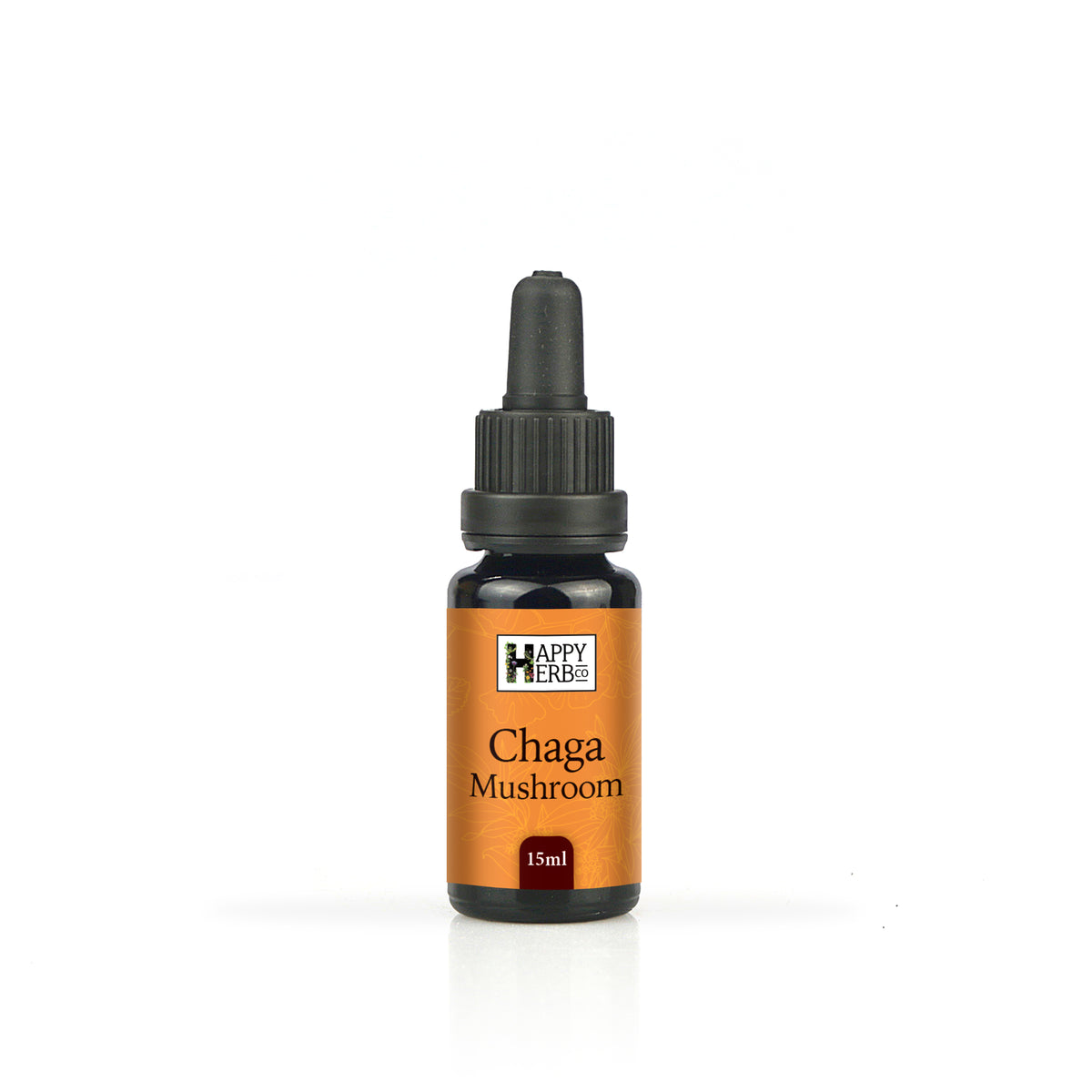
Spagyric
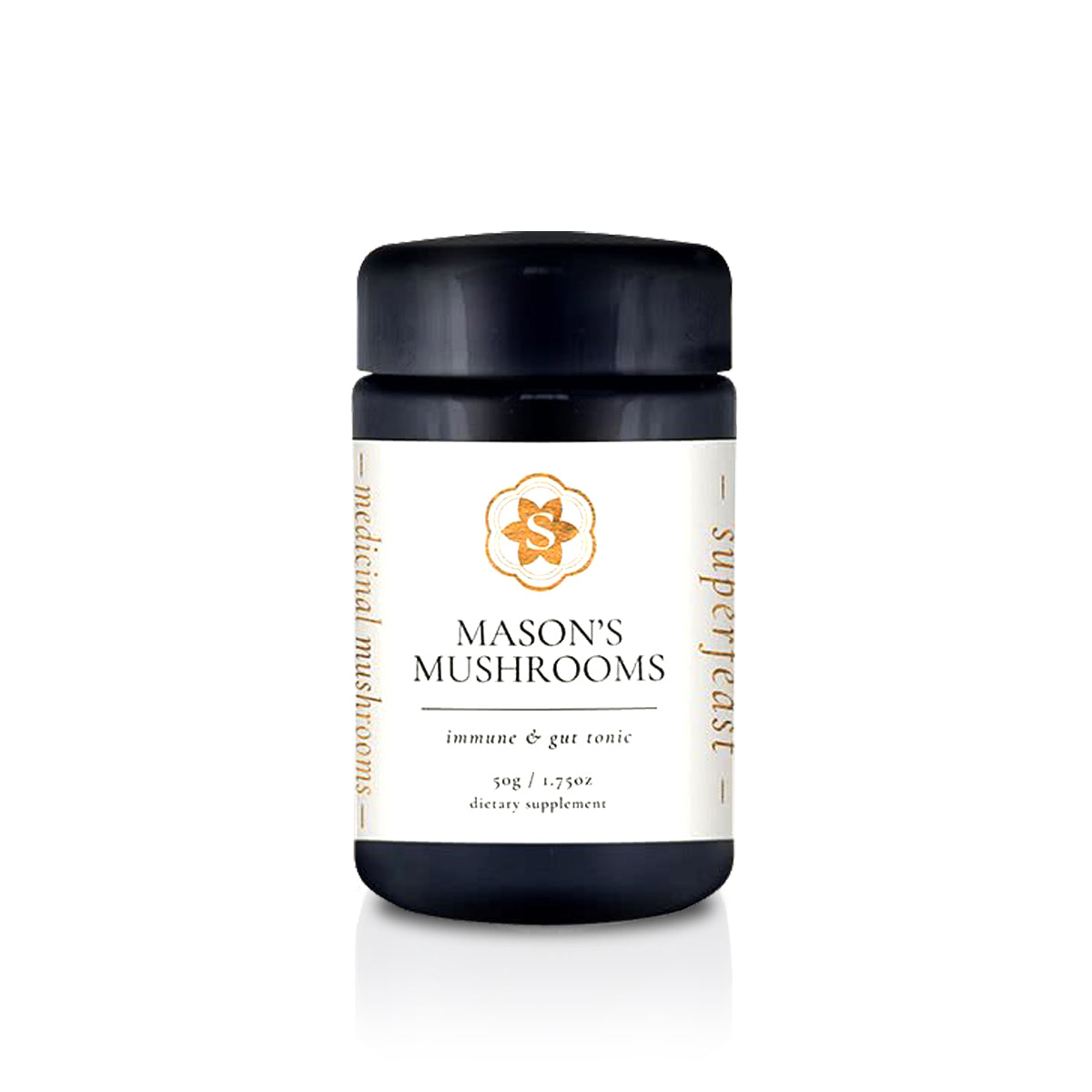
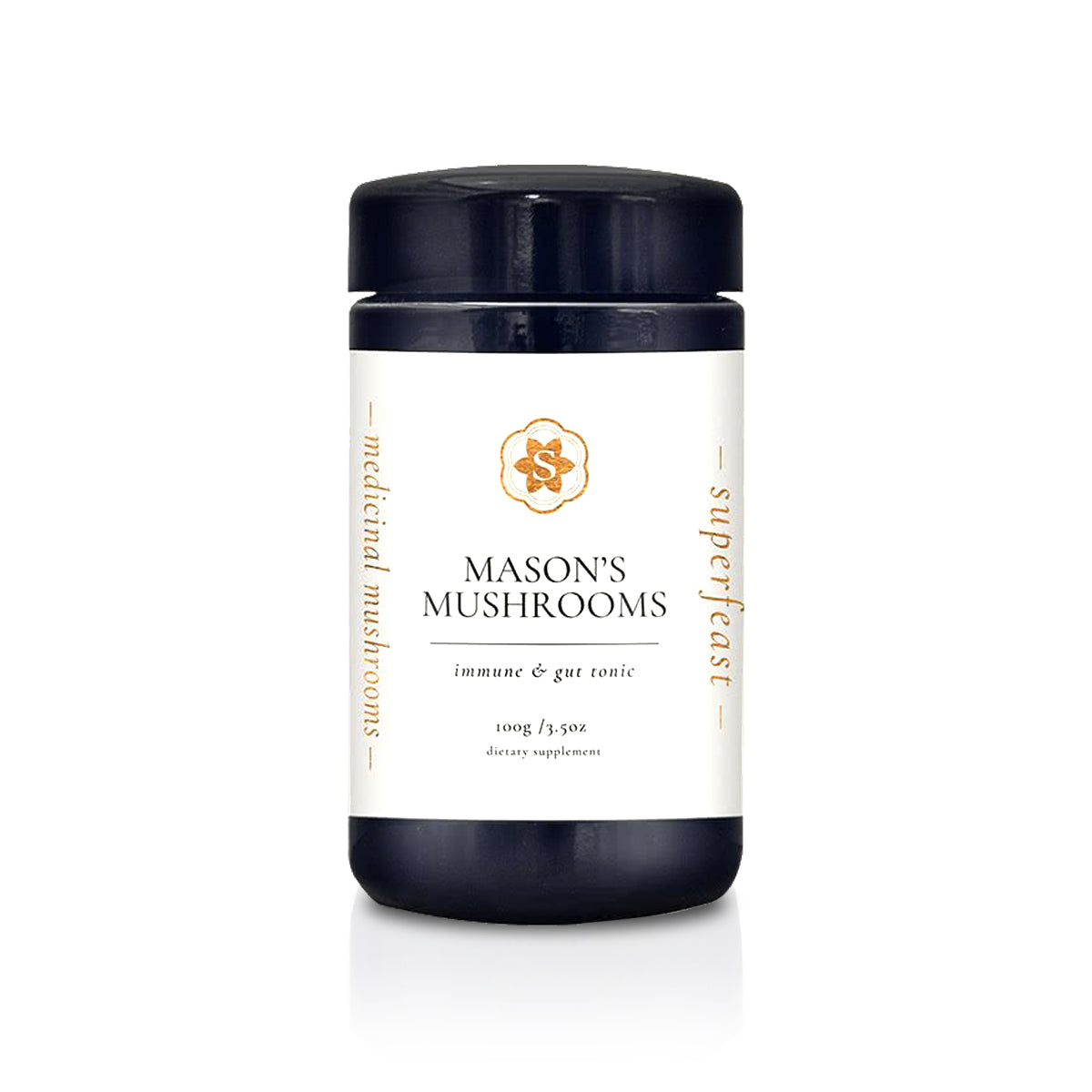
SuperFeast
Eight mushroom extracts, from wild chaga and reishi to lion's mane.

SuperFeast
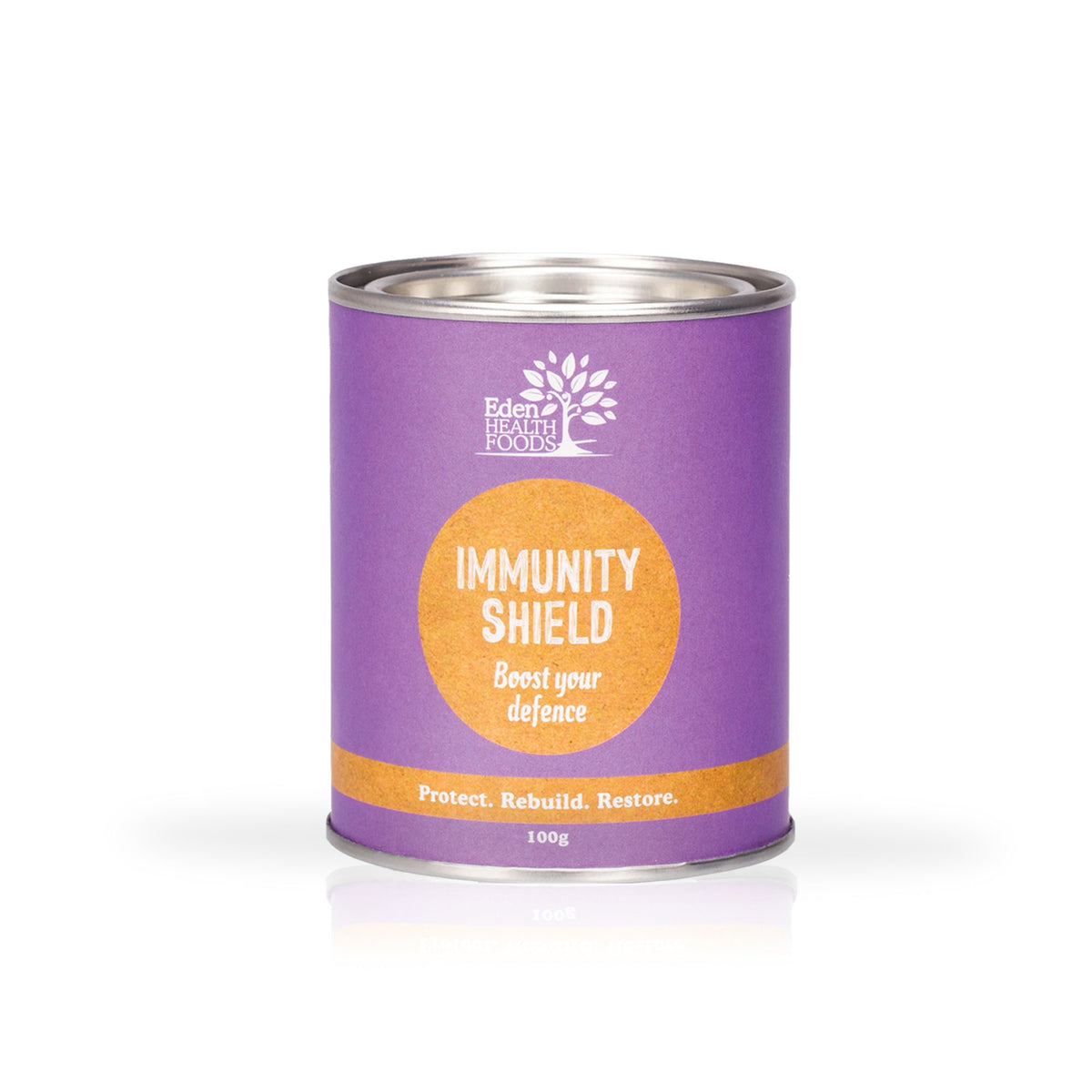
Eden Healthfoods
An echinacea-led formula with goji, rosehip, elderberry and astragalus.
FAQ
Chaga (Inonotus obliquus) is a fungus that grows as a hard, black, charcoal-like growth on birch trees in cold northern forests. It has been brewed as a tea in Siberia, Russia and northern Europe for centuries. Today Chaga is taken as a tea, as a liquid extract or as a powder stirred into a hot drink.
Chaga is mild and earthy with a faint bitterness and a hint of vanilla. It tastes closer to black tea or a light coffee than to a culinary mushroom, and it takes milk, honey, cinnamon or cacao well.
Steep small chunks of Chaga in hot water for at least an hour, then strain. The chunks can be used twice more before they are spent. Chaga tea bags need 4 to 6 minutes, and powdered extracts are simply stirred into hot water.
Most people take Chaga daily for weeks at a time, most often through the colder months. It is usually a morning or daytime drink, and many people have it in place of a second coffee.
No. Chaga is a fungus, not a tea leaf or a coffee bean, and it contains no caffeine. Its dark, earthy flavour is why many people drink it at the hour they would otherwise have coffee. Check the label of blended products, which may include tea, coffee or cacao.
Do not use Chaga if you have a bleeding disorder. Take care if you have an autoimmune condition, diabetes, kidney disease or a history of kidney stones, or if you take blood-thinning medicine such as warfarin. Memorial Sloan Kettering records cases of kidney damage after long-term, heavy use of Chaga powder. Stop at least two weeks before planned surgery. If you take medication or have a health condition, check with your health professional first.
Use with caution if you have an autoimmune condition such as multiple sclerosis, lupus or rheumatoid arthritis: Chaga might make the immune system more active and increase the symptoms of autoimmune conditions. Do not use Chaga if you have a bleeding disorder. Chaga might lower blood sugar. If you have diabetes, monitor your blood sugar carefully and watch for signs of low blood sugar (hypoglycaemia). Stop using Chaga at least 2 weeks before scheduled surgery. Talk to your healthcare practitioner before using Chaga if you take blood-thinning medicine such as warfarin: it may increase the risk of bleeding. Chaga contains oxalates, and kidney damage has been reported after long-term, heavy use of Chaga powder. Use with caution if you have kidney disease or a history of kidney stones.
As described in the monographs cited under Sources.