
Wild Yam
Shipping calculated at checkout
Wild Yam: A Foundational Practice for Mature Feminine Rhythm
Often chosen by those seeking natural support for smooth muscle ease and female hormonal balance, Wild Yam has a long tradition of use among Native American peoples and in Western herbalism for its gentle phyto-hormonal affinity and antispasmodic qualities. A herb for those who want to tend to their feminine wellness with something rooted in nature and time.
- Character
- Mild · Earthy · Sweet
- Companion for
- Female hormonal balance · Muscle ease · Cycle support
- Pairs well with
- , ,
Cramp Bark (Viburnum opulus) is the bark of the guelder rose, a deciduous shrub native to Europe, North Africa and northern Asia, with a close relative in North America. The bark has been used on both sides of the Atlantic for generations, and its common name records what for.
The taste is bitter and earthy. Most people take Cramp Bark as a simmered tea, and it is the herb our customers reach for on the heavier days of the month, or after hard physical work, when the body feels tight and wants to let go.
Shatavari (Asparagus racemosus) is a climbing wild asparagus native to India and the Himalayas. Its clustered, fleshy roots are Ayurveda's best-known tonic for women, named in the classical texts and used through every stage of life.
The taste is bittersweet and a little starchy. Most people simmer the root as a tea or stir the powder into hot milk, and it is the herb our customers reach for when they want steady nourishment through the monthly cycle and the changes of midlife.
Chaste Tree (Vitex agnus-castus) is a shrub or small tree native to the Mediterranean and western Asia. Its small, dark, peppery berries, also sold as Chasteberry, Vitex or Monk's Pepper, have been written about for more than two thousand years and are one of the best-known women's herbs of European tradition.
The taste is peppery, aromatic and a little bitter. Most people take Chaste Tree as a tea or a liquid extract, usually once a day in the morning, and it is the herb our customers reach for when they want to feel in step with their monthly rhythm.
Ingredients
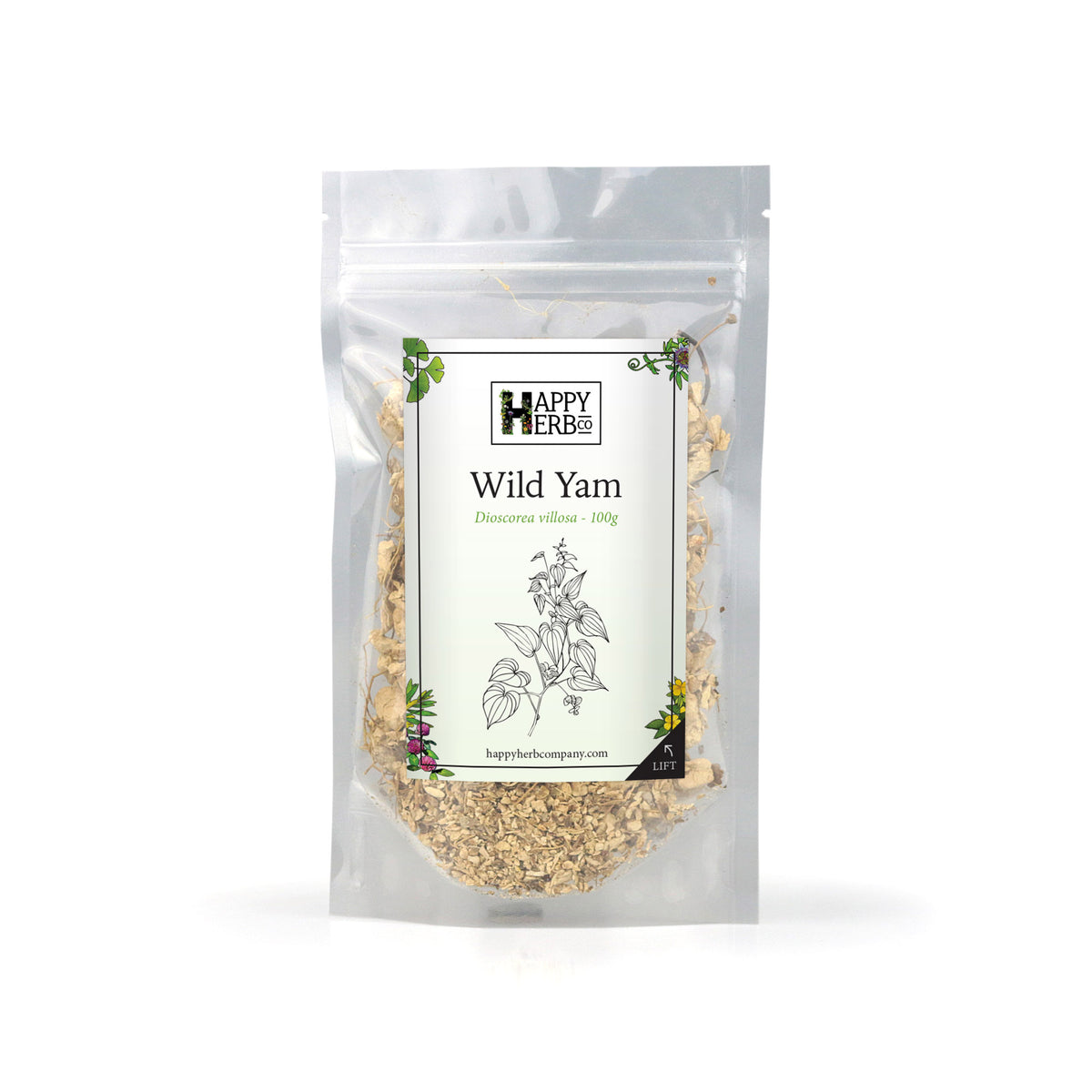
Contents: Wild Yam (Dioscorea villosa) root
Preparation: 1-2 tsp/cup, simmer covered 10 mins. Drink 3 times daily.
Herbal Intelligence
Phytochemistry
Wild Yam root contains steroidal saponins and their building block diosgenin, together with alkaloids, tannins, phytosterols and starch. Diosgenin is the compound the pharmaceutical industry has used in the preparation of steroids.
Living tradition
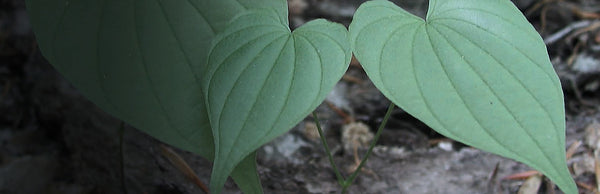
Wild Yam grows wild across eastern North America, and its recorded story starts there. Among the Meskwaki, women took the root for pain at childbirth, a use the ethnobotanist Huron Smith recorded in 1928.
Specifications
- Range
- Dried Herbs & Powders
- Packaging
- Home Compostable Pouch
Precautions
- Wild yam contains saponins that may cause gastrointestinal upset for some sensitive individuals.
Happy Herb Co shares referenced knowledge about herbs and makes no therapeutic claims for its products. If you are pregnant, breastfeeding, taking medication or managing a health condition, please speak with a health professional before using any herb.
Choose options
I really enjoy this with some others I mix up for my autoimmune disease. They help for my pain and hopefully they will slow its progression :)
I bought to add to my other teas as I have an inflammatory arthritis. Tastes fine, we’ll see how it works :)
Explore