Cat's Claw Profile
Cat's Claw
Uncaria tomentosa
For deep strength, whole body vitality and long term resilience.


Cart
Your cart is empty

Join us in our love of herbs
Cat's Claw Profile
Uncaria tomentosa
For deep strength, whole body vitality and long term resilience.
Herbal Intelligence
Cat's Claw (Uncaria tomentosa) is a woody vine of the Amazon rainforest, named for the hooked thorns that grow along its stem. Its inner bark has been used by the Indigenous peoples of Peru for centuries.
The taste is earthy, woody and bitter. Most people simmer the bark into a tea or take it as a liquid extract, and it is the herb our customers reach for when they are thinking about the long term: deep strength, and staying well through demanding seasons.
Cat's Claw grows wild in the Amazon rainforest and other tropical parts of Central and South America, where Indigenous peoples have used it for centuries(1). Its Spanish name, uña de gato, means the same as the English one: both describe the curved thorns that grow along the vine.
Among the Asháninka of Peru the vine holds a special place. In their understanding a person is made of a physical being and a spiritual being, kept in step by a regulating element, and Cat's Claw was reserved for the priests, who used it to restore that balance(2).
Two related vines share the name. Uncaria tomentosa and Uncaria guianensis both grow in the Amazon and both are called Cat's Claw. Uncaria tomentosa is the one most often used in herbal products(1).
The bark of Cat's Claw (Uncaria tomentosa) contains a range of compounds, including oxindole alkaloids, quinovic acid glycosides, proanthocyanidins and various phenolic compounds(3). In the laboratory these compounds are studied for their effects on immune cell activity and inflammatory signalling, and for their antioxidant activity(3).
In Western herbalism Cat's Claw is classed as an immune tonic: a herb taken steadily to build resilience, often alongside Echinacea, Astragalus or Pau D'Arco. People build it into their routine ahead of winter and through long, demanding stretches of work and life.
It reached the wider world through the Austrian researcher Klaus Keplinger, who began the first scientific work on the vine in the 1970s(4).
Most of the research since has been done in the laboratory. The European Medicines Agency reviewed twelve small clinical trials and concluded that more are needed before firm conclusions can be drawn(4), and the US National Center for Complementary and Integrative Health notes that there have been very few high-quality trials in people(1). We describe how Cat's Claw is used, not what it will do.
Developed and reviewed by Laura Grace, Owner and Creative Director of Happy Herb Co, Herb Educator and Registered Ayurvedic Lifestyle Consultant · Clinically reviewed by Tamara Welsh, BSc, AdvDipWHM, ATMS, Clinical Herbalist
This profile is intended as a researched educational guide and does not replace the broader perspective of a herbal consultation.
In everyday life
Cat's Claw bark is taken in two main ways.
Cat's Claw is usually taken daily for several weeks at a time, not just now and then.
Hold on, and keep climbing.
Hold a piece of the bark. It comes from a vine that climbs thirty metres into the Amazon canopy, gripping the trees with hooked thorns shaped like a cat's claw.
Simmer a tablespoon for ten minutes until the water turns the colour of tea, then add honey or ginger. Drink it with the understanding that this herb is taken daily, for weeks.
Sip slowly. The vine reaches the light by holding fast and moving a little each day. What are you climbing towards, and what are you holding onto to get there?
Shop


Single Herb
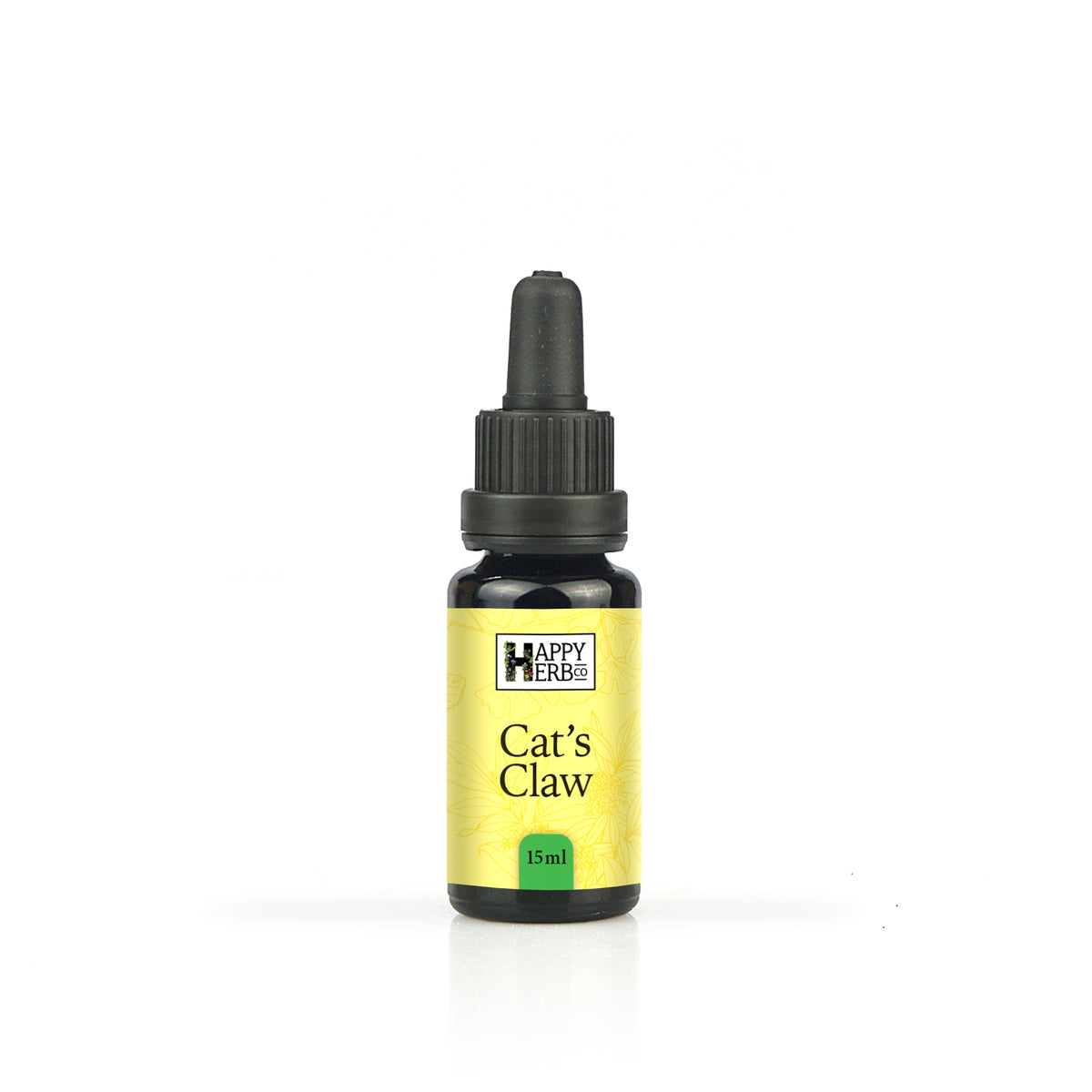
Spagyric
For long term resilience, seasonal wellness and steady strength.


Luxury Tea
A spicy tea of cinnamon, licorice, ginger, orange and rooibos.
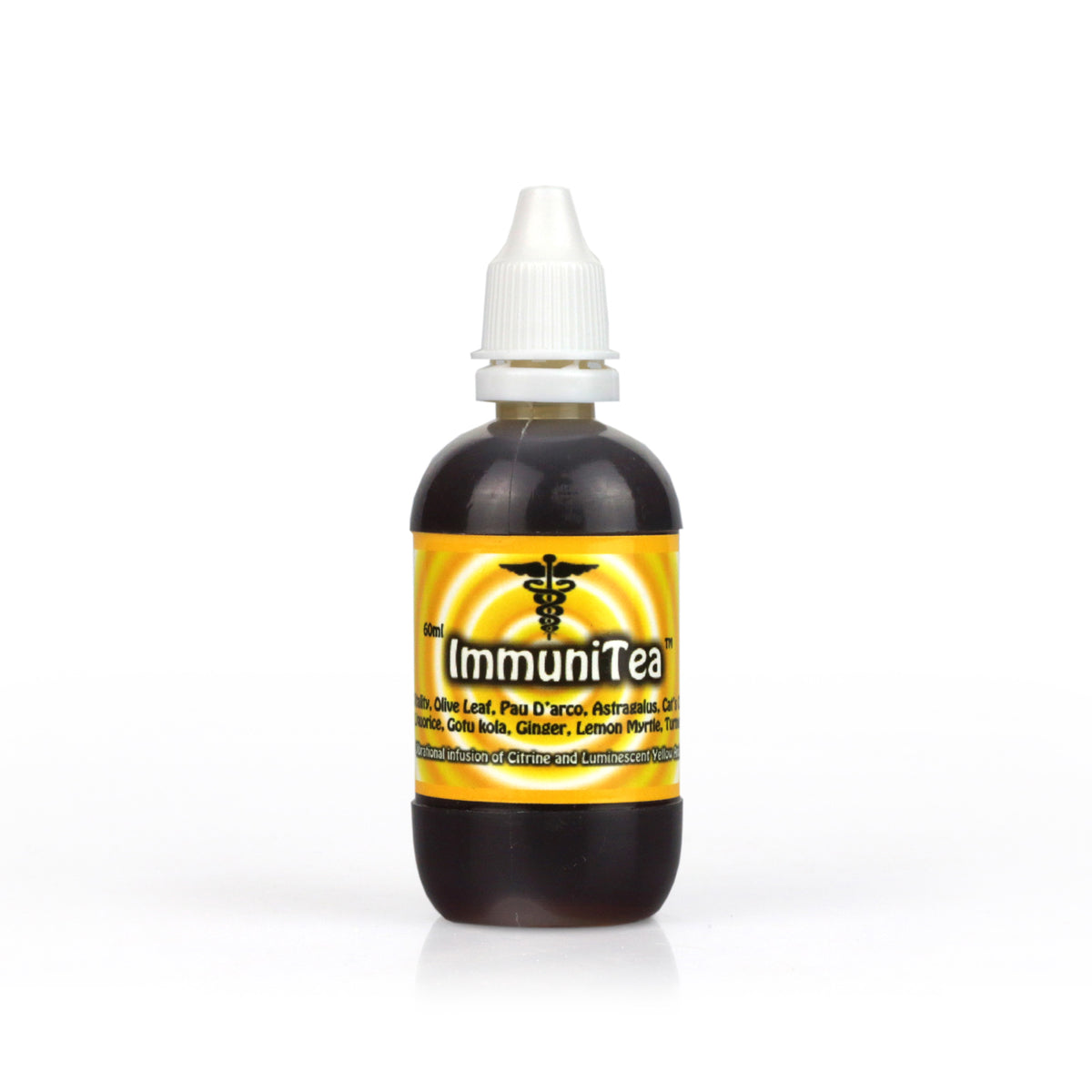
Tea Elixir
Olive leaf, pau d'arco, astragalus, cat's claw and ginger as a concentrate.
FAQ
Cat's Claw (Uncaria tomentosa) is a woody vine native to the Amazon rainforest and other tropical parts of Central and South America. Its inner bark has been used by the Indigenous peoples of Peru for centuries. Today Cat's Claw is simmered into a tea or taken as a liquid extract.
Cat's Claw is long associated with immune action and long-term resilience. The Indigenous peoples of Peru have used the inner bark for centuries, and Western herbalists class it as an immune tonic, taken steadily ahead of winter. The US National Center for Complementary and Integrative Health notes that there have been very few high-quality trials in people, so we describe how it is used, not what it will do.
Cat's Claw is best known as a herb people reach for when they are thinking about the long term and want to stay well through a demanding season. Most people take it daily for several weeks at a time, ahead of winter or through long stretches of work, often alongside Echinacea, Astragalus or Pau D'Arco.
Simmer 1 tablespoon of Cat's Claw bark in a cup of water for 10 minutes, then strain. Because it is a bark, it needs simmering rather than steeping. Honey, lemon or Ginger soften the earthy, bitter flavour.
No. Cat's Claw is naturally caffeine free, so the tea can be taken at any time of day. The bark is earthy, woody and bitter, and sits easily in a blend with other roots and barks.
Most people who take Cat's Claw do take it daily, for several weeks at a time. The US National Center for Complementary and Integrative Health notes that Cat's Claw appears to be safe when taken by mouth for short periods, as much as six months. If you plan to take it for longer, check with your health professional.
Avoid Cat's Claw during pregnancy and breastfeeding. Speak to your doctor first if you have an autoimmune condition such as multiple sclerosis or lupus, or take immunosuppressive medication. Use caution with blood-thinning, blood-pressure and Parkinson's medicines, including L-Dopa. If you take medication or have a health condition, check with your health professional first.
Avoid use if you are pregnant or breast-feeding. Consult your doctor if you have an auto-immune disease such as Multiple Sclerosis, Lupus, as Cat’s Claw may worsen these conditions, and/or counteract immunosuppressive medications. Caution with prescription medications including anticoagulant, antihypertensive, L-Dopa and other treatments used for Parkinson's disease.
As described in the monographs cited under Sources.