Ginger Profile
Ginger
Zingiber officinale
For after meals and cooking.


Cart
Your cart is empty

Join us in our love of herbs
Ginger Profile
Zingiber officinale
For after meals and cooking.
Herbal Intelligence
Ginger (Zingiber officinale) is a leafy perennial native to tropical Asia, grown for its knobbly, aromatic rhizome. It has been used as both a spice and a household herb in India and China for thousands of years, and it is now one of the most widely eaten plants in the world.
The taste is spicy and zesty, with a lemony sweetness. Most people take Ginger as a tea, fresh or dried, or as a liquid extract, and it is the herb our customers reach for after a meal, or whenever the stomach wants settling.
Ginger has been used in India and China for thousands of years(1), and has been grown for so long that its precise origins are unknown(2). In ancient Sanskrit it was called 'the horned thing', after the shape of the rhizome(2).
It was one of the first cargoes on the early trade routes between Asia and Europe. The Romans bought it through Arab traders and later by sea from India, and in medieval Europe it gave its name to gingerbread(2). Around 1525 the Spanish took Ginger to Jamaica, which was soon shipping it to Europe in quantity(2).
In Ayurveda the dried rhizome is a digestive herb, and Chinese herbal tradition counts fresh and dried Ginger as two distinct ingredients. Both are still listed in the official pharmacopoeias of India and China(3).
Ginger's pungency comes from the gingerols, chiefly 6-gingerol. During drying and storage, gingerols are partly converted to shogaols, which is why fresh and dried Ginger differ in character(3). Its aroma comes from a volatile oil, 1 to 4 per cent of the rhizome, made up mostly of sesquiterpenes such as zingiberene(3).
In the laboratory the gingerols and shogaols are studied for antioxidant and anti-inflammatory activity and for their effects on the gut and on nausea pathways(1, 3).
In Western herbalism Ginger is classed as a carminative and an aromatic digestive: a herb for the stomach, taken around meals and travel. It is also one of the great blending herbs, added in small amounts to round out other teas.
People drink it after a heavy meal, pack it for boat and car trips, and make a hot cup with lemon and honey through the winter months.
Ginger is among the better-studied herbs. The European Medicines Agency accepts the powdered rhizome as a well-established herbal medicine for travel sickness(3). The US National Center for Complementary and Integrative Health is more cautious, noting that some of the many studies have not been of high quality and that results differ from one use to the next(4). We describe how Ginger is used, not what it will do.
Developed and reviewed by Laura Grace, Owner and Creative Director of Happy Herb Co, Herb Educator and Registered Ayurvedic Lifestyle Consultant · Clinically reviewed by Tamara Welsh, BSc, AdvDipWHM, ATMS, Clinical Herbalist
This profile is intended as a researched educational guide and does not replace the broader perspective of a herbal consultation.
In everyday life
Ginger is used in three main ways.
Ginger suits both everyday use and the occasional cup when it is wanted.
Fire in the kitchen.
Grate a little fresh ginger and smell your fingers. Bright, spicy, unmistakable. It has been in kitchens and teapots across Asia for five thousand years, and it is in yours already.
Steep the grated root, covered, for ten minutes with lemon and honey. Make it when you come in from the cold, or when a meal has sat badly.
Sip slowly. The most familiar herb in the house is still a herb. What ordinary thing in your kitchen deserves a second look?
Shop


Luxury Tea
An after-dinner tea of peppermint, licorice, ginger, fennel and calendula.

Tea Elixir
Yerba mate, damiana, Siberian ginseng, ginger and cinnamon as a tincture.
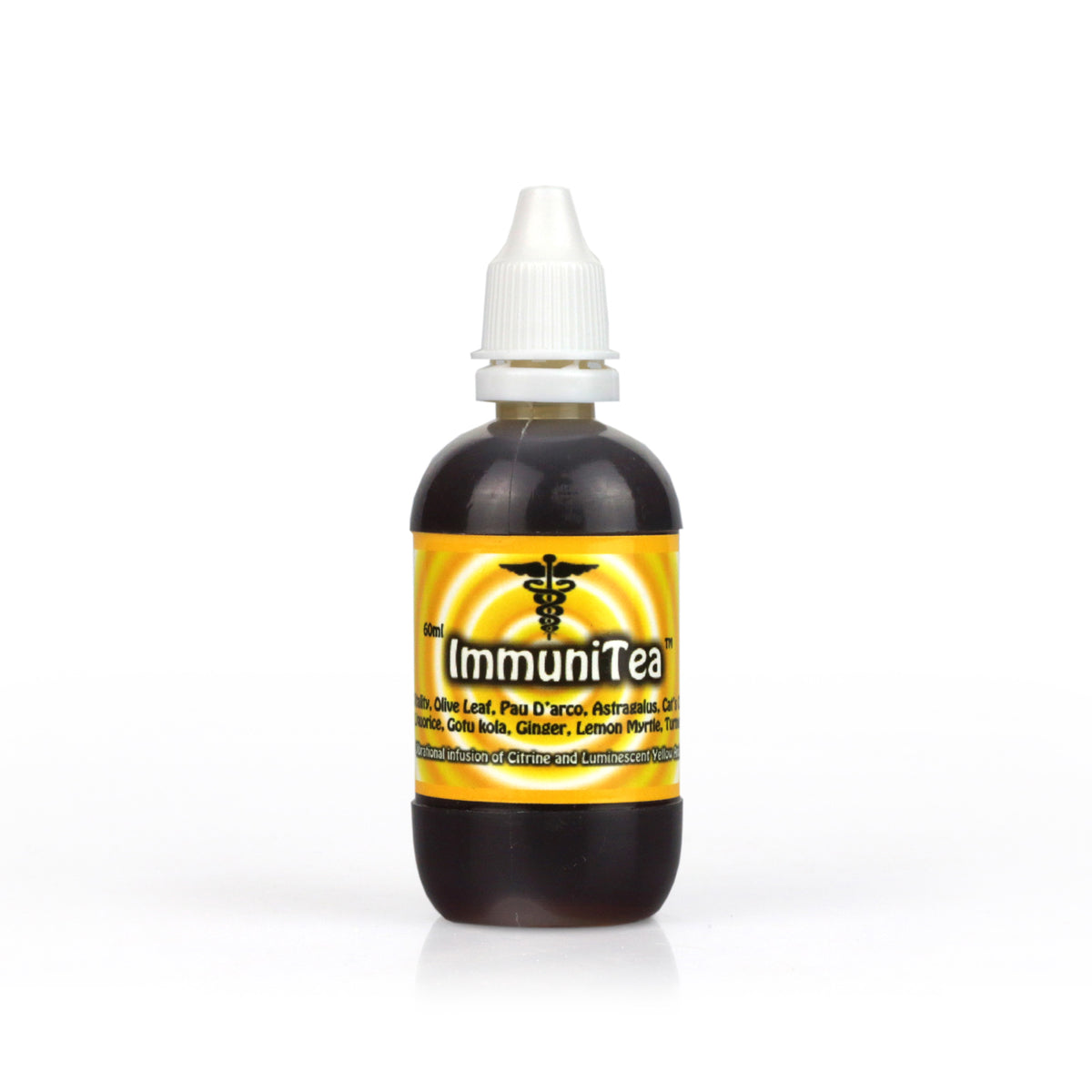
Tea Elixir
Olive leaf, pau d'arco, astragalus, cat's claw and ginger as a concentrate.
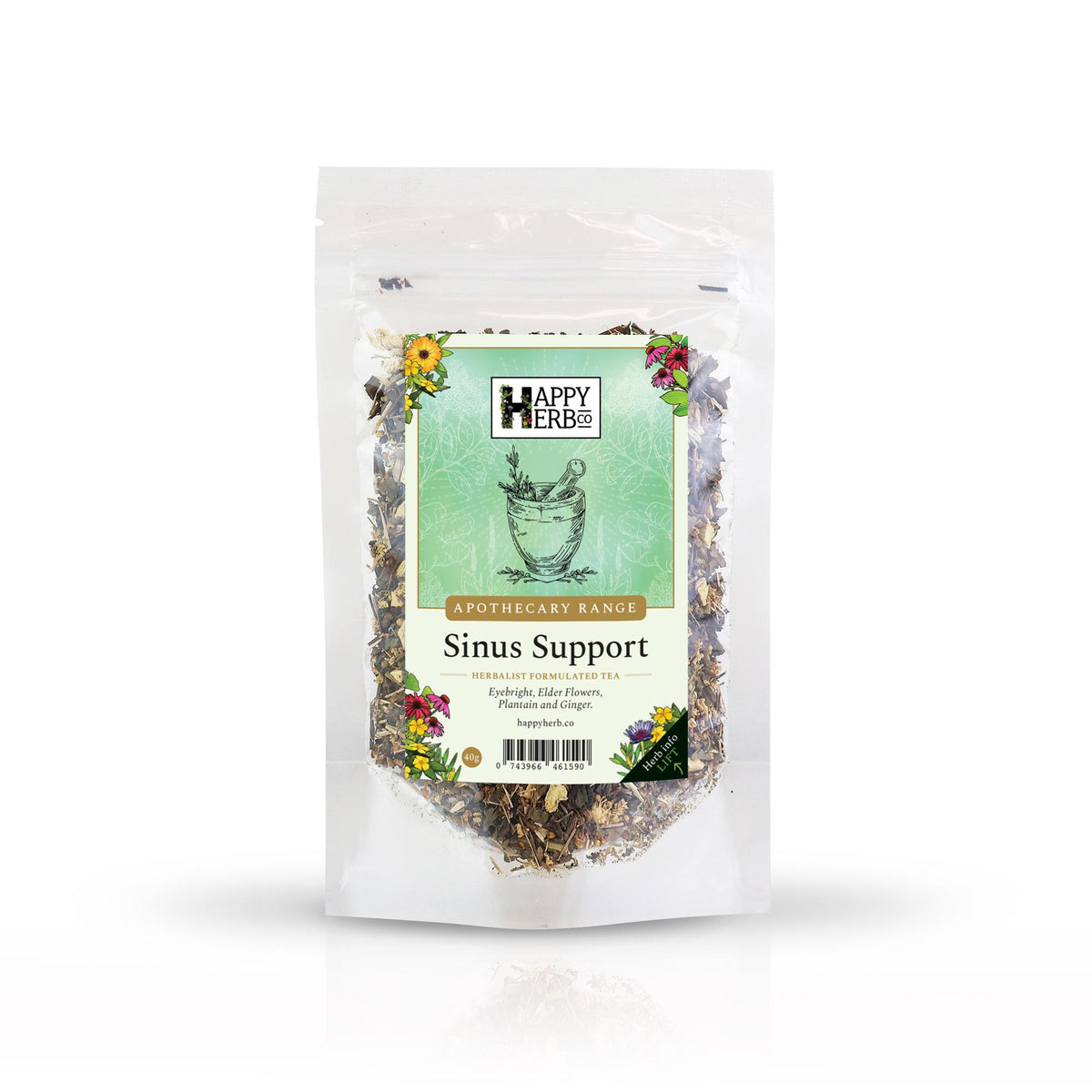

Apothecary Tea
A four-herb tea of eyebright, elder flowers, plantain and ginger.
FAQ
Ginger (Zingiber officinale) is a leafy perennial native to tropical Asia, grown for its knobbly, aromatic rhizome. It has been used as a spice and a household herb in India and China for thousands of years. Today it is taken as a tea, fresh or dried, as a liquid extract, and in cooking.
Ginger is long associated with digestion and a settled stomach. In Ayurveda the dried rhizome is a digestive herb, and Western herbalists class Ginger as a carminative, taken around meals and travel. The US National Center for Complementary and Integrative Health notes that some of the many studies have not been of high quality, so we describe how Ginger tea is used, not what it will do.
Ginger is best known as a herb people reach for when the stomach wants settling after a meal. Most people drink a cup of Ginger tea after eating, before or during travel, and as a hot cup with lemon and honey through the winter months.
For dried Ginger, simmer 1 teaspoon in a cup of water for 5 minutes, then strain. For fresh Ginger, steep 1 teaspoon of grated root in a cup of just-boiled water, covered, for 10 minutes. Add lemon and honey to taste.
No. Ginger is naturally caffeine free, so Ginger tea can be enjoyed at any time of day, including after dinner. Check the label of blended teas: Ginger is often mixed with black or green tea, which do contain caffeine.
Many people do. Ginger is one of the most widely eaten plants in the world, and it suits both everyday use and the occasional cup. The US National Center for Complementary and Integrative Health says Ginger has been used safely in many research studies, though it can cause heartburn or abdominal discomfort in some people. If you take medication or have a health condition, check with your health professional first.
Use Ginger with caution if you have a peptic ulcer. It can cause mild heartburn, diarrhoea or stomach discomfort in some people. Avoid it alongside antiplatelet, anticoagulant or immunosuppressant medication. If you take medication or have a health condition, check with your health professional first.
Caution with peptic ulcer. Ginger can cause mild side effects including heartburn, diarrhea, and general stomach discomfort. Avoid with antiplatelet, anticoagulant and immunosuppressant medication.
As described in the monographs cited under Sources.