Lion's Tail Profile
Lion's Tail
Leonotis leonurus
For mood elevation, social rituals and rolling blends.


Cart
Your cart is empty

Join us in our love of herbs
Lion's Tail Profile
Leonotis leonurus
For mood elevation, social rituals and rolling blends.
Herbal Intelligence
Lion's Tail (Leonotis leonurus) is a tall, orange-flowered shrub of the mint family, native to southern Africa, where it is known as wild dagga (the same plant; its cousin Leonotis nepetifolia, klip dagga, is a different species). Its leaves and flowers have long been brewed and smoked by the Khoikhoi and other peoples of the region, and it is grown in gardens around the world for its tiers of bright flowers.
The taste is earthy and aromatic, with some bitterness. Most people enjoy Lion's Tail as a tea or in a milled herb blend, and it is the herb our customers reach for at the end of the day or in good company, when they want to unwind and lift the mood.
Lion's Tail is common across South Africa, growing among rocks and in grassland, mostly along the wetter eastern and southern coasts(1). The genus name Leonotis comes from the Greek for 'lion's ear', after the furry upper lip of each flower(1). In Afrikaans it is wildedagga, wild dagga, and in isiZulu and isiXhosa umfincafincane(1).
The Khoikhoi smoked the dried leaves and flowers, which were said to bring on a calm or mildly euphoric feeling(1). The plant is also boiled into a decoction that is taken by mouth and used on the skin, and it is still widely used as a traditional medicine in South Africa(2). The dried leaves are brewed as a tea, and children suck the sweet nectar from the flowers(1).
It was one of the many Cape plants taken to Europe for gardens, and it appears in European gardening books as early as 1673(1).
More than 50 compounds have been isolated from Lion's Tail, mainly terpenoids. The chief one reported is marrubiin, a labdane diterpene(2). The alkaloid leonurine is often named in popular writing as its active compound, but no scientific analysis of the plant has found it(2). The compounds behind its mild psychoactive effect have still to be identified(2). In the laboratory marrubiin and leaf extracts are studied for their effects on blood sugar, on inflammation and on the nervous system in animal models(2).
Lion's Tail sits outside the mainstream of Western herbalism. It is a South African folk herb, valued by those who use it as mildly relaxing and gently mood-lifting.
People use it at the end of the day and in company: a pot of tea shared with friends, or a hand-rolled blend at a gathering. For some it is part of habit shifting, a quieter ritual in place of an old one.
Research is at an early stage. Studies of extracts have confirmed a psychoactive effect, but the compounds responsible have not been identified(2), and we found no clinical trials in people. A 2008 study in rats found harm at high amounts, and its authors advised caution(1). So we describe how it is used, not what it will do.
Developed and reviewed by Laura GraceClinically reviewed by Tamara Welsh, Clinical HerbalistLast reviewed
This profile is intended as a researched educational guide and does not replace the broader perspective of a herbal consultation.
★★★★★
4.5 out of 5, from 8 reviews
Containing atypical cannabinoids, bringing an uplifting twist to the usual routine. Might be better than the original... further testing required.
Lion's Tail 50x
Hi Tracey,
Thank you for trying & it reviewing the Lions' Tail 50x extract. We really appreciate you taking the time to submit feedback!
- Happy Herb Co
It is a nice mild, relaxing smoke. The flavour isn't great but that is to be expected with these kinds of products. Makes a nice additive to other herbs or on its own.
Doesn’t do allot to be honest, tastes pretty good, got a bit of a buzz after 3 full cones.
I bought because of lockdown and I can’t go see mr green thumb, bit disappointed.
I recommend if you are 15-20 and never tried anything, me in my 40s, smoked weed for 20 years, I’ve found nothing to compare it to.
Hi Chris,
Thank you for your honest review! Sorry to hear that the Lion's Tail extract didn't live up to the desired effects. Many customers prefer it because it isn't as strong, but we understand your sentiments. Your feedback helps other customers connect to the best products for their unique needs and also helps us optimize our offerings to deliver the highest quality. Cheers!
In health & happiness,
Happy Herb Co
I'm glad O found this too relax, and just "escape for a bit "💖 wonderful for my extreme mental health issues, beautiful xxxooo Ta and VERY Speedy delivery 4 days..not bad.. Thankyou lol
In everyday life
Lion's Tail leaf and flower are used in three main ways.
Lion's Tail is mostly an evening and social herb, used now and then.
Orange flames in the veld.
Look at a dried flower if you have one, bright orange and furred. In the South African veld the plant stands two metres tall, ringed with these flowers, and sunbirds hang from them.
Boil a tablespoon of the leaf and flower in half a litre of water for ten minutes, let it cool, strain and add honey. Make it in the afternoon, with the window open.
Sip slowly. The Khoikhoi called it wild dagga and brewed it for calm. What would a calmer version of this afternoon look like?
Shop


Single Herb
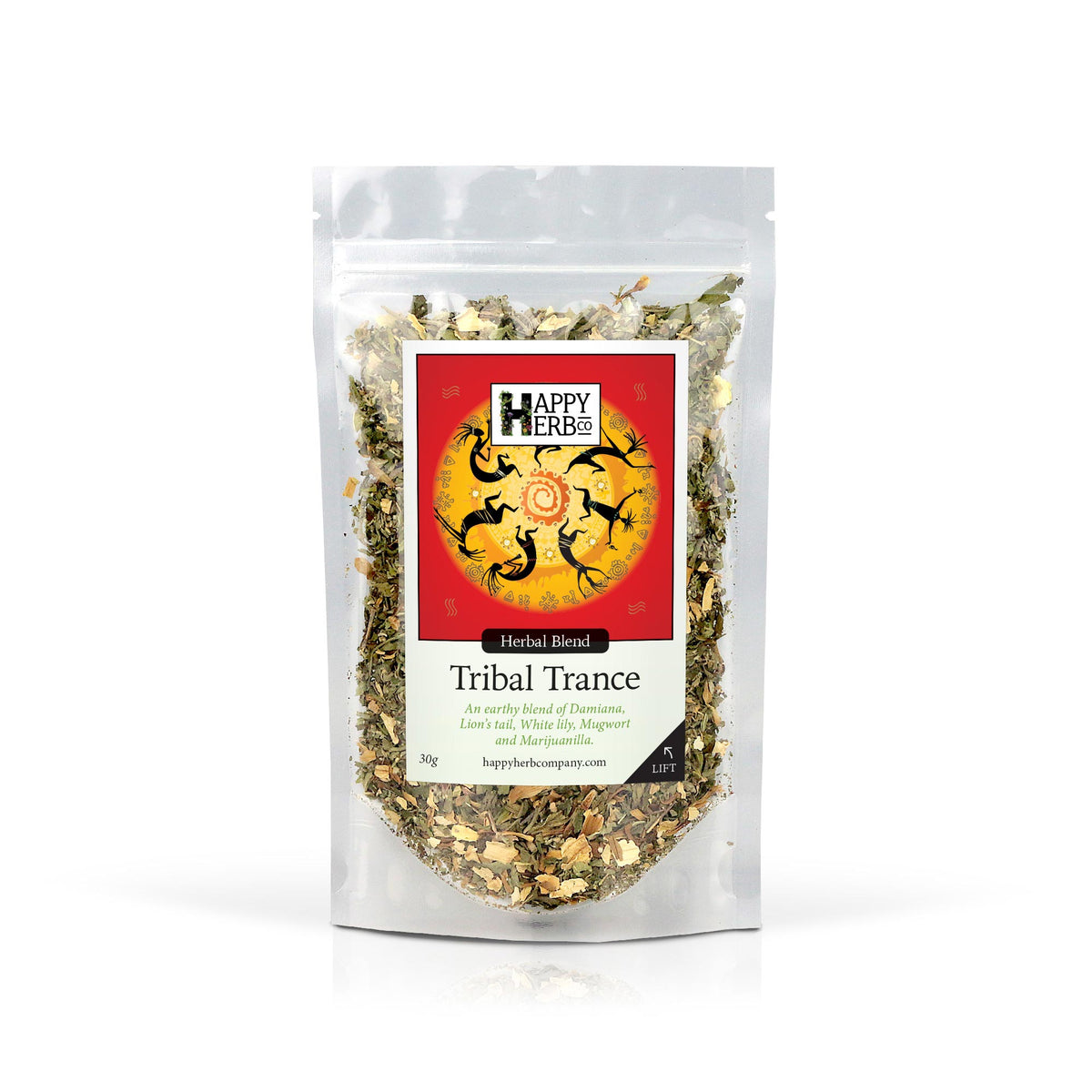
Milled Blend
A bold milled blend of damiana, lion's tail, mugwort and white lily.
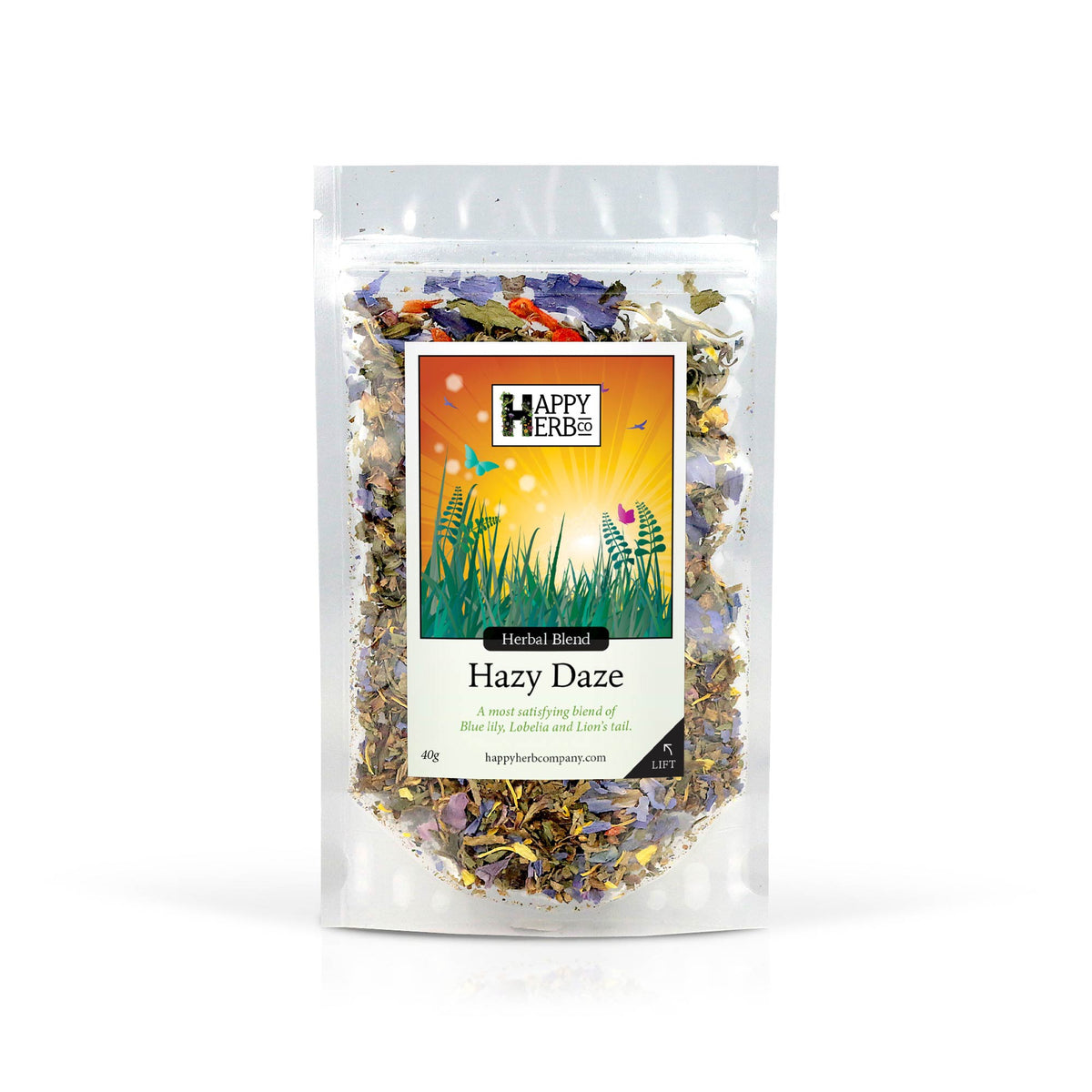
Milled Blend
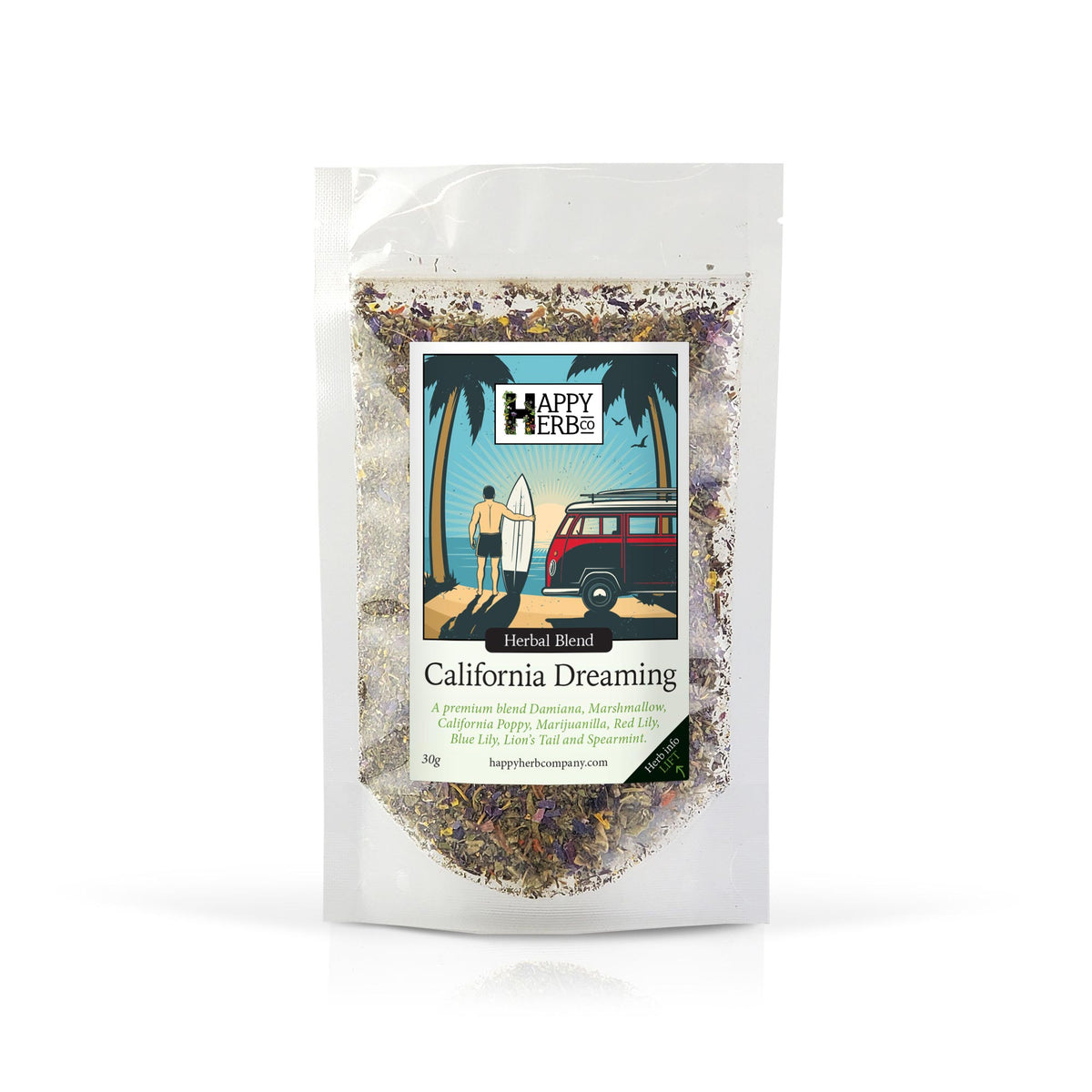
A soft milled blend of lion's tail, blue lily, marshmallow and passionflower.
Milled Blend
A dreamy evening milled blend with California poppy, blue lily and mullein.
FAQ
Lion's Tail (Leonotis leonurus) is a tall shrub of the mint family with tiers of bright orange flowers, native to southern Africa, where it is known as wild dagga. Its leaves and flowers have long been brewed and smoked by the Khoikhoi and other peoples of the region. Today Lion's Tail is enjoyed as a tea and in milled herb blends.
Lion's Tail is long associated with relaxation, a lifted mood and social occasions. In South Africa the Khoikhoi smoked the dried leaves and flowers, and the plant is still brewed as a traditional tea and skin wash. Research is at an early stage and we found no clinical trials in people, so we describe how it is used, not what it will do.
Lion's Tail is best known as a herb people reach for when they want to unwind at the end of the day or settle into good company. Most people have it in the evening, as a pot of tea shared with friends or in a milled herb blend. It suits the occasional evening more than a daily routine.
Add 1 tablespoon of dried Lion's Tail to 500 ml of water and boil for 10 minutes. Let it cool, then strain. The tea is earthy and somewhat bitter, so most people add honey. In South Africa the same cooled tea is also used on the skin as a wash.
No. Lion's Tail is naturally caffeine free. It belongs to the mint family and is not related to tea or coffee. It is, however, traditionally described as mildly relaxing and mood-lifting, so most people keep Lion's Tail for the evening and for times when they do not need to drive or work.
Yes. In southern Africa the dried leaf and flower have long been smoked, and we sell Lion's Tail on its own as a milled herb for that reason. It is not an ingredient in our blends. It is also taken as a tea, which is the gentler way to meet it.
Inhaling smoke is harmful; we describe how the herb is used, we do not suggest it.
No formal safety studies of Lion's Tail in people have been published, so there is no established list of who should avoid it. If you are pregnant or breastfeeding, take medication or have a health condition, check with your health professional first.
No formal safety studies of Lion's Tail in people have been published. If you are pregnant, breastfeeding or taking medication, check with your health professional first.
This herb has not been studied enough for its actions to be defined. What we know of it comes from tradition and the sources below.
Log in or create an account to use your points.