Kanna Profile
Kanna
Sceletium tortuosum
For mood elevation, social ease and present moment focus.


Cart
Your cart is empty

Join us in our love of herbs
Kanna Profile
Sceletium tortuosum
For mood elevation, social ease and present moment focus.
Herbal Intelligence
Kanna (Sceletium tortuosum) is a small succulent native to the dry western parts of South Africa. The Khoi and San peoples have chewed its fermented leaves and stems for centuries, and it has long been known as a plant for lifting the mood and for good company.
The taste is earthy and mild. Most people take Kanna as a tea or a liquid extract, in small amounts, and it is the herb our customers reach for when they want to feel lighter, more at ease with other people and present in the moment.
Kanna has one of the longest written records of any southern African herb. Jan van Riebeeck noted it around 1660 as an item of trade among the Khoi, and the journal of Governor Simon van der Stel's expedition to Namaqualand in 1685 carries a painting of the plant, with a note that it was called Canna and held in great esteem(1). Its use by San hunter-gatherers and Khoi herders is thought to be far older(1).
The Afrikaans name kougoed, first recorded around 1830, means 'chewing stuff', from kou, to chew, and goed, stuff(1). The plant is crushed, sealed in a bag and left in the sun for about eight days, then dried(1). The prepared herb was mainly chewed or smoked(2).
In Namaqualand Kanna is still gathered between October and January and prepared this way(1). The uses recorded there include lifting the mood, sociability, calming, and easing hunger, thirst and fatigue(1).
Kanna's main compounds are the mesembrine-type alkaloids. Twenty-five alkaloids in four structural classes have been identified in the plant, and the mesembrine class is the largest(2). In laboratory tests mesembrine acts on the serotonin transporter, and a standardised Kanna extract also inhibits an enzyme called PDE4(1). These are laboratory findings and do not describe the effects of any product.
In Western herbalism Kanna is classed as a nervine, and more recently as a nootropic. Herbalists think of it as a mood herb, taken in small amounts as a tea or liquid extract at the times it is wanted.
For many people Kanna is part of habit shifting: something to share at a gathering in place of a drink, or a quieter way to close a tense day. Others take a little before meditation or creative work, when they want to be present and unhurried.
Research on Kanna is promising but still small. The clinical studies so far have used one standardised extract in healthy volunteers, and none has yet been run in people with a diagnosed condition(1, 2). So we describe how it is used, not what it will do.
Developed and reviewed by Laura GraceClinically reviewed by Tamara Welsh, Clinical HerbalistLast reviewed
This profile is intended as a researched educational guide and does not replace the broader perspective of a herbal consultation.
★★★★★
4.1 out of 5, from 15 reviews
This kanna kava elixir has become a staple as it’s much easier to take than the kava powder although not as strong but it’s a compromise when my stomach can’t tolerate the volume of instant kava needed for an effect. The only downside is I go through it quite quickly.
I mainly take in late arvo early evening as it instantly settles my nervous system and I can get quite sleepy
I recently got kava but i heard you shouldn't take it with L dopa - like drugs/ Would this include your velvet mucana bean powder , as velvet bean inhibits L dopa similar to Pharmaceutical antidepressants . Also heard you shouldnt have it with alcohol but this product contains alchol? thanks
We have emailed you a detailed response to this question. In short, Kava and Mucuna could go well together if you are seeking an effect. The suggestions to avoid alcohol with Kava would be more like 2 drinks or more and getting in a drunk state, rather than a small amount of alcohol used to extract the herb. A glass of alcohol may potentiate the effects of Kava. Thanks Laura.
Unfortunately this product is not what I was hoping for. On 5 droppers I felt a slight, barely noticeable buzz which only lasted a few minutes and then it was gone.
5mls plenty imho ;-)
Nice natural buzz, took some before I went to the shopping centre, felt less social anxiety and a bit giggly...would also be great in larger amounts for a festival/party, would be good to have a ticture with straight Kanna and no kava for more energy though to take before work. Overall best tincture I've tried from HHH :)
Hi Ebony, Thank you so much for your kind words and positive feedback! We greatly appreciate your support and are thrilled to hear that you had a wonderful experience with our Kanna.
Our goal is to provide the best possible herbs & blends to our valued customers, and your feedback motivates us to continue working hard towards that goal -- and we will definitely keep a kanna only tincture in mind!
If you ever have any more feedback or questions in the future, please don't hesitate to get in touch. Your feedback is invaluable to us, and we hope to continue to serve you in the future!
In everyday life
Kanna is used in four main ways.
Kanna is strong for its size. Begin with a small amount, and do not combine it with alcohol.
Something to chew on.
Smell the dried, fermented herb, slightly sour and earthy. The San people of South Africa chewed it on long walks and before gatherings, and traded it in rolls for two thousand years.
Steep a small amount, 200 milligrams, in hot but not boiling water with a squeeze of lemon, or take a few drops of the tincture. Start low: this is a herb to meet gradually.
Sip slowly. Kanna was shared between walkers and talkers. Who is the person you most easily fall into step with?
In the Botanical Guides
Shop
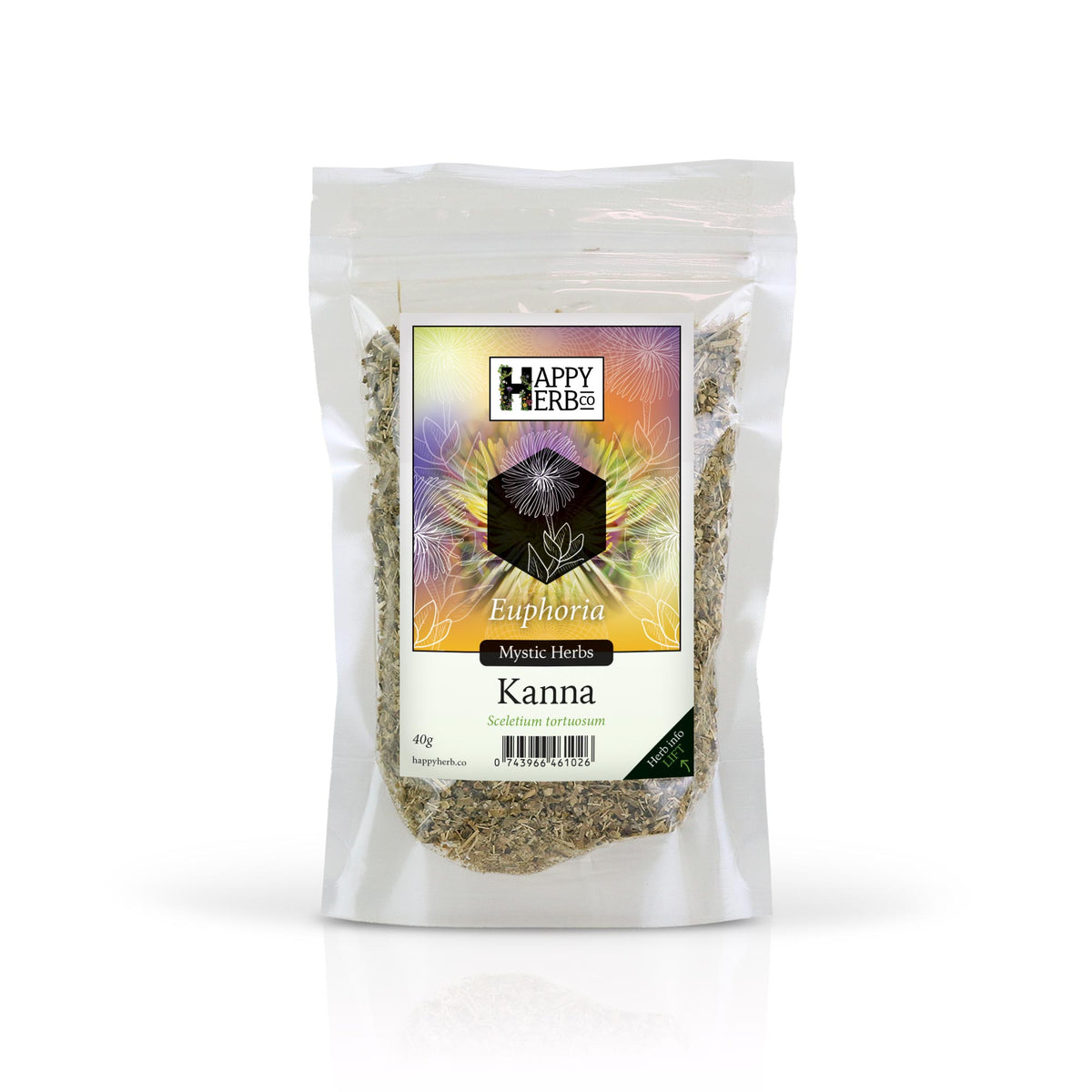

Single Herb


Single Herb
A concentrated 100:1 resin of kanna, a groundcover from Southern Africa.
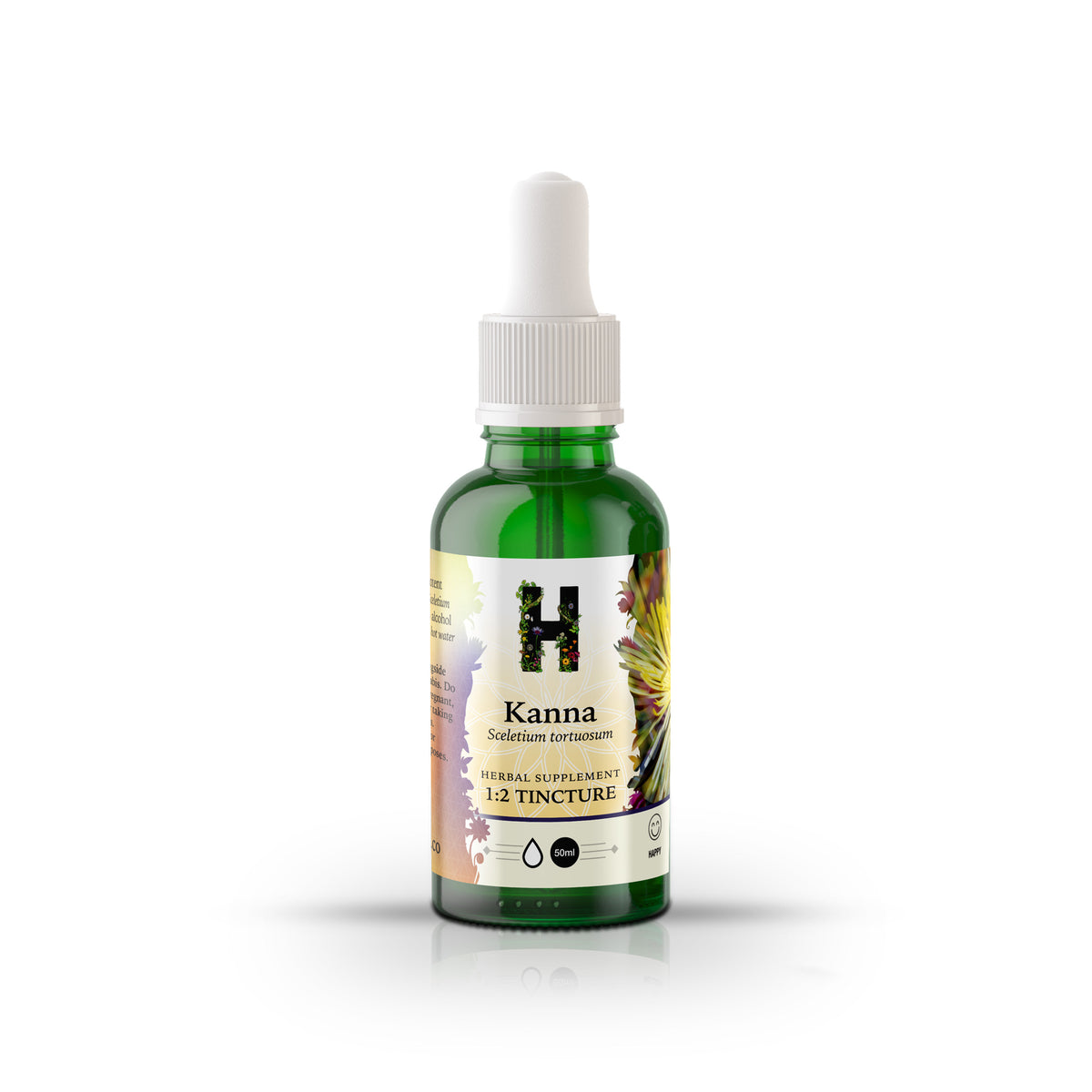
Botanical Concentrate

Magic Elixirs
FAQ
Kanna (Sceletium tortuosum) is a small succulent native to the dry western parts of South Africa, also known as Sceletium or kougoed. The Khoi and San peoples have chewed its fermented leaves and stems for centuries. Today Kanna is taken in small amounts as a tea, a liquid extract or a resin.
Kanna is long associated with mood and social ease. The Khoi and San peoples of South Africa chewed the fermented plant in company and to ease hunger, thirst and fatigue, and Western herbalists class it as a nervine. Clinical studies so far are small and in healthy volunteers only, so we describe how it is used, not what it will do.
Kanna is best known as a herb people reach for when they want to feel lighter and more at ease, on their own or in company. Most people take a small amount as a tea or liquid extract before a social occasion or at the end of a tense day. Kanna is not suitable alongside antidepressant medication.
Kanna is most often taken as a tea or a liquid extract. For tea, steep 200 mg of dried, fermented Kanna in hot, not boiling, water for 10 to 15 minutes with a squeeze of lemon. With the liquid extract, start with a few drops in water and increase slowly, to no more than two dropperfuls at a time.
No. Kanna is naturally caffeine free. Its main compounds are the mesembrine-type alkaloids, which are a different family from caffeine. Kanna is not a stimulant in the way coffee or tea is, and people tend to take it for ease and mood, not for energy.
Yes. Reviews of Kanna's history record that the fermented plant was mainly chewed or smoked in South Africa, and a small amount is sometimes added to a hand-rolled herb blend today.
Inhaling smoke is harmful; we describe how the herb is used, we do not suggest it. Many people prefer to take Kanna as a tea or a liquid extract.
Avoid Kanna during pregnancy and breastfeeding, and if you take SSRIs, MAOIs or any other medication that acts on serotonin. Do not combine Kanna with alcohol, cannabis or other drugs. Large amounts can cause mild nausea or drowsiness. If you take medication or have a health condition, check with your health professional first.
No. Kanna (Sceletium tortuosum) and MDMA are different things, and Kanna does not reproduce the MDMA experience. Kanna's alkaloids, chiefly mesembrine, are studied for the way they act on serotonin reuptake and on an enzyme called PDE4; what people describe is a lift in mood and a softening of social tension, with the senses and judgement intact. MDMA is a synthetic entactogen with a far stronger and quite different action.
People do reach for Kanna when they want a gentler, legal companion for a social evening, and that is a fair use of it. Because of how it works, Kanna is not combined with antidepressants (SSRIs, SNRIs or MAOIs), nor with MDMA itself.
Do not combine Kanna with alcohol, cannabis, or other drugs (especially antidepressants). Combining substances can increase the risk of adverse effects. Always use mindfully and in moderation.
The duration and onset of Kanna’s effects depend on the method of consumption:
Sublingual (under the tongue):
Smoking or snuffing:
Tincture (1:2 or similar):
Capsules or tea:
No. Kanna is not considered habit-forming. Traditionally it was chewed, and today people take it as a tea, a tincture or a snuff. It has a reputation as a herb people reach for when they are cutting back on other things, but that is reputation rather than evidence.
Kanna is known for:
Kanna is best used as an alcohol alternative when you want to feel uplifted, open-hearted, and socially relaxed without intoxication. It’s ideal for:
Kanna shines when you’re seeking gentle euphoria and emotional clarity. Use it in low doses to promote a calm, contented state—perfect for replacing alcohol in moments of connection or celebration.
Large amounts can cause mild nausea or sedation. Avoid during pregnancy and breastfeeding, and if you take SSRIs, MAOIs or other serotonin-based medications. Do not combine Kanna with alcohol, cannabis or other drugs. Combining substances can increase the risk of adverse effects. Always use mindfully and in moderation. This product is not intended to diagnose, treat, cure or prevent any disease.
As described in the monographs cited under Sources.
Log in or create an account to use your points.