Lobelia Profile
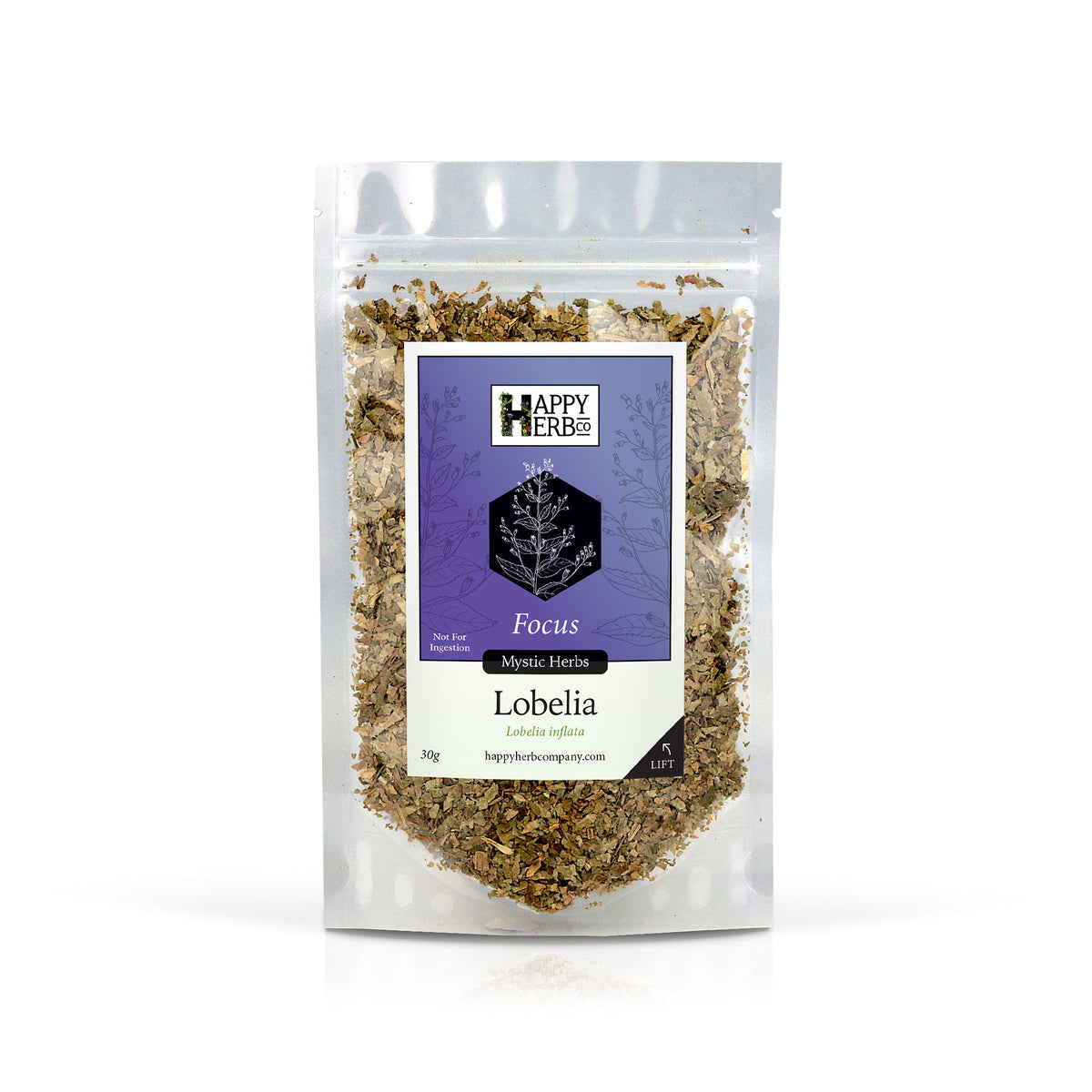
Lobelia
Lobelia inflata
For habit shifting, rolling blends and ceremonial use.


Cart
Your cart is empty

Join us in our love of herbs
Lobelia Profile
Lobelia inflata
For habit shifting, rolling blends and ceremonial use.
Herbal Intelligence
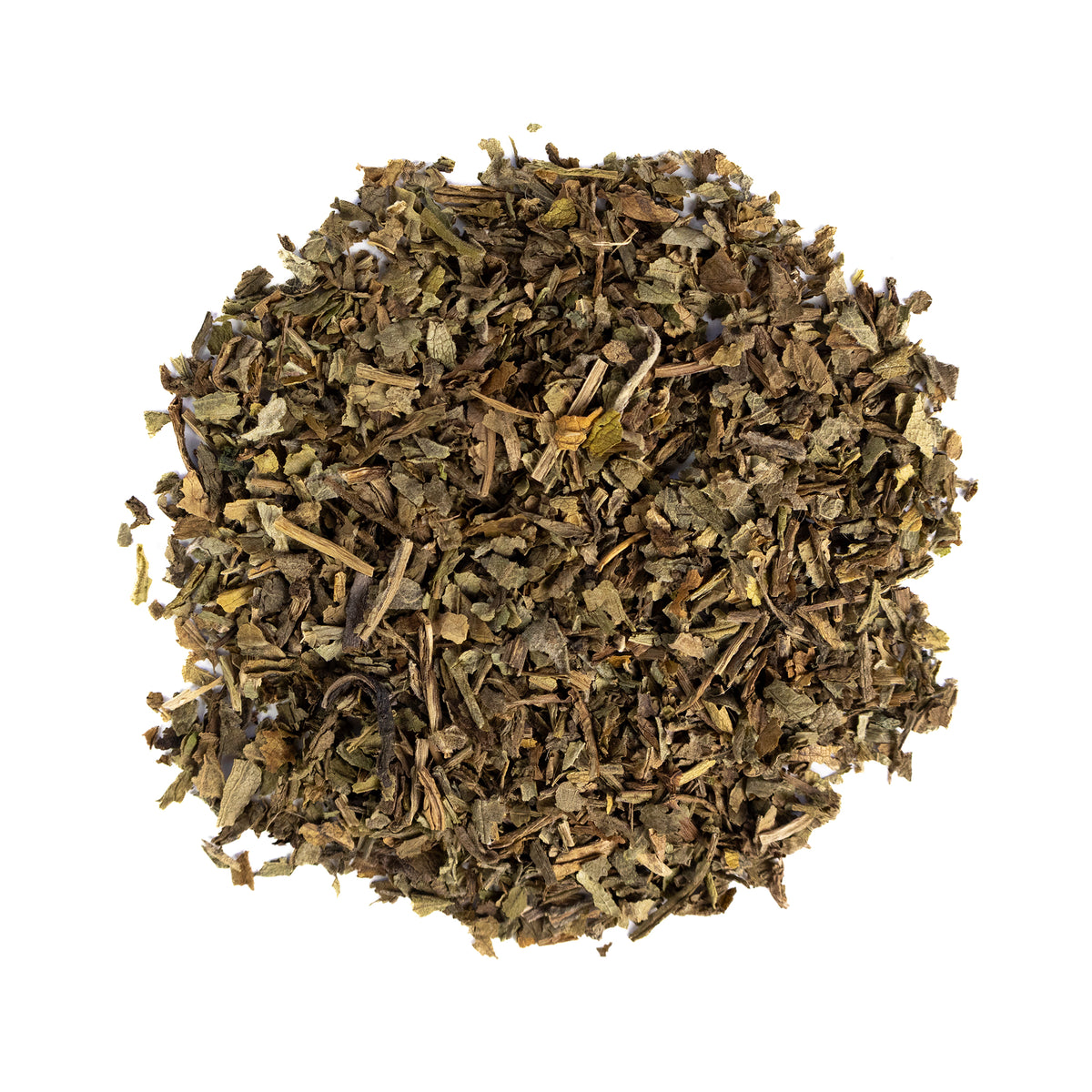
Lobelia (Lobelia inflata) is a small annual of the bellflower family, native to eastern North America. It is also called Indian Tobacco, after the account that Native American peoples of New England smoked its dried leaves in place of tobacco, and it was one of the best-known herbs of nineteenth-century American herbalism.
The taste is sharp, bitter and peppery. In Australia Lobelia is not sold for internal use, so here it is a leaf for milled herb blends, not for the teapot. It is the herb our customers reach for when they are putting a blend together as part of habit shifting.
Lobelia grows wild across eastern North America. Its common name, Indian Tobacco, comes from the account that Native American peoples of New England, the Penobscot among them, smoked the dried leaves in place of tobacco(1, 2).
The herb was later popularised by the American herbalist Samuel Thomson (1769 to 1843)(1). In large amounts Lobelia causes vomiting, and some nineteenth-century American herbal physicians used that effect on purpose, as a way of clearing the body.
In the twentieth century its main alkaloid, lobeline, was widely used in commercial remedies for people giving up smoking(3). Herbalists in some countries still use Lobelia in very small amounts. In Australia it is not sold for internal use, and it is known mainly as a leaf in milled herb blends.
The aerial parts of Lobelia (Lobelia inflata) contain a group of piperidine alkaloids, most notably lobeline. These alkaloids are structurally similar to nicotine and act on nicotinic acetylcholine receptors(4). They have been studied for their action on breathing and on the smooth muscle of the airways(5).
In Western herbalism Lobelia is classed as an expectorant and an antispasmodic: a strong herb for the chest, used in very small amounts and under a practitioner's care. In Australia it is not sold for internal use, so that side of its use belongs to herbalists overseas.
Here, people include Lobelia in milled herb blends as part of habit shifting: a pinch among softer leaves such as Mullein, Damiana or Marshmallow. It is a herb for now and then, not for every day.
The research does not support the old reputation. A Cochrane review found no long-term trials of lobeline for stopping smoking, and the short-term evidence suggested no benefit(3). So we describe how it is used, not what it will do.
Developed and reviewed by Laura Grace, Owner and Creative Director of Happy Herb Co, Herb Educator and Registered Ayurvedic Lifestyle Consultant · Clinically reviewed by Tamara Welsh, BSc, AdvDipWHM, ATMS, Clinical Herbalist
This profile is intended as a researched educational guide and does not replace the broader perspective of a herbal consultation.
In everyday life
In Australia Lobelia is not sold for internal use, so it is used in one main way.
Lobelia is a herb for occasional use, in small amounts.
A pinch, not a handful.
Take the smallest pinch of the dried herb and taste a single fragment: sharp and peppery, then a prickle at the back of the throat. That is lobeline, and it is why herbalists use lobelia by the pinch.
In Australia this herb is not for drinking. Keep it beside you while you make a cup of something soft, mullein or chamomile, and read the profile instead.
Sip that soft cup slowly. Lobelia is a lesson in measure: a little does the work, more does harm. Where in your life is more not better?
Shop
Mystic Herb

Milled Blend
Milled Blend
Milled Blend
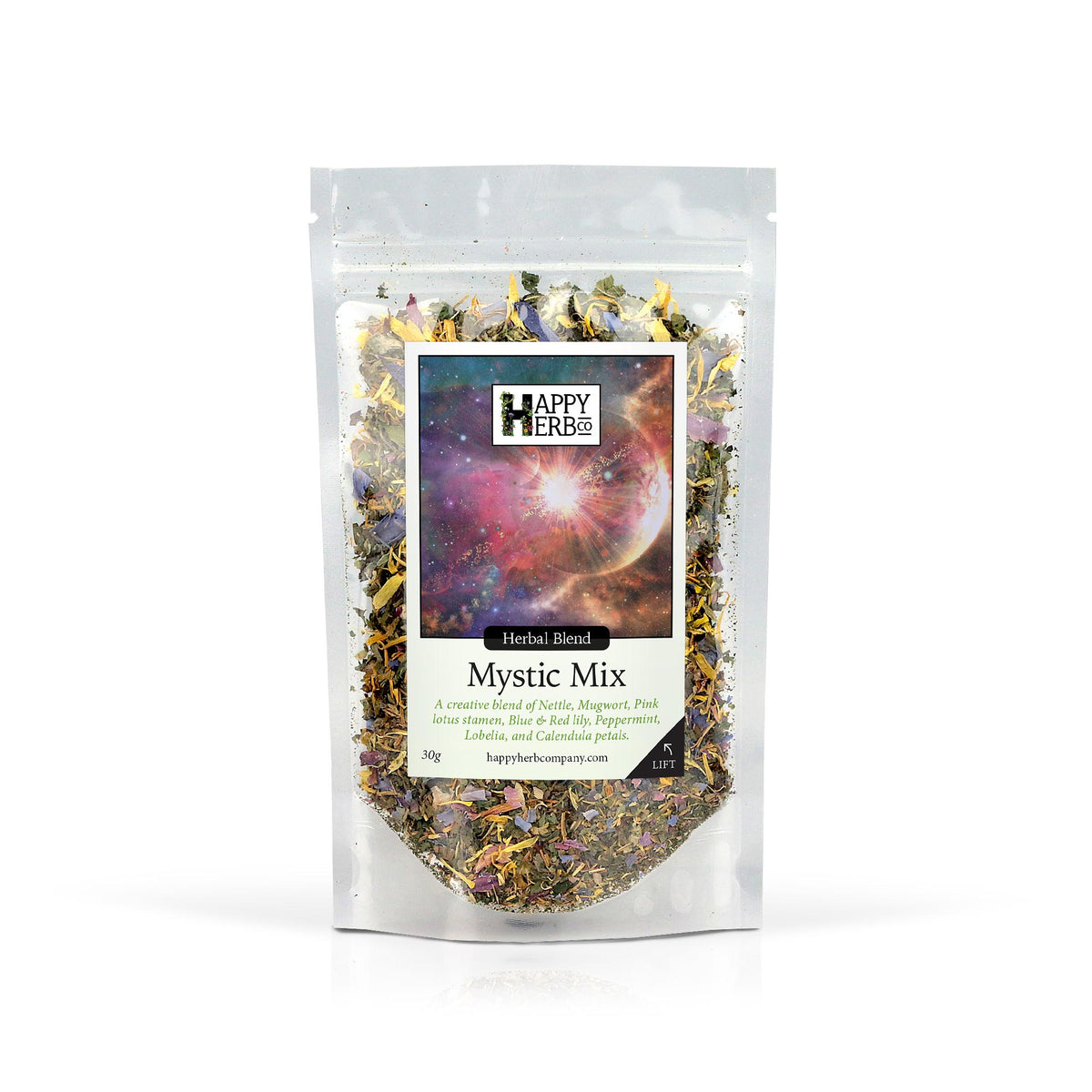
A floral, cooling milled blend with nettle, mugwort, blue lily and peppermint.
FAQ
Lobelia (Lobelia inflata) is a small annual of the bellflower family, native to eastern North America and also known as Indian Tobacco. Native American peoples of New England are said to have smoked its dried leaves, and it became one of the best-known herbs of nineteenth-century American herbalism. In Australia Lobelia is not sold for internal use, and it is found in milled herb blends.
Lobelia is long associated with the breath and with habit shifting. Native American peoples of New England are said to have smoked the leaf in place of tobacco, and Western herbalists class Lobelia as an expectorant and an antispasmodic. A Cochrane review found no evidence that lobeline, its main alkaloid, helps people stop smoking, so we describe how it is used, not what it will do.
Some people include Lobelia in a milled herb blend when they are stepping away from an old habit. A pinch is mixed with softer leaves such as Mullein or Damiana, and it is used now and then, not every day. Research has not shown that Lobelia makes stopping easier.
Not in Australia. Herbalists in some other countries use Lobelia as a tea or liquid extract in very small amounts, but because of its alkaloid lobeline it is not sold for internal use here, and larger amounts cause vomiting. We sell Lobelia for milled herb blends only and do not suggest drinking it.
No. Lobelia is naturally caffeine free. Its best-known compound is lobeline, an alkaloid of a different kind, and Lobelia is not related to tea or coffee. In Australia Lobelia is not sold for internal use, so here it is a leaf for milled herb blends, not for the teapot.
Yes. Lobelia is known as Indian Tobacco, after the account that Native American peoples of New England smoked its dried leaves in place of tobacco. It is used in small amounts in our milled herb blends, where it adds a sharp, peppery note among softer leaves such as Mullein.
Inhaling smoke is harmful; we describe how the herb is used, we do not suggest it.
Lobelia is not sold for internal use in Australia, because its alkaloid lobeline is potentially toxic, so it should not be made into tea or swallowed. In larger amounts it causes vomiting, and a Cochrane review also notes dizziness and nausea. If you take medication or have a health condition, check with your health professional first.
Because of the potential toxicity of its active constituent lobeline, Lobelia is not sold for internal use in Australia. In some other countries it is still used internally in very small amounts, usually under the guidance of a herbalist or naturopath. In large amounts Lobelia can cause vomiting.
As described in the monographs cited under Sources.