Turkey Tail Profile
Turkey Tail
Trametes versicolor
For resilience and winter.


Cart
Your cart is empty

Join us in our love of herbs
Turkey Tail Profile
Trametes versicolor
For resilience and winter.
Herbal Intelligence
Turkey Tail (Trametes versicolor) is a thin, banded bracket mushroom that grows on dead logs in forests around the world. Named for its fan of brown and tan rings, it has been part of Chinese herbal tradition for at least two thousand years, where it is known as Yun Zhi.
The taste is mild and earthy. The mushroom itself is too woody to eat, so most people take Turkey Tail as a liquid extract or as a powder stirred into a hot drink, and it is the mushroom our customers reach for ahead of winter, when they want to build their resilience for the season.
Turkey Tail is a woody bracket fungus that grows on dead logs worldwide(1). Its English name comes from its concentric rings of brown and tan, which resemble the tail feathers of a turkey(1). In Chinese herbal tradition it is Yun Zhi, usually translated as 'cloud mushroom', and in Japan it is Kawaratake, the 'roof tile fungus'(1).
Its place in Chinese tradition goes back at least two thousand years, as a mushroom taken for general health, endurance and long life(2). In both China and Japan the dried mushroom is powdered and prepared as a tea(2).
In the twentieth century that folk tea caught the attention of researchers. Since the mid-1970s an extract of Turkey Tail known as PSK has been an approved medicine in Japan, and China produces a related extract, PSP(1). Older books and papers list the mushroom as Coriolus versicolor(1, 2).
Turkey Tail's best-known compounds are its polysaccharides, the beta-glucans(1). Two protein-bound polysaccharides are prepared from it: PSK, also called krestin, in Japan, and PSP, or polysaccharopeptide, in China(1, 2). Both are made from the cultivated mycelium, and glucose is the main sugar in each(1, 2). Research has centred on these purified extracts, not on the whole mushroom(2).
In Western herbalism Turkey Tail is classed as an immune tonic: one of the tonic mushrooms, taken steadily over weeks and months, not at the moment of need. It is often combined with Reishi, Chaga or Shiitake, or with the root Astragalus.
People build it into the daily routine: a spoonful of powder in the morning coffee, tea or broth, or a liquid extract in water. Many start in autumn and carry on through winter.
Turkey Tail is among the most researched mushrooms, but nearly all of that work concerns PSK, the purified extract given in Japanese hospitals alongside cancer treatment(1). It is not research on a powder or tea taken at home, and the US Food and Drug Administration has not approved any mushroom as a treatment for a medical condition(1). So we describe how it is used, not what it will do.
Clinically reviewed by Tamara Welsh, BSc, AdvDipWHM, ATMS, Clinical Herbalist ·
This profile is intended as a researched educational guide and does not replace the broader perspective of a herbal consultation.
In everyday life
Turkey Tail is taken in three main ways.
Turkey Tail is usually taken daily for weeks or months at a time.
Rings on a fallen log.
Find a picture of turkey tail growing, or better, find it on a log in the bush: fans of concentric rings, brown, grey, blue, cream, like a feathered tail. It has been used in China for two thousand years.
Stir the powder into tea, coffee or broth, where its mild, earthy flavour disappears. Take it daily, as part of the ordinary round.
Sip slowly. The rings are seasons of growth, each one laid on the last. Which ring are you adding this year?
In the Botanical Guides
Shop
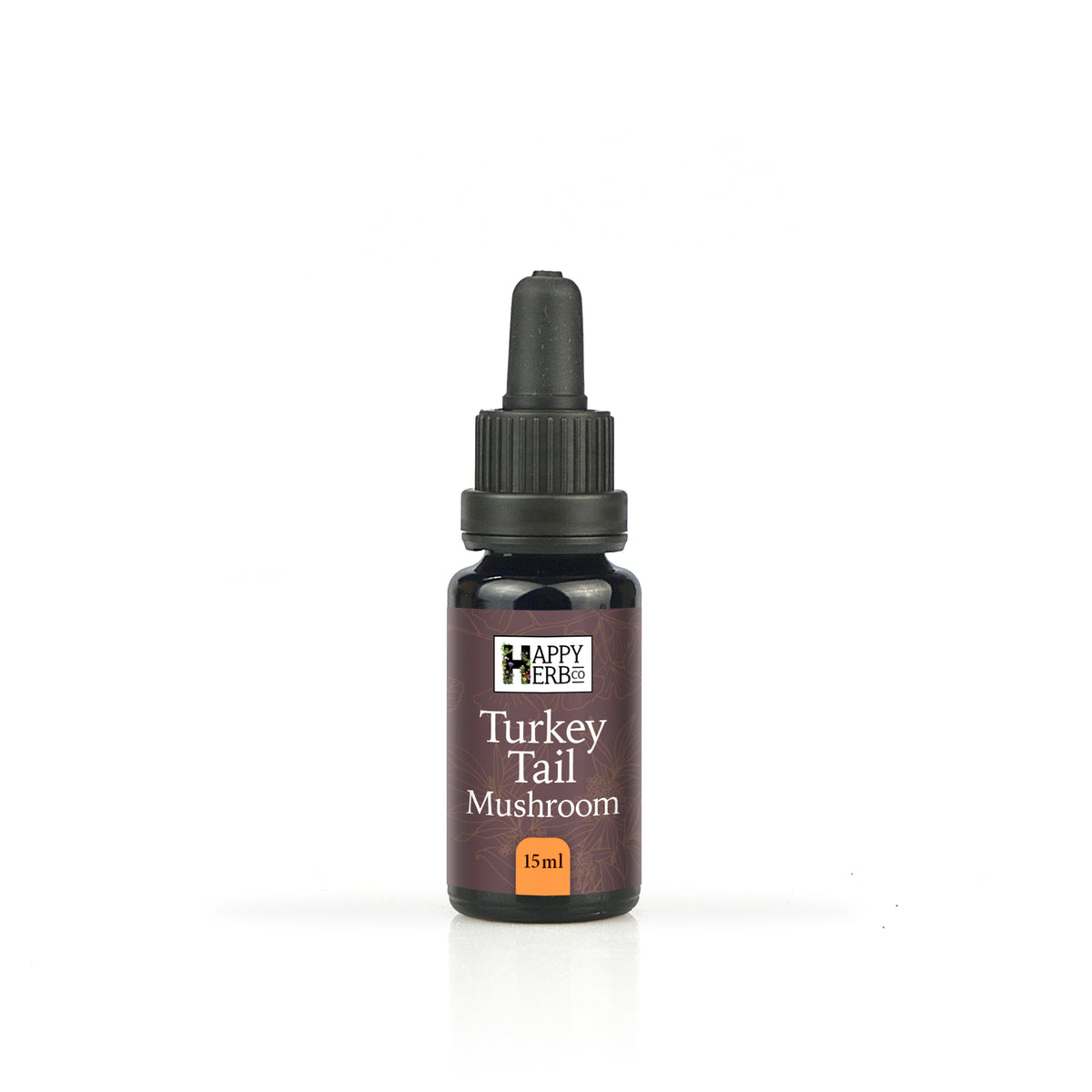
Spagyric
A single-mushroom spagyric, extracted in triple filtered spirit.
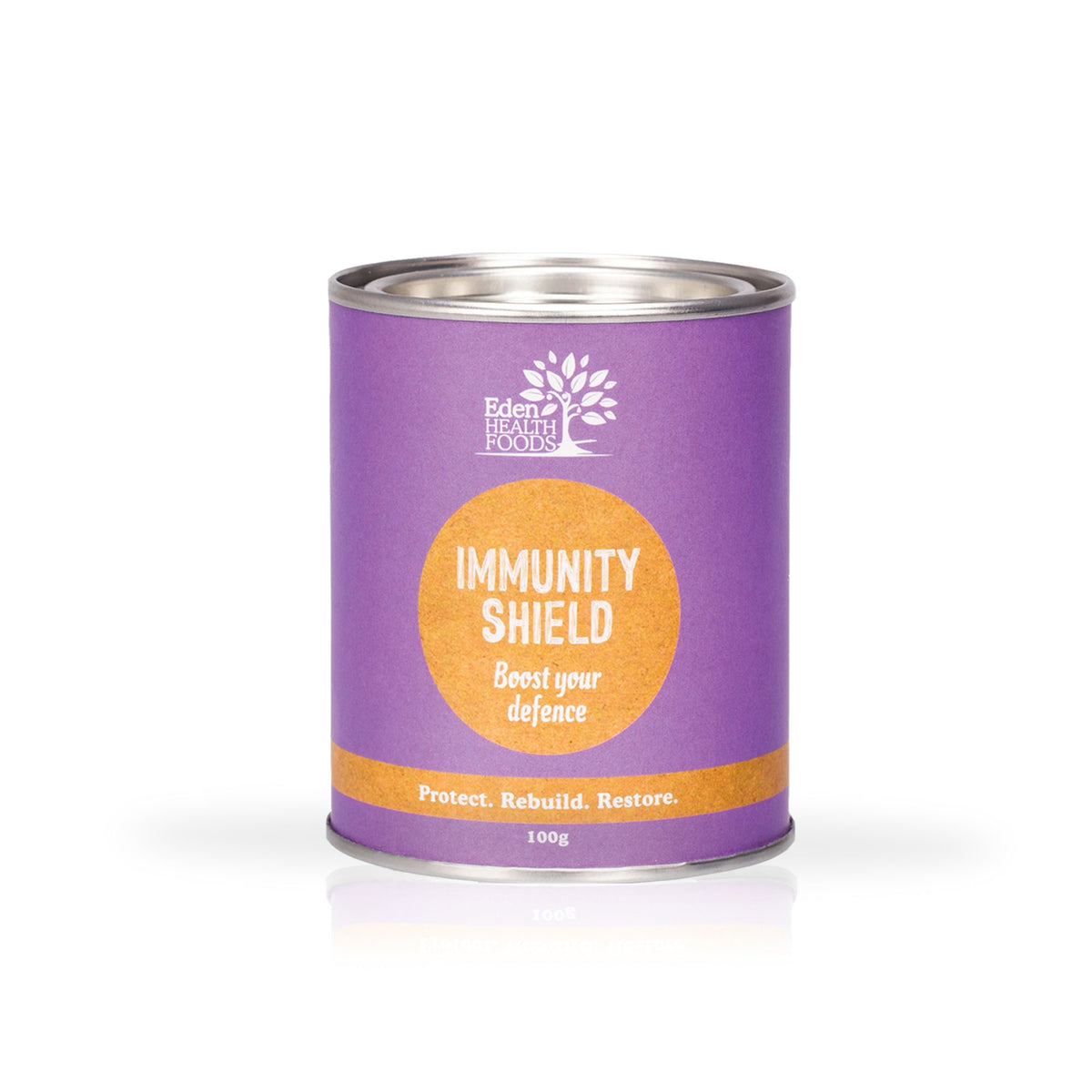
Eden Healthfoods
An echinacea-led formula with goji, rosehip, elderberry and astragalus.
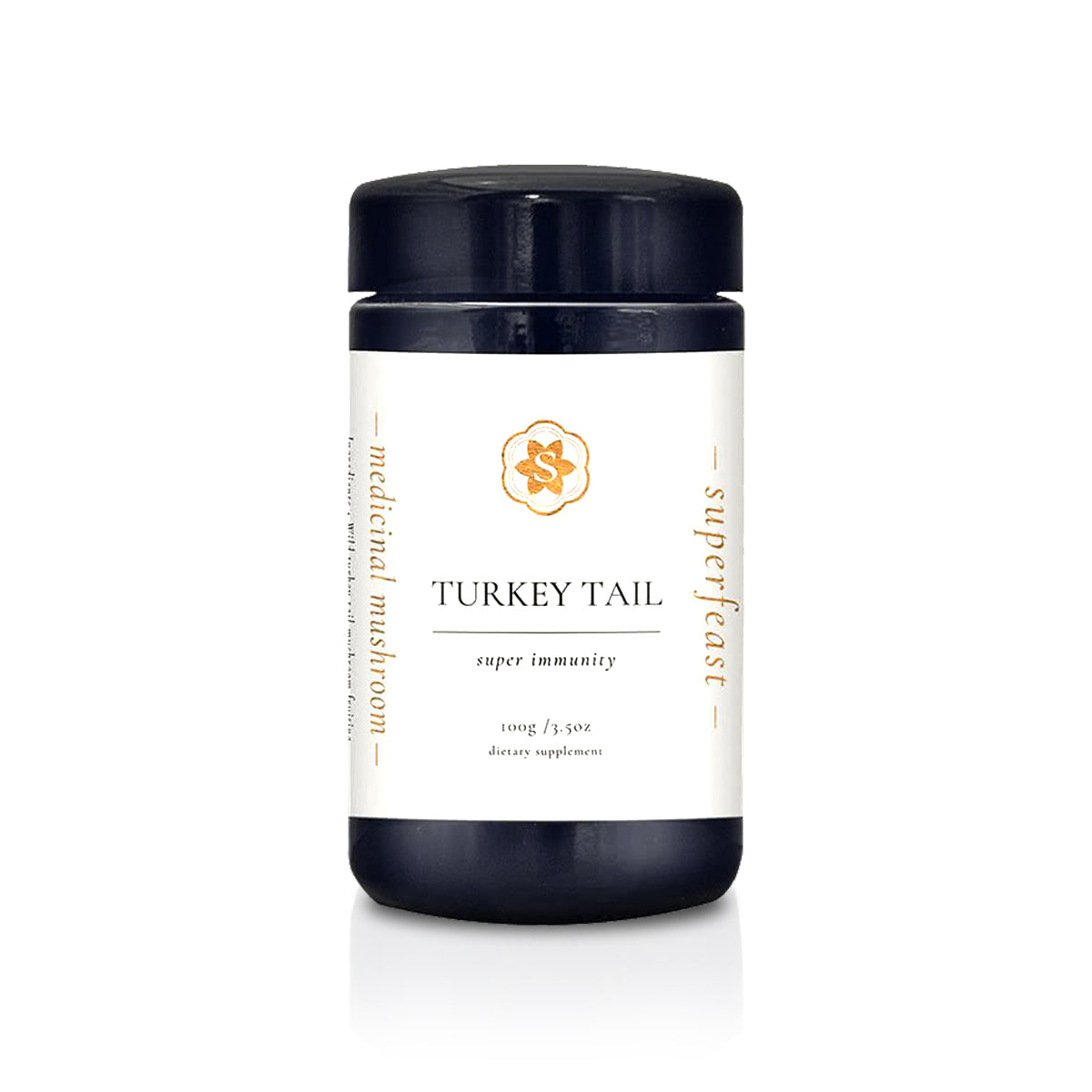
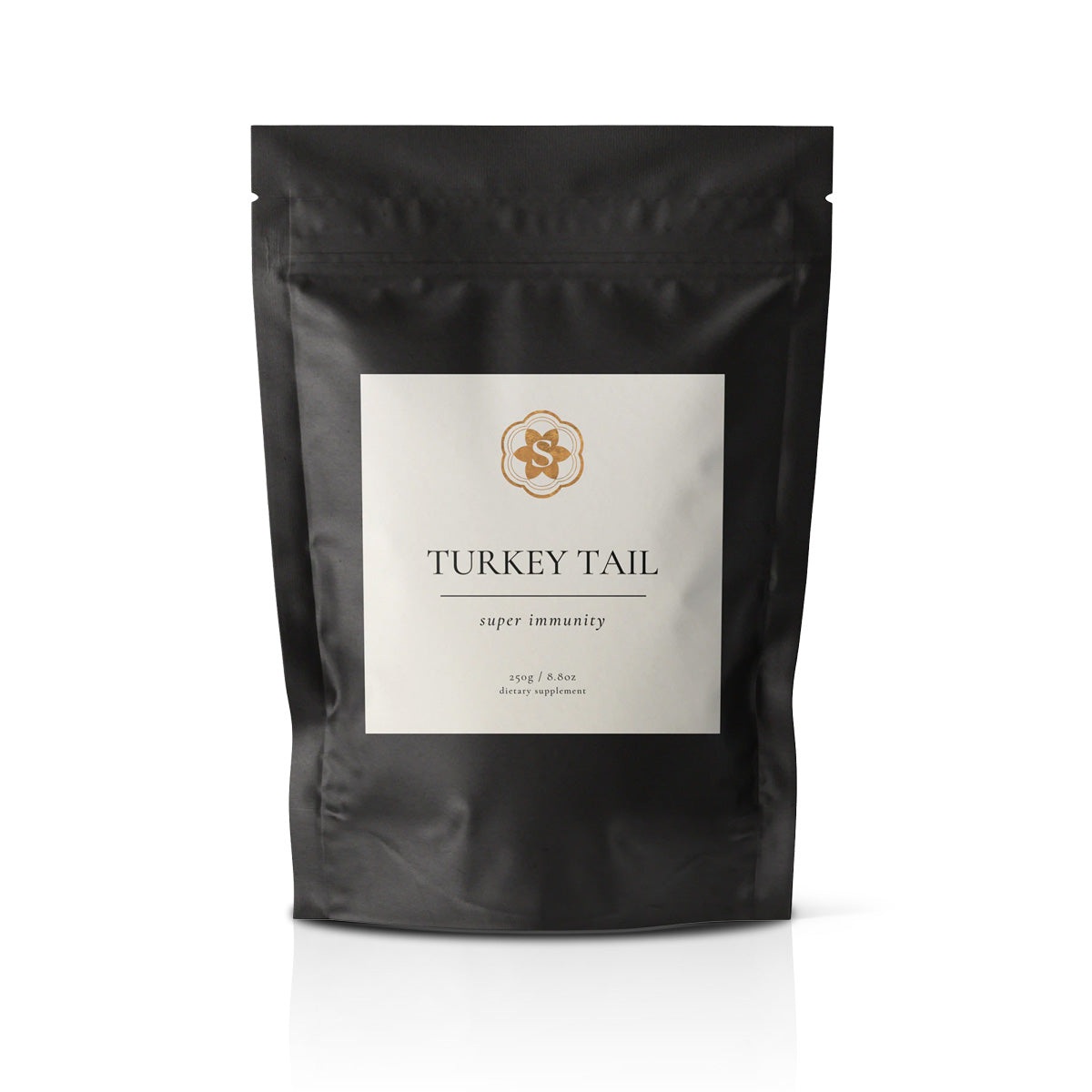
SuperFeast
Wild turkey tail fruiting body as a water extract powder.
FAQ
Turkey Tail (Trametes versicolor) is a thin bracket mushroom that grows on dead logs around the world, named for its bands of brown and tan that resemble a turkey's tail feathers. It has been part of Chinese herbal tradition for at least two thousand years, where it is called Yun Zhi. Today Turkey Tail is taken as a liquid extract or a powder.
Turkey Tail is long associated with immune action and resilience. In Chinese herbal tradition it is taken for general health, endurance and long life, and Western herbalists class it as an immune tonic. Most of the research concerns PSK, a purified extract used in Japanese hospitals, not the mushroom powder or tea, so we describe how it is used, not what it will do.
Turkey Tail is best known as a herb people reach for when they want to build their resilience ahead of the season. Most people take it daily for weeks or months at a time, often starting in autumn and carrying on through winter. It is a slow, steady tonic, not something for the moment of need.
Stir Turkey Tail powder into hot water, tea, coffee, broth or a smoothie, or take a liquid extract in a little water. Follow the directions on the label for the amount. In China and Japan the dried mushroom is powdered and prepared as a tea. Most people take Turkey Tail once a day, at the same time each day.
No. Turkey Tail is a mushroom and is naturally caffeine free, so it can be taken at any time of day. Many people stir the powder into their morning coffee or tea, in which case the caffeine comes from the coffee or tea, not from the Turkey Tail.
Not as a table mushroom. Turkey Tail is a thin, woody bracket fungus, too tough to chew, so in China and Japan the dried mushroom is powdered and prepared as a tea. Today it is mostly taken as a powdered or liquid extract. The US National Cancer Institute notes that several related Trametes species are difficult to tell apart from true Turkey Tail.
The US National Cancer Institute notes that PSK, the Turkey Tail extract used in Japan, has a well-established safety record there, with few adverse events reported. That finding is for a purified extract taken under medical care, not for every Turkey Tail product. If you take medication or have a health condition, check with your health professional first.
As described in the monographs cited under Sources.