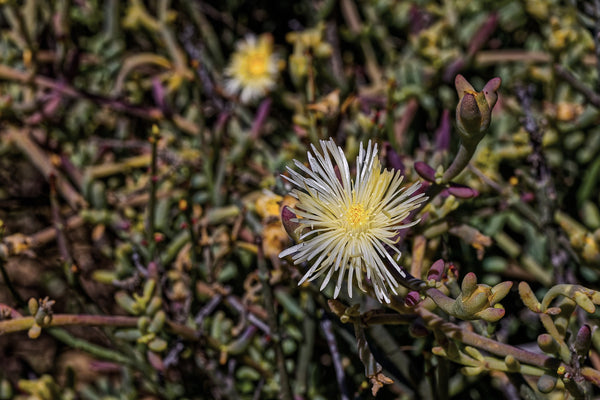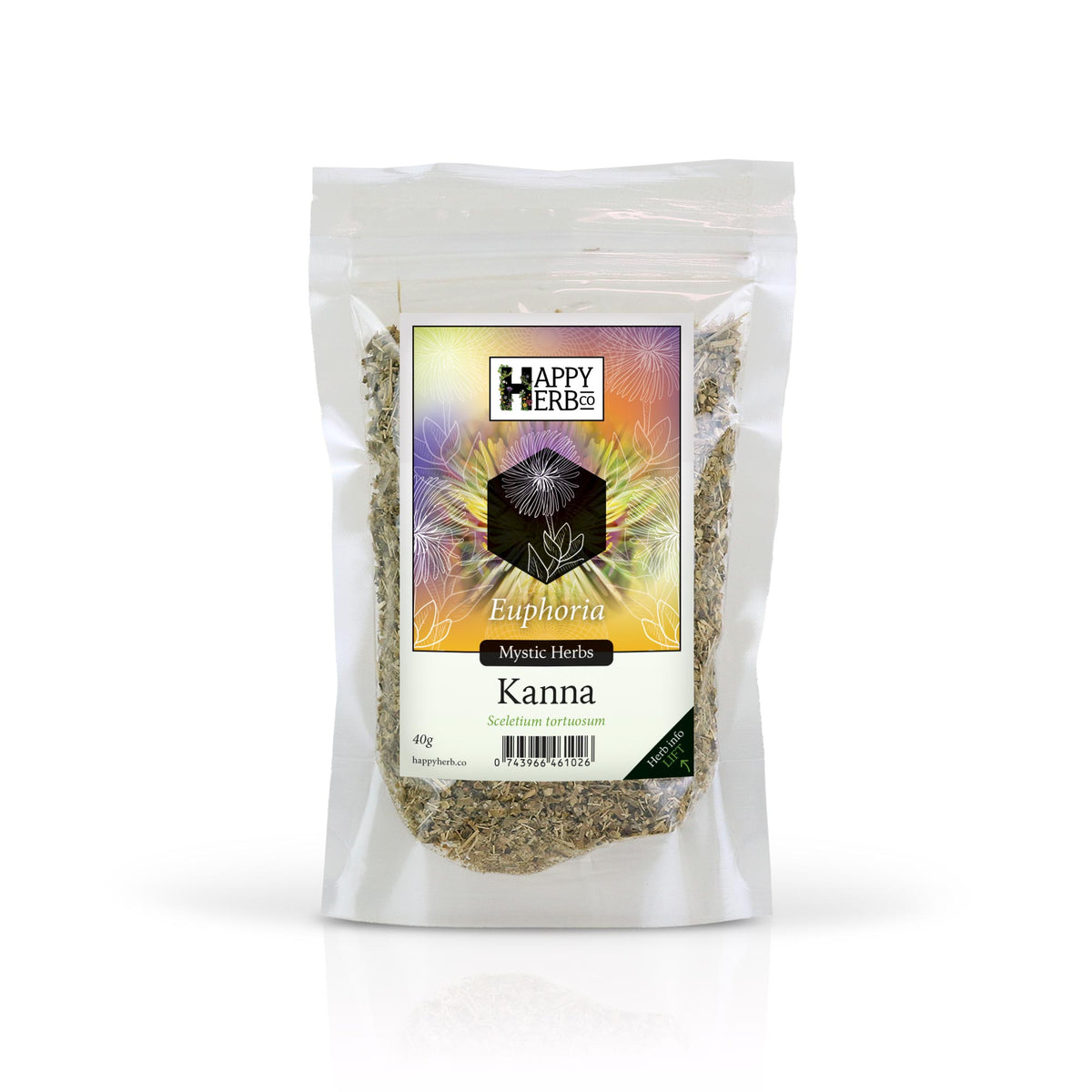

Kanna
Shipping calculated at checkout

Kanna: An In the Moment Pause for Presence and Ease
Open, connected and distinctly felt. Kanna is often chosen in social moments where presence, conversation and ease come naturally to the forefront. Small amounts are traditionally appreciated for their bright, focused quality, while larger amounts lean toward softness and relaxation, giving the herb a uniquely adaptable character. Long valued by the Khoisan people of southern Africa, Kanna has a long tradition of use around mood, connection and shared experience. A herb for those who want to feel more present in the moment, or removed from it.
- Character
- Earthy · Mild · Uplifting
- Companion for
- Mood elevation · Social ease · Present moment focus
- Pairs well with
- , ,
Cacao (Theobroma cacao) is a small evergreen tree native to the upper Amazon. Its seeds, known as cacao beans, are the source of all chocolate, and people have been preparing them for more than five thousand years.
The taste is rich, deep and bitter, with none of the sweetness of confectionery. Most people take Cacao as a hot drink, whisked into water or milk, or blend it into smoothies and food. It is the herb our customers reach for in the morning, and when a gathering calls for a cup to share.
Damiana (Turnera diffusa) is a small, aromatic shrub native to Mexico, Central America and the Caribbean. Its dried leaf has been brewed and shared for centuries, and it has long been known as a plant of love, ease and good company.
The flavour is aromatic and a little sweet, with a soft bitterness. Most people enjoy Damiana as a tea or a liquid extract, and it is a classic leaf in milled herb blends. It is the herb our customers reach for when the day is done and it is time to unwind, connect and enjoy the moment.
Lion's Tail (Leonotis leonurus) is a tall, orange-flowered shrub of the mint family, native to southern Africa, where it is known as wild dagga (the same plant; its cousin Leonotis nepetifolia, klip dagga, is a different species). Its leaves and flowers have long been brewed and smoked by the Khoikhoi and other peoples of the region, and it is grown in gardens around the world for its tiers of bright flowers.
The taste is earthy and aromatic, with some bitterness. Most people enjoy Lion's Tail as a tea or in a milled herb blend, and it is the herb our customers reach for at the end of the day or in good company, when they want to unwind and lift the mood.
Ingredients
Dried Kanna (Sceletium tortuosum)
Herbal Intelligence
Phytochemistry
Kanna's main compounds are the mesembrine-type alkaloids. Twenty-five alkaloids in four structural classes have been identified in the plant, and the mesembrine class is the largest.
Living tradition
Kanna has one of the longest written records of any southern African herb. Jan van Riebeeck noted it around 1660 as an item of trade among the Khoi, and the journal of Governor Simon van der Stel's expedition to Namaqualand in 1685 carries a painting of the plant, with a note that it was called Canna and held in great esteem.
Suggested use
Very popular for hand-rolling.
Specifications
- Other Names
- Sceletium, Kougoed
- Range
- Dried Herbs & Powders
- Grown In
- South Africa
- Plant Parts
- Aerial parts
- Packaging
- Home compostable bag
Vegan Friendly
Precautions
Kanna is considered safe and non-addictive when used appropriately, though high doses can cause mild nausea or sedation. It should be avoided during pregnancy and breastfeeding, and by anyone taking SSRIs, MAOIs, or other serotonin-based medications. Do not combine Kanna with alcohol, cannabis, or other drugs. Combining substances can increase the risk of adverse effects. Always use mindfully and in moderation. This product is not intended to diagnose, treat, cure, or prevent any disease.
Happy Herb Co shares referenced knowledge about herbs and makes no therapeutic claims for its products. If you are pregnant, breastfeeding, taking medication or managing a health condition, please speak with a health professional before using any herb.
Choose options
Explore