

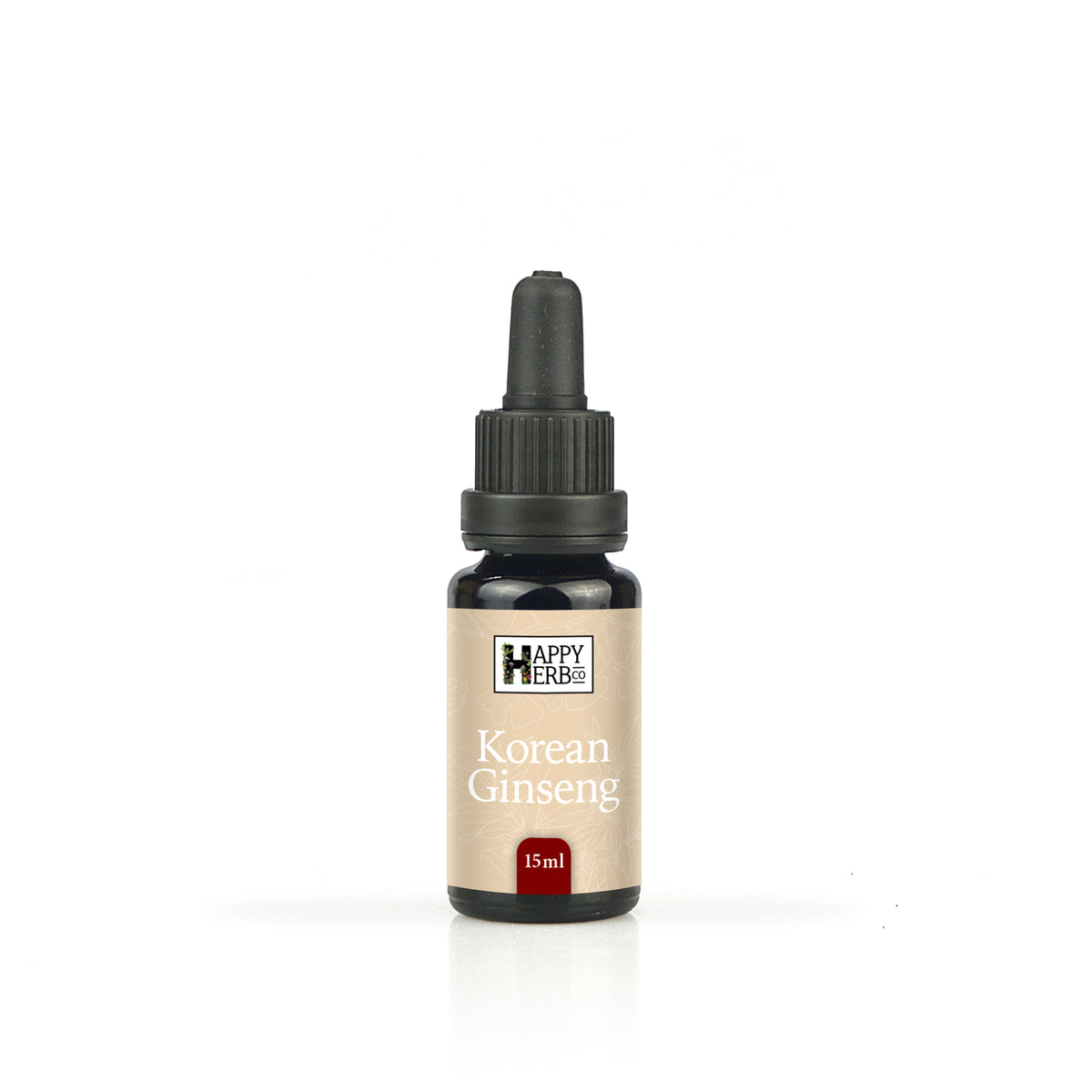
Korean Ginseng Spagyric
Shipping calculated at checkout

Korean Ginseng Spagyric — A Foundational Practice for Peak Vitality
For those who want to perform at their best. Known botanically as Panax Ginseng, Korean Ginseng has been valued in TCM for thousands of years as the king of herbs. A supreme tonic for vitality, endurance and whole body strength. Working to support the body's natural reserves of energy, drive and resilience.
This Korean Ginseng Spagyric is crafted through traditional alchemical practice to capture the vital essence of the plant. As part of our Spagyric range, it offers a subtle yet complete expression of this herb — for those drawn to the deeper energetic and vibrational qualities of herbalism.
- Character
- Bitter · Earthy · Rounded
- Companion for
- Vitality · Physical endurance · Whole body strength
- Pairs well with
- , ,
Schisandra (Schisandra chinensis) is a woody climbing vine native to northern China, Korea and far-eastern Russia. Its clusters of deep-red berries are known in Chinese as wu wei zi, the five-flavour fruit, and they have been taken as a tonic across East Asia for centuries.
The taste is like nothing else: sour first, then sweet, salty, bitter and pungent in turn. Most people simmer the berries into a tart, ruby-red tea, or take a powder or liquid extract. It is the herb our customers reach for in long, demanding stretches, when they want to stay steady and keep going.
Astragalus (Astragalus membranaceus) is a perennial of the pea family, native to northern China and Mongolia. Its long, sweet root, known as huang qi, has been one of the central tonic herbs of Chinese herbal tradition for around two thousand years.
The taste is mild, sweet and earthy, closer to food than to medicine. Most people simmer the sliced root into a tea, a broth or a pot of soup, and it is the herb our customers reach for ahead of winter, when they want to build themselves up for the season.
Shatavari (Asparagus racemosus) is a climbing wild asparagus native to India and the Himalayas. Its clustered, fleshy roots are Ayurveda's best-known tonic for women, named in the classical texts and used through every stage of life.
The taste is bittersweet and a little starchy. Most people simmer the root as a tea or stir the powder into hot milk, and it is the herb our customers reach for when they want steady nourishment through the monthly cycle and the changes of midlife.
Ingredients
Spagyric of Korean Ginseng
Contains alcohol: triple filtered spirit for extraction and preservation.
Herbal Intelligence
Phytochemistry
The compounds most studied in Korean Ginseng are the ginsenosides, a family of saponins found through the root and richest in its fine rootlets. The European Pharmacopoeia asks for at least 0.4 per cent of two of them, Rg1 and Rb1, in the dried root.
Living tradition
Ginseng has been used in Chinese herbal tradition for more than two thousand years. One of the earliest texts to describe it, the Shennong pharmacopoeia, was written around 196 CE.
Suggested use
- How often
- Up to 3 times a day
- A serve
- 5 drops under the tongue, held for as long as is comfortable (sublingual), or in a little warm water
Specifications
- Form
- Liquid Concentrate
- Range
- Spagyrics
- Extraction
- Spagyric technique in accordance with Paracelsus and the hermetic philosophy: slow cold extraction, long maceration, calcination of the plant to recover its salts, and astrological and energetic alignment. What is a spagyric?
- Concentration
- 1:2
- Packaging
- Reusable UV Glass Bottle
Precautions
Avoid if pregnant or breastfeeding.
Not suitable for people with high blood pressure, and traditionally avoided in people with bleeding disorders or hyperactivity.
Cautioned with prescription medications including diuretic, antidepressant, anticoagulant, anticonvulsant, cardiac glycoside and calcium channel blocker drugs.
May lower blood sugar. If you have diabetes or take diabetes medication, check with your health professional first.
More on the Korean Ginseng profile.
Happy Herb Co shares referenced knowledge about herbs and makes no therapeutic claims for its products. If you are pregnant, breastfeeding, taking medication or managing a health condition, please speak with a health professional before using any herb.
Choose options
Awesome product, will buy again 🤗
Explore

