
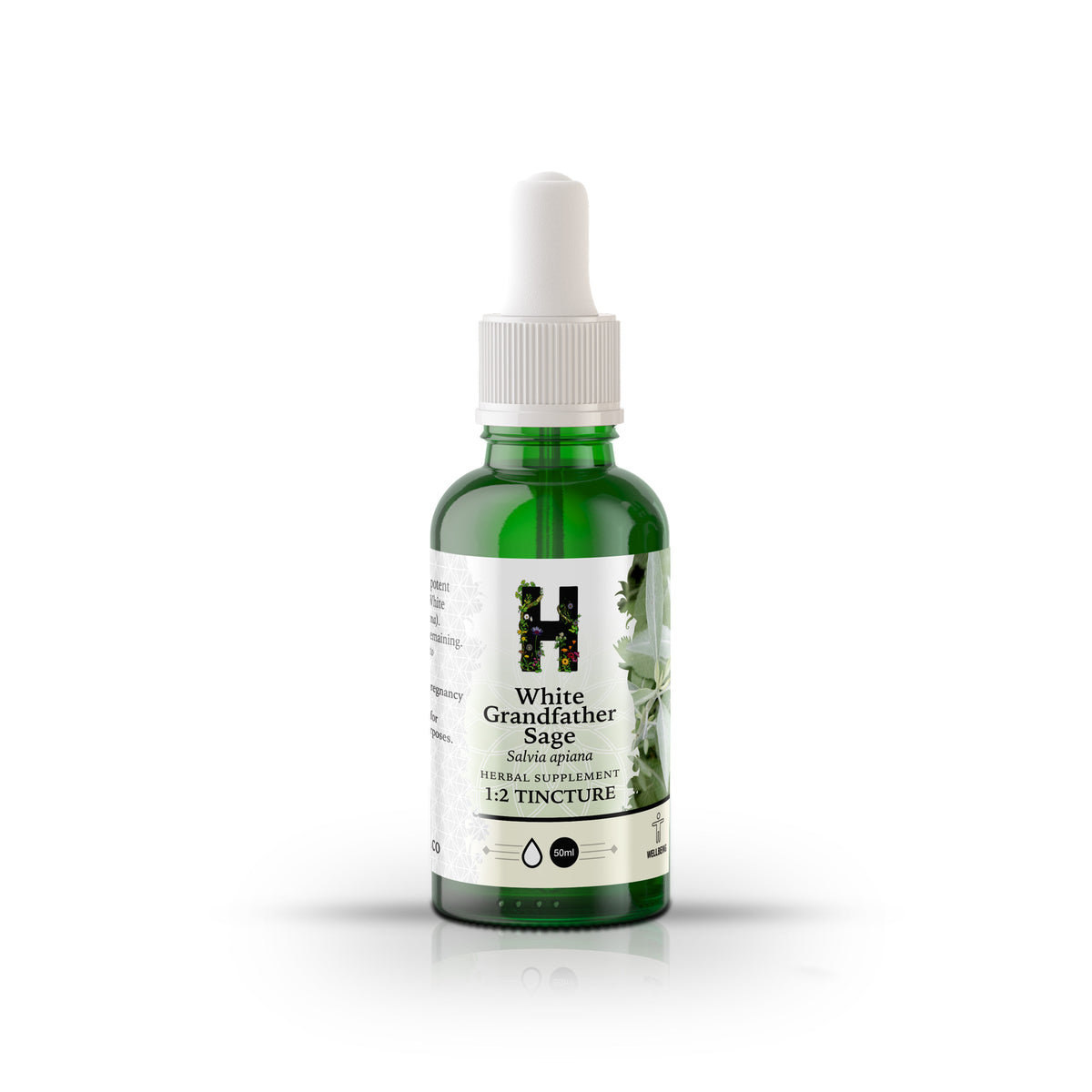
White Grandfather Sage 1:2 Liquid Herb
Shipping calculated at checkout

Liquid White Grandfather Sage — A Ceremonial Offering for Clearing and Grounding
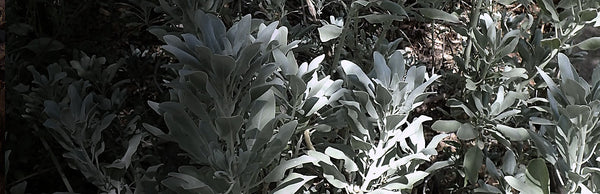
Recognised across cultures for its remarkable ability to cleanse spaces and auric fields, White Sage is one of the most respected and widely used ceremonial plants in the world. Long revered among indigenous peoples of California and the American Southwest as a sacred herb of purification and energetic clearing. A herb for those who tend to the energy of their space and themselves.
This White Sage Concentrate is cold drip percolated in house to create a concentrated, full spectrum extract. Traditionally aromatic in nature, it may also be added to cleaning washes, bathing rituals and other intentional clearing practices.
- Character
- Earthy · Grounding · Spicey
- Companion for
- Space clearing · Household cleaning · Energetic cleansing
- Pairs well with
- , ,
Palo Santo (Bursera graveolens) is a fragrant tree of the frankincense family, native to the dry forests from southern Mexico to northern Peru. Its name is Spanish for holy wood, and in Ecuador and Peru the wood is burned for its sweet smoke in ceremony and in daily life.
The scent is woody and sweet with a citrus edge. Palo Santo is not a tea herb: most people burn a stick, light an incense or diffuse the essential oil. It is the wood our customers reach for when they want to clear a space, begin a ritual or settle into meditation.
Tulsi (Ocimum sanctum), also called Holy Basil, is an aromatic shrub of the mint family, native to India. It has been used in Ayurveda for more than three thousand years, and it is grown in Hindu households as a sacred plant as well as a herb.
The taste is fresh and aromatic, with a clove-like spice. Most people take Tulsi as a tea or a liquid extract, and it is the herb our customers reach for on full, demanding days, when they want a clear head and a steadier footing.
Mugwort is the name shared by a group of closely related, silvery-leaved herbs of the daisy family, native to Europe and Asia. In the Middle Ages Mugwort was known as the 'mother of herbs'. We offer two: the common Mugwort of Europe (Artemisia vulgaris), the herb of the old texts and the one long linked with the monthly cycle, sold as Mugwort Leaf; and Verlot's Mugwort (Artemisia verlotiorum), a close relative with a stronger aroma, which is our Premium Cut and the leaf in our milled blends.
The taste is bitter, aromatic and earthy. Most people take Mugwort as a tea or a liquid extract, and it is the herb our customers reach for late in the evening, when they want a quiet hour before sleep and are curious about their dreams.
Ingredients
Ingredients: A potent 1:2 tincture of White Grandfather Sage (Salvia apiana). Grape ethanol for extraction and preservation (24% ABV).
Herbal Intelligence
Phytochemistry
White Sage (Salvia apiana) leaves are rich in aromatic terpenoids, notably 1,8-cineole, camphor, alpha-pinene and beta-pinene, along with diterpenoids, triterpenoids, C23 terpenoids, phenolic acids and small amounts of flavonoids(3, 4).
Living tradition
White Sage grows on the dry slopes of southern California and Baja California, and its story belongs to the Native peoples of that country. The Chumash used it as both a ritual and a medicinal plant.
Suggested use
To support general wellbeing, take up to 2 dropperfuls twice a day. Add to hot water to dissipate alcohol.
Specifications
- Other Names
- White Sage
- Range
- 1:2 Liquid Herbs
- Grown In
- Australia
- Organic Status
- Australian certified organic before production.
- Plant Parts
- Leaves
- Packaging
- Reusable glass bottle
Vegan Friendly
Precautions
- Contains alcohol
- Avoid in pregnancy, or when breastfeeding, as it may reduce milk production (unless you are trying to wean your baby).
More on the White Sage profile.
Happy Herb Co shares referenced knowledge about herbs and makes no therapeutic claims for its products. If you are pregnant, breastfeeding, taking medication or managing a health condition, please speak with a health professional before using any herb.
Choose options
Explore