Siberian Ginseng Profile
Siberian Ginseng
Eleutherococcus senticosus
For physical endurance, stress resilience and whole body vitality.


Cart
Your cart is empty

Join us in our love of herbs
Siberian Ginseng Profile
Eleutherococcus senticosus
For physical endurance, stress resilience and whole body vitality.
Herbal Intelligence
Siberian Ginseng (Eleutherococcus senticosus) is a hardy, thorny shrub native to Siberia, northern China, Korea and Japan. Its root, also sold as Eleuthero, is not a true ginseng. It became known around the world in the 1960s, when Soviet scientists made it the model for a new word: adaptogen.
The taste is mild, earthy and a little bitter. Most people take Siberian Ginseng as a tea or a liquid extract, and it is the herb our customers reach for in long, demanding stretches, when they want stamina that lasts the distance.
Siberian Ginseng grows in the cold forests of the Russian Far East, northern China, Korea and Japan. In Chinese herbal tradition the root is ci wu jia, a folk tonic taken to restore vigour and appetite(1). In German it is still called Taigawurzel, 'taiga root'(1).
Its modern story is Russian. In 1958 Soviet scientists introduced the word 'adaptogen' to describe what the root did, and the researcher Brekhman published his first paper on it in 1960(1). In 1962 an extract was approved for clinical use in the Soviet Union, and in 1966 the root was recommended for the Soviet space program(1).
The West met it as 'Siberian Ginseng', a name used in the United States from 1971 and banned there by a labelling law in 2002, which is why the root is also sold as Eleuthero(1). More than a thousand papers have been published on it since 1960(1).
The root of Eleutherococcus senticosus contains phenylpropanoid glycosides and lignans known together as eleutherosides, notably eleutheroside B and E, alongside coumarins and polysaccharides(2, 3). In the laboratory these compounds are studied for their interaction with metabolic and cellular stress-response systems(2), and eleutheroside E for its effect on endothelial signalling(3).
In Western herbalism Siberian Ginseng is classed as an adaptogen: a root taken in courses, through times of heavy work, hard training or slow recovery. It is often paired with Rhodiola, Schisandra or Ashwagandha.
People take it earlier in the day, as a tea, a liquid extract in a little water or a powder in a smoothie. A course usually runs for about six weeks, with a break before the next.
The research is large but old. The European Medicines Agency accepts the root as a traditional herbal medicine for tiredness and weakness, on the strength of long use(1). It also notes that most of the many trials, largely Soviet studies from the 1960s and 1970s, lacked good methodology, and that the clinical data are still inconclusive(1). So we describe how it is used, not what it will do.
Clinically reviewed by Tamara Welsh, BSc, AdvDipWHM, ATMS, Clinical Herbalist ·
This profile is intended as a researched educational guide and does not replace the broader perspective of a herbal consultation.
★★★★★
5.0 out of 5, from 5 reviews
I'm a tea addict and am trying to go herbal.
This is fabulous either on its own or with other herbs. I use it with ashwagantha and schisandra.
Hi Yvette, Thank you so much for your kind words and positive feedback! We greatly appreciate your support and are thrilled to hear that you had a wonderful experience with the Siberian Ginseng. Sounds like a great combo with ashwagandha & schisandra too!
Our goal is to provide the best possible herbs & blends to our valued customers, and your feedback motivates us to continue working hard towards that goal .
If you ever have any more feedback or questions in the future, please don't hesitate to get in touch. Your feedback is invaluable to us, and we hope to continue to serve you in the future!
On time
This is my favourite tea. I have about 5 cups half an hour apart and it leads to a really powerful experience. Very mystical. Highly recommended.
Hi Aedan, Thank you for the review! So glad to hear that you are enjoying the siberian ginseng. What a powerful way to work with this plant ally!
With health & happiness, Happy Herb Co
I use my Ginseng with my Lemon green tea. It adds a different level to the taste of the tea. Very clean and refreshing. I am very pleased with my purchases. Thank you.
Hi Vicki,
Thank you for sharing your feedback on Siberian Ginseng. We appreciate your honest feedback as it helps connect other customers with the best products and also helps us optimize our offerings. Glad to hear it is helping elevate your tea. Also, thank you for your continuous support over the years. It means the world to us!
In health & happiness,
Allison
I really enjoy this with some others I mix up for my autoimmune disease. They help for my pain and help me relax in the afternoon and m hopefully they will slow my disease progression :)
In everyday life
Siberian Ginseng root is used in three main ways.
Siberian Ginseng is taken one to three times a day, in courses: up to six weeks, then a two week break.
Hardy by nature.
Hold a piece of the root. The plant is a spiny shrub from the forests of eastern Siberia, where winters reach forty below, and Soviet scientists spent decades studying what let it thrive there.
Steep a teaspoon or two for ten minutes in the morning. Siberian ginseng is taken for up to six weeks, then rested, like any good training.
Sip slowly. Hardiness is built in hard places. What hard season taught you something you still use?
In the Botanical Guides
Shop


Single Herb
For physical endurance, stress resilience and whole body vitality.
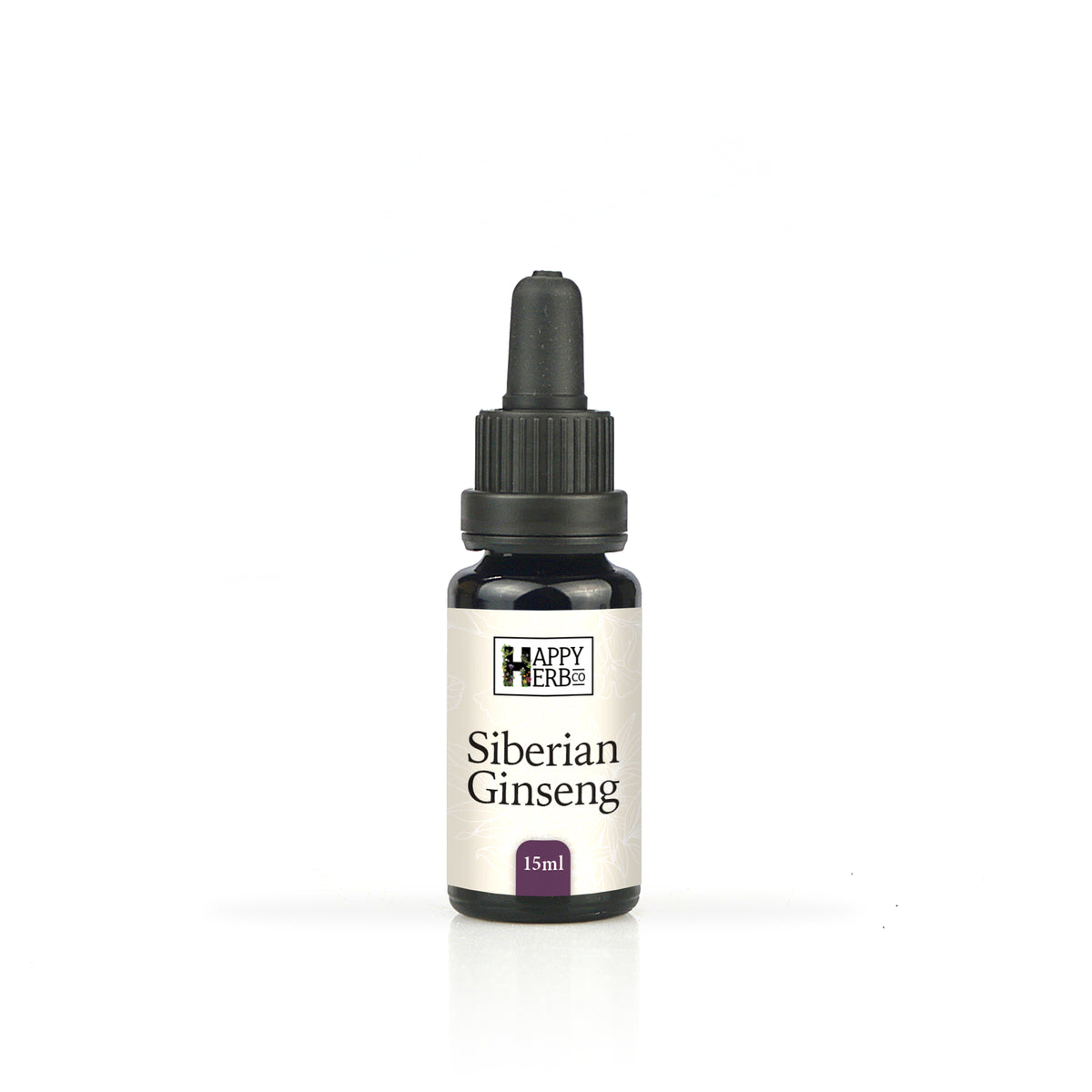
Spagyric
For physical endurance, stress resilience and whole body vitality.
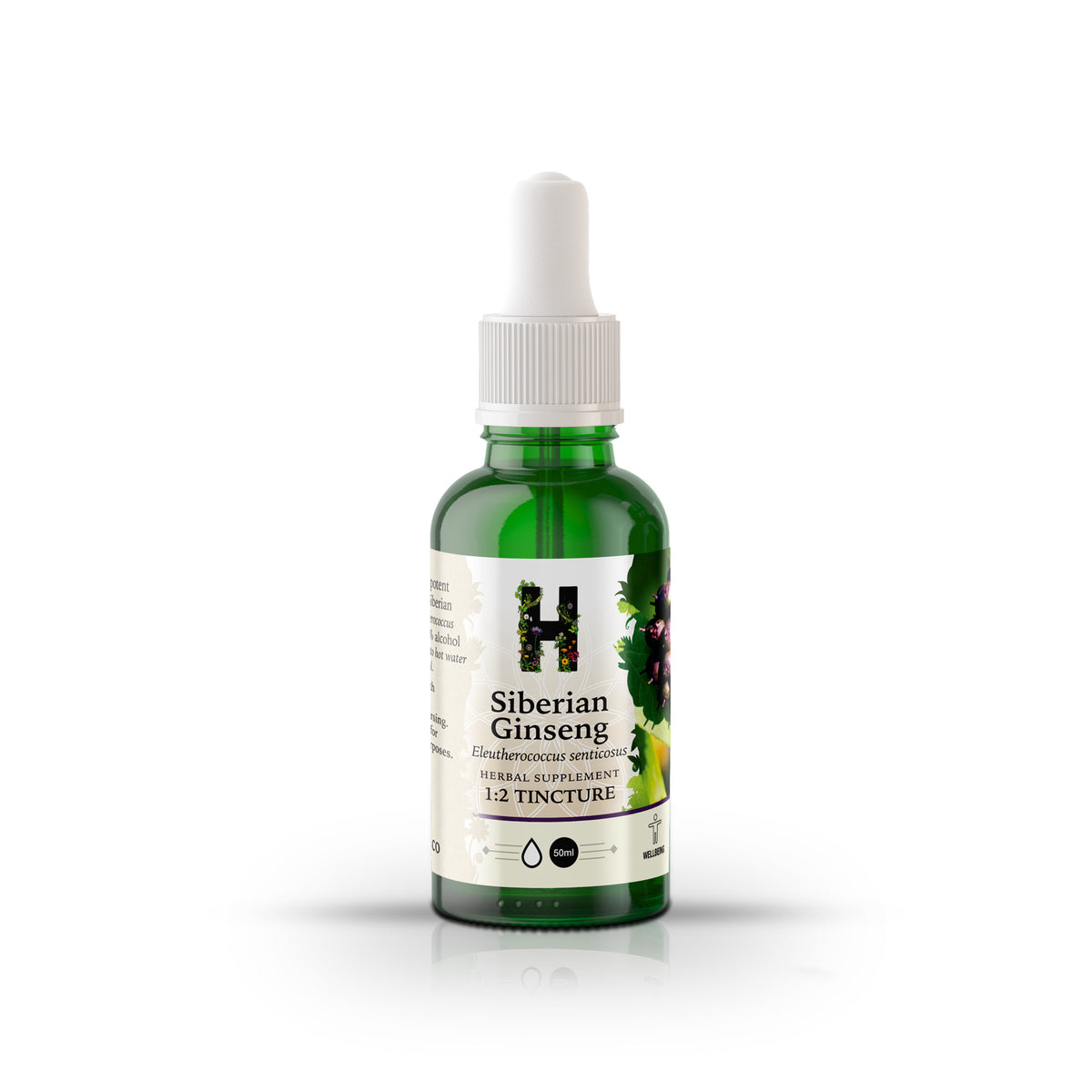
Botanical Concentrate
For physical endurance, stress resilience and whole body vitality.

Tea Elixir
A herbal concentrate of damiana, muira puama, maca, tribulus and vanilla.
FAQ
Siberian Ginseng (Eleutherococcus senticosus) is a hardy, thorny shrub native to Siberia, northern China, Korea and Japan. Its root, also sold as Eleuthero, was studied closely by Soviet scientists from the late 1950s and became the best-known adaptogen. Today Siberian Ginseng is taken as a tea, a liquid extract, a powder or in capsules.
Siberian Ginseng is long associated with stamina and endurance. In Chinese tradition the root is a folk tonic for vigour, and in Russia it has been used since the 1960s as an adaptogen, which is how Western herbalists class it too. The European Medicines Agency says the clinical data are still inconclusive, so we describe how it is used, not what it will do.
Siberian Ginseng is best known as a herb people reach for when a long stretch of hard work or training has worn they down and they want stamina that lasts. Most people take it in the morning, daily for up to six weeks, and then take a two week break before starting again.
Steep 1 to 2 teaspoons of cut Siberian Ginseng root in a cup of just-boiled water, covered, for 10 minutes, then strain. It can be taken one to three times a day. The powdered root can also be added to a smoothie, and Siberian Ginseng is taken as a liquid extract or in capsules, following the directions on the label.
No. Siberian Ginseng is naturally caffeine free. Even so, the European Medicines Agency lists sleeplessness among its reported side effects, so most people take it earlier in the day. Check the label of energy blends, which may pair Siberian Ginseng with caffeine-containing herbs such as Guarana.
No. Siberian Ginseng (Eleutherococcus senticosus) belongs to the same plant family as Korean and American Ginseng (Panax), but it is a different plant with different compounds, known as eleutherosides. The name Siberian Ginseng has been used in the United States since 1971 and was banned on labels there in 2002, so the root is also sold as Eleuthero.
Avoid Siberian Ginseng during an acute infection such as the flu, and take it for no more than six weeks before a two week break. It can cause sleeplessness, raised blood pressure and headaches in people with heart conditions, especially high blood pressure. If you are pregnant or breastfeeding, take medication or have a health condition, check with your health professional first.
Korean Ginseng is Panax ginseng, the original ginseng of Chinese and Korean tradition and the one most of the research is about. Its characteristic compounds are ginsenosides, and it is considered the most stimulating of the family, taken in the morning and for stamina. Red and white Korean Ginseng are the same root, steamed or simply dried.
American Ginseng (Panax quinquefolius) is a true ginseng from the same genus, with a gentler, cooler reputation in Chinese medicine. Siberian Ginseng (Eleutherococcus senticosus) is not a Panax at all: a different plant from the same wider family, given the name for its similar reputation as an adaptogen, with eleutherosides rather than ginsenosides and a steadier, less stimulating character.
Avoid during acute infectious illness such as the flu. Take for a maximum of 6 weeks, followed by a 2 week break. Can cause insomnia, raised blood pressure and headaches in people with cardiovascular disease, especially high blood pressure. If you are pregnant or breastfeeding, check with your health professional first.
As described in the monographs cited under Sources.