St John's Wort Profile
St John's Wort
Hypericum perforatum
For mood elevation, emotional brightness and nervous system support.


Cart
Your cart is empty

Join us in our love of herbs
St John's Wort Profile
Hypericum perforatum
For mood elevation, emotional brightness and nervous system support.
Herbal Intelligence
St John's Wort (Hypericum perforatum) is a perennial herb with bright yellow flowers, native to Europe, western Asia and North Africa. It comes into flower around midsummer, close to the feast of St John the Baptist, and it has been used as a herb since the time of the ancient Greeks.
The taste is bitter and earthy. Most people take St John's Wort as a tea or a liquid extract, and it is the herb our customers reach for in the flat, grey stretches of the year, when they want a little more brightness in their days.
St John's Wort is named for John the Baptist: it flowers around the time of his feast in late June(1). Historians think the first Christians gave it the name, having noticed that it blossoms on about the 24th of June(2). 'Wort' is simply an old English word for a plant.
Its use is older than the name. Some of the earliest reports come from the Greek herbalist Dioscorides in the first century AD, and in the sixteenth century the Swiss physician Paracelsus used it too(2).
In the alpine regions of Central Europe it is still the most frequently used herb in folk medicine(3). The tea is taken to strengthen the nerves and restore emotional balance. The fresh flowers are also steeped in oil and left in the sun for about six weeks, until the oil turns bright red, and the oil is used on the skin(3).
The flowering aerial parts of St John's Wort (Hypericum perforatum) contain phloroglucinols such as hyperforin, naphthodianthrones (hypericin and pseudohypericin), and a group of flavonoids and other phenolic compounds(4, 5). In the laboratory, hyperforin has been studied for its non-selective inhibition of the uptake of neurotransmitters, including serotonin, noradrenaline, dopamine, GABA and glutamate(4).
In Western herbalism St John's Wort is classed as a nervine: a herb for the nerves and for mood, taken steadily over weeks. The red infused oil is kept for the skin.
People tend to use it through winter and other flat stretches of the year, as a daily cup of tea or a liquid extract, often alongside Lemon Balm.
It is one of the most studied herbs there is. The US National Center for Complementary and Integrative Health says many studies indicate it may be helpful for mild or moderate depression, and warns that it can interact in dangerous ways with a variety of medicines(1). The European monograph notes that preparations containing hyperforin can speed up the enzymes that break down other medicines(5). The European Medicines Agency notes that those trials used defined dry extracts, while the tea and most liquid extracts rest on long tradition(3). So we describe how it is used, not what it will do.
Clinically reviewed by Tamara Welsh, BSc, AdvDipWHM, ATMS, Clinical Herbalist ·
This profile is intended as a researched educational guide and does not replace the broader perspective of a herbal consultation.
In everyday life
The flowering tops of St John's Wort are used in three main ways.
St John's Wort is usually taken daily for a few weeks at a time, not as an occasional cup. Read the precautions first if you take any medication.
Midsummer in a jar.
Crush a dried flower between your fingers. If it is good, it stains them red, the plant's own sign. It flowers at midsummer and was hung over doors on St John's Eve across Europe.
Steep a teaspoon for ten minutes with lemon balm, or make the infused oil by leaving the flowers in a jar of oil in the sun until it turns ruby. Read the precautions first: this herb does not mix with many medicines.
Sip slowly. The flower holds the longest day and gives it back in colour. What light have you stored that you could give back now?
Shop
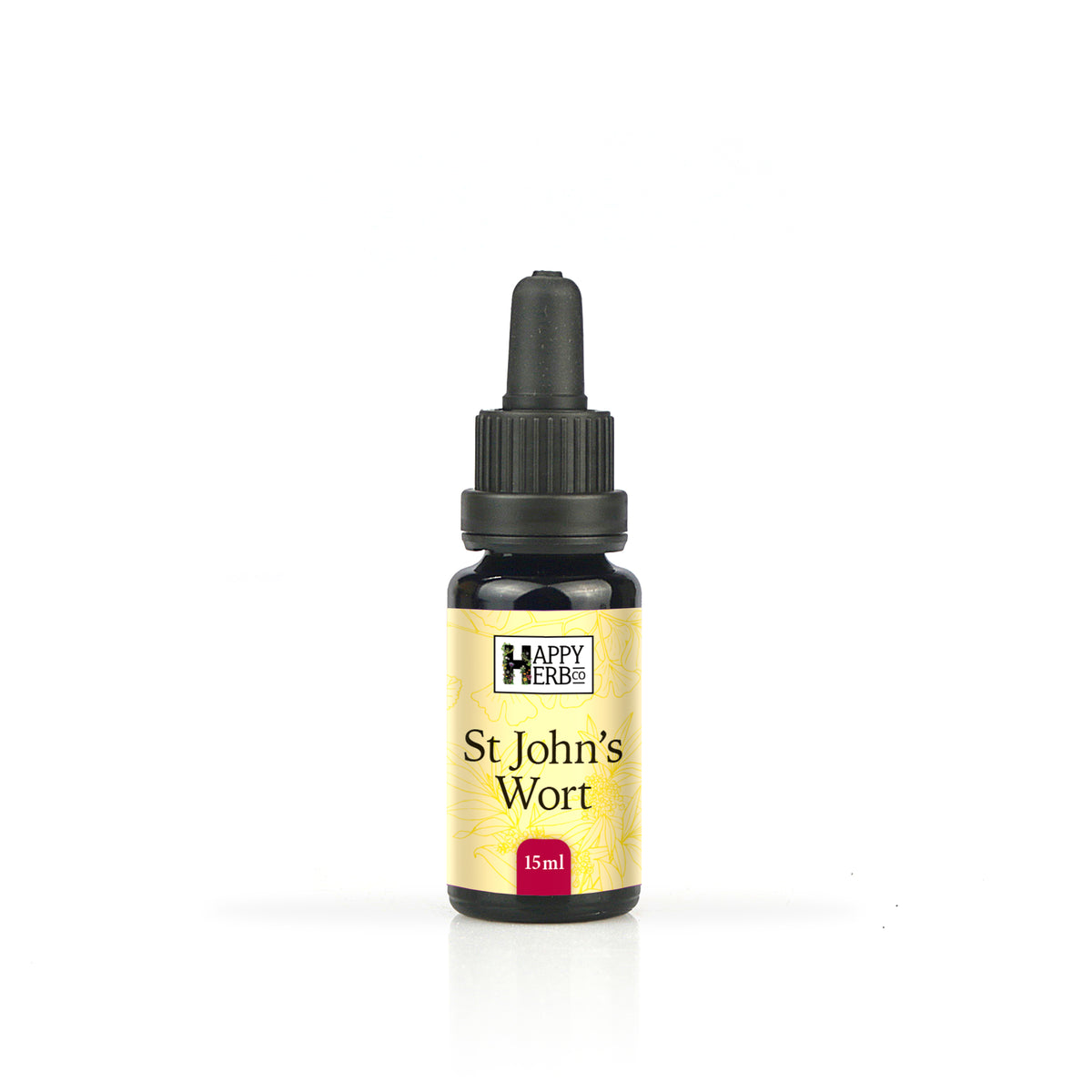
Spagyric
For mood elevation, emotional brightness and nervous system support.
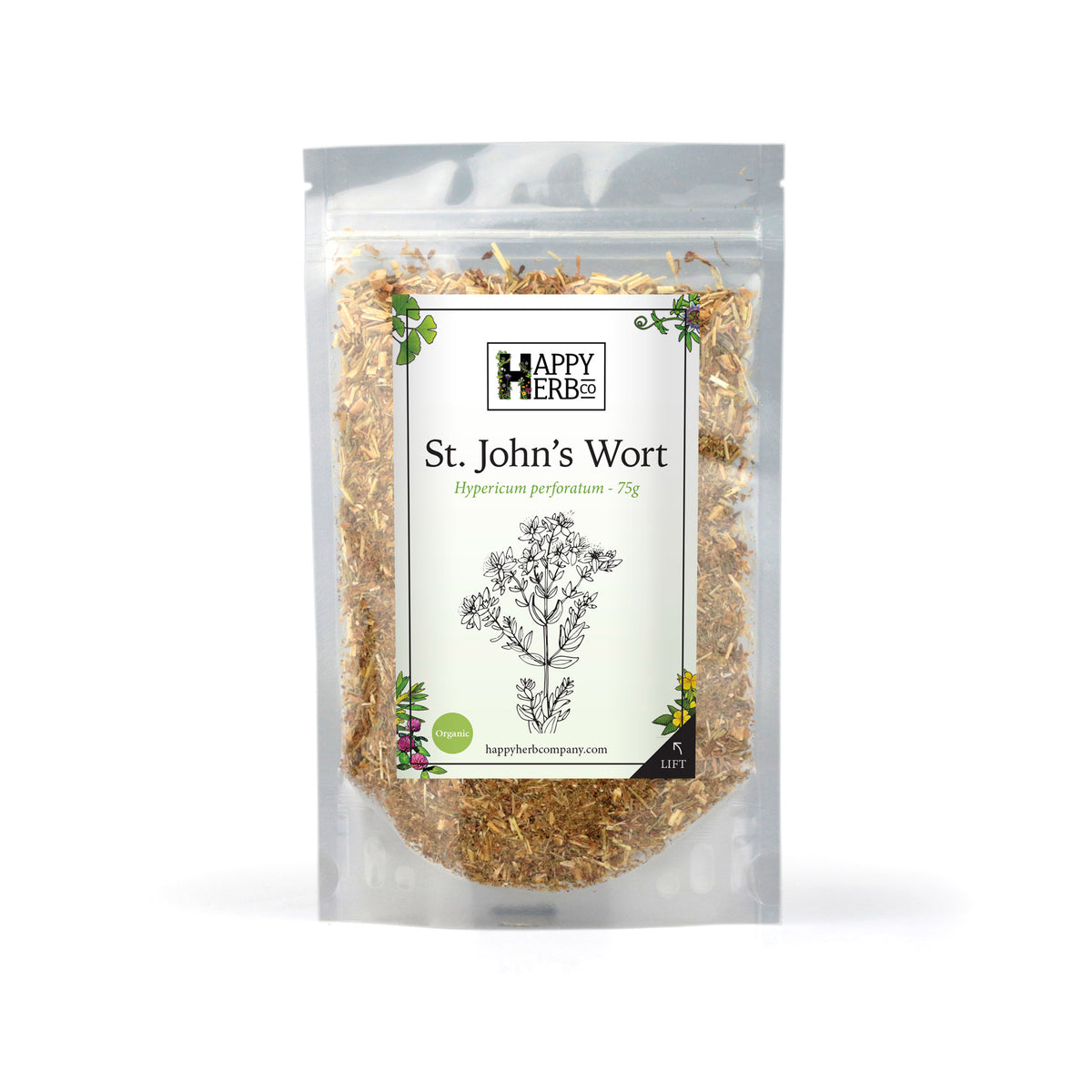
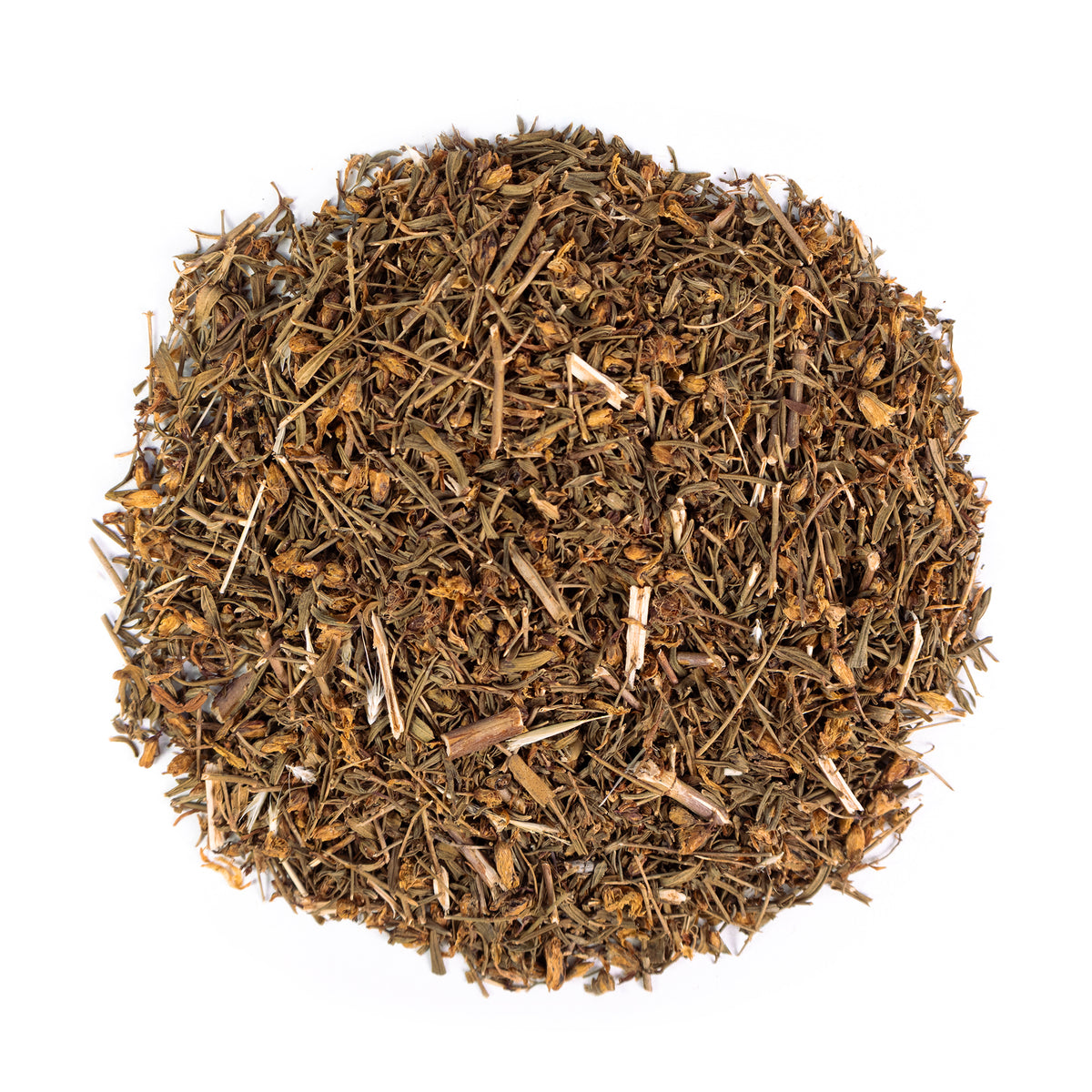
Single Herb
For mood elevation, emotional brightness and nervous system support.
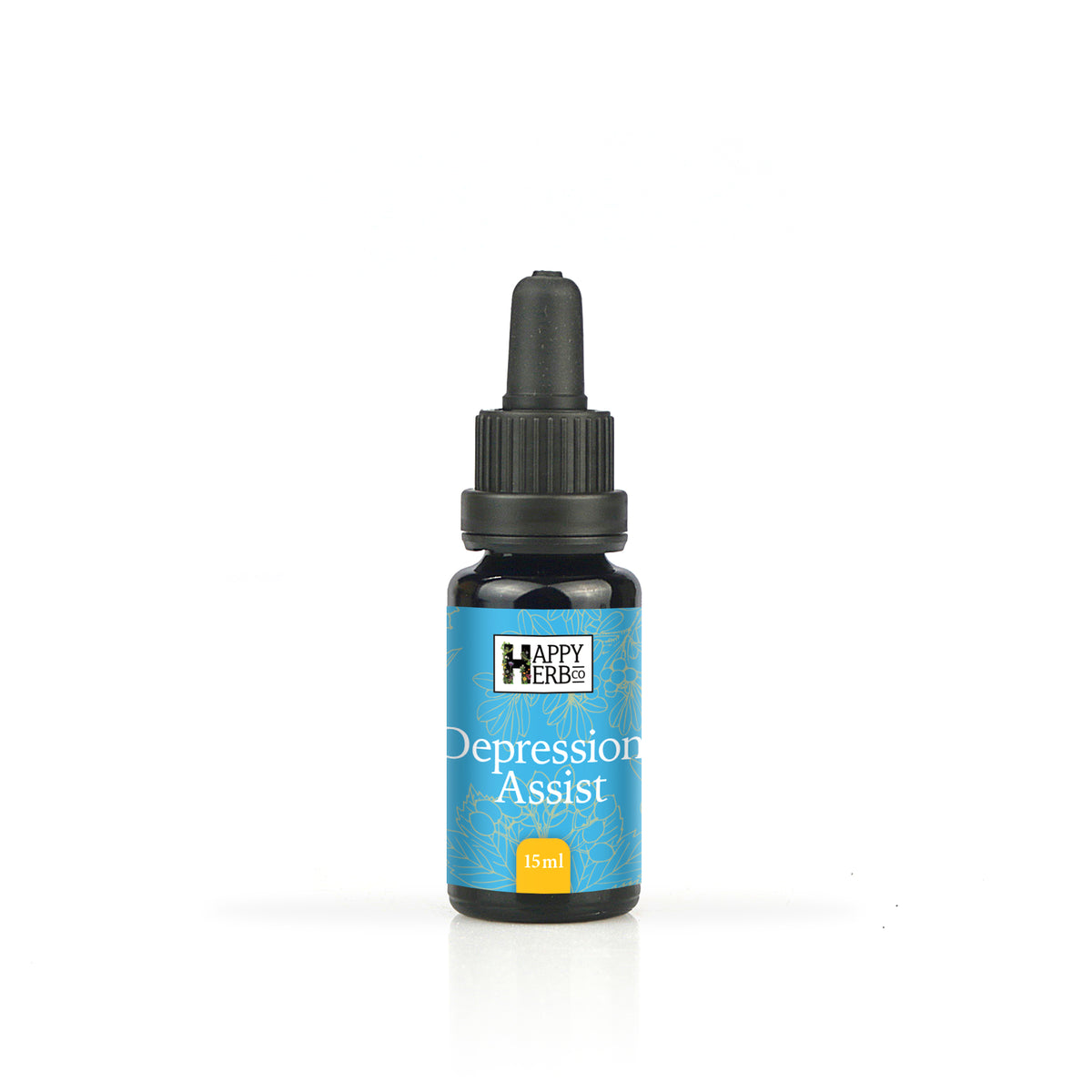
Spagyric
Damiana, St John's wort, brahmi and ashwagandha in one spagyric.
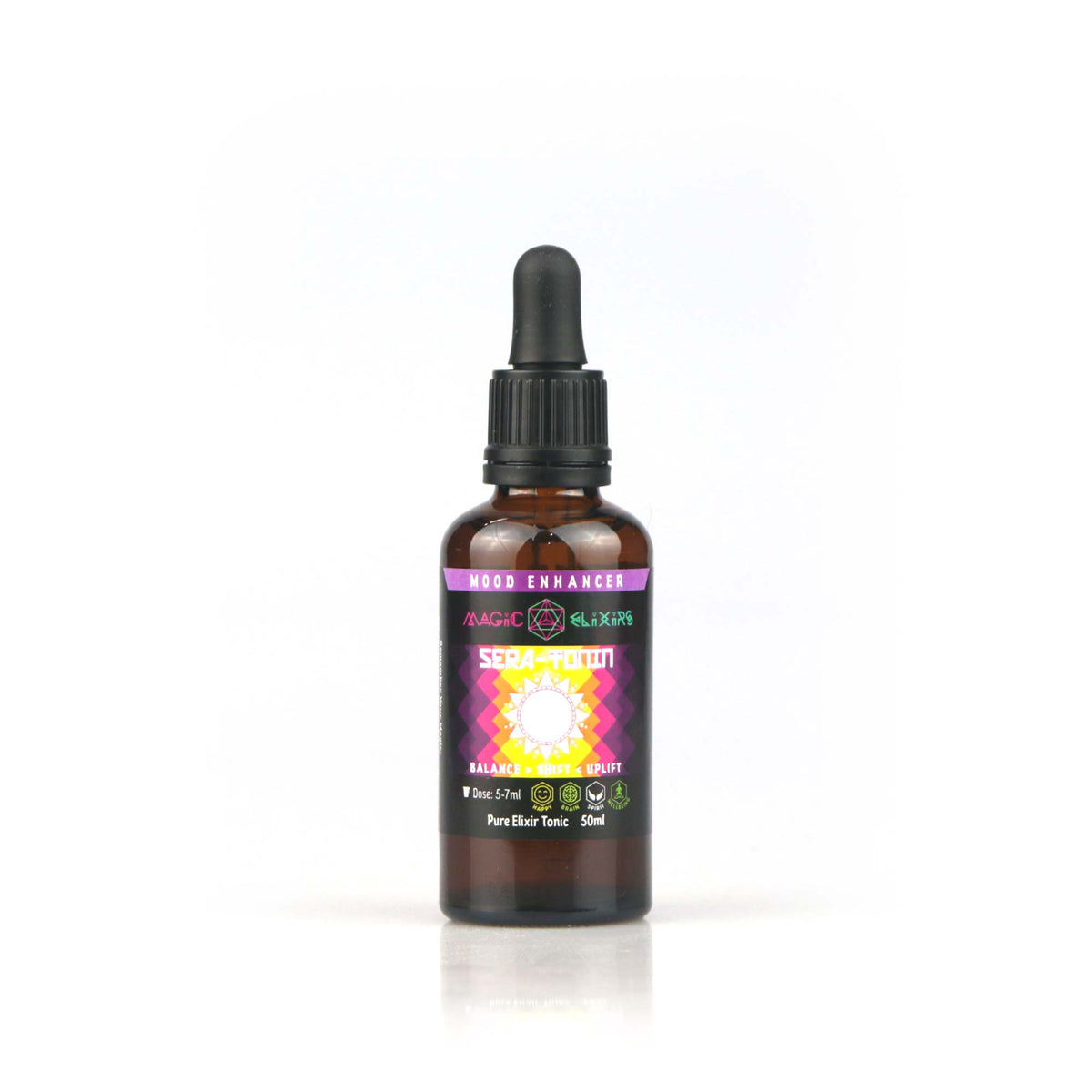
Magic Elixirs
Happiness bark, St John's wort, rose, muira puama and kola nut in an elixir.
FAQ
St John's Wort (Hypericum perforatum) is a yellow-flowered perennial herb native to Europe, western Asia and North Africa. It is named for John the Baptist, whose feast falls in late June when the plant is in flower, and it has been used since the time of the ancient Greeks. Today St John's Wort is taken as a tea or a liquid extract, and as an infused oil for the skin.
St John's Wort is long associated with mood and the nerves. In Central European folk tradition the tea is taken to strengthen the nerves and restore emotional balance, and Western herbalists class it as a nervine. Clinical trials have studied concentrated extracts, not the tea, and the herb interacts with many medicines, so we describe how it is used, not what it will do.
St John's Wort is best known as a herb people reach for when they want a little more brightness through a flat stretch of the year. Most people take a cup of the tea or a liquid extract daily for a few weeks. If a low mood is severe or does not lift, see your doctor, and read the precautions first if you take any medication.
Steep 1 teaspoon of dried St John's Wort in a cup of just-boiled water, covered, for 10 minutes, then strain. It can be had up to three times a day. The taste is bitter and earthy, so many people add honey or blend it with Lemon Balm.
No. St John's Wort is naturally caffeine free. The tea is made from the flowering tops of a herb, not from the tea plant. The US National Center for Complementary and Integrative Health does list trouble sleeping and restlessness among its possible side effects, so some people prefer to take St John's Wort earlier in the day.
The US National Center for Complementary and Integrative Health says that for most adults who are not taking any kind of medicine, St John's Wort appears to be safe when used for up to 12 weeks, and that some studies indicate a year or more. That finding comes from studies of standardised extracts rather than the tea, and the same caution applies to both.
The main concern is medicines: St John's Wort can interact with many of them, including the contraceptive pill and antidepressants, sometimes dangerously. Check with your health professional first.
St John's Wort can reduce the effect of many medicines, including the contraceptive pill: do not combine it with any medication without your doctor's guidance. Taken with antidepressants or other medicines that affect serotonin, it can cause serious side effects. It is not recommended in pregnancy or breastfeeding, and can cause sensitivity to sunlight. Stop at least one week before surgery. If you have a health condition, check with your health professional first.
Depression is a medical condition, and the first conversation should be with your GP.
On the research: standardised St John's Wort extracts have been studied in many trials for mild to moderate depression, and some countries license them as medicines. That evidence is for those extracts at set doses, not for a cup of the tea, and St John's Wort interacts with many medicines, including antidepressants and the contraceptive pill.
Saffron, Rhodiola and Ashwagandha have smaller and shorter trials on mood and stress scores. Lemon Balm has a long tradition for low spirits and little trial evidence. We describe how these herbs are used, not what they will do.
Interacts with pharmaceutical medications. St John’s Wort increases the liver’s ability to process medication, which means it can reduce the effects of pharmaceuticals. Do not combine with any pharmaceutical medications (including contraceptive drugs) without the guidance of your doctor. Do not take with antidepressants or other medicines that affect serotonin, as the combination can cause serious side effects. Not recommended during pregnancy or breastfeeding. St John’s Wort can cause photosensitivity (sensitivity to sunlight). Discontinue use at least one week before surgery.
As described in the monographs cited under Sources.