White Lily Profile
White Lily
Nymphaea ampla
For ceremonial use, spiritual presence and inner exploration.


Cart
Your cart is empty

Join us in our love of herbs
White Lily Profile
Nymphaea ampla
For ceremonial use, spiritual presence and inner exploration.
Herbal Intelligence
White Lily (Nymphaea ampla) is a white-flowered water lily native to Mexico and Central America, where it floats on still, clear lakes and sinkholes. It is one of the most common plants in the art of the Classic Maya, who linked it with clean water and with their kings.
The flavour is floral and delicate, with a light bitterness. Most people take White Lily as a tea or in a milled herb blend, and it is the herb our customers reach for on a quiet evening, or when they want to mark a moment of ceremony or reflection.
White Lily grows on still, clear, slightly alkaline water, in lakes and in the cenotes, the limestone sinkholes of the Maya lowlands(1). It only thrives where the water is clean. For the Classic Maya, around 250 to 900 CE, it became a sign of clean water and of the kings who were responsible for it(1).
Kings and water lilies appear together on monuments, murals and painted objects, and kings wore water lily headdresses(1). Inscriptions name the kings 'Water Lily Lords' and the nobility 'Water Lily People'(1). Names recorded for the plant include lolha', 'flower of the water', and the Spanish sol de agua, 'sun of the water'.
In 1981 the botanist William Emboden compared the water lilies of Maya art with the Blue Lily of ancient Egypt, and proposed that priests in both cultures used the flowers as ritual plants to bring on trance(2). His case rests on the reading of ancient images, not on a recorded living practice.
The aerial parts of White Lily (Nymphaea ampla) contain flavonoids, isoflavones, triterpene glycosides and other polyphenolic compounds, among them several glycosylated flavones(3, 4). In laboratory tests these flavonoids and glycosides have shown antioxidant activity(3, 4). Older chemical literature also reports aporphine-type alkaloids in water lilies(5).
White Lily is not part of the classical Western herbal tradition. Where it is described, it is classed as a nervine with a mild sedative character, and it is used much like its relatives Blue Lily and Red Lily: as a gentle, dreamy flower for unwinding.
People drink a cup on a quiet evening, bring it into a meditation or ceremony, or add the flowers to a milled blend. For some it is part of habit shifting, a floral cup in place of an evening drink.
There is very little research on White Lily. Chemical studies have identified flavonoids, isoflavones and saponins in the plant(3), and the idea that the Maya used it in ritual is an interpretation of their art(2). We know of no clinical studies in people. So we describe how it is used, not what it will do.
Clinically reviewed by Tamara Welsh, BSc, AdvDipWHM, ATMS, Clinical Herbalist ·
This profile is intended as a researched educational guide and does not replace the broader perspective of a herbal consultation.
In everyday life
White Lily flowers are used in two main ways.
White Lily is an occasional herb for quiet evenings and ceremony, not an everyday tea. Keep to small amounts.
Sacred to the Maya.
Hold a dried white petal. The Maya carved this water lily into their temples and painted it on their pottery, rising from the water with a fish or a jaguar beside it.
Steep a teaspoon for ten minutes with a little honey, and start with a single cup. An occasional herb for a quiet evening.
Sip slowly. A flower that grows from mud and opens white on still water. What has come clean out of something difficult in your life?
Shop
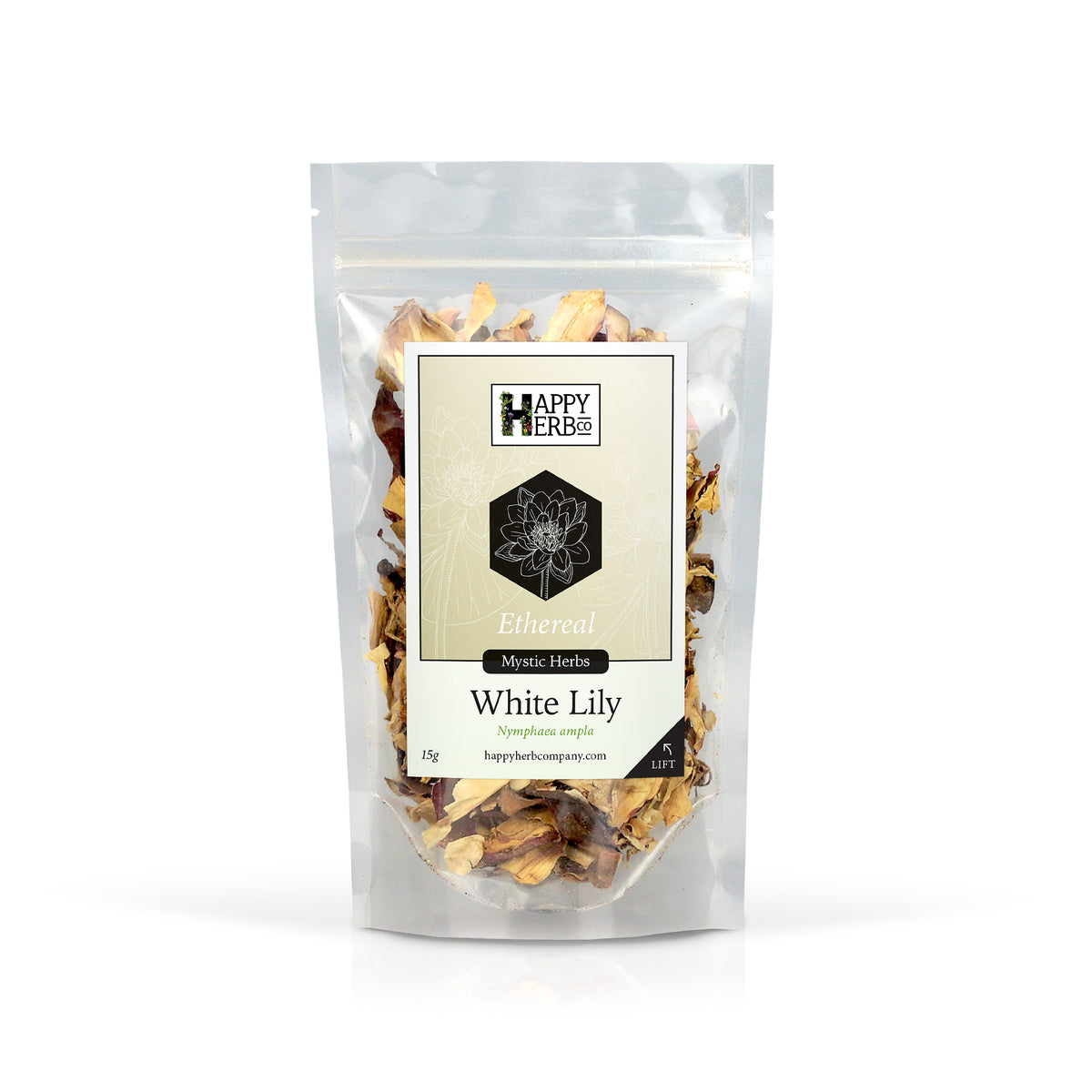

Mystic Herb
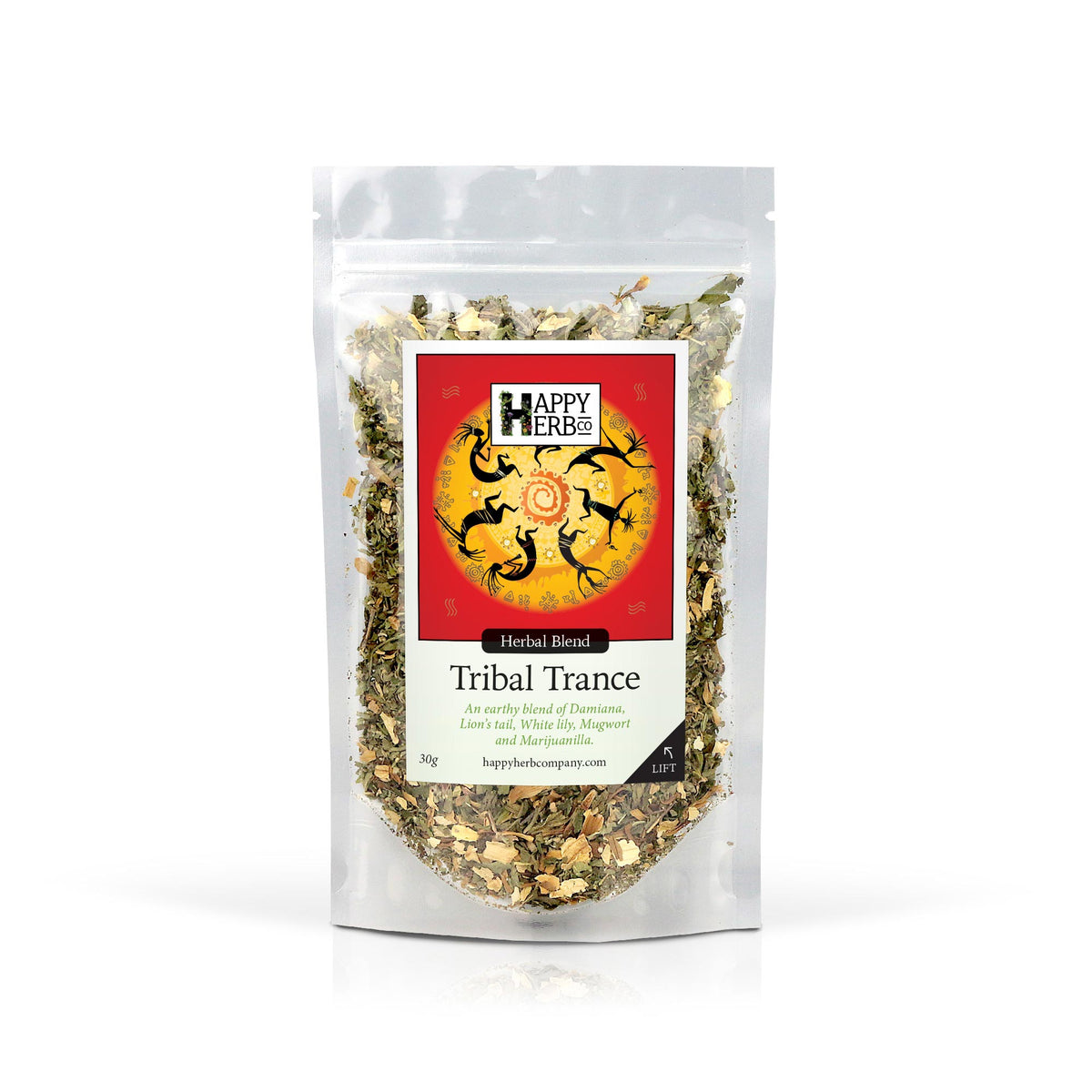
Milled Blend
A bold milled blend of damiana, lion's tail, mugwort and white lily.


Milled Blend
Sample sizes of any of the hand crafted milled herb blends.
FAQ
White Lily (Nymphaea ampla) is a white-flowered water lily native to Mexico and Central America, where it grows on still, clear lakes and sinkholes. It is one of the most common plants in Classic Maya art, where it is linked with clean water and kingship. Today the dried flowers are taken as a tea and used in milled herb blends.
White Lily is long associated with ceremony, calm and a dreamy state of mind. In Maya art the flower appears with kings, and one scholar has proposed it was a ritual plant. Today it is described as a nervine and taken as an evening tea. There is very little research on it, so we describe how it is used, not what it will do.
White Lily is best known as a herb people reach for when they want a quiet, dreamy evening or a moment of ceremony. Most people have a single cup of White Lily tea in the evening, when nothing more is asked of them. It is an occasional herb, not an everyday tea.
Steep 1 teaspoon of dried White Lily flowers in a cup of just-boiled water, covered, for 10 minutes, then strain. The flavour is floral and delicate with a light bitterness, and a little honey sits well with it. Start with a single cup and keep to small amounts.
No. White Lily is naturally caffeine free. It is the flower of a water lily, not a true tea, and most people drink it in the evening. It is still not an everyday tea: White Lily is best kept to small amounts on occasional evenings.
Yes. Dried White Lily flowers are smoked in some herbal blends, including our milled herb blends, where they add a soft, floral note, often alongside Blue Lily. White Lily is better known from Maya art than from any record of smoking, and there is little written history of smoking it.
Inhaling smoke is harmful; we describe how the herb is used, we do not suggest it. Many people prefer White Lily as a tea.
Avoid White Lily if you are pregnant or breastfeeding, or if you take anti-diabetic medication. In larger amounts it may cause nausea, a mild jittery feeling, hot flushes and even hallucinations, so keep to small amounts. If you take medication or have a health condition, check with your health professional first.
Avoid if pregnant, breastfeeding or on anti-diabetic medication. When taken in large doses, it may cause nausea, mild jittery feelings, hot flashes and even hallucinations.
This herb has not been studied enough for its actions to be defined. What we know of it comes from tradition and the sources below.