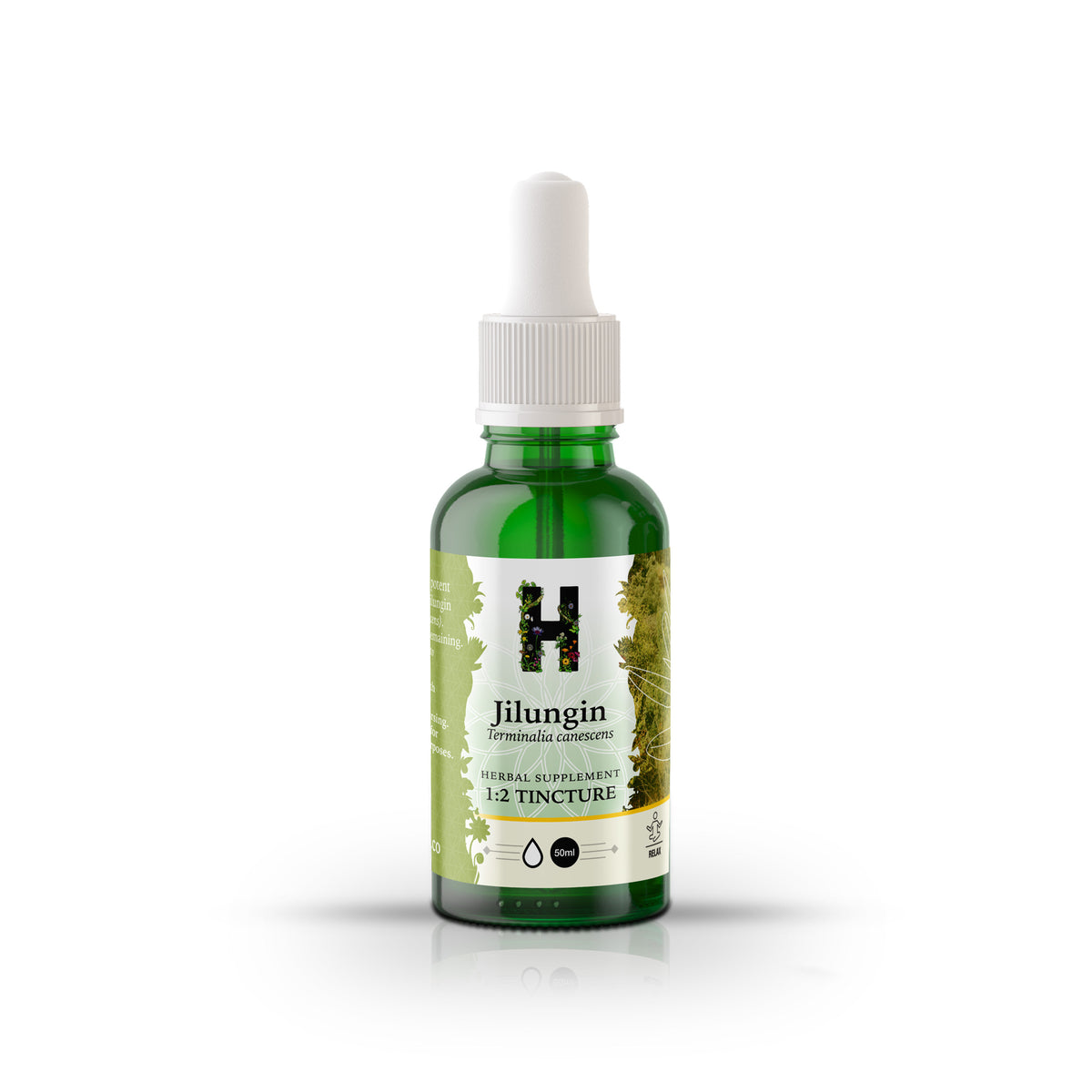
Jilungin 1:2 Liquid Herb
Shipping calculated at checkout

Free shipping Australia wide on orders over $150
Liquid Jilungin: An Evening Moment for Deep Rest
A treasure of the Australian bush, Jilungin has been used by Indigenous Australian communities for generations as a calming and restorative evening herb, deeply valued for its particular affinity with sleep and rest. Gentle, grounding and deeply considered, it is a herb that carries the wisdom of the land.
This Jilungin Concentrate is cold drip percolated in house to create a potent, full spectrum extract. As part of our Liquid Herbs range, it offers a direct and considered way to work with this herb with ease and consistency.
- Character
- Mild · Earthy · Gentle
- Companion for
- Deep sleep · Evening rituals · Calm restoration
- Pairs well with
- , ,
Valerian (Valeriana officinalis) is a tall perennial with clusters of pale pink flowers, native to Europe and western Asia. Its pungent root has been used since the times of ancient Greece and Rome, and it is the best-known bedtime herb of European tradition.
The taste is earthy, bitter and strong, with a smell people tend to either like or avoid. Most people take Valerian as a liquid extract or a tea, often blended with Hops or Passionflower, and it is the herb our customers reach for at night, when sleep is slow to come and the nerves need settling.
Passionflower (Passiflora incarnata) is a climbing vine native to the south-eastern United States, with intricate purple and white flowers and an edible fruit called the maypop. Its leaves and stems have a long history as a calming herb, first among Native American peoples and later in European folk medicine.
The taste is grassy and soft, with a light floral note. Most people take Passionflower as a tea or a liquid extract, and it is the herb our customers reach for in the evening, when the mind is still busy and the body is ready for rest.
Lemon Myrtle (Backhousia citriodora) is an evergreen rainforest tree of the myrtle family, native to the coastal forests of Queensland. Its leaves are the richest known natural source of citral, the compound behind their strong lemon scent, and Indigenous Australians have long used them for food and medicine.
The taste is citrusy, fresh and bright: more lemony than lemon, without the sourness. Most people take Lemon Myrtle as a tea, hot or iced, and it is the herb our customers reach for when they want a bright cup to lift the day, or a hot one with honey through the winter months.
Ingredients
Ingredients: A potent 1:2 tincture of Jilungin
(Terminalia canescens). Grape ethanol for extraction and preservation (24% ABV).
Herbal Intelligence
Phytochemistry
The main compounds identified in Jilungin leaf are tannins and related polyphenols: ellagic acid, geraniin, pedunculagin and punicalagin. The same 2024 analysis found the leaf high in dietary fibre, and reported strong antioxidant activity when the infusion was tested in the laboratory.
Living tradition
Jilungin is the name used by the Nyul Nyul people of the Kimberley region of Western Australia, who make a herbal tea from the leaves of the tree. The knowledge of the plant, and of how to gather and prepare it, is theirs.
Suggested use
To support general wellbeing, take up to 2 dropperfuls as desired. For improved sleep take one hour before going to bed. Add to hot water to dissipate alcohol.
Specifications
- Other Names
- Djilungin, Jilungin Bush Tree, Bush Tea Tree
- Range
- 1:2 Liquid Herbs
- Grown In
- Australia
- Organic Status
- Wildharvested
- Plant Parts
- Leaves
- Packaging
- Reusable glass bottle
Vegan Friendly
Precautions
- Contains alcohol
Happy Herb Co shares referenced knowledge about herbs and makes no therapeutic claims for its products. If you are pregnant, breastfeeding, taking medication or managing a health condition, please speak with a health professional before using any herb.
Choose options
Free shipping Australia wide on orders over $150
Explore