Tongkat Ali Profile
Tongkat Ali
Eurycoma longifolia
For desire, hormonal vitality and physical endurance.


Cart
Your cart is empty

Join us in our love of herbs
Tongkat Ali Profile
Eurycoma longifolia
For desire, hormonal vitality and physical endurance.
Herbal Intelligence
Tongkat Ali (Eurycoma longifolia) is a tall, slender tree of the Southeast Asian rainforest, native to Malaysia, Indonesia and Vietnam. Its long, bitter root is one of the best-known folk medicines of the region, and its Malay name means 'Ali's walking stick'.
The taste is intensely bitter and earthy. Most people take Tongkat Ali as a liquid extract in a little water, and it is the herb our customers reach for when they want more drive and stamina, in training, at work or in the bedroom.
Tongkat Ali is one of the most well-known folk medicines of Southeast Asia(1). The Malay name literally means 'Ali's walking stick'. Some authors put this down to the long, twisted roots, others to the plant's reputation as an aphrodisiac(1). In Indonesia it is pasak bumi, and in Malaysia it is also called Malaysian ginseng(1).
Different parts of the tree have had their own uses, but it is the root that matters most. Across Malaysia, Indonesia and Vietnam it has been taken for energy, strength and desire, and at times of fever(1). Traditionally the root is simmered in water and the bitter decoction is drunk(1).
Today it is sold in Malaysia as a traditional herbal medicine, often mixed into tea and coffee, and it is planted there to help conserve the wild trees(1).
Tongkat Ali root is rich in quassinoids, a group of bitter compounds found only in its plant family, and these make up the major share of the root's known constituents(1). Eurycomanone is the one most often measured. The root also contains canthin-6-one and beta-carboline alkaloids, triterpenes and other compounds(1). In animal research eurycomanone was poorly absorbed when taken by mouth(1).
In Western herbalism Tongkat Ali is classed as an adaptogen and an aphrodisiac: a root for drive, stamina and vitality, used most often by men. It is usually taken as a liquid extract for some weeks at a time, alongside training or through a demanding stretch, and is often paired with Maca or Tribulus.
It has been studied more than most herbs of its kind. A 2022 systematic review found that, across a small number of clinical trials, Tongkat Ali extract was mostly associated with a rise in total testosterone in men. Its authors stress that the trials were few, small and varied(2).
The safety picture is less settled. In 2021 the European Food Safety Authority assessed a standardised root extract and concluded that its safety had not been established, after tests indicated a potential to damage DNA(3). So we describe how it is used, not what it will do.
Clinically reviewed by Tamara Welsh, BSc, AdvDipWHM, ATMS, Clinical Herbalist ·
This profile is intended as a researched educational guide and does not replace the broader perspective of a herbal consultation.
In everyday life
Tongkat Ali root is taken in two main ways.
Tongkat Ali is usually taken for a few weeks at a time, not indefinitely.
Ali's walking stick.
Hold a piece of the long, straight root. The Malay name means Ali's walking stick, and the root can run a metre into the forest floor. It is one of the most bitter things you will ever taste.
Take the tincture in a little juice, or simmer the root for fifteen minutes the Malaysian way and drink the bitter liquid without flinching.
Sip slowly. A walking stick is for the long road, not the sprint. What road are you on, and have you packed for its length?
Shop
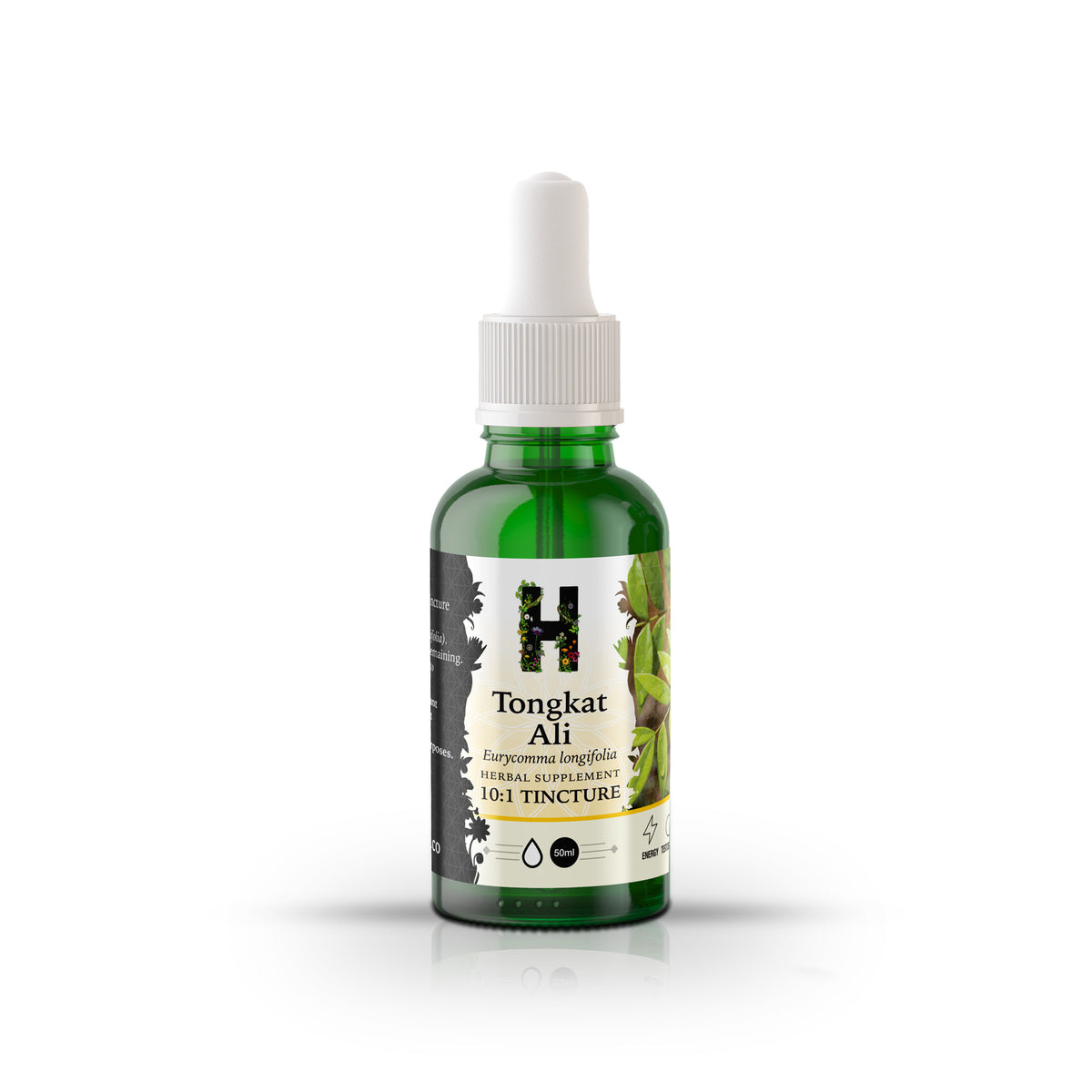
Botanical Concentrate

Botanical Concentrate
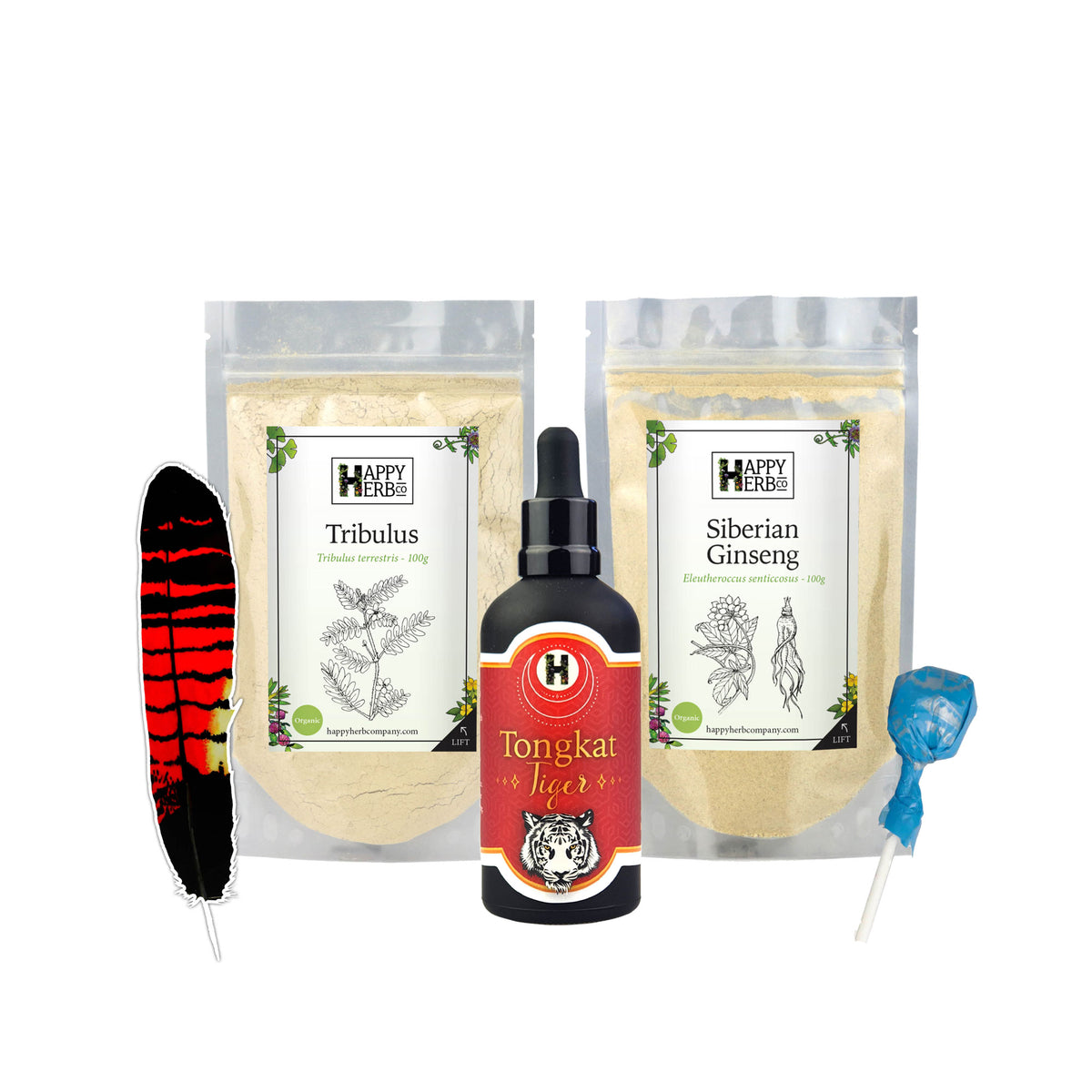
Bundle
A tincture, Siberian ginseng and tribulus powders, a sticker and a pop.
Pureheart Alchemy
Roasted mate, pine pollen, tongkat ali and black maca in organic cane spirit.
FAQ
Tongkat Ali (Eurycoma longifolia) is a tall, slender rainforest tree native to Malaysia, Indonesia and Vietnam. Its long, bitter root is one of the best-known folk medicines of Southeast Asia, and the Malay name means 'Ali's walking stick'. It is also called Long Jack and Malaysian ginseng. Today Tongkat Ali is mostly taken as a liquid extract.
Tongkat Ali is long associated with drive, stamina and desire, especially in men. In Malaysia and Indonesia the root is simmered and drunk as a bitter decoction, and Western herbalists class it as an adaptogen and an aphrodisiac. A small number of clinical trials suggest it may raise testosterone in men, but they are few and small, so we describe how it is used, not what it will do.
Tongkat Ali is best known as a herb people reach for when they want more drive and stamina, in training or in intimacy. Most people take a liquid extract in a little water, following the directions on the label, for a few weeks at a time. If a change in desire is sudden or lasting, see your doctor.
Tongkat Ali is mostly taken as a liquid extract: a tincture or spagyric in a little water or juice, following the directions on the label. The root is intensely bitter, and juice softens the taste. In Southeast Asia the root is traditionally simmered in water and drunk as a decoction, or stirred into tea and coffee.
No. Tongkat Ali is naturally caffeine free. It is the root of a Southeast Asian rainforest tree. In Malaysia it is often sold mixed into coffee and tea, and those drinks do contain caffeine, so check the ingredients of any blended product if you are avoiding it.
The evidence is mixed. Several clinical trials of Tongkat Ali extract, lasting up to six months, reported few or no side effects. But in 2021 the European Food Safety Authority concluded that the safety of a standardised root extract had not been established, after tests indicated a potential to damage DNA. Speak with your health professional before taking Tongkat Ali regularly.
Avoid Tongkat Ali if you have prostate cancer, or if you take anti-androgen or testosterone-blocking medicines. There is no data to support its safety in children, pregnancy or breastfeeding. European food regulators reviewed one root extract in 2021 and concluded that more evidence is needed to confirm its safety, so keep to the amount on the label. One clinical trial reported stomach upset and itching in some people. If you take medication or have a health condition, check with your health professional first.
Avoid taking alongside anti-androgen or testosterone-blocking drugs. Avoid in prostate cancer. Caution in children, pregnancy and breastfeeding as there is no data to support its safety. European food regulators reviewed one Tongkat Ali root extract in 2021 and concluded that more evidence is needed to confirm its safety. Keep to the amount on the label.
As described in the monographs cited under Sources.