Rhodiola Profile
Rhodiola
Rhodiola rosea
For mental endurance, mood elevation and stress resilience.


Cart
Your cart is empty

Join us in our love of herbs
Rhodiola Profile
Rhodiola rosea
For mental endurance, mood elevation and stress resilience.
Herbal Intelligence
Rhodiola (Rhodiola rosea) is a hardy, fleshy perennial that grows on cliffs and mountain slopes across the Arctic and the high country of Europe and Asia. Its thick root, also called Rose Root or Golden Root, has been used for centuries in Scandinavia, Russia and Mongolia by people living and working in hard conditions.
The taste is bitter and astringent, with a faint scent of rose. Most people take Rhodiola as a liquid extract or a tea, usually in the morning, and it is the herb our customers reach for in demanding stretches of work or study, when they want stamina and a clear head.
Rhodiola grows around the top of the world, from Iceland and Scandinavia across Siberia to the Altai mountains, and in Alaska and Greenland(1). The name Rose Root refers to the rose-like scent of the freshly cut root(2).
The oldest report of its use dates from 1599, when King Christian IV travelled to Finnmark and Kola and found the plant in use among the Sami and the Russians(1). In eighteenth-century Norway it was known as a remedy for scurvy, and in Alaska and Greenland it was eaten as a vegetable(1).
In Siberia the 'golden root' was a prized trade good, and in mountain villages a bouquet of roots is still given to couples before marriage(1). In 1969 the Soviet Ministry of Health approved a liquid extract of Rhodiola for medical use(2).
Rhodiola is the root and rhizome of Rhodiola rosea. It contains characteristic phenylpropanoid glycosides, the rosavins (rosavin, rosarin and rosin), alongside salidroside (p-tyrosol glucoside), flavonoids and phenolic acids(3). In the laboratory, salidroside and the rosavins are studied for their influence on cellular energy metabolism, mitochondrial function and neurochemical signalling(4).
In Western herbalism Rhodiola is classed as an adaptogen and a nootropic: a root for stamina of body and mind. Among the adaptogens it is thought of as one of the more stimulating, so it is usually taken in the morning or at midday, not at night.
People build it into demanding seasons: exam periods, deadlines, shift work, long blocks of training. It is often paired with Ashwagandha or Schisandra, and taken for some weeks at a time.
Rhodiola is one of the more studied adaptogens, but the trials are of mixed quality. The European Medicines Agency accepts it as a traditional herbal medicine for the symptoms of stress, such as fatigue, on the basis of long use, not clinical proof(2). The US National Center for Complementary and Integrative Health says there is not enough reliable evidence to judge its usefulness(6). So we describe how it is used, not what it will do.
Developed and reviewed by Laura Grace, Owner and Creative Director of Happy Herb Co, Herb Educator and Registered Ayurvedic Lifestyle Consultant ·
This profile is intended as a researched educational guide and does not replace the broader perspective of a herbal consultation.
★★★★★
5.0 out of 5, from 7 reviews
I’ve noticed a pronounced difference in my mood - a definite improvement in sleep and sense of calm. This is helping me make better decisions & also feel more relaxed
This has given me the energy and positivity to get through a tricky time. I really started noticing it after taking in for two or three days. I'm feeling so much better!
Definitely helps when feeling depleted from anxiety and stress. About 5-10 drops for me gives a calm uplifting feeling.
It was the 3rd dose of 5 drops on the second day that it first ‘kicked in’. After a long day on little sleep, i very quickly started to feel well rested and alert. My evening exercise performance improved significantly. It’s a powerful feeling of clean energy, no ‘rush’ or caffeine-like feelings, just clean, bright energy. No other way to describe it. Most impressive adaptogen!
A dear friend of mine, who is well experienced with herbs, recommended this tincture to me. I ordered it without question, and his claims were warranted, and then some! I am sharper, happier, and altogether better. Thank you for providing this excellent product!
So great to hear Alex! Happy to hear you have found incredible results with our Rhodiola Spagyric.
In everyday life
Rhodiola root is taken in three main ways.
Most people take Rhodiola early in the day, for some weeks at a time.
Rose root of the cold.
Smell a piece of the cut root. Faintly, unexpectedly, it smells of roses, which is how a plant from Arctic cliffs and Siberian mountains got its name.
Steep the root for a few minutes, dilute it well, and take a small amount in the morning. Rhodiola is a daytime herb, bitter and bracing.
Sip slowly. Vikings and Siberian herders carried this root for long, cold work. What long work are you in the middle of, and what carries you through it?
In the Botanical Guides
Shop


Single Herb
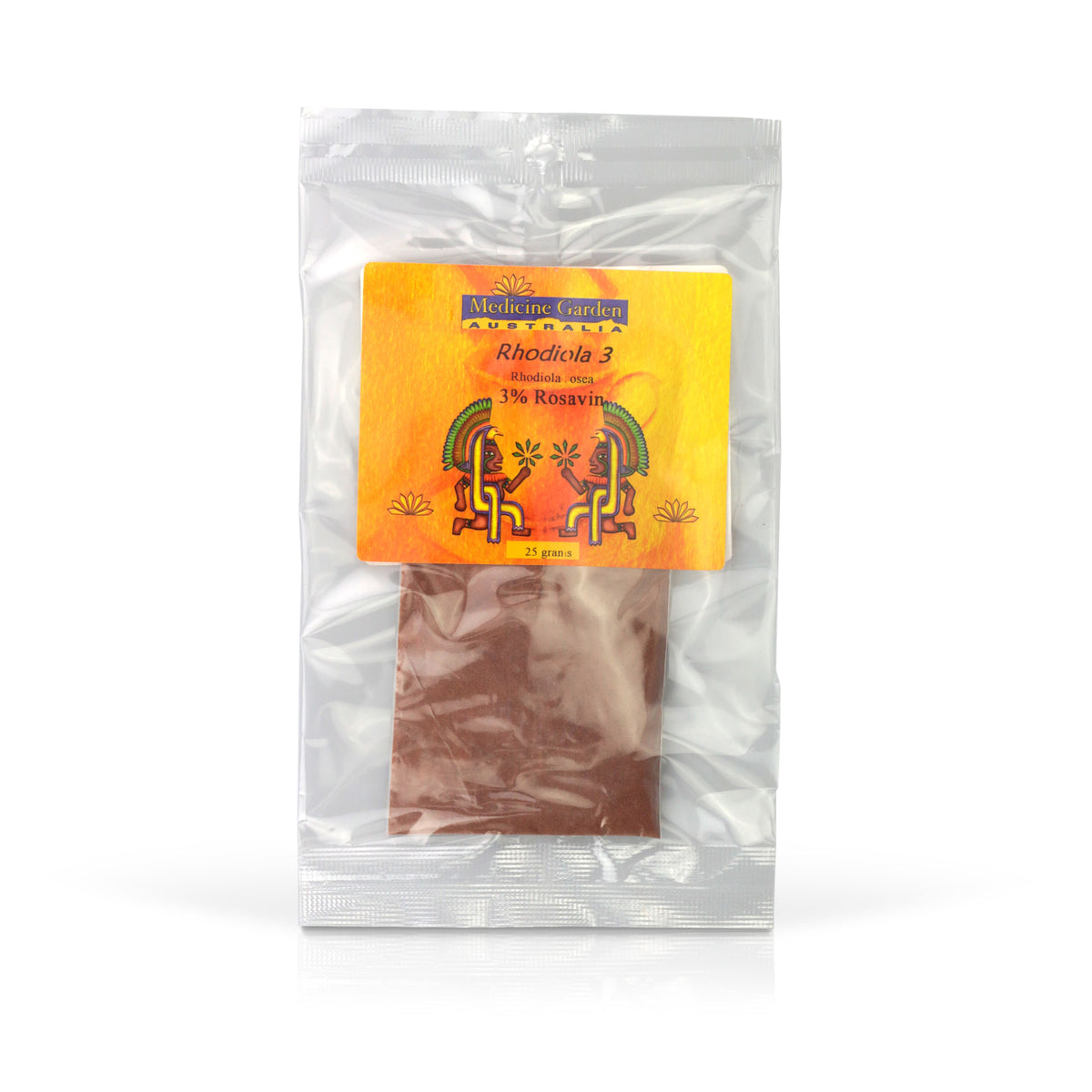
Medicine Garden
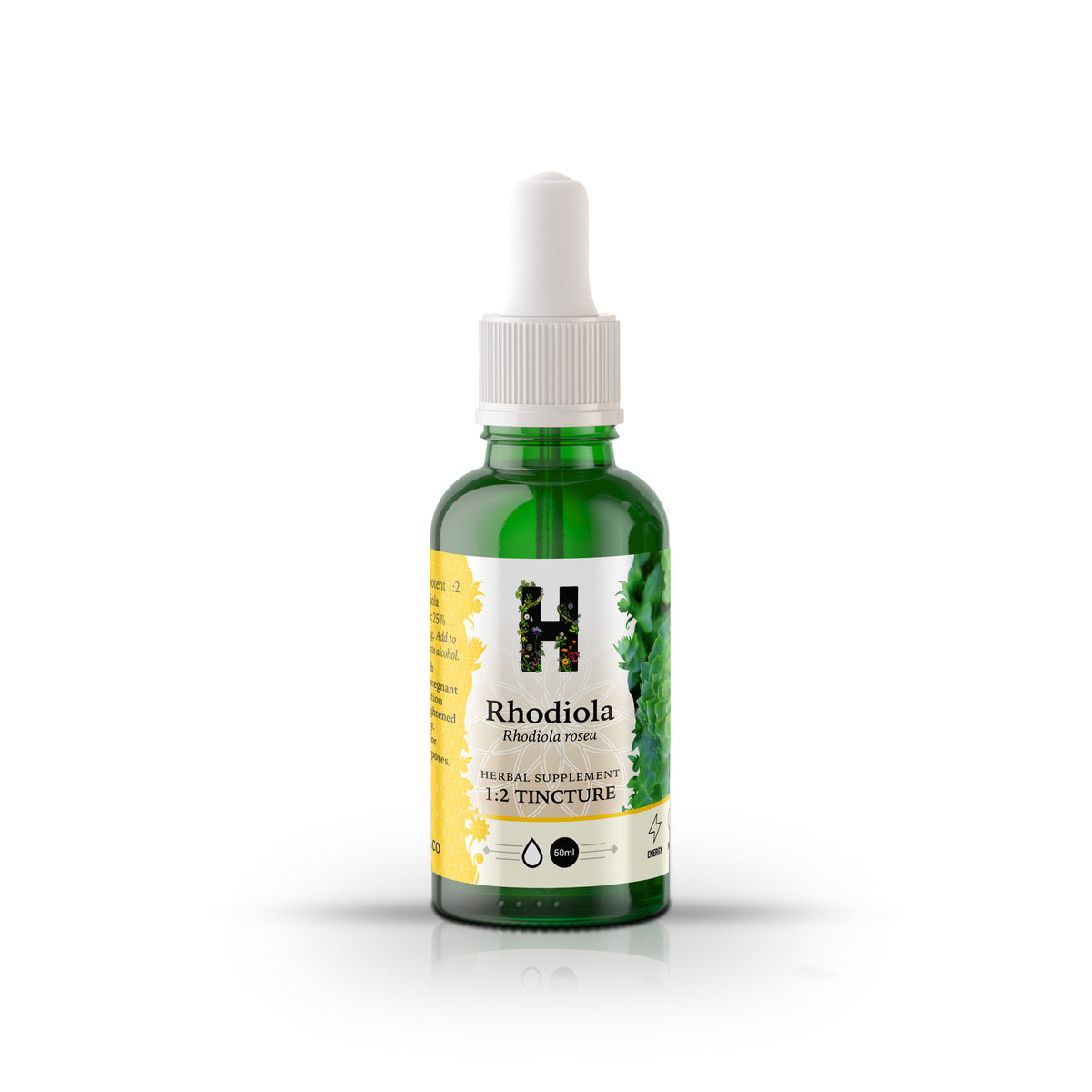
Botanical Concentrate
For mental endurance, mood elevation and stress resilience.

Spagyric
FAQ
Rhodiola (Rhodiola rosea), also called Rose Root or Golden Root, is a hardy perennial of the Arctic and the mountains of Europe and Asia. Its thick, rose-scented root has been used for centuries in Scandinavia, Russia and Mongolia. Today Rhodiola is taken as a liquid extract, a tea or a powder, usually in the morning.
Rhodiola is long associated with stamina, mental endurance and resilience under stress. In Siberia and Scandinavia the root was taken by people working in hard conditions, and Western herbalists class it as an adaptogen and a nootropic. The US National Center for Complementary and Integrative Health says reliable evidence is still lacking, so we describe how it is used, not what it will do.
Rhodiola is best known as a herb people reach for when they are in a demanding stretch of work or study and want steady stamina and a clear head. Most people take it in the morning or at midday, for some weeks at a time. It is not usually taken in the evening.
Take Rhodiola as a liquid extract in a little water, following the directions on the label. To make a tea, steep 5 grams of dried root in a cup of just-boiled water, covered, for a few minutes, then strain. The brew is strong and bitter: take about a fifth of a cup at a time, diluted with water or juice.
No. Rhodiola is naturally caffeine free. Even so, it is thought of as one of the more stimulating adaptogens, and the European Medicines Agency lists nervousness and sleeplessness among its possible unwanted effects. Most people take Rhodiola in the morning or at midday, not at night.
The US National Center for Complementary and Integrative Health says Rhodiola is possibly safe when taken for up to 12 weeks. It lists dizziness, headache, sleeplessness and a dry mouth or extra saliva as possible side effects. Less is known about longer use, so most people take Rhodiola for some weeks at a time and not all year round.
Rhodiola is best avoided during pregnancy and breastfeeding, as there is not enough information on its safety. The European Medicines Agency does not recommend it for children or adolescents. The US NCCIH notes a reported interaction with losartan, a blood pressure medicine. If you take medication or have a health condition, check with your health professional first.
Depression is a medical condition, and the first conversation should be with your GP.
On the research: standardised St John's Wort extracts have been studied in many trials for mild to moderate depression, and some countries license them as medicines. That evidence is for those extracts at set doses, not for a cup of the tea, and St John's Wort interacts with many medicines, including antidepressants and the contraceptive pill.
Saffron, Rhodiola and Ashwagandha have smaller and shorter trials on mood and stress scores. Lemon Balm has a long tradition for low spirits and little trial evidence. We describe how these herbs are used, not what they will do.
Exhaustion that has lasted weeks is a matter for your GP first, who can check for causes such as low iron or thyroid trouble.
Within that, the herbs people reach for are the adaptogens, Ashwagandha, Schisandra and Rhodiola, taken daily for a few weeks, and Licorice Root in small amounts for short stretches of no more than four weeks. Rebuilding the adrenals is a traditional way of describing these herbs, not something trials have shown, so we describe how they are used, not what they will do.
Adaptogen is a term from Western herbalism for tonic herbs taken over time through stress. Researchers have proposed that they act on the body's stress-response systems, the HPA axis and the sympathetic nervous system, and some small trials have measured changes in stress scores and cortisol. That is a proposed mechanism, not a settled one, and the trials of Ashwagandha and Rhodiola have been short and small.
We describe how these herbs are used, not what they will do. If low mood lasts more than a couple of weeks, speak with your health professional.
It depends on the herb. The caffeine herbs, Guarana, Yerba Mate, Kola Nut and Guayusa, are felt within about an hour, much like coffee.
Adaptogens such as Rhodiola and Ashwagandha are traditionally taken daily for several weeks, and the trials that exist ran for weeks to months. People respond differently, and some notice nothing. Herbs are not interchangeable and there is no single timetable.
Rhodiola is best known as a herb people reach for when anxiety is tied to fatigue, low mood and mental fog, and they have to stay sharp through a demanding stretch. Herbalists class it as an adaptogen; in Russian and Scandinavian tradition it was taken for stamina through hard work and long winters.
Most people take it in the morning, as a tea or a liquid extract, for a few weeks at a time, and leave it out after midday so it does not get in the way of sleep. If you take antidepressants or medication for blood pressure or diabetes, or are pregnant, speak with your health professional first.
Use Rhodiola when you’re mentally or physically fatigued, especially from stress. It’s great in the morning or early afternoon, and best taken before mentally demanding tasks or workouts.
There is insufficient information on the safety of Rhodiola during pregnancy and breastfeeding, therefore best avoided.
As described in the monographs cited under Sources.