Brahmi Profile
Brahmi
Bacopa monnieri
For mental clarity, focus and long-term cognitive depth.


Cart
Your cart is empty

Join us in our love of herbs
Brahmi Profile
Bacopa monnieri
For mental clarity, focus and long-term cognitive depth.
Herbal Intelligence
Brahmi (Bacopa monnieri) is a small creeping herb that grows in wetlands and shallow water across India, southern Asia and Australia. Its leaves and stems have been used in Ayurveda for well over a thousand years as a herb for the mind.
The taste is bitter and earthy. Most people take Brahmi as a tea or a liquid extract, and it is the herb our customers reach for when there is study, writing or long thinking work ahead and they want a clear, steady focus.
Brahmi is named after Brahma, the Hindu creator god(1). It was described around the sixth century in Ayurvedic texts such as the Charaka Samhita and the Sushruta Samhita, where it is counted among the medhya rasayanas: herbs taken to sharpen the intellect(1). Vedic scholars are said to have used it when memorising long hymns and scriptures(1).
The plant itself is modest: a creeping perennial of marshes and pond edges, native to India and Australia(1). In English it is also called Water Hyssop, or simply Bacopa. The name Brahmi is sometimes given to Gotu Kola (Centella asiatica) as well, a different plant used in a similar way, so the Latin name is the surest guide.
Brahmi remains one of the best-known herbs of Ayurveda, taken daily over weeks and months rather than at the moment of need.
Brahmi (Bacopa monnieri) is a creeping perennial herb. Its main constituents include dammarane-type triterpenoid saponins, particularly the bacosides, along with alkaloids, flavonoids and cucurbitacin-type compounds(2). In the laboratory these compounds are studied for their influence on neuronal signalling, antioxidant enzyme systems and oxidative stress in brain tissue(2).
In Western herbalism Brahmi is classed as a nervine tonic and, in newer language, a nootropic: a herb for memory, focus and clear thinking. It is considered calming rather than stimulating and has no caffeine, so it suits people who want to concentrate without feeling wired.
People build it into study terms, exam preparation and stretches of demanding desk work, usually daily for two to three months.
Brahmi is one of the more closely studied herbs. A 2014 meta-analysis pooled nine randomised trials involving 518 people, each lasting at least 12 weeks, and found signs of faster attention and reaction time(4). The authors called for larger, better-designed trials before firm conclusions are drawn(4). We describe how it is used, not what it will do.
Developed and reviewed by Laura GraceClinically reviewed by Tamara Welsh, Clinical HerbalistLast reviewed
This profile is intended as a researched educational guide and does not replace the broader perspective of a herbal consultation.
★★★★★
4.9 out of 5, from 7 reviews
I’m really in love with this tea. I combine with gingko biloba and add a drop of olive as the Bacosides are fat-soluble, and tea’s water base limits extraction— taken with fats like olive oil enhance uptake significantly.
This tea is wonderful for psychic clarity. First port of call for my working morning. Mixes well with dried calendula flowers. ;)
Pairs very well with Ginko, these 2 herbs are perfect for an intense gaming session.
Quite a bitter herb with a slight sweet flavor, but delicious nonetheless.
Changed my life. I suffer from a variety of immune related illnesses which has resulted in severe neurological symptoms. Brahmi has done so much for my capacity to think clearly and function like a "normal" person that I will be drinking this tea for the rest of my life. Thank you HHS!
This Brahmi leaf tea helps my hubby focus as he's constantly thinking and worryin
In everyday life
Brahmi is taken in two main ways.
Brahmi is taken daily for weeks at a time, not now and then.
A clear pool.
Look at the dried leaf, small and rounded. Brahmi grows creeping at the edges of ponds and slow rivers, half in the water, and it has been the scholar's herb in India for two thousand years.
Steep a teaspoon, covered, with a little honey ready for the bitterness. Sit with one thing you have been meaning to learn, and give it the length of the cup.
Sip slowly. Attention is not forced; it settles, like silt in still water. What would you see clearly if you stopped stirring?
In the Botanical Guides
Shop
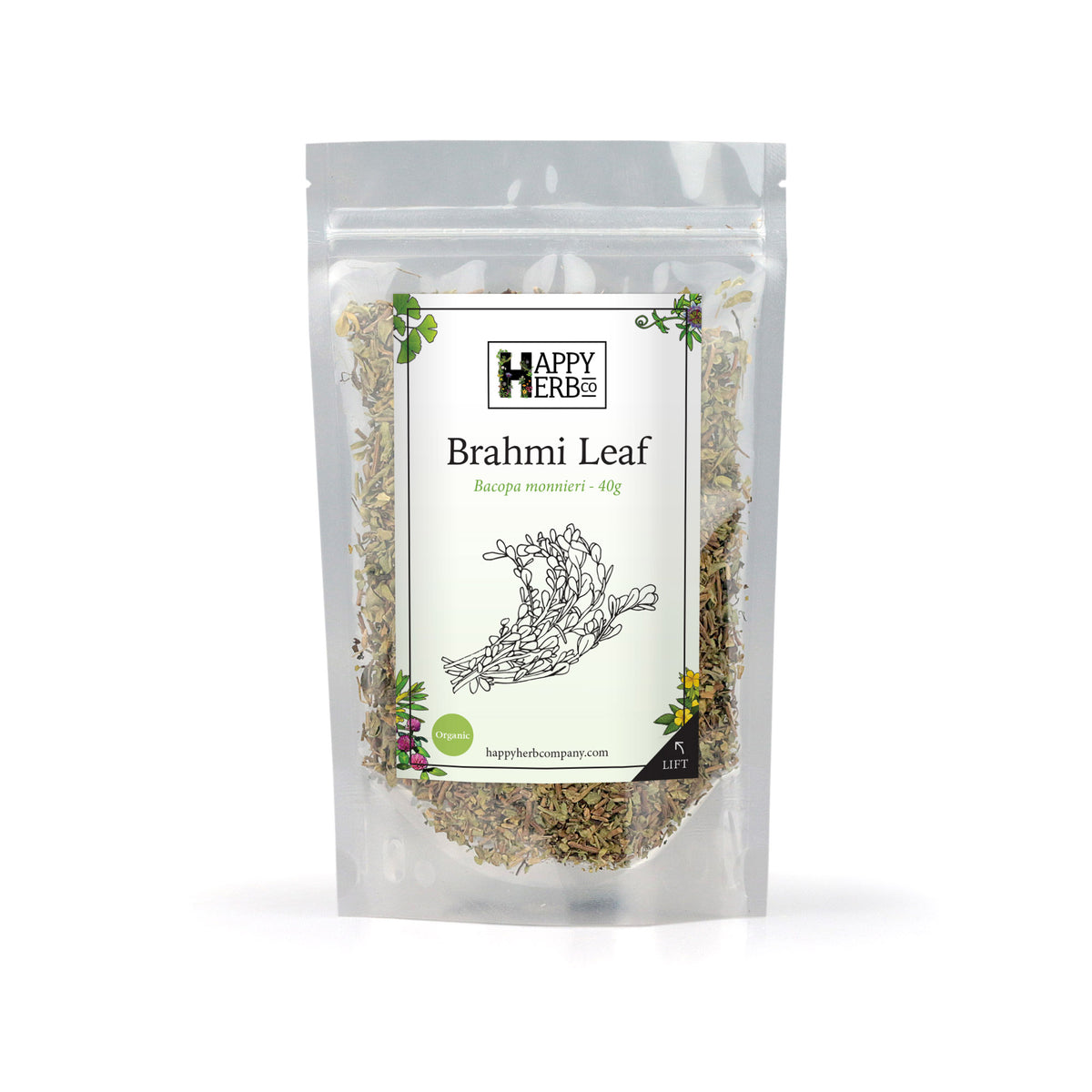
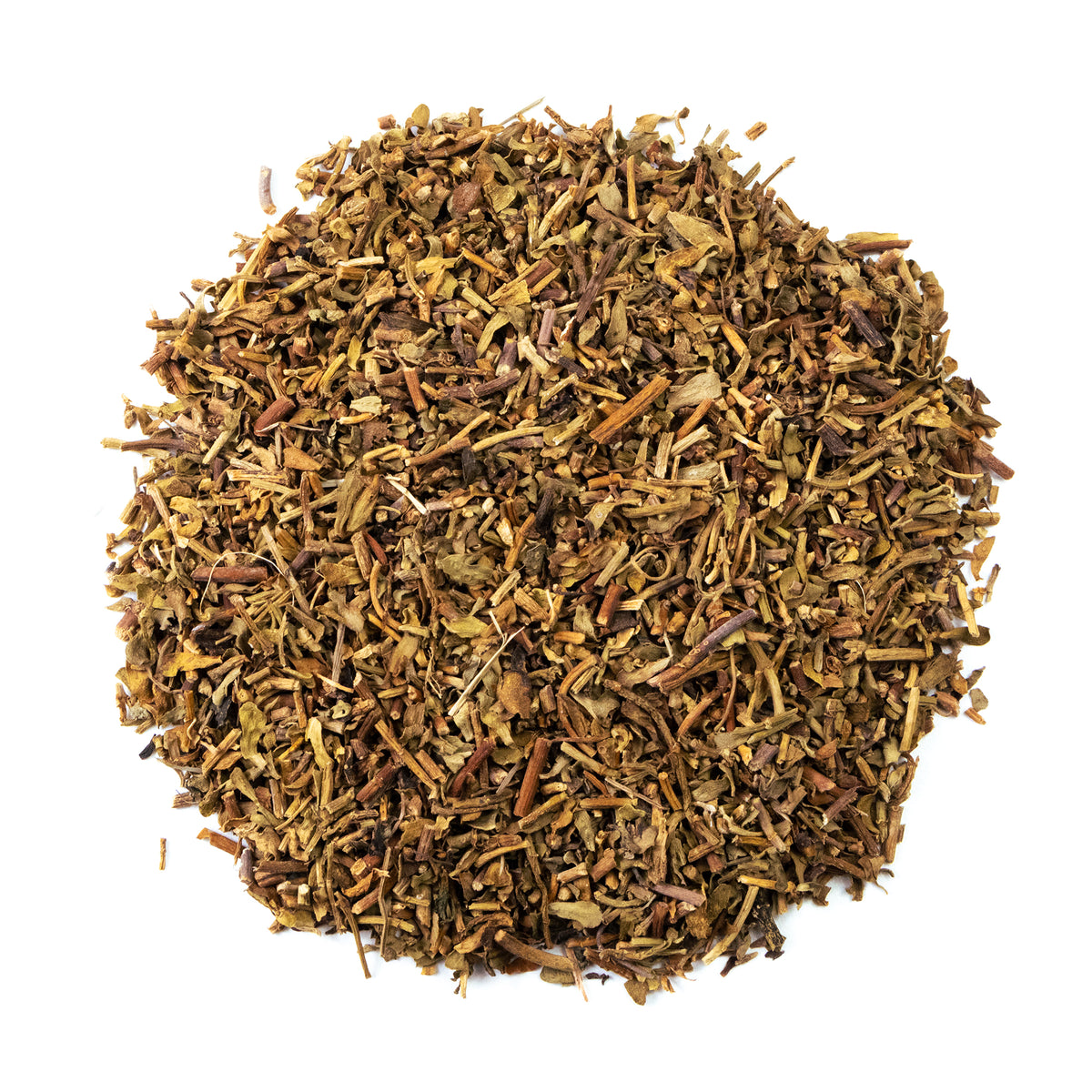
Single Herb
Spagyric


Luxury Tea
A vanilla-scented tea of tulsi, ginkgo, brahmi, green tea and cornflower.

Tea Elixir
Gotu kola, ginkgo, brahmi, herb Robert and rosemary in a liquid extract.
FAQ
Brahmi (Bacopa monnieri) is a small creeping herb of wetlands in India, southern Asia and Australia. It has been used in Ayurveda for well over a thousand years as a herb for memory and intellect. Today it is taken as a tea or as a liquid extract.
Brahmi is long associated with memory, focus and clear thinking. In Ayurveda it is a herb for memory and intellect, and Western herbalists class it as a nervine tonic and a nootropic. A 2014 analysis of nine trials found signs of faster attention and reaction time, but its authors called for larger studies, so we describe how it is used, not what it will do.
Brahmi is best known as a herb people reach for when there is study, writing or long thinking work ahead and they want a clear, steady focus. Most people take it daily for two to three months at a time, through study terms and exam preparation. Clinical trials of Brahmi have typically run for 12 weeks.
Steep 1 teaspoon of dried Brahmi leaf in a cup of just-boiled water, covered, for 10 minutes, then strain. Most people drink one or two cups a day, with honey or lemon to soften the bitterness.
No. Brahmi is naturally caffeine free. It is considered calming rather than stimulating, so it suits people who want to concentrate without feeling wired, and a cup can be taken at any time of day.
No. Brahmi (Bacopa monnieri) and Ashwagandha (Withania somnifera) are different plants, both long used in Ayurveda. Brahmi is a creeping wetland herb taken for memory and focus; Ashwagandha is a shrub whose root is taken as an adaptogen. Brahmi is also confused with Gotu Kola (Centella asiatica), which shares the name Brahmi in parts of India. The Brahmi we sell is Bacopa monnieri.
Use Brahmi with caution if you have an overactive thyroid. It can increase the effects of cholinergic medicines and of antidepressants (SSRIs and SNRIs), so take it alongside these only with care and under supervision. If you take medication or have a health condition, check with your health professional first.
Use caution with an overactive thyroid (hyperthyroidism). Brahmi can enhance the effects of cholinergic medicines (such as tacrine) and of antidepressants (SSRIs and SNRIs). Take it alongside these only with care and under supervision.
As described in the monographs cited under Sources.