Peppermint Profile
Peppermint
Mentha x piperita
For digestive ease, mental clarity and respiratory comfort.


Cart
Your cart is empty

Join us in our love of herbs
Peppermint Profile
Mentha x piperita
For digestive ease, mental clarity and respiratory comfort.
Herbal Intelligence
Peppermint (Mentha x piperita) is an aromatic perennial of the mint family, native to Europe. It is a natural cross between water mint and spearmint, and its leaves make one of the best-known herbal teas in the world.
The taste is fresh, bright and strongly minty, with a clean menthol finish. Most people take Peppermint as a tea, on its own or in a blend, and it is the herb our customers reach for after dinner, when they want to feel settled and clear.
Mints have been used for the digestion since the days of ancient Egypt, Greece and Rome, where they were known both as a flavouring for food and as a remedy(1, 2). Peppermint itself is a natural cross between water mint and spearmint(1). One of the oldest known specimens is kept in the herbarium of the English botanist John Ray, who lived from 1628 to 1705(2).
England made it a crop. Peppermint was first grown commercially there around 1750, and by 1800 an English medical dictionary was describing peppermint oil as an aromatic for the stomach(2).
It has been a popular digestive herb for at least two centuries(2). The leaf is still drunk as a tea after meals, and the plant is used around the world as a flavouring(2).
The dried leaves of Mentha × piperita are rich in volatile oils, especially menthol, menthone, 1,8-cineole and menthyl acetate, along with flavonoids and other phenolic compounds(3). These constituents give Peppermint its characteristic aroma and its mildly bitter, aromatic taste(4). In the laboratory the oils are studied for carminative and antispasmodic activity(3).
In Western herbalism Peppermint is classed as a carminative: an aromatic leaf for the stomach, taken after meals. It is also one of the great blending herbs, added to other teas for flavour and lift, and paired with Ginger or Lemon Balm in digestive blends.
People drink it after dinner, in the mid-afternoon in place of another coffee, and whenever they want a clear head.
The European Medicines Agency accepts Peppermint leaf as a traditional herbal medicine for minor digestive complaints. That rests on long use: the agency found the clinical studies of the leaf were mainly of combinations with other herbs(2). The US National Center for Complementary and Integrative Health notes that very little research has been done on Peppermint leaf, as distinct from the oil(1). So we describe how it is used, not what it will do.
Developed and reviewed by Laura Grace, Owner and Creative Director of Happy Herb Co, Herb Educator and Registered Ayurvedic Lifestyle Consultant ·
This profile is intended as a researched educational guide and does not replace the broader perspective of a herbal consultation.
★★★★★
4.9 out of 5, from 7 reviews
Very tasty and subtle relaxing tea. You can never go wrong with peppermint
Very versatile and an excellent substitute for coffee.
Thanks Andrea! So glad you are loving our Peppermint.
A wonderful addition to any tea to help sweeten it up a bit. A beautiful aroma aswell.
I can't really give an honest review because I bought it solely to mix with mullein, chamomile, honey rose and tobacco as a smoking mixture.
All new to me
But found cooking for a short time on the stove top and then adding the tea to the pot, made an idea brew 😎
Hi Marc,
Thank you for your review! So happy to hear you are enjoying the Peppermint tea. Sounds delicious & refreshing.
Your honest feedback helps other customers connect to the best products for their needs so we really appreciate it. Cheers & happy sleeping!
With health & happiness,
Happy Herb Co
In everyday life
Peppermint leaf is used in three main ways.
Peppermint tea can be enjoyed every day, most often after meals.
Cool, bright, obvious.
Crush a leaf and breathe in. Menthol reaches the nose before you have finished thinking about it. Peppermint was found growing in an English field in 1696 and has been in every kitchen since.
Steep a teaspoon, covered, for ten minutes, after a meal. Hot or over ice, with ginger or alone.
Sip slowly. Sometimes the right thing is the obvious thing. What simple fix have you been overcomplicating?
Shop


Single Herb
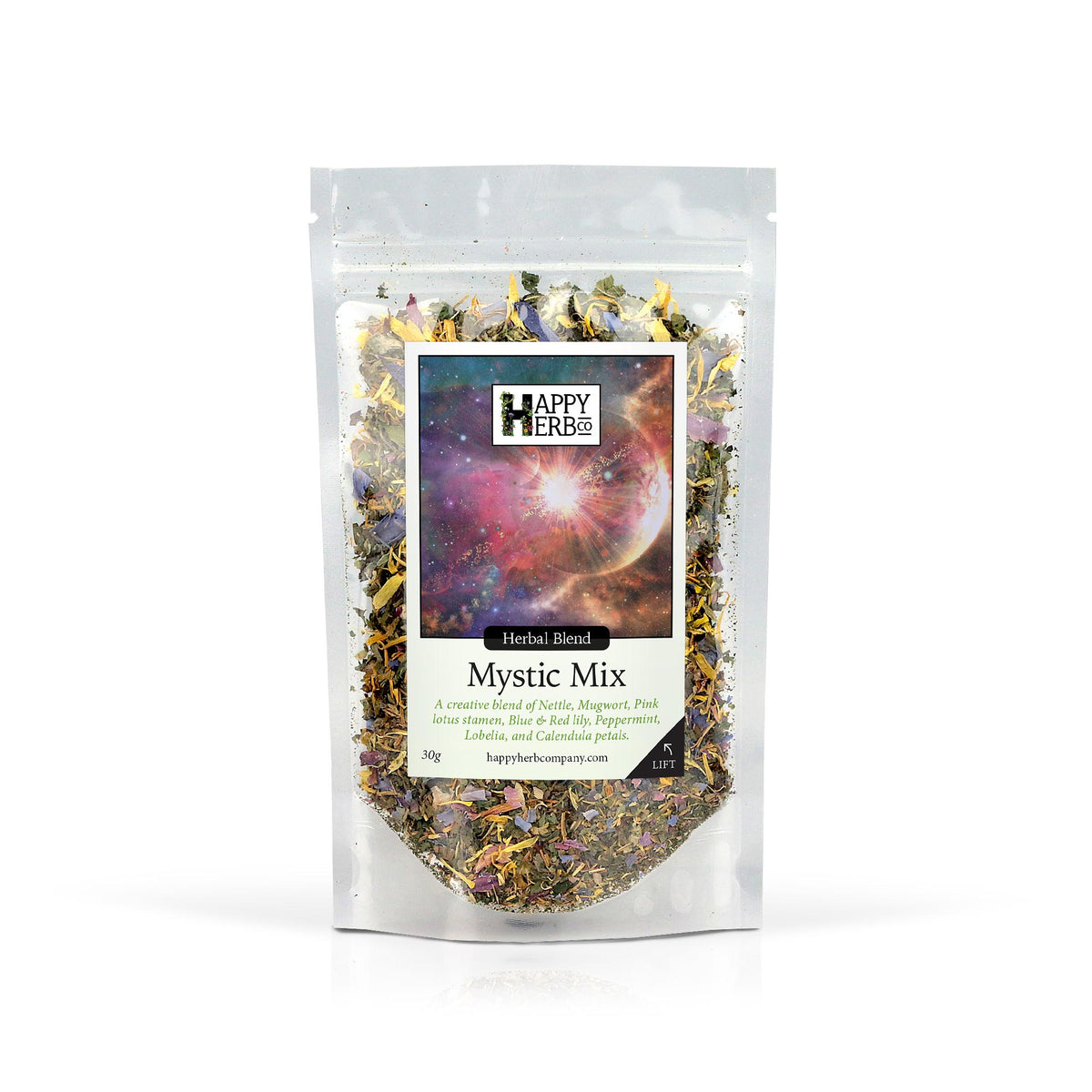
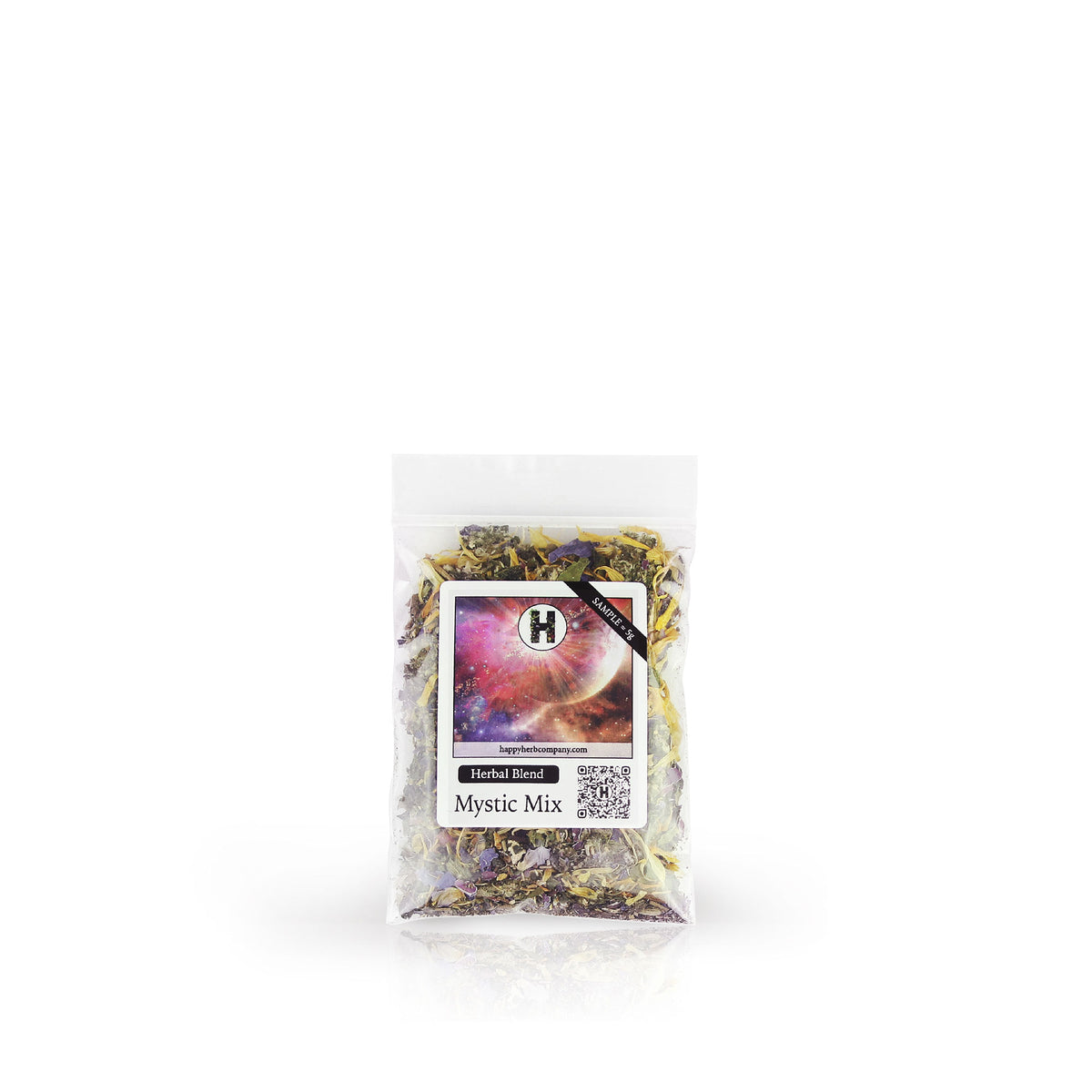
Milled Blend
A floral, cooling milled blend with nettle, mugwort, blue lily and peppermint.
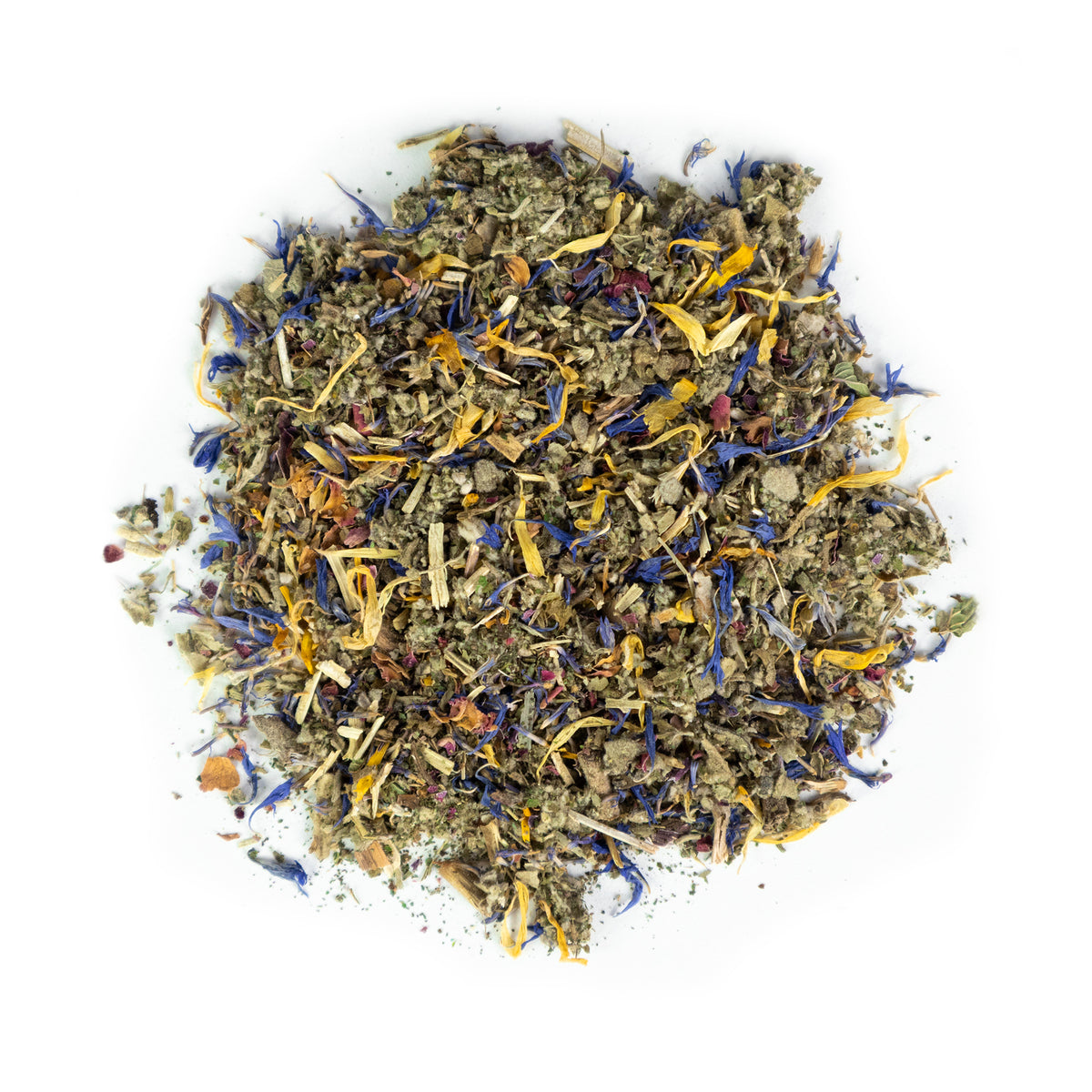
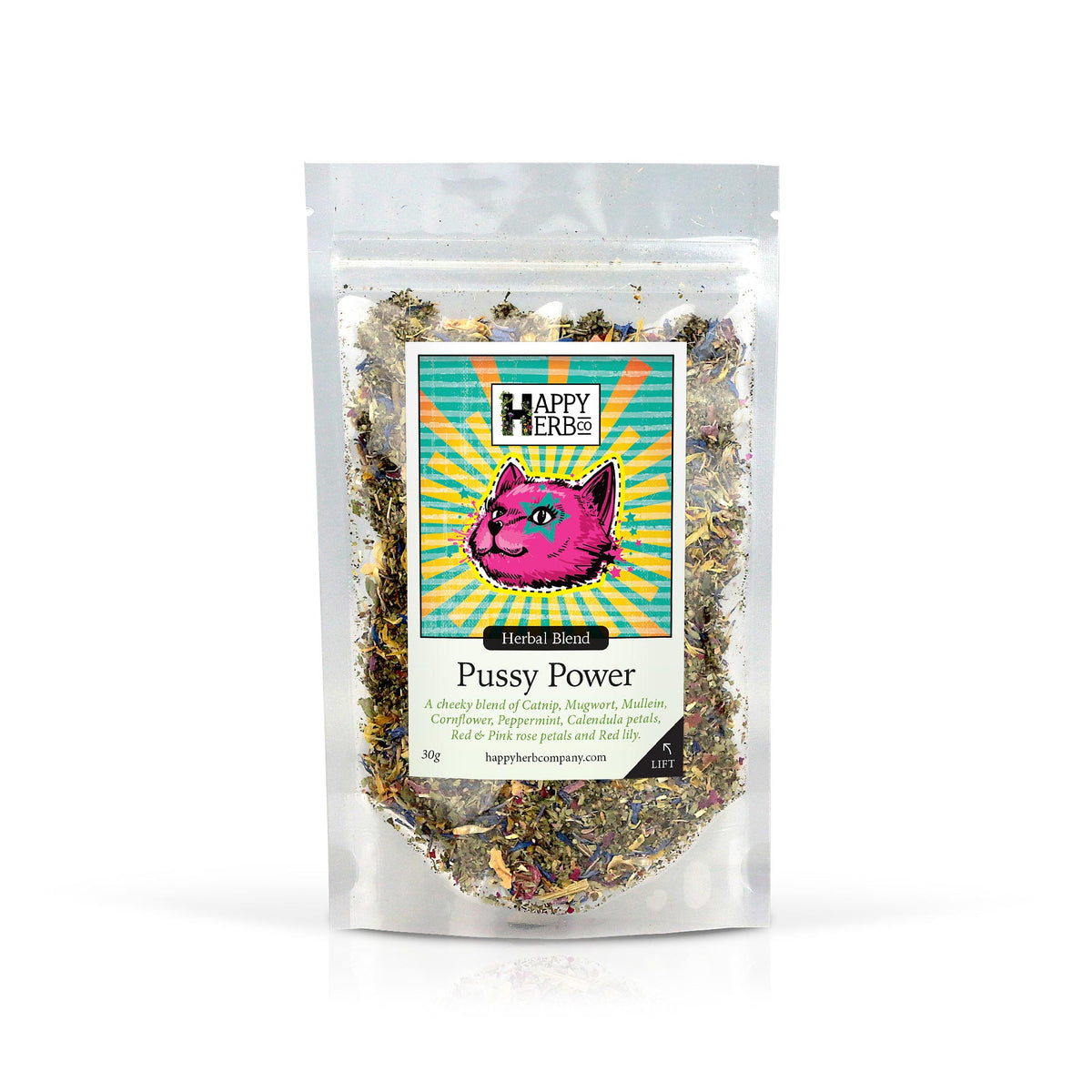
Milled Blend
A vibrant floral milled blend with catnip, rose petals and calendula.


Luxury Tea
An after-dinner tea of peppermint, licorice, ginger, fennel and calendula.
FAQ
Peppermint (Mentha x piperita) is an aromatic perennial of the mint family, native to Europe. It is a natural cross between water mint and spearmint, grown commercially in England since about 1750. Its leaves make one of the best-known herbal teas, and Peppermint is also taken as a liquid extract and used around the world as a flavouring.
Peppermint is long associated with digestion. In European herbal tradition the tea is drunk after meals, and Western herbalists class Peppermint as a carminative. The US National Center for Complementary and Integrative Health notes that very little research has been done on Peppermint leaf, so we describe how it is used, not what it will do.
Peppermint is best known as a herb people reach for when they want to feel settled after a meal. Most people have a cup of Peppermint tea shortly after eating, on its own or blended with Ginger or Lemon Balm. If you are prone to reflux, use it cautiously.
Steep 1 teaspoon of dried Peppermint leaf in a cup of just-boiled water, covered, for 10 minutes, then strain. Covering the cup keeps the aroma in. Peppermint tea is good hot or iced, on its own or blended with Ginger or Lemon Balm.
No. Peppermint is naturally caffeine free, so Peppermint tea can be drunk at any time of day, including the evening. It is the leaf of a plant in the mint family, not a true tea, which makes it an easy swap for a late cup of tea or coffee.
Yes. Dried Peppermint leaf is smoked in some herbal blends, including our milled herb blends, where it adds a fresh, minty note. Peppermint is far better known as a tea, and there is little written history of smoking it.
Inhaling smoke is harmful; we describe how the herb is used, we do not suggest it. Most people prefer to enjoy Peppermint as a tea.
Use Peppermint cautiously if you suffer from reflux, or if you have gallstones or another bile duct disorder. Take care combining Peppermint with immunosuppressant, calcium channel blocker or anticoagulant medication. Peppermint essential oil should not be taken internally, and oil inhalations are not suitable for infants. If you take medication or have a health condition, check with your health professional first.
The herbs with a long tradition for the chest after smoking are taken as teas: Mullein and Marshmallow Leaf as soft, soothing cups, Thyme and Elecampane as sharper aromatic ones, Peppermint for freshness, and Licorice Root in small amounts for short stretches.
Detox is a marketing word, not a herbal one. The lungs clear themselves over months once smoking stops, and no herb has been shown to speed that. Coltsfoot is not for internal use in Australia. A cough that lasts needs your GP.
Carminative herbs like Peppermint, Chamomile, Fennel, and Ginger help relax intestinal muscles, reduce gas buildup, and ease bloating.
Chamomile, Lemon Balm and Peppermint are the herbs most often used when the stomach feels unsettled.
Do not use the essential oil internally. Peppermint oil inhalations are not suitable for infants. Use cautiously if you suffer from reflux. Use caution when combining with immunosuppressant, calcium channel blocker or anticoagulant medication. Use cautiously if you have gallstones or another bile duct disorder.
As described in the monographs cited under Sources.