Butterfly Pea Profile
Butterfly Pea
Clitoria ternatea
For creative presence, daily calm and visual ritual.


Cart
Your cart is empty

Join us in our love of herbs
Butterfly Pea Profile
Clitoria ternatea
For creative presence, daily calm and visual ritual.
Herbal Intelligence
Butterfly Pea (Clitoria ternatea) is a twining vine of the pea family, grown throughout tropical Asia for its deep blue flowers. The petals have coloured teas and sweets for generations, and the plant has a long history in Ayurveda.
The taste is mild and earthy, and the colour is the point: a vivid blue that turns purple with a squeeze of lemon. Most people drink Butterfly Pea as a tea, hot or iced, and it is the herb our customers reach for when they want a calm, caffeine-free cup that is a pleasure to look at.
No one is certain where Butterfly Pea began. Botanists think it arose around the Indian Ocean, and it now grows wild throughout the tropics(1). Linnaeus named the species ternatea after Ternate, the Indonesian island his specimens came from(1).
In India it is known as Aparajita. Ayurveda has used it for centuries as a herb for memory and a settled mind(2).
Across Asia the flowers are as much a dye as a herb: the petals colour teas, desserts and cloth(1). More recently distillers have used them to make blue gins that change colour when tonic or lime is added(1). In Australia the plant is better known to farmers. It has long been grown as cattle fodder, and a pasture variety was released in Queensland in 1991(1).
Butterfly Pea (Clitoria ternatea) contains anthocyanins, notably the ternatins, flavonoids such as kaempferol, quercetin and myricetin glycosides, and alkaloids, triterpenoids and phenolic acids(3). In the laboratory these compounds are studied for antioxidant activity and for their effects on inflammatory pathways, nervous system signalling, and glucose and lipid metabolism(4).
Butterfly Pea is a newcomer to Western herbalism. Most of its modern use borrows from two older sources: Ayurveda, where it is a herb for the mind, and the kitchens of Asia, where it is a drink and a dye.
People choose it as an afternoon or evening tea because it has no caffeine, and for the small ceremony of the colour change: add lemon or lime and the blue turns purple or pink, as the flower's pigments respond to acidity(6). It is also part of habit shifting, as a bright blue mocktail in place of a drink.
Research is at an early stage. Most studies have been done in the laboratory or in animals, many are preliminary, and research in people is limited to very small trials(1). We describe how it is used, not what it will do.
Developed and reviewed by Laura Grace, Owner and Creative Director of Happy Herb Co, Herb Educator and Registered Ayurvedic Lifestyle Consultant · Clinically reviewed by Tamara Welsh, BSc, AdvDipWHM, ATMS, Clinical Herbalist
This profile is intended as a researched educational guide and does not replace the broader perspective of a herbal consultation.
★★★★★
4.9 out of 5, from 8 reviews
Absolutely adore!! Makes such a nice tea. Very versatile to blend with. And the colour!! Just gorgeous.
So glad you enjoyed it, its also full of many health benefits
Has a gorgeous deep blue colour that changes to purple, makes the best mocktails with a gentle taste and a calm feeling
Love the flavour of this tea 2 cups a day nice a mellow good just before bed
What a beautiful tea. I love the vibrant blue colour of this tea. It’s really lovely hot or cold. Very relaxing. It’s definitely on my rotating list of teas
Thanks, Butterfly Pea is so full of antioxidants, its one of my favrouties also. Thanks Laura
Beautiful as a tea, and so much fun adding to cocktails!
In everyday life
Butterfly Pea flowers are used in three main ways.
Butterfly Pea has no caffeine, so it can be enjoyed at any time of day.
Watch it change.
Steep a few of the dried flowers and watch the water turn a deep indigo. Then add a squeeze of lemon and watch it shift to violet in front of you.
Make the cup somewhere with good light so you can see the colour properly. Hot or over ice, it is the same quiet piece of kitchen chemistry.
Sip slowly. One small addition changed the whole cup. What small thing, added or taken away, might change the colour of your day?
In the Botanical Guides
Shop
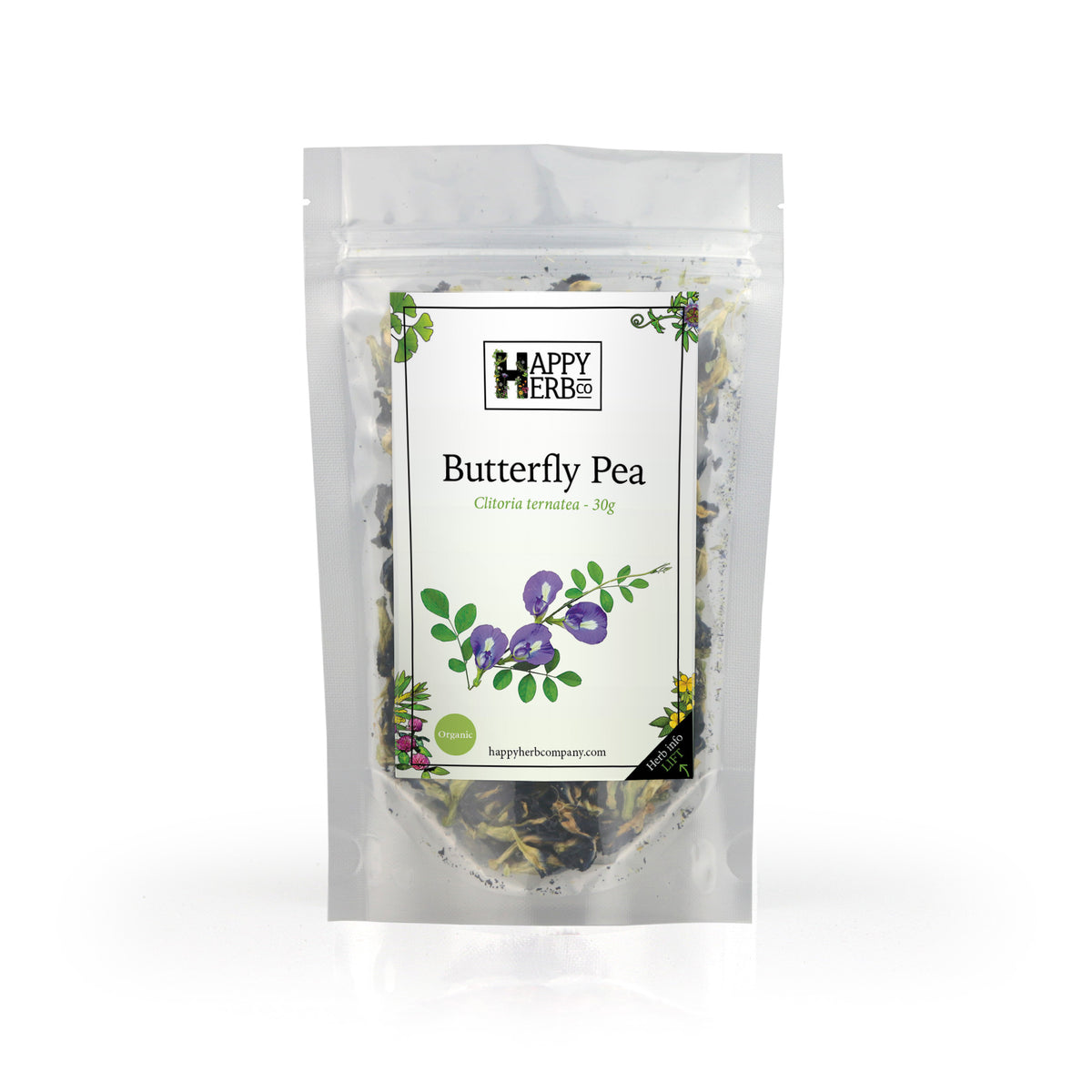
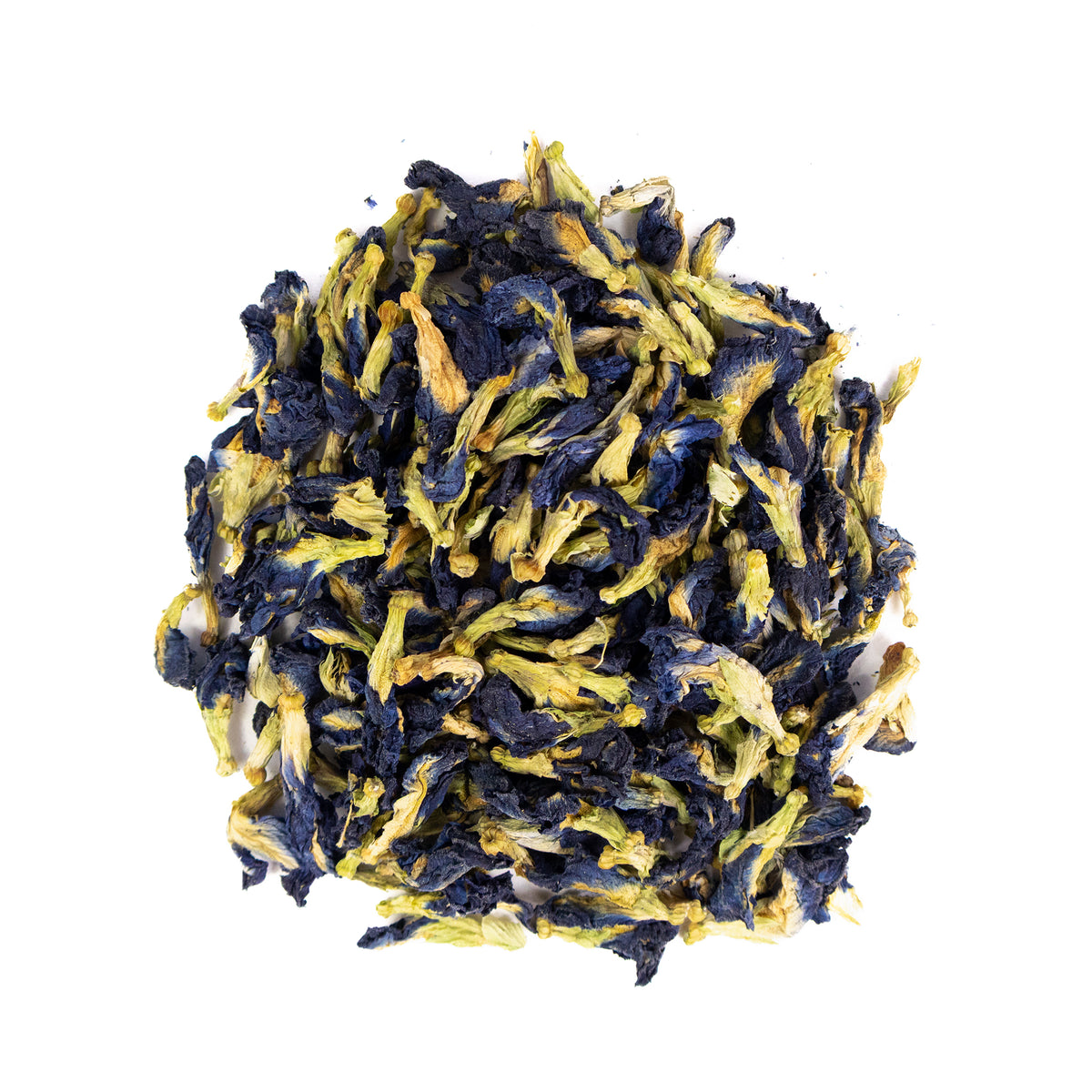
Single Herb
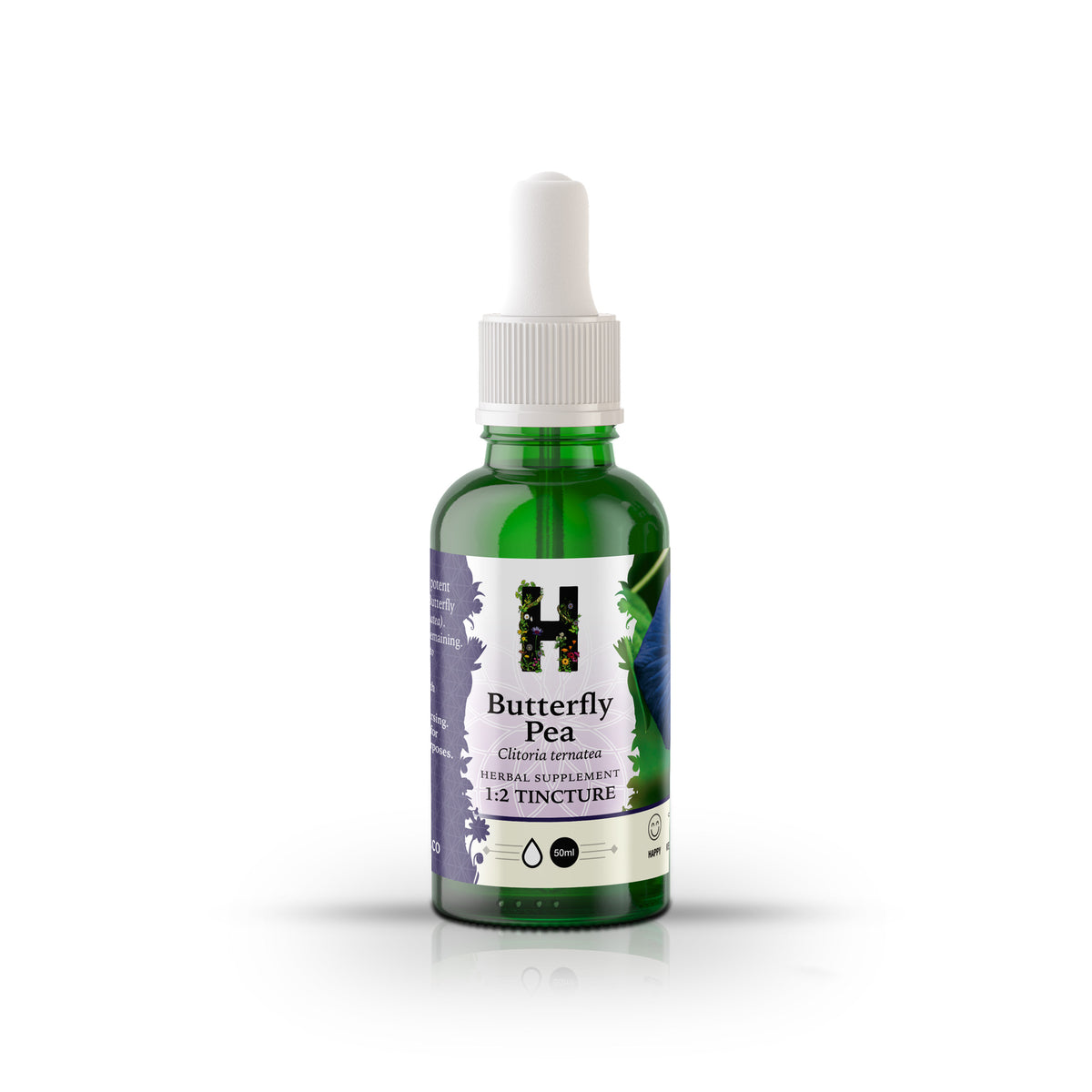
Botanical Concentrate


Luxury Tea
A floral tea that brews a vivid natural blue, with butterfly pea and blue lotus.
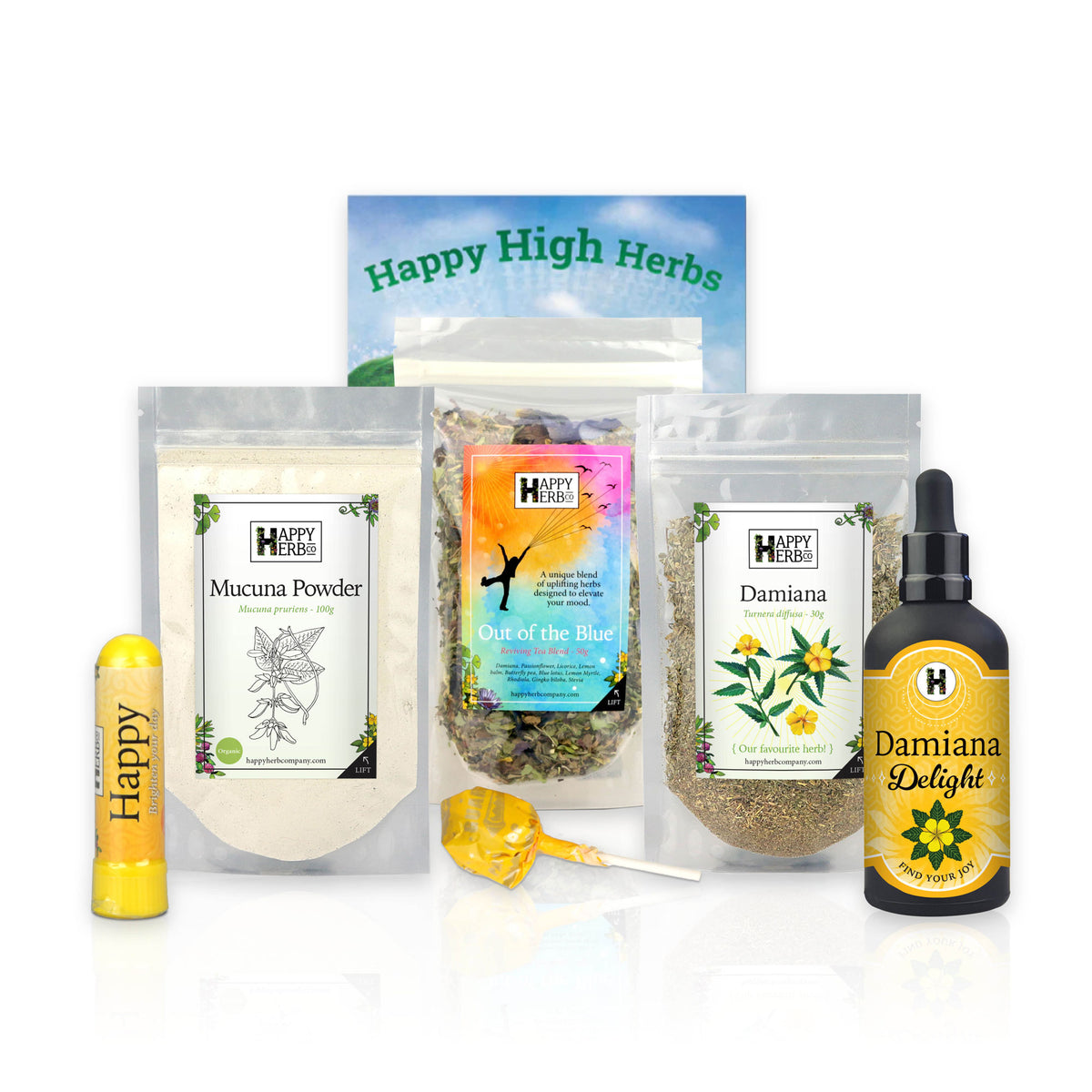
Bundle
For the lighter side of life, with damiana at its heart.
FAQ
Butterfly Pea (Clitoria ternatea) is a twining vine of the pea family, grown throughout tropical Asia for its deep blue flowers. The petals have long been used to colour teas and desserts, and the plant has a history in Ayurveda. Today the dried flowers are brewed as a caffeine-free blue tea or taken as a liquid extract.
Butterfly Pea is long associated with calm and a clear mind. In Ayurveda it is a herb for the mind, and in the kitchens of Asia it is a drink and a natural blue colouring. Today people choose it as a calm, caffeine-free cup. Research is at an early stage, mostly in the laboratory or in animals, so we describe how it is used, not what it will do.
Butterfly Pea is best known as a herb people reach for when they want a calm, caffeine-free cup that is a pleasure to look at. Most people drink it in the afternoon or evening, hot or iced, and it is also popular as a blue mocktail in place of an alcoholic drink.
Steep 1 to 2 teaspoons of dried Butterfly Pea flowers in a cup of just-boiled water, covered, for 10 minutes, then strain. Drink it hot or over ice. A squeeze of lemon or lime turns the blue tea purple.
No. Butterfly Pea is naturally caffeine free, so it can be enjoyed at any time of day, including the evening. The flavour is mild and earthy, with a faint floral note, so it is often brewed with lemon, honey, ginger or Lemon Myrtle.
Butterfly Pea flowers contain blue pigments called anthocyanins, which change colour with acidity. Brewed in plain water the tea is deep blue. Add lemon or lime juice and it turns purple or pink.
Butterfly Pea tea is caffeine free, so it will not keep you awake, and many people choose it as an evening cup for that reason. Whether it makes people sleepy has not been established: research on Butterfly Pea in people is limited to very small trials. We describe how it is used, not what it will do.
No formal safety studies of Butterfly Pea in people have been published, so there is no established list of who should avoid it. If you are pregnant or breastfeeding, take medication or have a health condition, check with your health professional first.
Use Butterfly Pea as an alcohol alternative when you want something beautiful, calming, and mildly uplifting—without altering your mental clarity. Butterfly Pea doesn’t have strong mood-altering effects on its own, but its soothing nature and vivid blue hue create a grounding, sensory-rich experience—ideal for mindful drinking rituals and magical herbal mocktails (like this Cosmic Crush Mocktail).
No formal safety studies of Butterfly Pea in people have been published. If you are pregnant, breastfeeding or taking medication, check with your health professional first.
This herb has not been studied enough for its actions to be defined. What we know of it comes from tradition and the sources below.