Passionflower Profile
Passionflower
Passiflora incarnata
For restful sleep, nervous system ease and habit shifting.


Cart
Your cart is empty

Join us in our love of herbs
Passionflower Profile
Passiflora incarnata
For restful sleep, nervous system ease and habit shifting.
Herbal Intelligence
Passionflower (Passiflora incarnata) is a climbing vine native to the south-eastern United States, with intricate purple and white flowers and an edible fruit called the maypop. Its leaves and stems have a long history as a calming herb, first among Native American peoples and later in European folk medicine.
The taste is grassy and soft, with a light floral note. Most people take Passionflower as a tea or a liquid extract, and it is the herb our customers reach for in the evening, when the mind is still busy and the body is ready for rest.
Passionflower is native to the south-eastern United States, where the Houma, Cherokee and other Native American peoples used it for food, drink and medicine, and as a sedative(1). In 1612 Captain John Smith reported that people in Virginia planted the vines for their fruit, the maypop(1).
The name is a Christian one. Early Spanish explorers saw in the unusual parts of the flower the sufferings of Christ, the Passion(1). It has nothing to do with romance.
The plant was brought to Europe, widely cultivated, and taken into European folk medicine(2). Handbooks there have recorded it continuously since at least 1938 as a herb for mental stress and sleep, mostly in combination with Valerian, Hops or Lemon Balm(3).
The aerial parts of Passiflora incarnata contain flavonoids such as vitexin, isovitexin, apigenin and chrysin, along with small amounts of alkaloids, glycosides and phenolic compounds(4). In the laboratory these constituents are studied for their action on the GABA system in the brain(5).
In Western herbalism Passionflower is classed as a nervine and a mild sedative: a herb for a busy mind at the end of the day. It is one of the most widely used evening herbs, and a usual partner of Valerian, Skullcap and California Poppy in bedtime blends.
People use it in two rhythms: a cup in the hour before bed, or smaller cups through a tense day. For some it is part of habit shifting, a pot of tea in place of the evening drink, or a soft leaf in a hand-rolled blend.
The European Medicines Agency accepts Passionflower as a traditional herbal medicine for mild mental stress and to aid sleep, on the strength of long use. It found the clinical studies too small and too weak to show more(3). The US National Center for Complementary and Integrative Health says its effects have not been studied extensively(2). So we describe how it is used, not what it will do.
In herbal circles Passionflower also has a name as a herb people lean on when they are cutting down on nicotine, as a tea or in a hand-rolled blend in place of tobacco. The science behind that is thin and mostly from the laboratory: the plant carries trace amounts of harmala alkaloids, which have been studied as inhibitors of the enzyme monoamine oxidase(6), and a 2002 study in mice looked at a fraction of the plant and nicotine withdrawal(7). No trial in people has followed. We describe the use; we do not promise the outcome.
Developed and reviewed by Laura Grace, Owner and Creative Director of Happy Herb Co, Herb Educator and Registered Ayurvedic Lifestyle Consultant · Clinically reviewed by Tamara Welsh, BSc, AdvDipWHM, ATMS, Clinical Herbalist
This profile is intended as a researched educational guide and does not replace the broader perspective of a herbal consultation.
★★★★★
4.9 out of 5, from 38 reviews
Perfect for a nice soft tea blend 👌
Such a versatile herb, thank you for your review.
Really great helping me sleep!
Gotta buy more off this one great for my anxiety love ❤️ it
As a tea before bed, this is great for a restful nights sleep. And as a smoke, very soft and smooth when mixed with tobacco (tried it due to other comments about using this to help quit - love it!) also great with other herbs. Def be back for more! 💚
Great, Passionflower is so powerful as an addiction interupter and potentiates other herbs. I use it for a restful sleep also, I mix it with Chamomile or California Poppy for my bedtime tea and it works a treat. Thanks for the review, Laura
Helped my husband to stop smoking... added it into the tobacco and then started decreasing the tobacco until it was only passionflower with some damiana mixed in. The only thing that ever worked for him!
Thank you for sharing your positive experience with our passionflower product. We are delighted to hear that it helped your husband in his journey to quit smoking. Mixing it with damiana is a great idea! Congratulations to your husband on his success!
In everyday life
Passionflower is used in three main ways.
Passionflower tea is taken up to three times through the day, or as a single cup before bed.
Let the thoughts circle.
Look closely at the flower if you have one, or a picture of it: the ring of fine purple filaments, the strange crown at the centre. Spanish missionaries read a whole story into it.
Steep a teaspoon in the evening, or take a few drops of the concentrate in water, and sit somewhere the day cannot reach you. Notice the thoughts that keep circling. You do not have to follow them.
Sip slowly. The mind, like the vine, climbs whatever it is given. What would you like to give it tonight?
In the Botanical Guides
Shop
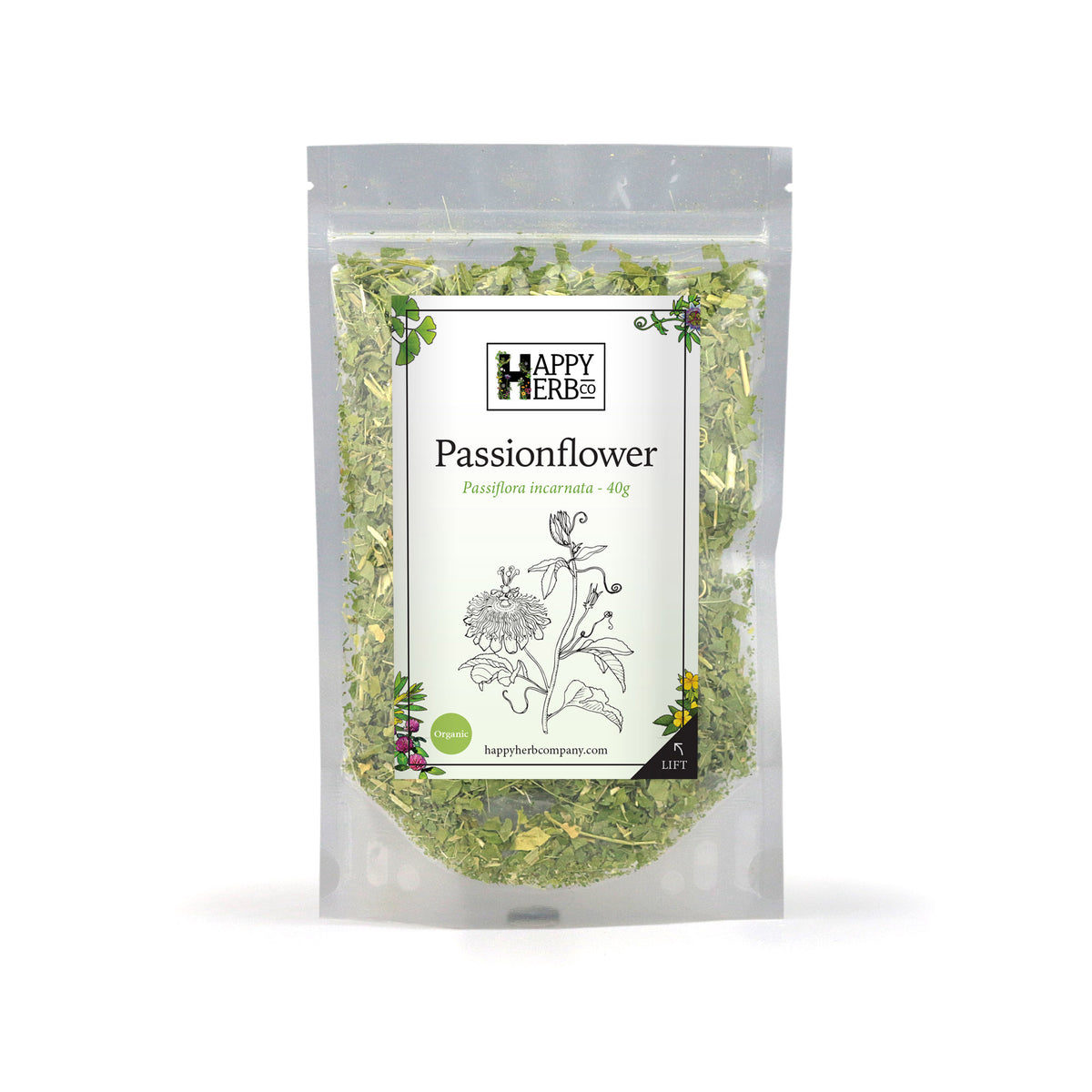
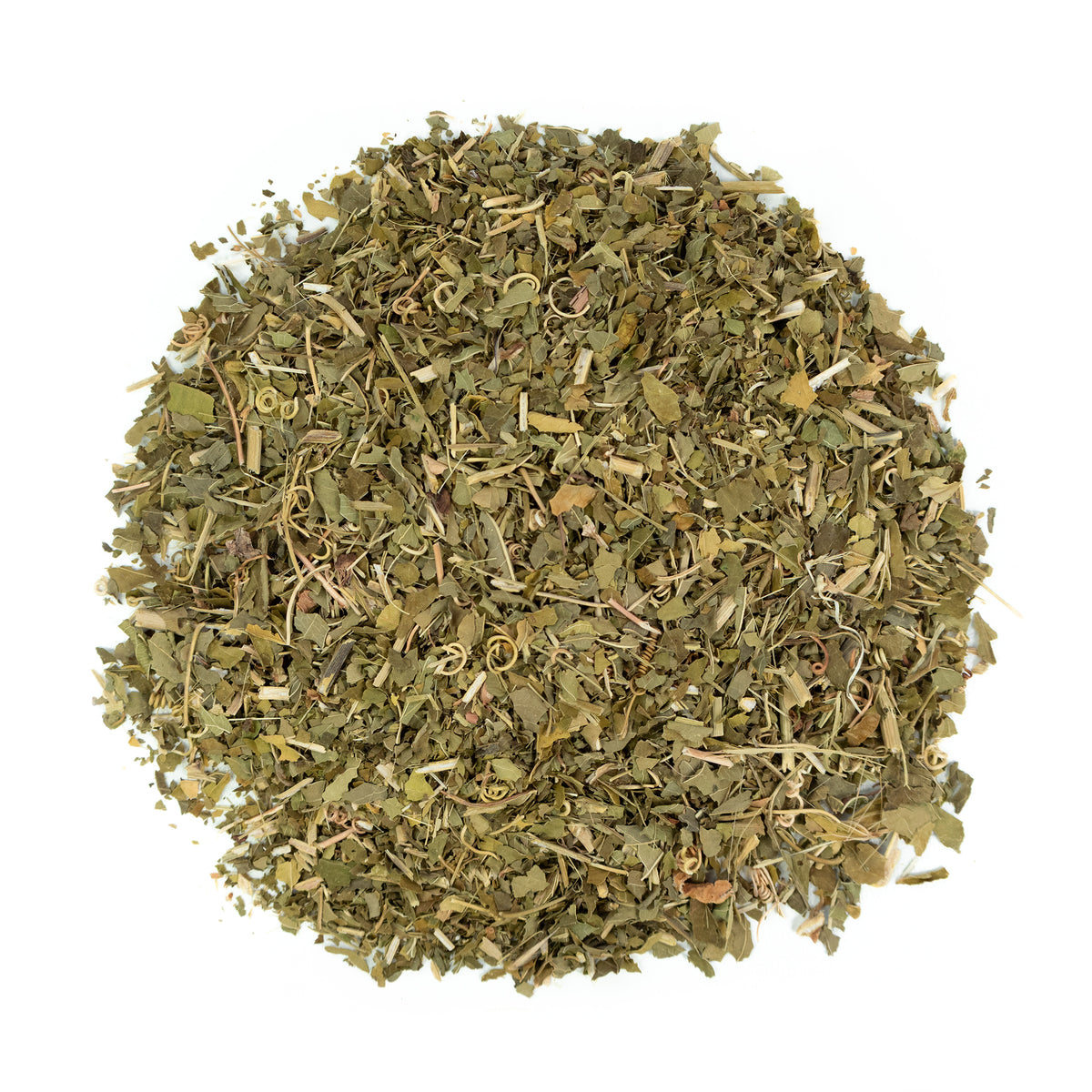
Single Herb

Botanical Concentrate
For restful sleep, nervous system ease and tobacco reduction.
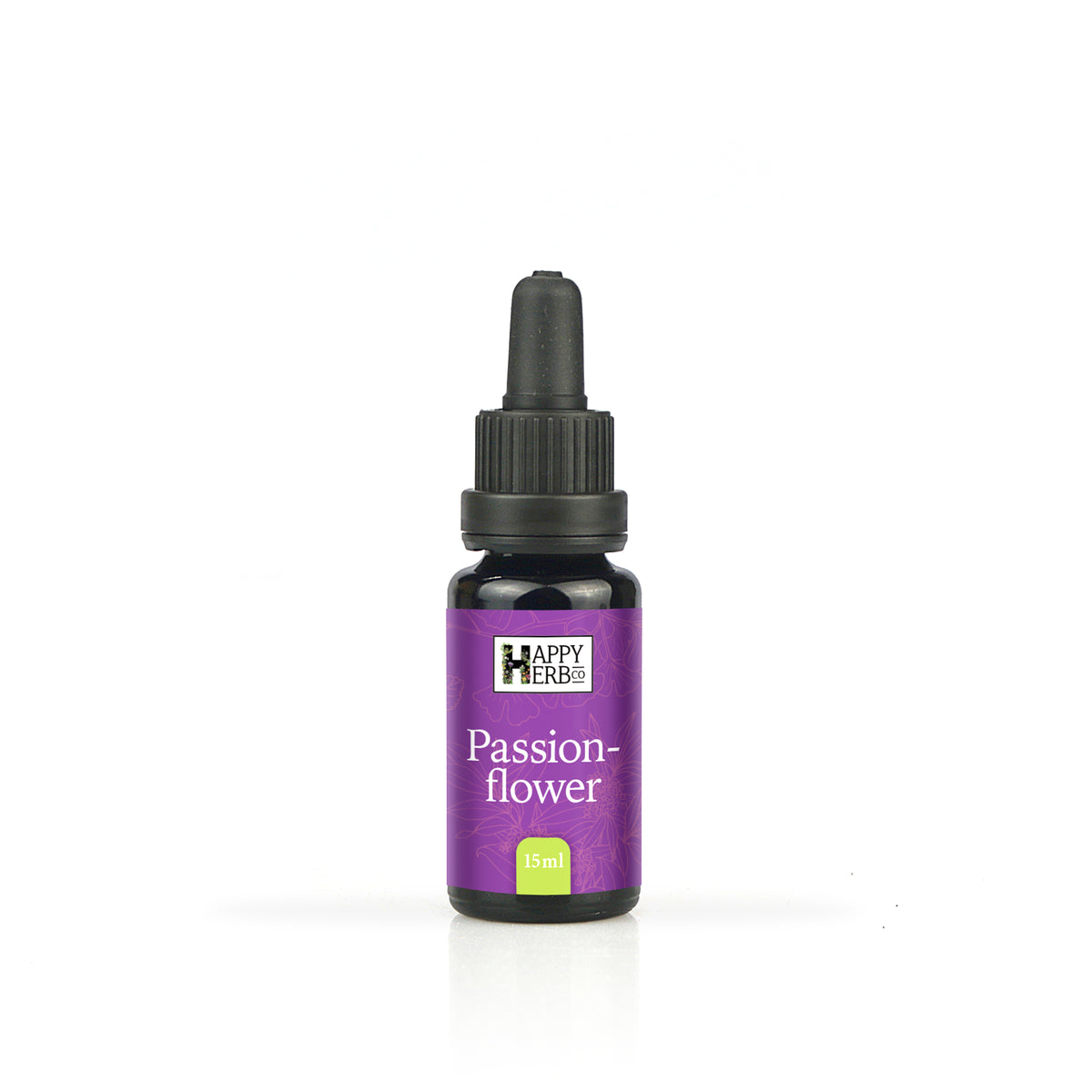
Spagyric
For restful sleep, nervous system ease and tobacco reduction.
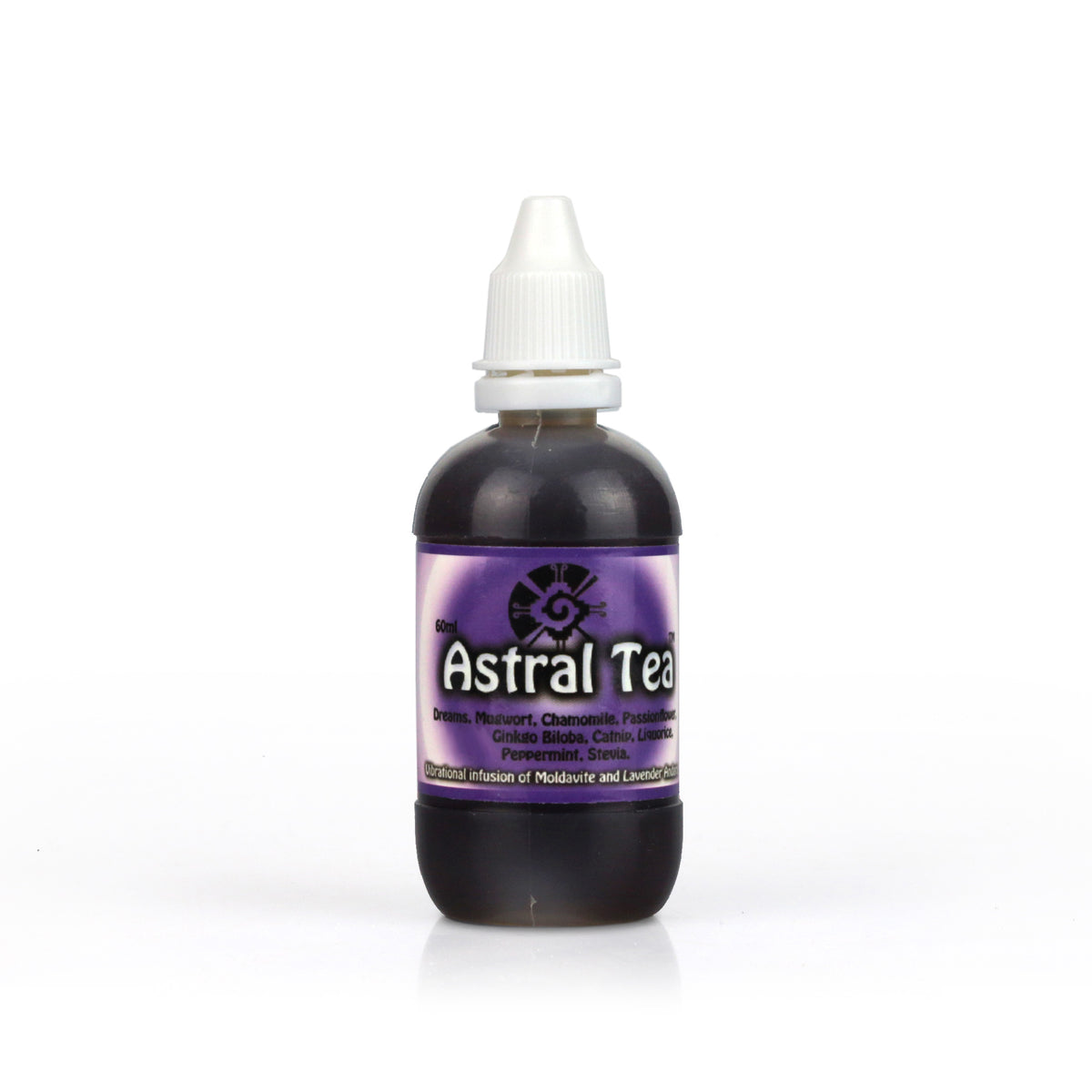
Tea Elixir
Mugwort, chamomile, passionflower, ginkgo and catnip in a tea concentrate.
FAQ
Passionflower (Passiflora incarnata) is a climbing vine native to the south-eastern United States, with intricate purple and white flowers and an edible fruit called the maypop. Its leaves and stems have a long history as a calming herb, among Native American peoples and in European folk medicine. Today Passionflower is taken as a tea or a liquid extract.
Passionflower is long associated with calm and sleep. In European herbal tradition it is taken as a tea or an extract at times of mental stress and before bed, and Western herbalists class Passionflower as a nervine and a mild sedative. The US National Center for Complementary and Integrative Health says its effects have not been studied extensively, so we describe how it is used, not what it will do.
Passionflower is best known as a herb people reach for when the mind is still busy at the end of the day. Most people have a cup of Passionflower tea, or a liquid extract in a little water, in the hour before bed. It is often blended with Valerian, Hops or Lemon Balm.
Steep 1 teaspoon of dried Passionflower in a cup of just-boiled water, covered, for 10 minutes, then strain. The flavour is grassy and soft, with a light floral note. Passionflower blends well with Chamomile or Lemon Balm, and a little honey rounds it out.
No. Passionflower is naturally caffeine free, so Passionflower tea suits the evening and the hour before bed. It is the leaf and stem of a climbing vine, not a true tea, and it is often blended with other caffeine-free herbs such as Chamomile and Lemon Balm.
Yes. Dried Passionflower leaf is smoked in some herbal blends, including our milled herb blends, where it adds a soft, grassy note. Passionflower is far better known as a tea and a liquid extract, and there is little written history of smoking it.
Inhaling smoke is harmful; we describe how the herb is used, we do not suggest it. Most people prefer to enjoy Passionflower as a tea.
Passionflower can increase the effects of sedative medicines, so combine with care. The US NCCIH lists drowsiness, dizziness and confusion as possible side effects, and notes it may interact with anaesthesia, so tell your doctor before surgery. If you are pregnant or breastfeeding, take medication or have a health condition, check with your health professional first.
No. The passion fruit on the supermarket shelf comes from Passiflora edulis, a different species grown for its fruit. The herb used in tea, liquid extracts and blends is Passiflora incarnata, the purple passionflower of the south-eastern United States, and it is the leaf, stem and flower that are used, not the fruit. The two plants are cousins in the same family and look alike in flower, but they are not interchangeable: the fruit of the passion fruit vine does not carry the compounds the herb is known for.
It is one of the herbs people reach for, yes. Some drink the tea through the day in place of a cigarette break; others roll the dried leaf, alone or in a blend, as a stand-in for tobacco while they let the habit go. In herbal circles this use is well known.
What stands behind it is slight. Passionflower contains trace amounts of harmala alkaloids, which have been studied in the laboratory as inhibitors of monoamine oxidase, and a 2002 study in mice examined a fraction of the plant and nicotine withdrawal. There is no trial in people. So we describe the use, not the result. Inhaling smoke of any kind is harmful; if you are giving up nicotine, the tea is the kinder way to lean on this herb.
Passionflower is the herb people reach for as an alcohol alternative when they are tense and want to switch off without a hangover. Western herbalists class it as a nervine, traditionally used for a racing mind and nervous tension, and it is known for leaving no fog the next morning. It suits the evening at home, a social setting where you want to feel settled and present, and the post-work glass in place of wine.
Most people take it in the evening, as a tea or a liquid extract in sparkling water. If you take medication for sleep or mood, or are pregnant, speak with your health professional first.
Passionflower is best known as a herb people reach for when anxiety shows up as a racing mind, restlessness and trouble settling at night. Western herbalists class it as a nervine, traditionally used for overthinking, nervous tension and the kind of tiredness that will not turn into sleep. It is gentle enough for the daytime too.
Most people take it in the evening, as a tea or a liquid extract, for a few weeks at a time. Passionflower is known to add to the effect of medicines for sleep and mood, so if you take these, or are pregnant, speak with your health professional first.
Passionflower is a sedative and nervine herb, making it an amazing tool to use for a sound, restful sleep. Most users report waking up with a smile on their face in the mornings after a deep passionflower slumber. Like Valerian Root, it works by boosting GABA levels in the brain, promoting relaxation and reducing stress.
Passionflower can increase the effects of sedative medicines: combine them with caution. If you are pregnant or breastfeeding, check with your health professional first. Tell your doctor if you are taking Passionflower in the two weeks before surgery, as it may add to the effects of anaesthetic medicines.
As described in the monographs cited under Sources.